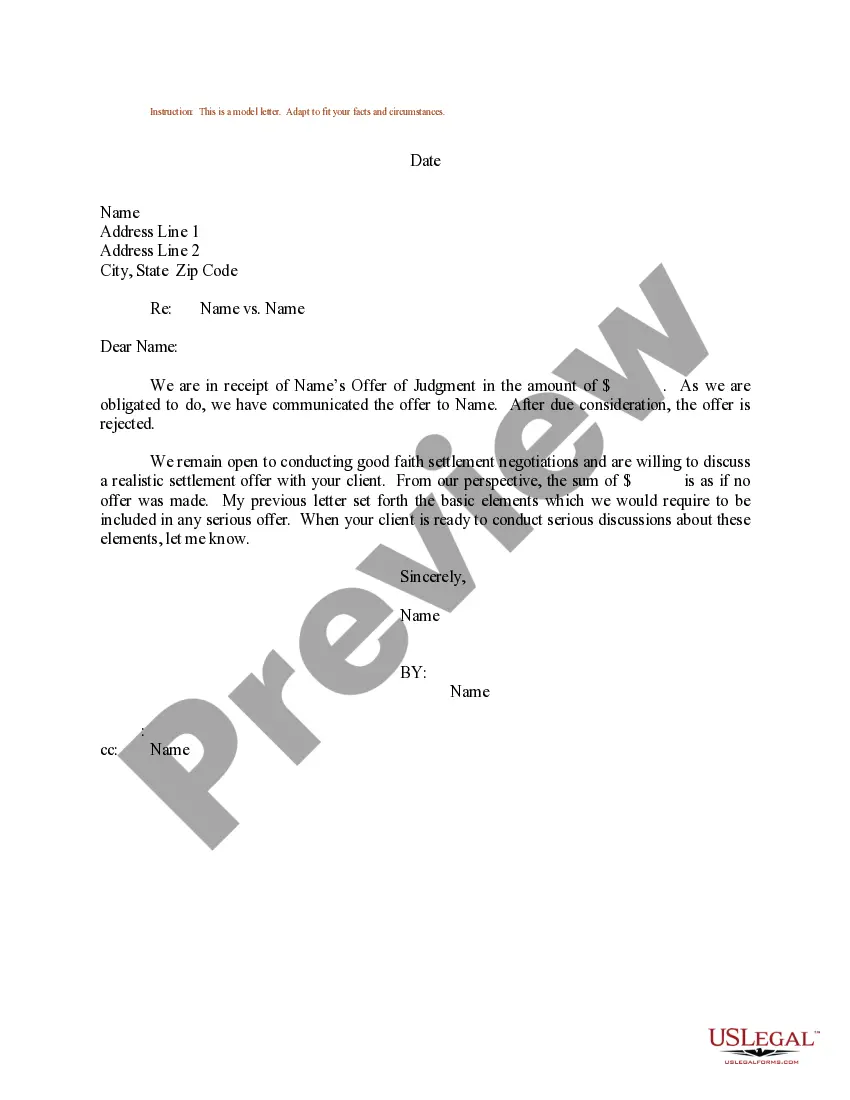
Sample Settlement Letter Without Prejudice In Fulton
Description


Get your form ready online
Our built-in tools help you complete, sign, share, and store your documents in one place.
Make edits, fill in missing information, and update formatting in US Legal Forms—just like you would in MS Word.
Download a copy, print it, send it by email, or mail it via USPS—whatever works best for your next step.
Sign and collect signatures with our SignNow integration. Send to multiple recipients, set reminders, and more. Go Premium to unlock E-Sign.
If this form requires notarization, complete it online through a secure video call—no need to meet a notary in person or wait for an appointment.
We protect your documents and personal data by following strict security and privacy standards.

Make edits, fill in missing information, and update formatting in US Legal Forms—just like you would in MS Word.

Download a copy, print it, send it by email, or mail it via USPS—whatever works best for your next step.

Sign and collect signatures with our SignNow integration. Send to multiple recipients, set reminders, and more. Go Premium to unlock E-Sign.

If this form requires notarization, complete it online through a secure video call—no need to meet a notary in person or wait for an appointment.

We protect your documents and personal data by following strict security and privacy standards.
Looking for another form?






Form popularity
FAQ
A person serving papers must be 18 years of age or older and must not be a party to the case (CPLR 2103a). Papers may be served by a process server, friend or relative of a party so long as he or she is not a party to the case.
Personal Service of Process in NY The most common way of effecting service upon a “natural person” is by hand delivery. Section 308 of the consolidated statutes (CPLR 308) states that personal service upon a person can be made “by delivering the summons within the state to the person to be served.” It's that simple.
If there is a scheduled hearing, the respondent must be served at least 24 hours before the court date.
If insufficient attempts are made to serve the defendant directly or if documents are left with someone who cannot be verified as living at the residence (such as a visiting friend or contractor), courts may deem the service improper.
What does without prejudice save as to costs mean? In England and Wales, if a dispute gets to court, the losing party generally pays the legal costs of the winning party. Without prejudice allows parties to have private settlement discussions that cannot be used in court if the case goes to trial.
Insufficient service of process occurs when the paperwork is complete, but is not properly delivered to the defendant in a manner consistent with Article 3 of the CPLR.
Insufficient service of process under Rule 12(b)(5) occurs when the paperwork is complete, but isn't properly delivered to the defendant. For example, if the plaintiff leaves the summons with the defendant's six-year-old child, that would invalidate the service.
Gathering Evidence of Improper Service Personal Testimony: Provide a detailed account of your whereabouts and activities you're engaged in at the time of the alleged service. Witnesses: If there are individuals with you at your location during the improper service, their testimonies can serve as evidence.
Your settlement letter should begin with a heading that clearly identifies it as a settlement proposal. Be sure to include your contact information, such as your name, address and phone number so that the recipient can get in touch with you if necessary.
Where do I put the words "without prejudice" on a document or email? There are no rules about this but generally, at the top of any document or in the subject line etc - so that it is instantly clear to the reader.

