Meeting Notice For Employees In Texas
Description


Get your form ready online
Our built-in tools help you complete, sign, share, and store your documents in one place.
Make edits, fill in missing information, and update formatting in US Legal Forms—just like you would in MS Word.
Download a copy, print it, send it by email, or mail it via USPS—whatever works best for your next step.
Sign and collect signatures with our SignNow integration. Send to multiple recipients, set reminders, and more. Go Premium to unlock E-Sign.
If this form requires notarization, complete it online through a secure video call—no need to meet a notary in person or wait for an appointment.
We protect your documents and personal data by following strict security and privacy standards.

Make edits, fill in missing information, and update formatting in US Legal Forms—just like you would in MS Word.

Download a copy, print it, send it by email, or mail it via USPS—whatever works best for your next step.

Sign and collect signatures with our SignNow integration. Send to multiple recipients, set reminders, and more. Go Premium to unlock E-Sign.

If this form requires notarization, complete it online through a secure video call—no need to meet a notary in person or wait for an appointment.

We protect your documents and personal data by following strict security and privacy standards.
Looking for another form?
Form popularity
FAQ
The Open Meetings Act (Government Code, Chapter 551) provides that meetings of governmental bodies must be open to the public (except for expressly authorized executive sessions). Both state and regional agencies file notices of open meetings with the Secretary of State's office.
Notices must be posted and accessible to the public for at least 72 hours prior to the meeting. The Act also requires a city, county, school district, or sales tax economic development corporations publish a notice of its meetings on its Internet website.
The public hearing must be held at least five days after the date notice of public hearing is given. This hearing must be held on a weekday that is not a public holiday and must take place in a public building inside the taxing unit's boundaries or a suitable building to which the public have normal access.
Sec. 551.002. OPEN MEETINGS REQUIREMENT. Every regular, special, or called meeting of a governmental body shall be open to the public, except as provided by this chapter.
All states had enacted open meetings laws by 1976 In general, most statutes require public bodies to meet and deliberate in public. Although these laws guarantee that the public and the media can attend, they do not guarantee the public's right to speak.
From requiring your horse to have taillights for nighttime rides to needing a permit for walking barefoot, these laws are a testament to the Lone Star State's unique character. Buckle up, folks, as we dive into 20 weird laws in Texas that will leave you scratching your head.
The Act. It is a misdemeanor for a member of a governing body to conspire to circumvent the Act by meeting in numbers of less than a quorum for the purpose of secret deliberations. It Page 6 -6- is punishable by a fine of between $100 and $500, one to six months in jail, or both.
A proper meeting notice should include: Date, Time, and Venue: Clear details on when and where the meeting will take place. Purpose of the Meeting: A brief description of the meeting's objectives. Agenda: An outline of topics to be discussed; this helps attendees prepare for the meeting.
How much notice must be given? The general rule is that at least 21 days' notice must be given, although constitutions may specify longer. More than 28 days' notice must be given for listed companies regardless of what the company constitution says (s 249HA).
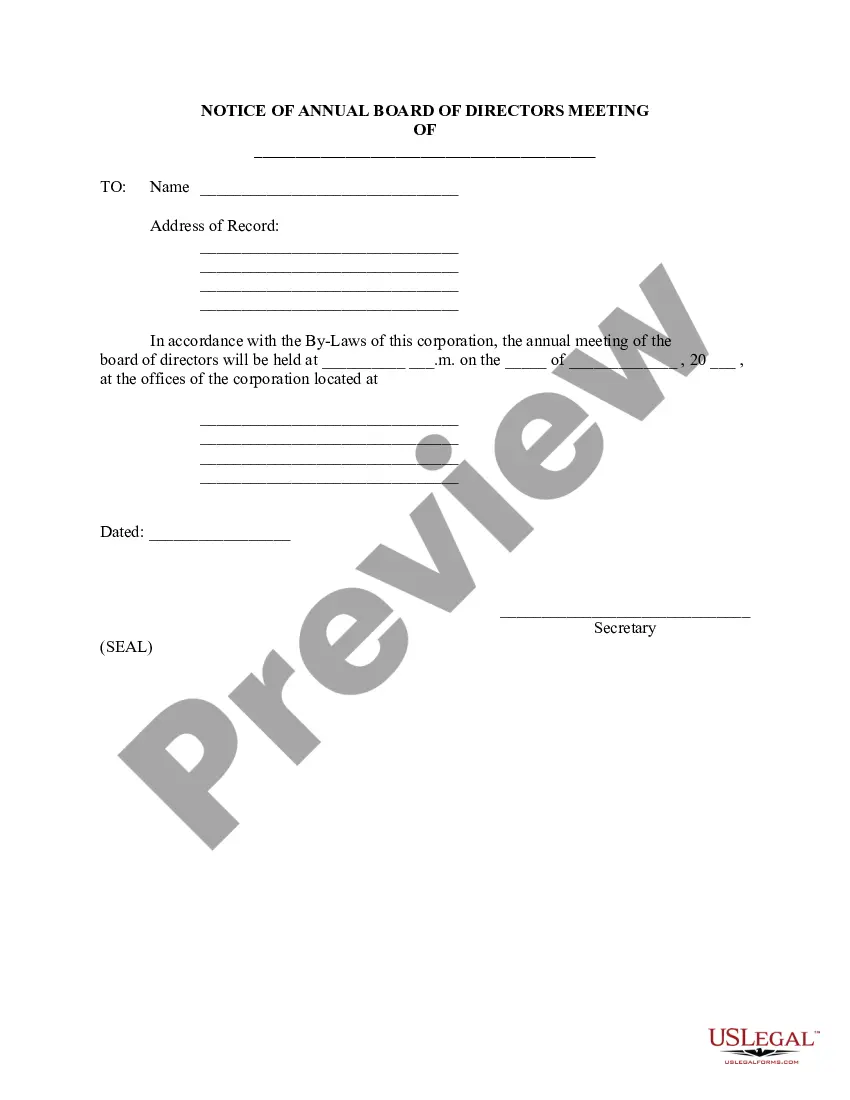
The _________________ Name of Governing Body of the _________________ Name of Public Entity (hereafter referred to as "governing body") will be holding a __________ regular or special meeting on _____________ Date at ________ Time.

