Board Meeting For Directors In Salt Lake
Description
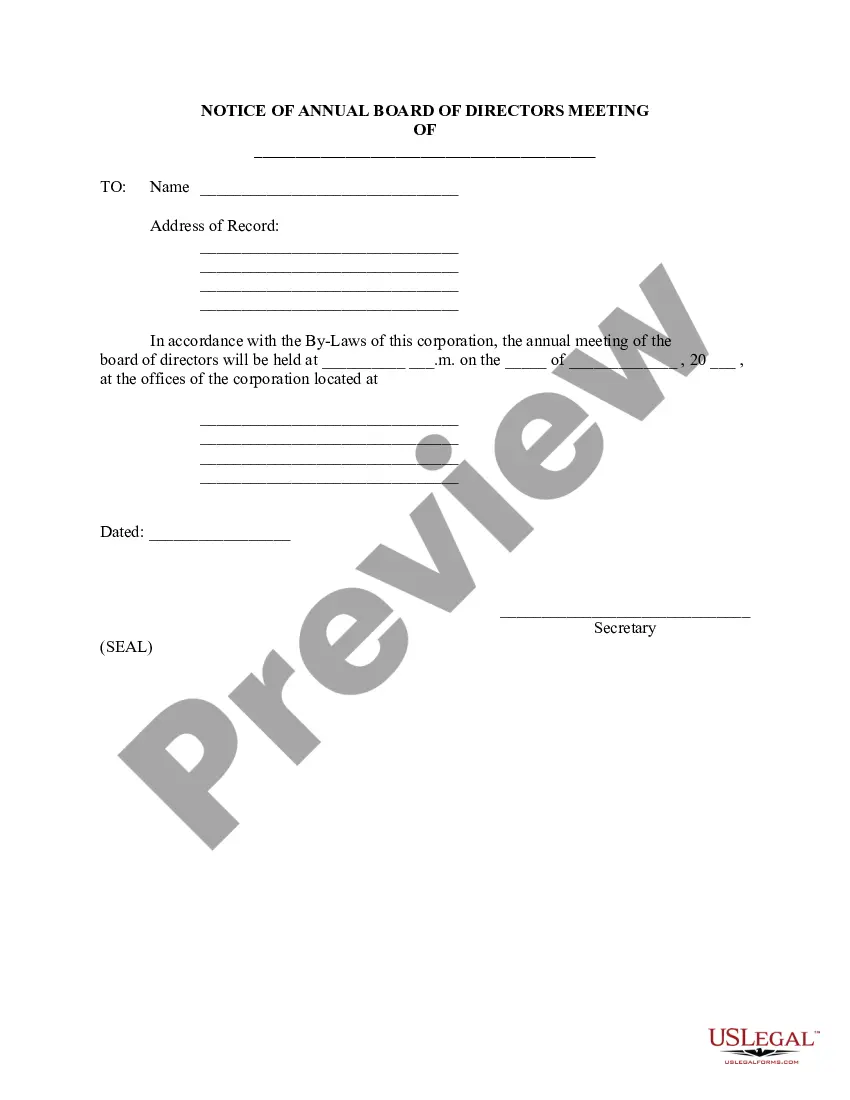


Get your form ready online
Our built-in tools help you complete, sign, share, and store your documents in one place.
Make edits, fill in missing information, and update formatting in US Legal Forms—just like you would in MS Word.
Download a copy, print it, send it by email, or mail it via USPS—whatever works best for your next step.
Sign and collect signatures with our SignNow integration. Send to multiple recipients, set reminders, and more. Go Premium to unlock E-Sign.
If this form requires notarization, complete it online through a secure video call—no need to meet a notary in person or wait for an appointment.
We protect your documents and personal data by following strict security and privacy standards.

Make edits, fill in missing information, and update formatting in US Legal Forms—just like you would in MS Word.

Download a copy, print it, send it by email, or mail it via USPS—whatever works best for your next step.

Sign and collect signatures with our SignNow integration. Send to multiple recipients, set reminders, and more. Go Premium to unlock E-Sign.

If this form requires notarization, complete it online through a secure video call—no need to meet a notary in person or wait for an appointment.

We protect your documents and personal data by following strict security and privacy standards.
Looking for another form?
Form popularity
FAQ
These meetings ensure that the directors of the company fulfill their legal duties to the company and its shareholders or stakeholders. The importance of board meetings lies in their role in guiding the company's direction, ensuring financial accountability, and maintaining ethical governance.
The job of a board of directors is to provide oversight for the company, which means they need to be regularly updated on the company's status and recent developments. For this reason, most boards meet at least once a quarter.
In such cases, the vacation of the director's office may not be enforceable. In conclusion, it is important for directors to attend Board meetings, as failure to attend all meetings for 12 months will result in the automatic vacating of their office.
A Board Meeting is a formal meeting of the board of directors of an organization and any invited guests, held at definite intervals and as needed to review performance, consider policy issues, address major problems and perform the legal business of the board.
Non-profit organizations typically have board meetings that last between one and two hours when held monthly, and up to eight hours for quarterly meetings.
Board Meetings shall be held at the head office and during the office hours of the Company or at any other appropriate place and time convenient for the Directors to attend. The subject matters of Board Meetings shall be decided by the Chairman of the Board of Directors.
Board meetings provide executives and directors the opportunity to discuss company performance, plans and progress. Having a specific agenda can ensure that the board can discuss needed topics and identify actions that different team members might complete.
Connect the Board to the Mission Right from the Start. Share Executive Director Reports in Advance. Avoid Committee Reports That Rehash Past Meetings. Allow Plenty of Time for Strategic Discussions. Executive Sessions are a Great Way to Tackle the “Big” Things. What Happens Between Board Meetings Matters.
Work sessions are intended to provide opportunities for council/board members to study difficult issues, gather and analyze information, and clarify problems. The public must be given an opportunity to address the council/board.
Board meetings typically focus on the internal workings and decisions of a company, which is why they will involve the entire board of directors. Key agenda items relating to the business will often be discussed which is why this type of meeting will often require board meeting minutes to be kept.
