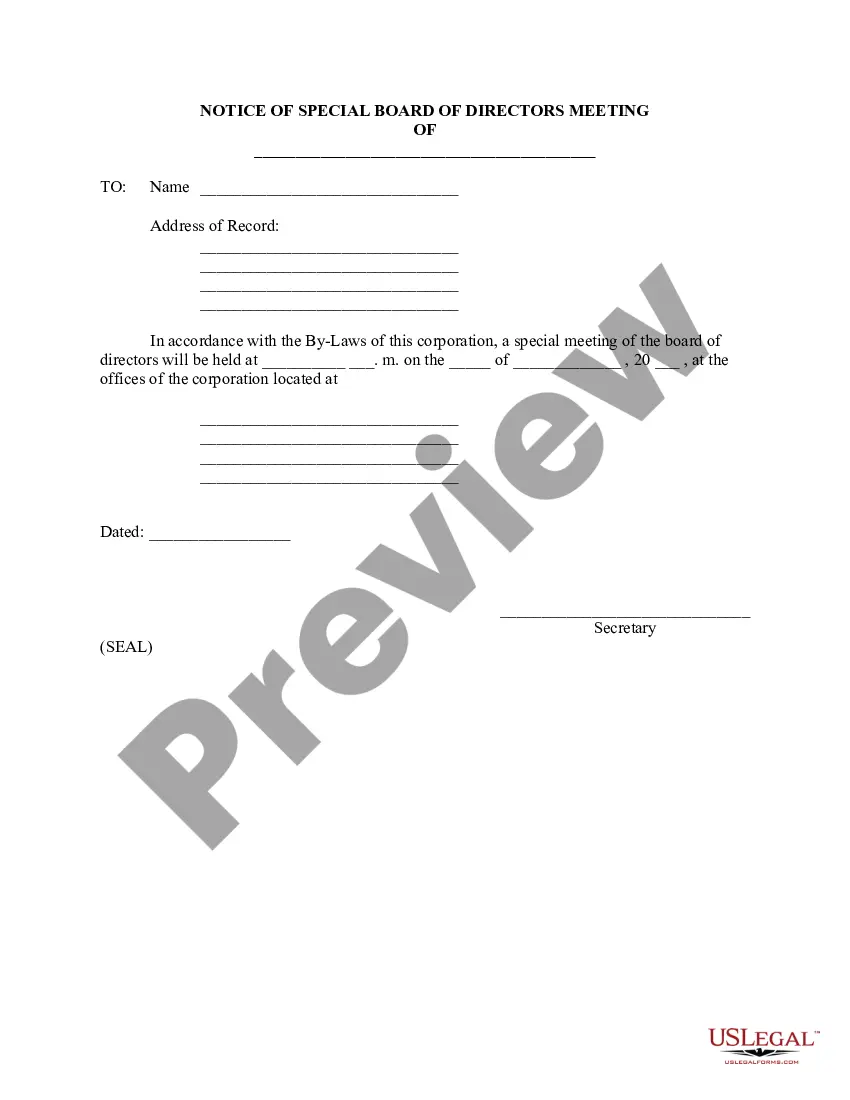
Special General Body Meeting For Redevelopment In North Carolina
Description
Get your form ready online
Our built-in tools help you complete, sign, share, and store your documents in one place.
Make edits, fill in missing information, and update formatting in US Legal Forms—just like you would in MS Word.
Download a copy, print it, send it by email, or mail it via USPS—whatever works best for your next step.
Sign and collect signatures with our SignNow integration. Send to multiple recipients, set reminders, and more. Go Premium to unlock E-Sign.
If this form requires notarization, complete it online through a secure video call—no need to meet a notary in person or wait for an appointment.
We protect your documents and personal data by following strict security and privacy standards.

Make edits, fill in missing information, and update formatting in US Legal Forms—just like you would in MS Word.

Download a copy, print it, send it by email, or mail it via USPS—whatever works best for your next step.

Sign and collect signatures with our SignNow integration. Send to multiple recipients, set reminders, and more. Go Premium to unlock E-Sign.

If this form requires notarization, complete it online through a secure video call—no need to meet a notary in person or wait for an appointment.

We protect your documents and personal data by following strict security and privacy standards.
Looking for another form?
Form popularity
FAQ
The terms “Annual General Meeting” and “annual meeting” are frequently used interchangeably, though they can have distinct meanings. An AGM specifically refers to a formal meeting held by organizations, such as corporations or nonprofits, where key issues are discussed.
A General Body Meeting (GBM) is a formal gathering of the members of an organization or society, typically held annually. It's a fundamental democratic process where members discuss and make key decisions about the organization's functioning and future.
General meetings are formal meetings of a company's shareholders or guarantors (aka its members). These meetings are optional for private companies but compulsory for public companies.
The policy of the state of North Carolina is to allow public access to the business of government. We help by acting as a liaison between public officials and the public. Open government laws are known as “sunshine laws” because they help shed light on the government's work.
The General Meeting is the Company's highest decision-making body, at which the shareholders exercise their voting rights. At the General Meeting decisions are taken regarding matters such as the annual accounts, dividend, election of the Board of Directors and the auditor as well as their remuneration.
A general body meeting can be called by the managing committee of the society or by a requisition signed by not less than one-fourth of the total number of members of the society.
Which agencies are subject to the Sunshine Act? The Act applies only to: (1) federal agencies headed by collegial bodies—i.e., boards, councils, and commissions—a majority of whose members are presidentially appointed and Senate confirmed; and (2) any subdivision of such an agency authorized to act on its behalf.
The Sunshine Act is a federal law that requires manufacturers of covered drugs, devices, biologics or medical supplies to collect detailed information about payments and other "transfers of value" worth more than $10 from manufacturers to physicians and teaching hospitals.
The policy of the state of North Carolina is to allow public access to the business of government. We help by acting as a liaison between public officials and the public. Open government laws are known as “sunshine laws” because they help shed light on the government's work.