Board Meeting For Directors In Chicago
Description
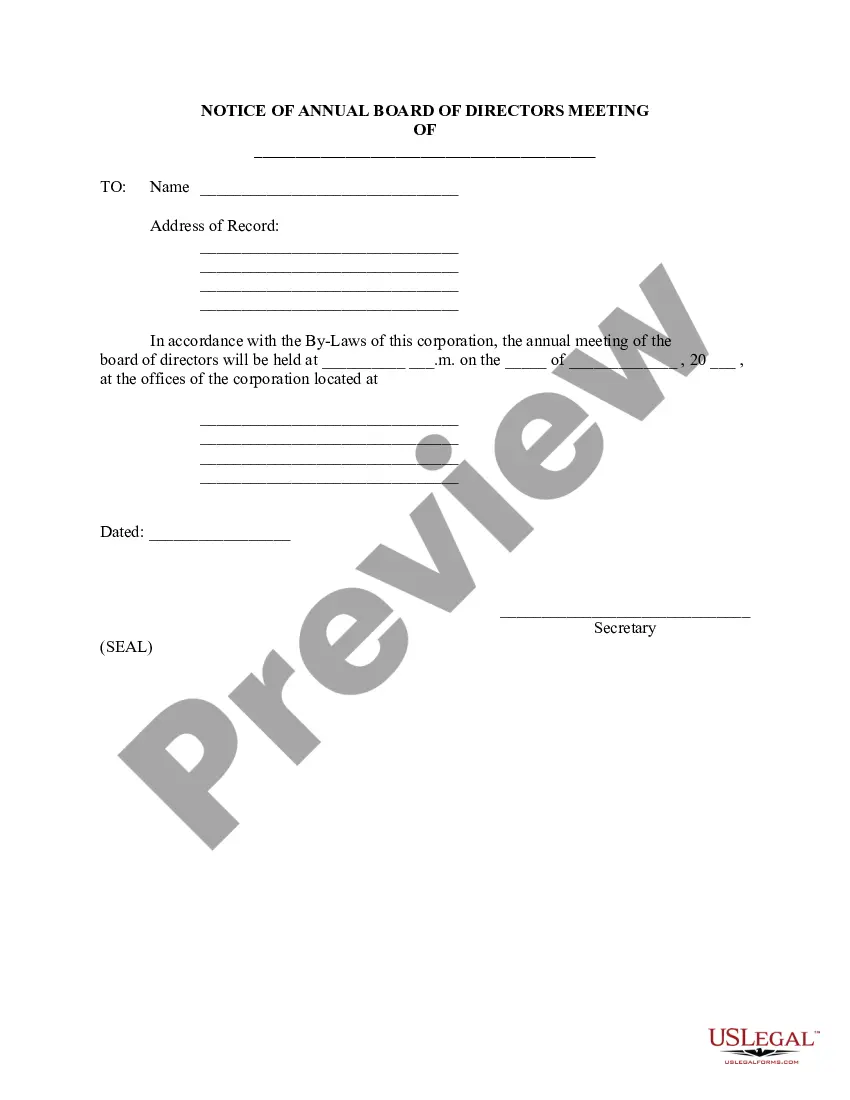


Get your form ready online
Our built-in tools help you complete, sign, share, and store your documents in one place.
Make edits, fill in missing information, and update formatting in US Legal Forms—just like you would in MS Word.
Download a copy, print it, send it by email, or mail it via USPS—whatever works best for your next step.
Sign and collect signatures with our SignNow integration. Send to multiple recipients, set reminders, and more. Go Premium to unlock E-Sign.
If this form requires notarization, complete it online through a secure video call—no need to meet a notary in person or wait for an appointment.
We protect your documents and personal data by following strict security and privacy standards.

Make edits, fill in missing information, and update formatting in US Legal Forms—just like you would in MS Word.

Download a copy, print it, send it by email, or mail it via USPS—whatever works best for your next step.

Sign and collect signatures with our SignNow integration. Send to multiple recipients, set reminders, and more. Go Premium to unlock E-Sign.

If this form requires notarization, complete it online through a secure video call—no need to meet a notary in person or wait for an appointment.

We protect your documents and personal data by following strict security and privacy standards.
Looking for another form?

Form popularity
FAQ
When addressing the board, always use the title Mr. Chairman” or Madam Chairwoman.” If you are unsure of the proper title, Board of Directors” is always acceptable. When speaking to the board, always refer to them as sir” or ma'am.”
Your governing documents will usually tell you who qualifies as a member. For a majority of HOAs, members are those who own lots or units within the association. This means that only those whose names appear on the unit or property title can attend.
The Board members and the HOA management company should ensure the meeting runs smoothly, such as setting an agenda, preparing materials, sending out notices, making sure the meeting is legal, setting up the meeting space, having a quorum, and appointing a meeting chair.
Most board meeting agendas follow a classic meeting structure: Calling meeting to order – ensure you have quorum. Approve the agenda and prior board meeting minutes. Executive and committee reports – allow 25% of time here for key topic discussion. Old/new/other business. Close the meeting and adjourn.
As per Robert's Rules, a second must follow a motion. If no one seconds a motion, the motion effectively dies. The chair should not permit any side discussions to take place to avoid straying from the topic at hand. Following the discussion, the chair can then call for a vote.
Can the board make decisions in an HOA without consulting homeowners? In a word, yes. There are certain decisions the board can make unilaterally. On the flip side, there are also some decisions that must go through a membership vote.
Starting the Meeting: ``Good (morning/afternoon), everyone. Thank you for joining us today. I'd like to welcome you to this meeting. Our agenda includes (briefly outline the agenda items). Let's begin with our first topic.''
Annual Meeting Attendance of 20% of the voting power constitutes a quorum. Notice of association meetings must be given at least 10 days before a meeting but no more than 30 days, and at least 48 hours' notice must be given for meetings of the board of directors.
There's no minimum number of board meetings prescribed by law, but directors should meet often enough to make sure that they are meeting their obligations and statutory duties as directors.
After all, the board of directors is meant to be responsible for high-level strategy, not for day-to-day operations. In general, nonprofit board meeting best practices establish that quarterly meetings are a happy medium for most boards.
