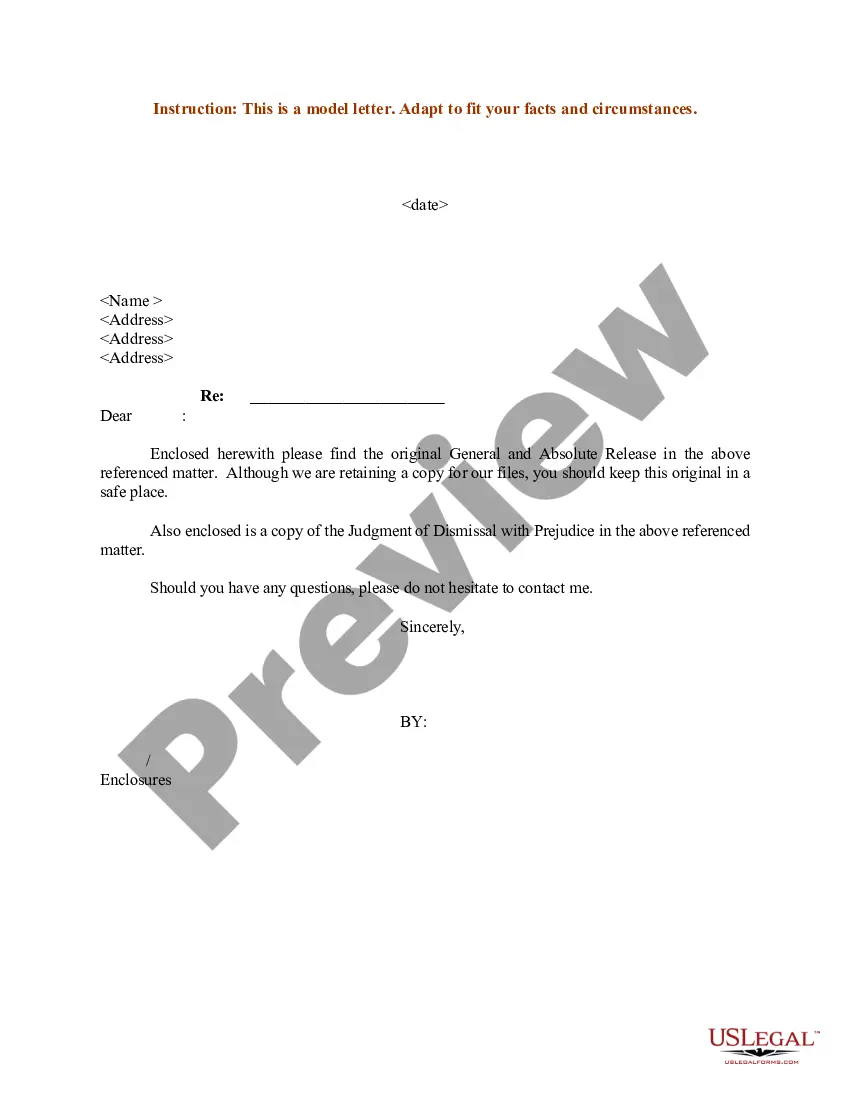
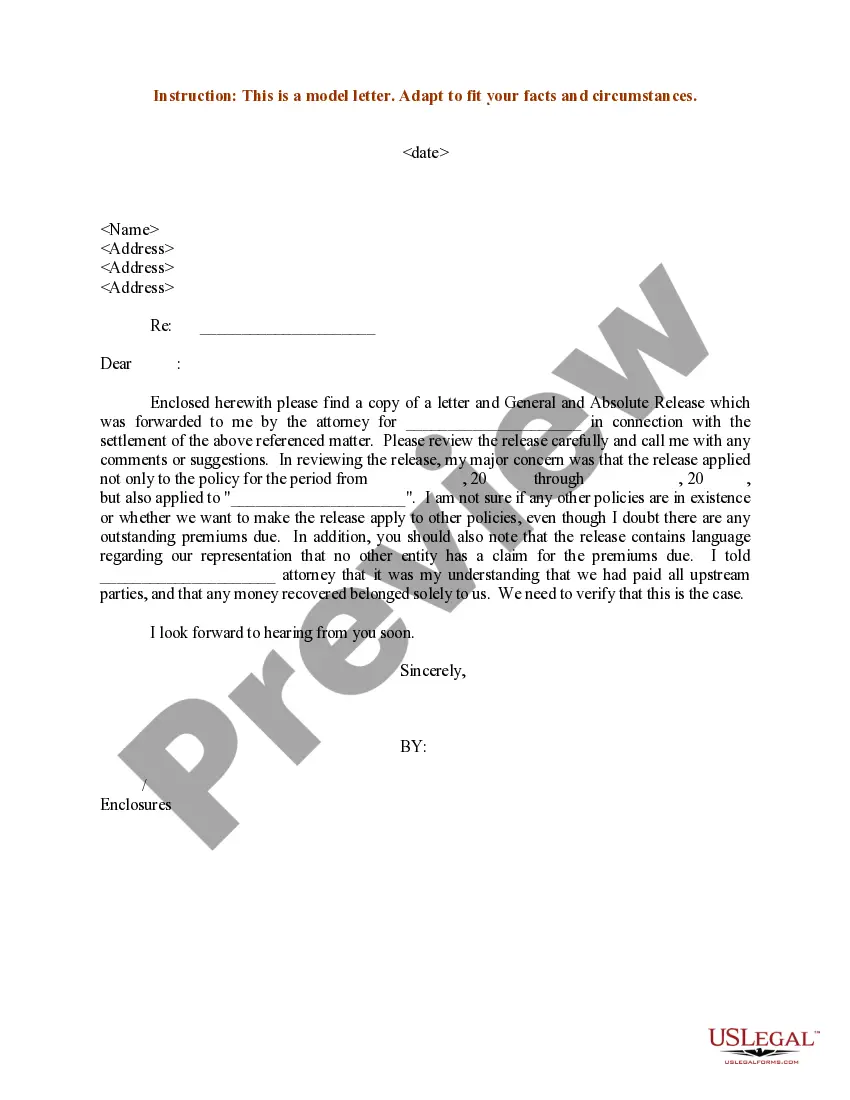
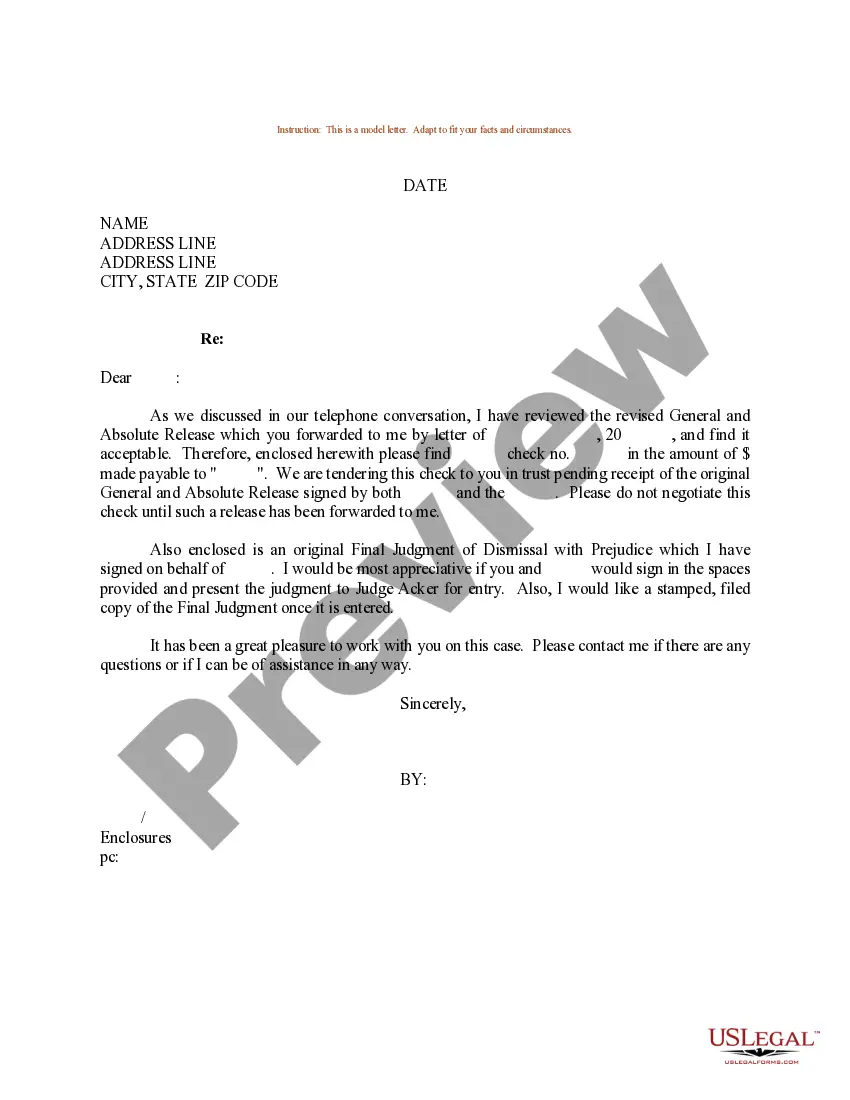
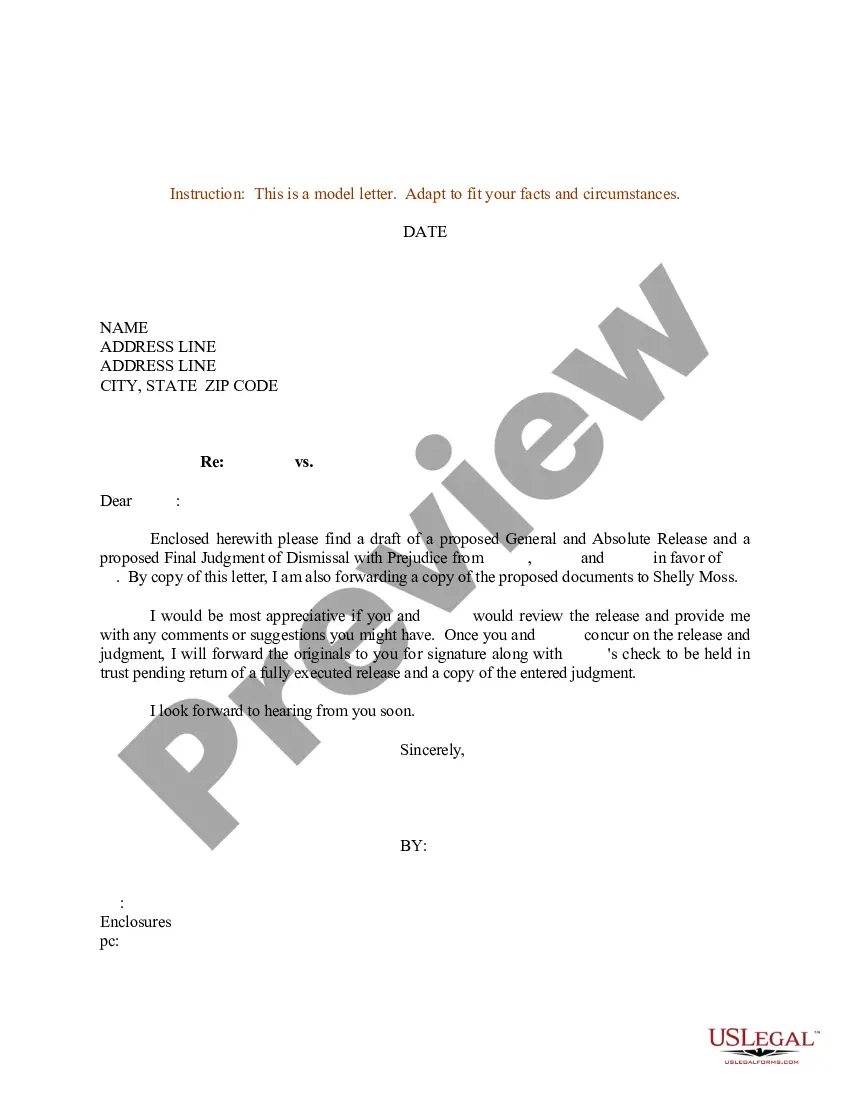
Release With Prejudice Without Prejudice In Texas
Description
Get your form ready online
Our built-in tools help you complete, sign, share, and store your documents in one place.
Make edits, fill in missing information, and update formatting in US Legal Forms—just like you would in MS Word.
Download a copy, print it, send it by email, or mail it via USPS—whatever works best for your next step.
Sign and collect signatures with our SignNow integration. Send to multiple recipients, set reminders, and more. Go Premium to unlock E-Sign.
If this form requires notarization, complete it online through a secure video call—no need to meet a notary in person or wait for an appointment.
We protect your documents and personal data by following strict security and privacy standards.

Make edits, fill in missing information, and update formatting in US Legal Forms—just like you would in MS Word.

Download a copy, print it, send it by email, or mail it via USPS—whatever works best for your next step.

Sign and collect signatures with our SignNow integration. Send to multiple recipients, set reminders, and more. Go Premium to unlock E-Sign.

If this form requires notarization, complete it online through a secure video call—no need to meet a notary in person or wait for an appointment.

We protect your documents and personal data by following strict security and privacy standards.
Looking for another form?




Form popularity
FAQ
The Court reached this holding based upon the history of Rule 60(b), which derived from a California Rule of Civil Procedure. As the Supreme Court noted, California case law interpreting California law, held that prejudice was not required to reopen a previously dismissed case.
A case dismissed with prejudice is over and done with, once and for all, and can't be brought back to court. A case dismissed without prejudice means the opposite. It's not dismissed forever. The person whose case it is can try again.
Understanding Case Dismissal Without Prejudice in California Dismissal without prejudice is a legal term indicating that the case has been dismissed but can be reopened at some point. Cases may be dismissed without prejudice at a prosecutor's request, or they may be dismissed at the judge's discretion.
A judge may dismiss a case without prejudice in order to allow for errors in the case presented to be addressed before it is brought back to court. A judge will dismiss a case with prejudice if he or she finds reason why the case should not move forward and should be permanently closed.
How long can a case be dismissed without prejudice? A case can be dismissed without prejudice for as long as it takes the plaintiff to file a new case for the same claim. If the statute of limitations expires before the plaintiff files a new case, they might not have legal grounds to open up the new case.
Dismissal without prejudice means that the judge dismissed the plaintiff's or prosecutor's case without damaging their right to have their matter heard in court later. A prosecutor may ask to withdraw the case against a person to have more time to make a case stronger, find more evidence or question other witnesses.
That bright line or “two-dismissal” rule is: “If a plaintiff has once dismissed an action, a dismissal by notice of a second action based on or including the same claim, amounts to an adjudication on the merits.
If the case is dismissed without prejudice, prosecutors will have another two years to refile before the statute of limitations expires. You can contact our California criminal defense lawyers for a case review.
In sum, a dismissal with prejudice means that a judge's order is the final judgment in the case, and the prosecutor cannot refile charges. In a dismissal without prejudice, the prosecutor can, in the future, either refile the charges or file new charges based on the same alleged criminal incident.
A motion to dismiss must state that it is made pursuant to this rule, must identify each cause of action to which it is addressed, and must state specifically the reasons the cause of action has no basis in law, no basis in fact, or both. 91a.

