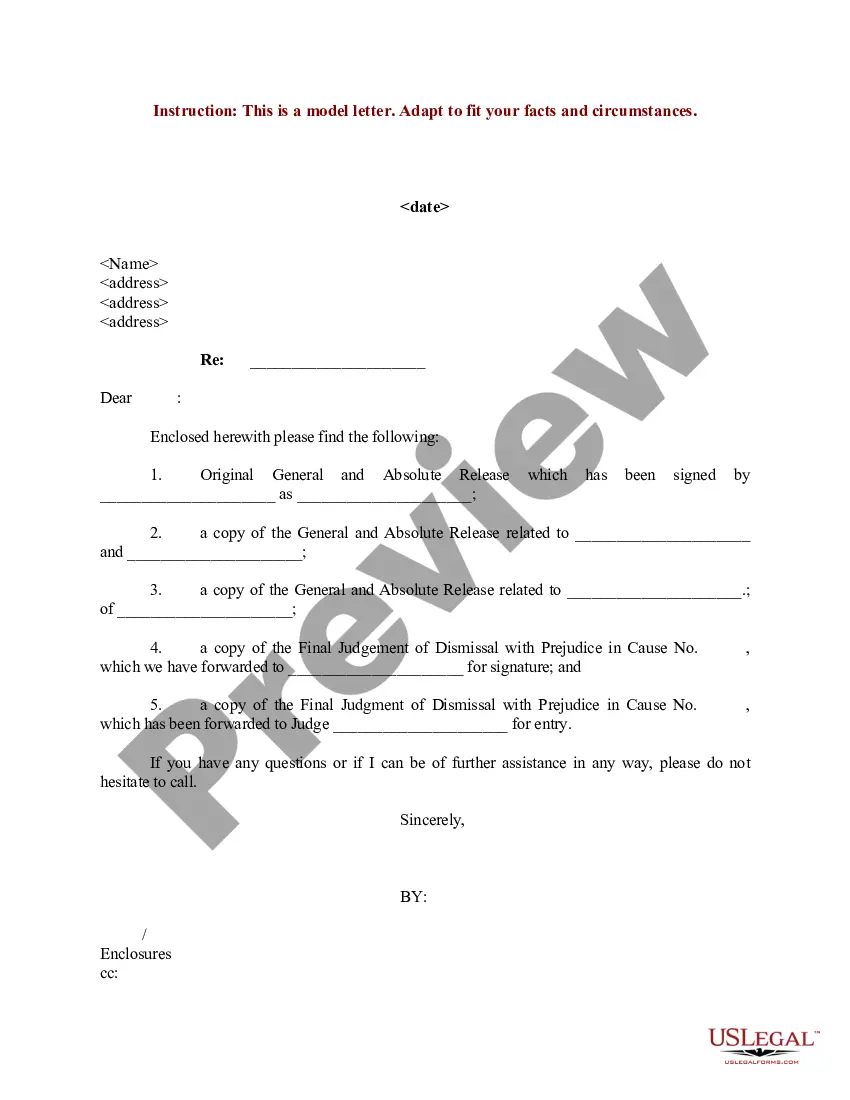
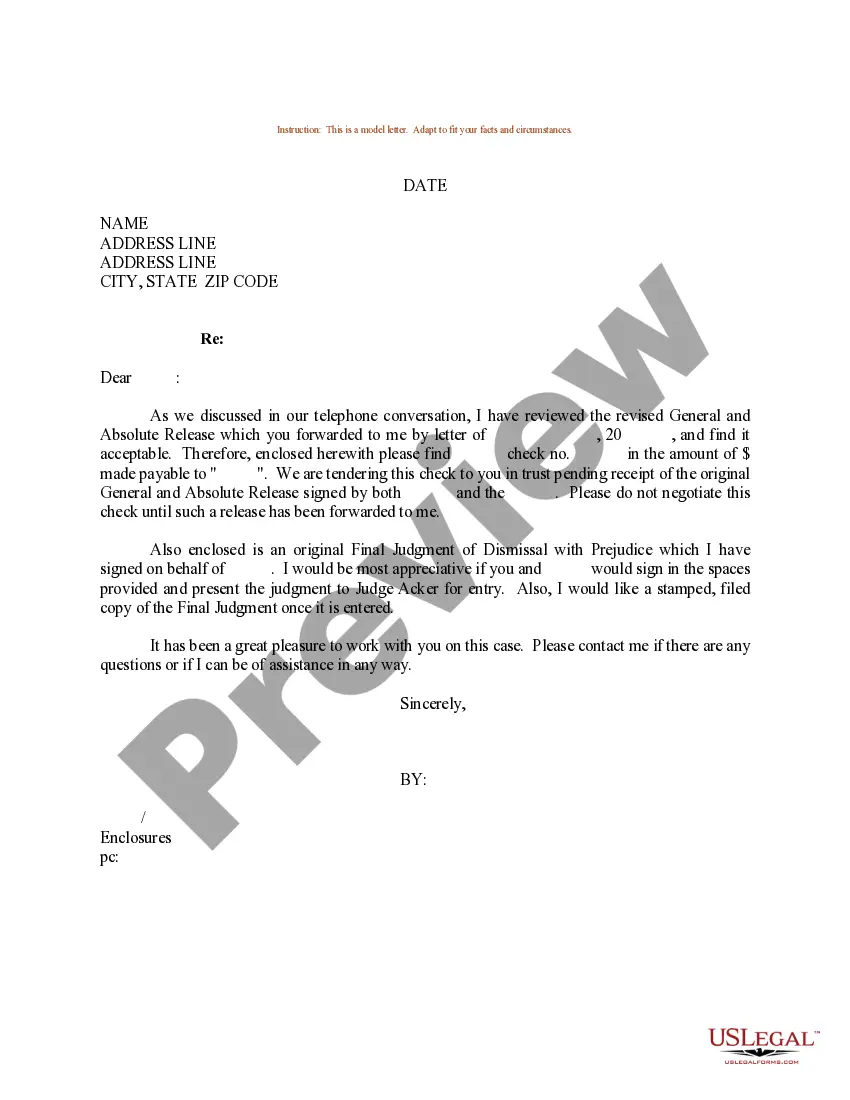
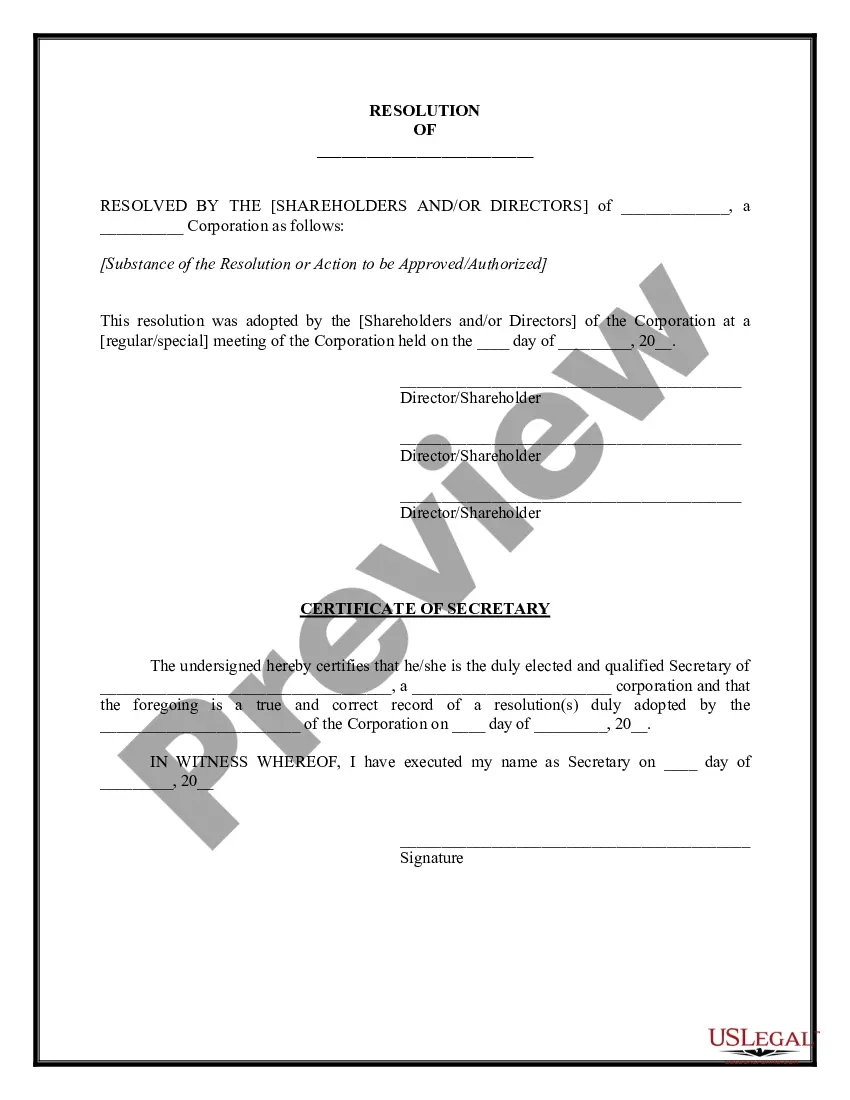
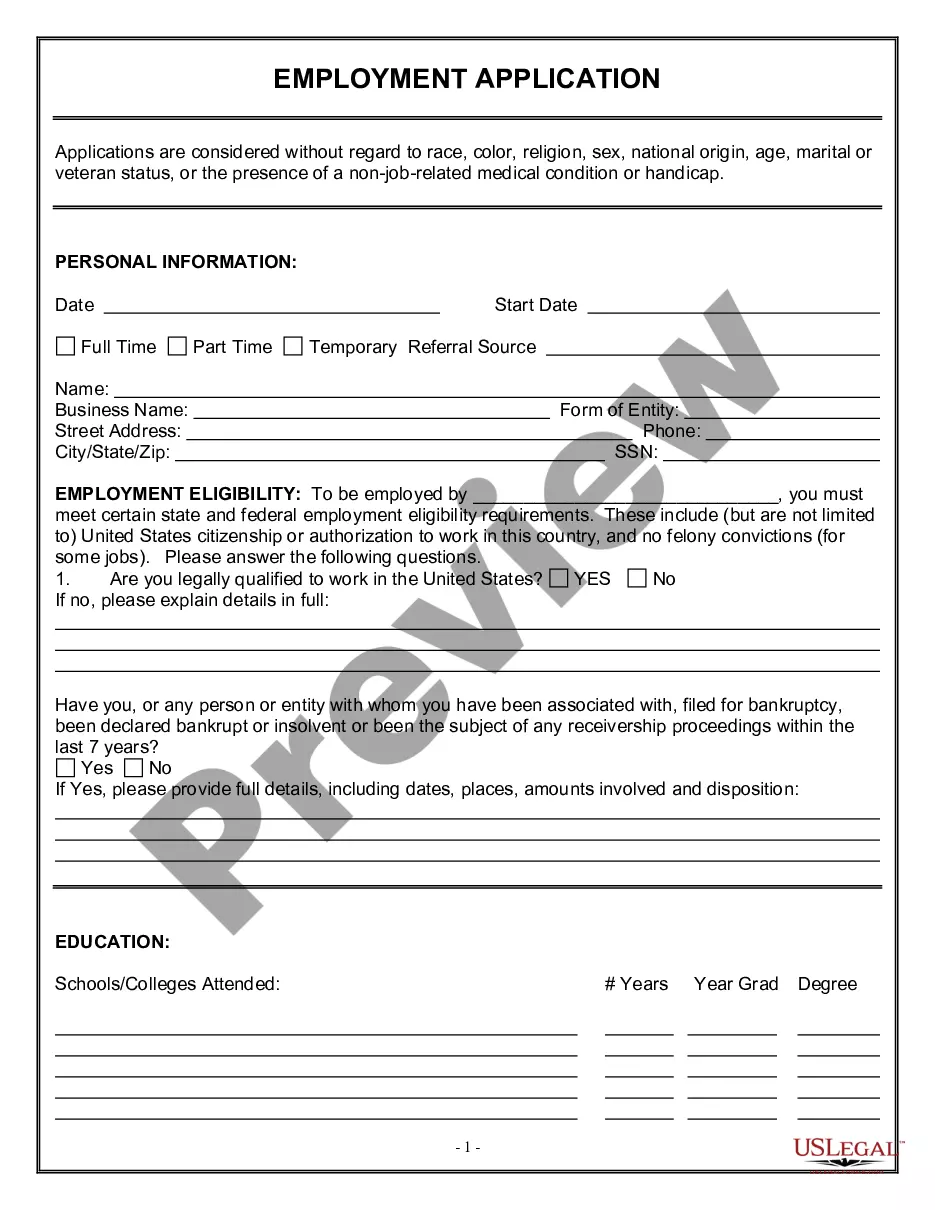
Release With Prejudice For Employees In Texas
Description

Get your form ready online
Our built-in tools help you complete, sign, share, and store your documents in one place.
Make edits, fill in missing information, and update formatting in US Legal Forms—just like you would in MS Word.
Download a copy, print it, send it by email, or mail it via USPS—whatever works best for your next step.
Sign and collect signatures with our SignNow integration. Send to multiple recipients, set reminders, and more. Go Premium to unlock E-Sign.
If this form requires notarization, complete it online through a secure video call—no need to meet a notary in person or wait for an appointment.
We protect your documents and personal data by following strict security and privacy standards.

Make edits, fill in missing information, and update formatting in US Legal Forms—just like you would in MS Word.

Download a copy, print it, send it by email, or mail it via USPS—whatever works best for your next step.

Sign and collect signatures with our SignNow integration. Send to multiple recipients, set reminders, and more. Go Premium to unlock E-Sign.

If this form requires notarization, complete it online through a secure video call—no need to meet a notary in person or wait for an appointment.

We protect your documents and personal data by following strict security and privacy standards.
Looking for another form?



Form popularity
FAQ
In the formal legal world, a court case that is dismissed with prejudice means that it is dismissed permanently. A case dismissed with prejudice is over and done with, once and for all, and can't be brought back to court.
In sum, a dismissal with prejudice means that a judge's order is the final judgment in the case, and the prosecutor cannot refile charges. In a dismissal without prejudice, the prosecutor can, in the future, either refile the charges or file new charges based on the same alleged criminal incident.
Understanding Case Dismissal Without Prejudice in California Dismissal without prejudice is a legal term indicating that the case has been dismissed but can be reopened at some point. Cases may be dismissed without prejudice at a prosecutor's request, or they may be dismissed at the judge's discretion.
Dismissal Without Prejudice: Allows the plaintiff to refile the case in the future, assuming no statute of limitations has elapsed.
Filing a Complaint The Texas Workforce Commission Civil Rights Division (TWCCRD) Employment Discrimination Inquiry Submission System (EDISS) is the method to submit your employment discrimination complaint. It provides an ample amount of space to describe how you have been discriminated against.
If it has been found to have been on a specified ground, then unfairness will be presumed. If on an unspecified ground, unfairness will have to be established by the complainant. The test of unfairness focuses primarily on the impact of the discrimination on the complainant and others in his or her situation”.
There are certain benefits when you decide to file a discrimination lawsuit. It will not only benefit you, but your co-workers as well because it will likely make your workplace safer by creating a better environment for all. When you sue, you can also obtain a legal remedy for the discrimination you have faced.
An investigation of a formal complaint of discrimination is an official inquiry into claims raised in an EEO complaint. EEO investigations may include a variety of fact-finding methods such as interviews, a fact-finding conference, requests for information, interrogatories, and/or affidavits.
Filing a Complaint The Texas Workforce Commission Civil Rights Division (TWCCRD) Employment Discrimination Inquiry Submission System (EDISS) is the method to submit your employment discrimination complaint. It provides an ample amount of space to describe how you have been discriminated against.
Direct evidence is most helpful to a Texas workplace discrimination case. Examples of direct evidence may include: Written employment policies. Communications or witness testimony.