Release With Prejudice Without A Lawyer In Nassau
Description
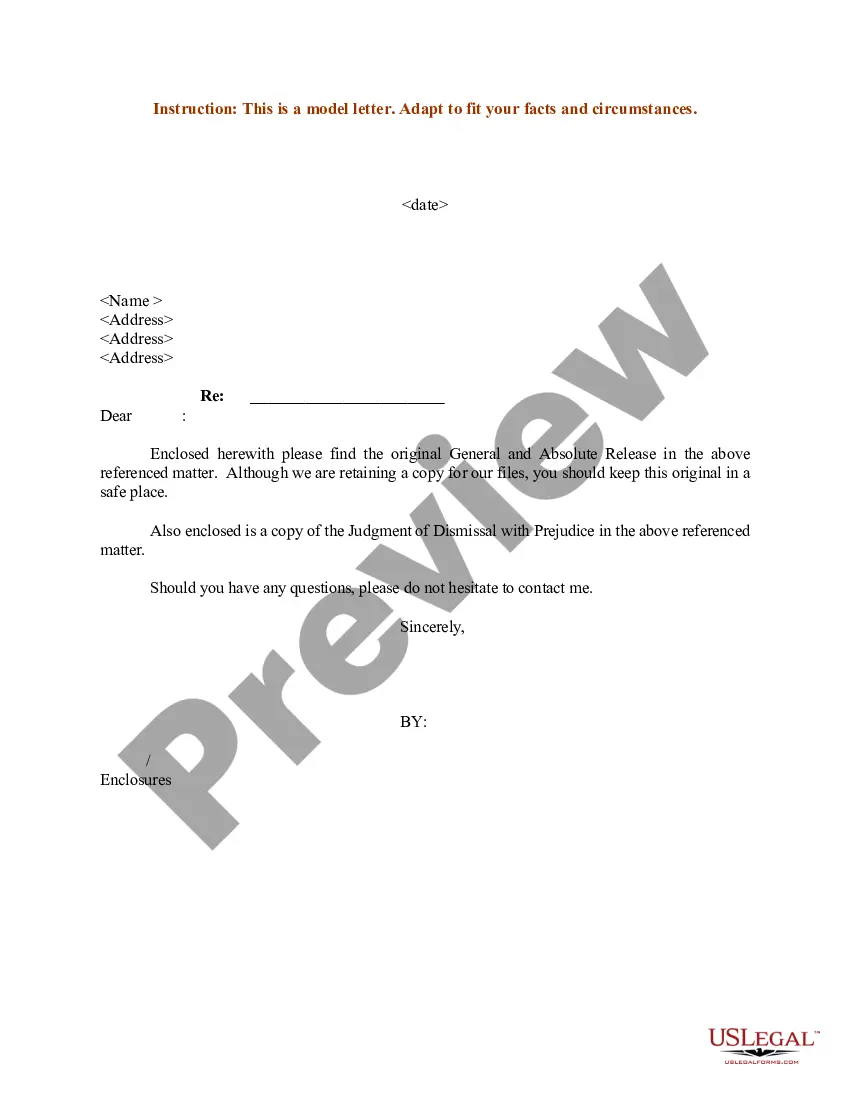
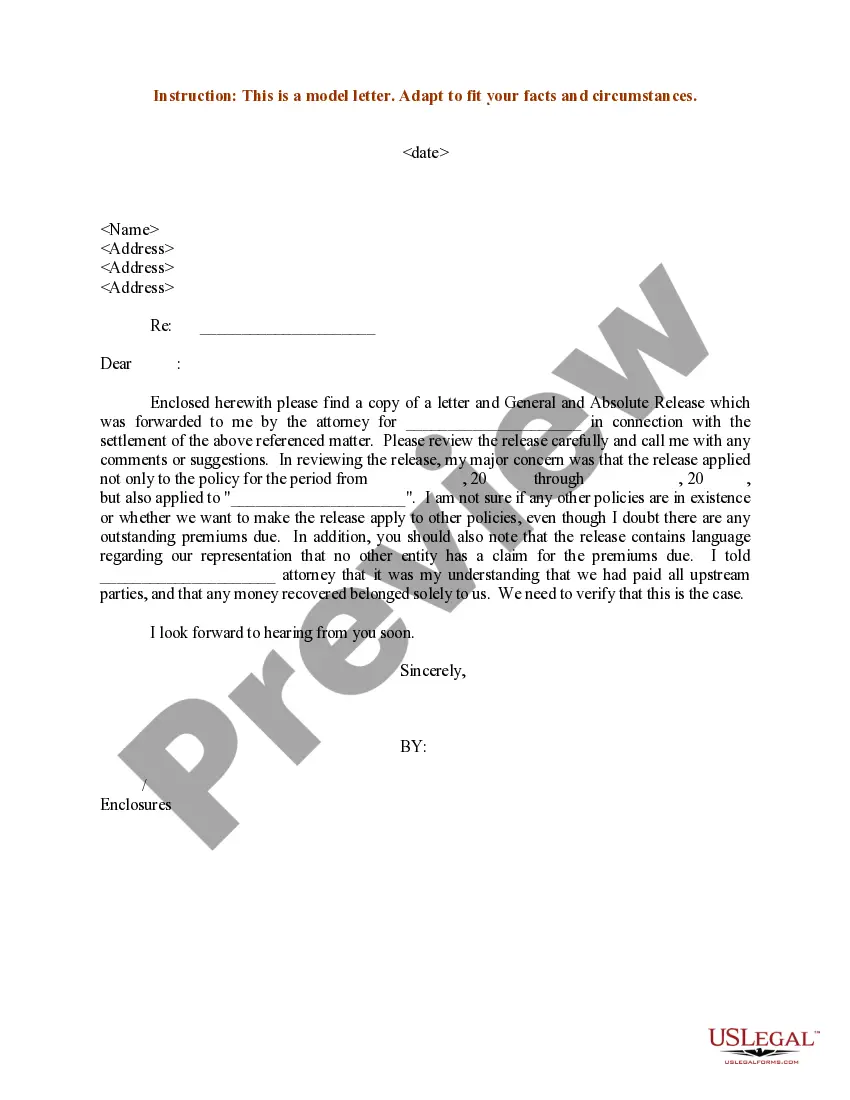
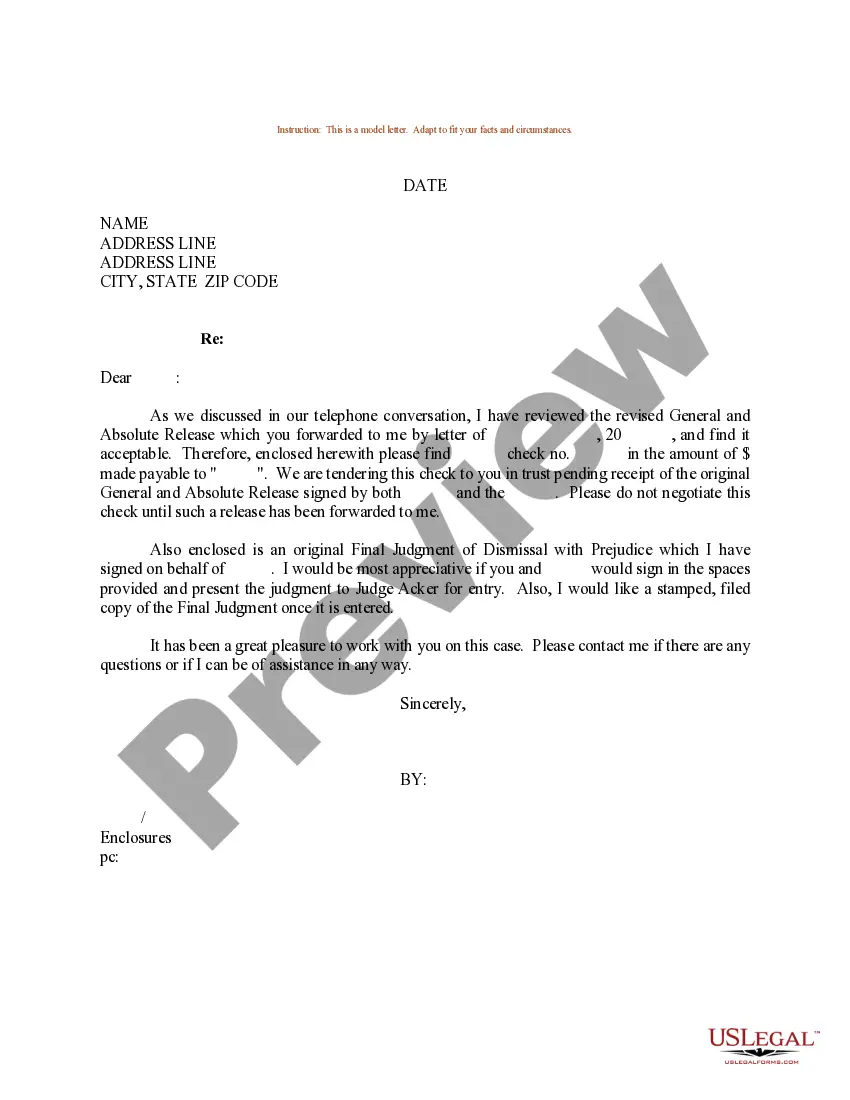
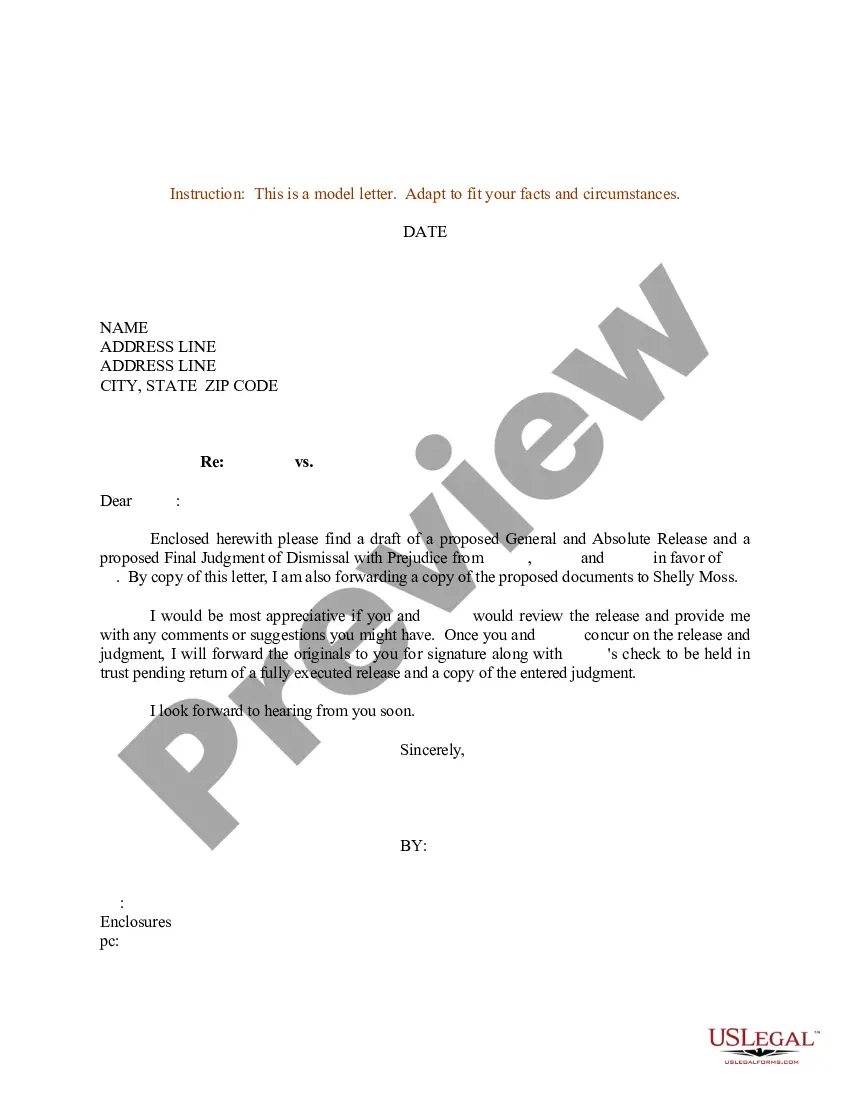
Get your form ready online
Our built-in tools help you complete, sign, share, and store your documents in one place.
Make edits, fill in missing information, and update formatting in US Legal Forms—just like you would in MS Word.
Download a copy, print it, send it by email, or mail it via USPS—whatever works best for your next step.
Sign and collect signatures with our SignNow integration. Send to multiple recipients, set reminders, and more. Go Premium to unlock E-Sign.
If this form requires notarization, complete it online through a secure video call—no need to meet a notary in person or wait for an appointment.
We protect your documents and personal data by following strict security and privacy standards.

Make edits, fill in missing information, and update formatting in US Legal Forms—just like you would in MS Word.

Download a copy, print it, send it by email, or mail it via USPS—whatever works best for your next step.

Sign and collect signatures with our SignNow integration. Send to multiple recipients, set reminders, and more. Go Premium to unlock E-Sign.

If this form requires notarization, complete it online through a secure video call—no need to meet a notary in person or wait for an appointment.

We protect your documents and personal data by following strict security and privacy standards.
Looking for another form?








Form popularity
FAQ
Alternative Methods Of Service This couldn't be farther from the truth. In almost all cases, there is a way to proceed with actions even if personal service never occurs. Most states require that several attempts be made to serve a defendant in person before substituted service can be used.
If you want to file a motion, the process is generally something like this: You write your motion. You file your motion with the court clerk. The court clerk inserts the date and time your motion will be heard by the judge. You “serve” (mail) your motion to the other side.
A person serving papers must be 18 years of age or older and must not be a party to the case (CPLR 2103a). Papers may be served by a process server, friend or relative of a party so long as he or she is not a party to the case.
Conclusion. In New York, process servers can only properly serve documents on an intended recipient through their door attendant in a few circumstances. As service of process marks the important procedural beginning to most litigations, it is taken seriously and scrutinized quite carefully.
If they're not answering the door or won't identify themselves, then most process servers will come back again later, sometimes multiple times, or will attempt service at the person's workplace (where someone else can identify them).
A person serving papers must be 18 years of age or older and must not be a party to the case (CPLR 2103a). Papers may be served by a process server, friend or relative of a party so long as he or she is not a party to the case.
If the court grants these motions to dismiss, the case is over, but the plaintiff can correct the problem and start the case again. This is called a dismissal without prejudice. Other motions to dismiss ask for dismissal with prejudice. This means that the case can't be started again.
Seven Tips When Representing Yourself In Court Make a good impression. If you dress nicely, it tells the judge that you respect the courtroom and care about your case. Be respectful. Know what to ask. Arrive early. Tell your story. Come prepared. Use a lawyer if you need help.
Steps to File a Motion to Dismiss Review the Complaint Thoroughly. Carefully read the plaintiff's complaint to identify any legal deficiencies. Research Relevant Laws and Precedents. Draft the Motion. Include a Conclusion. File the Motion with the Court.

