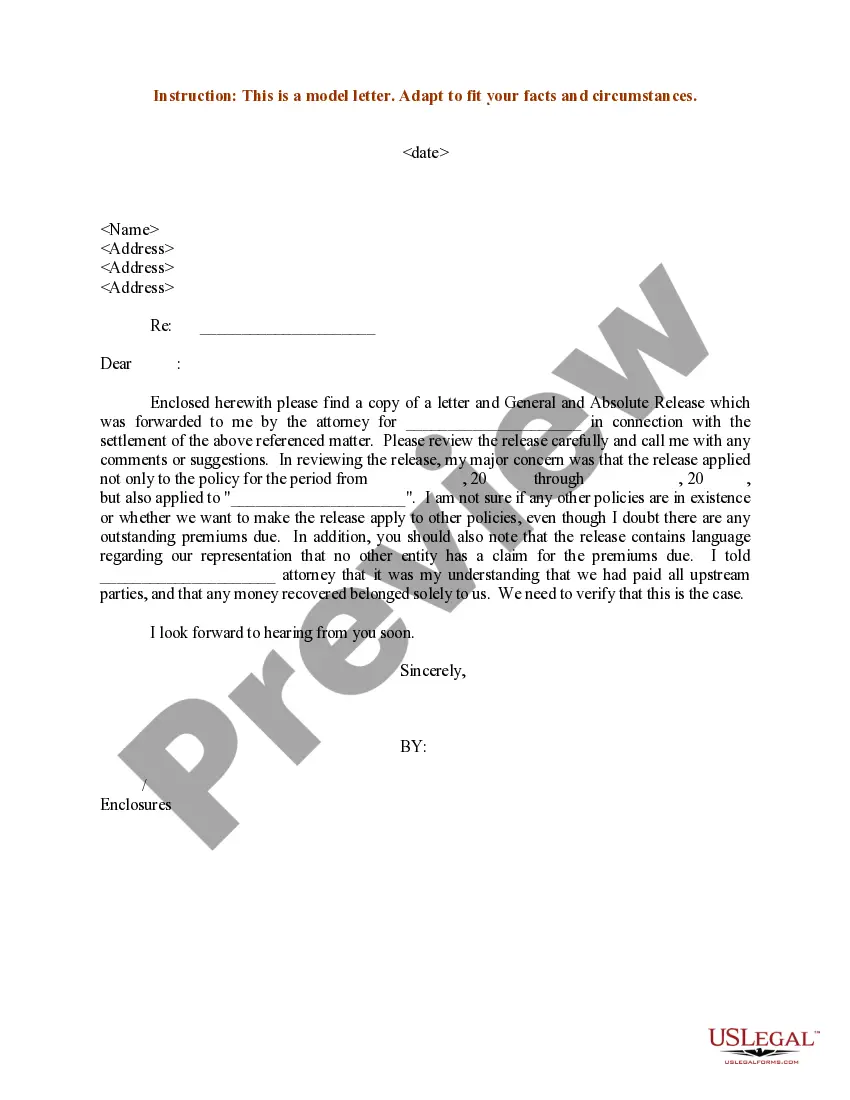
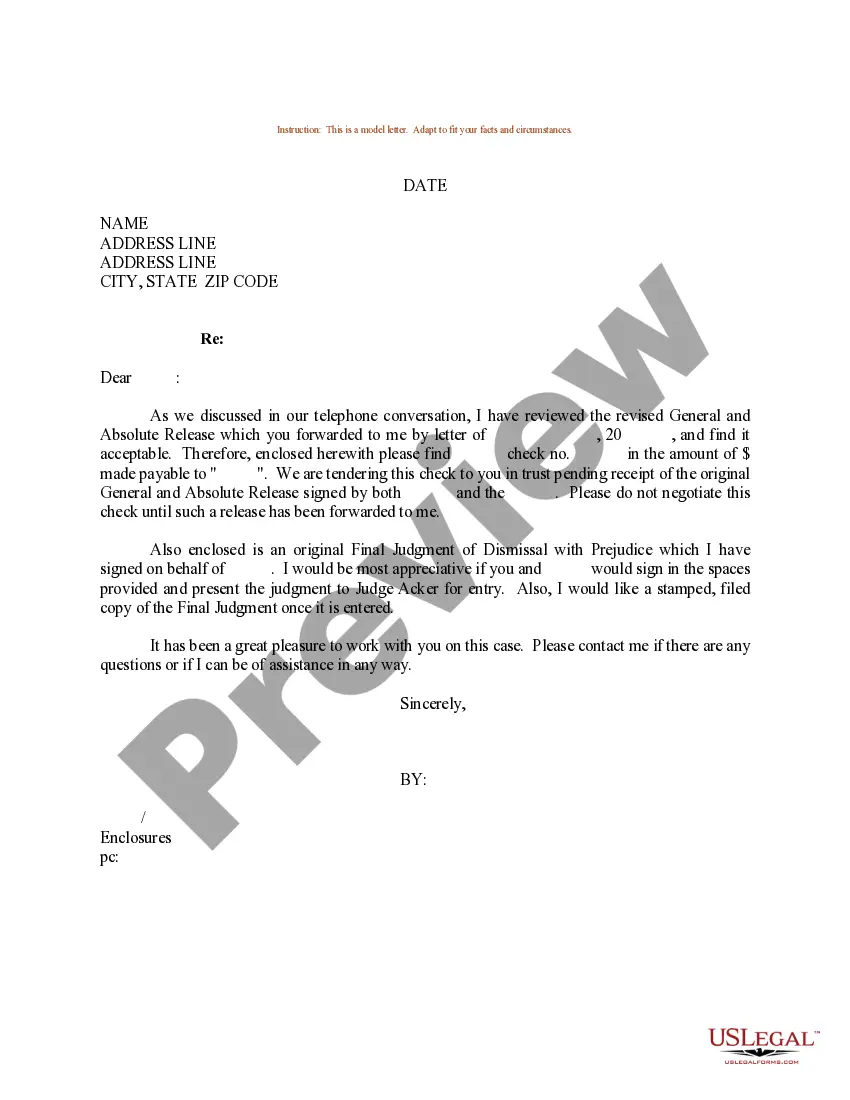
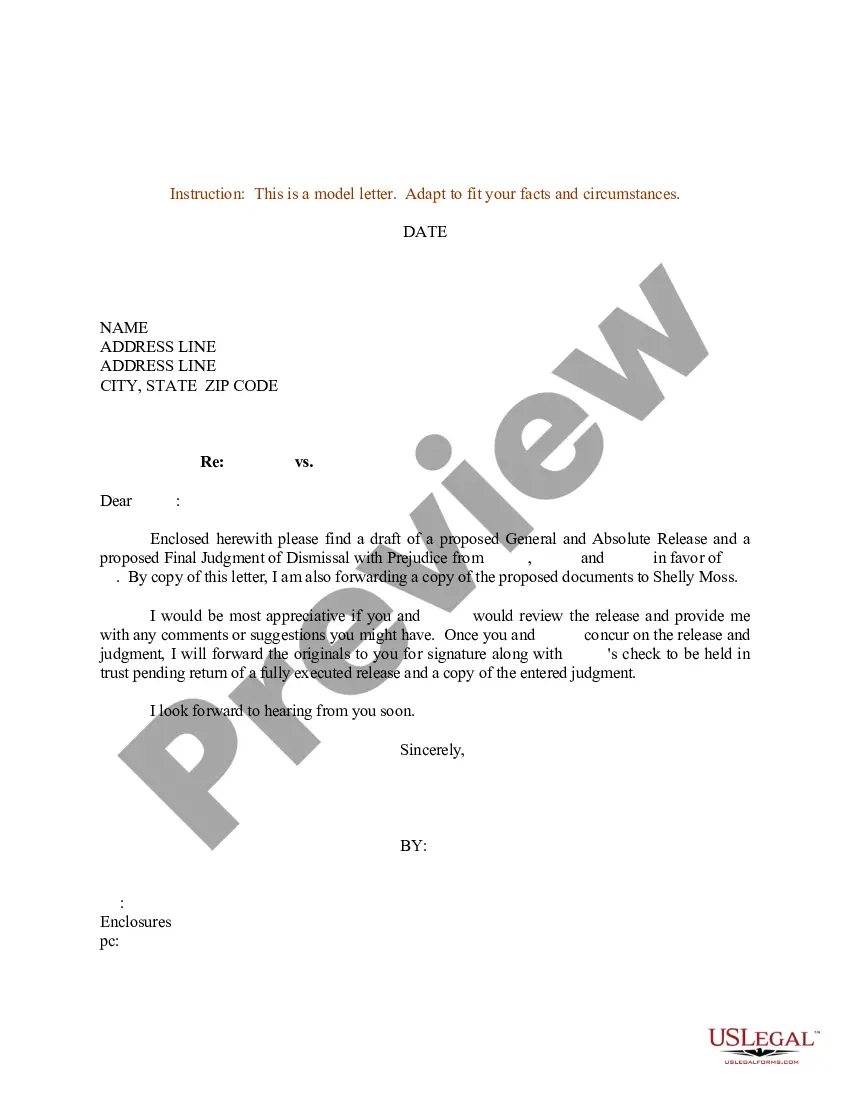
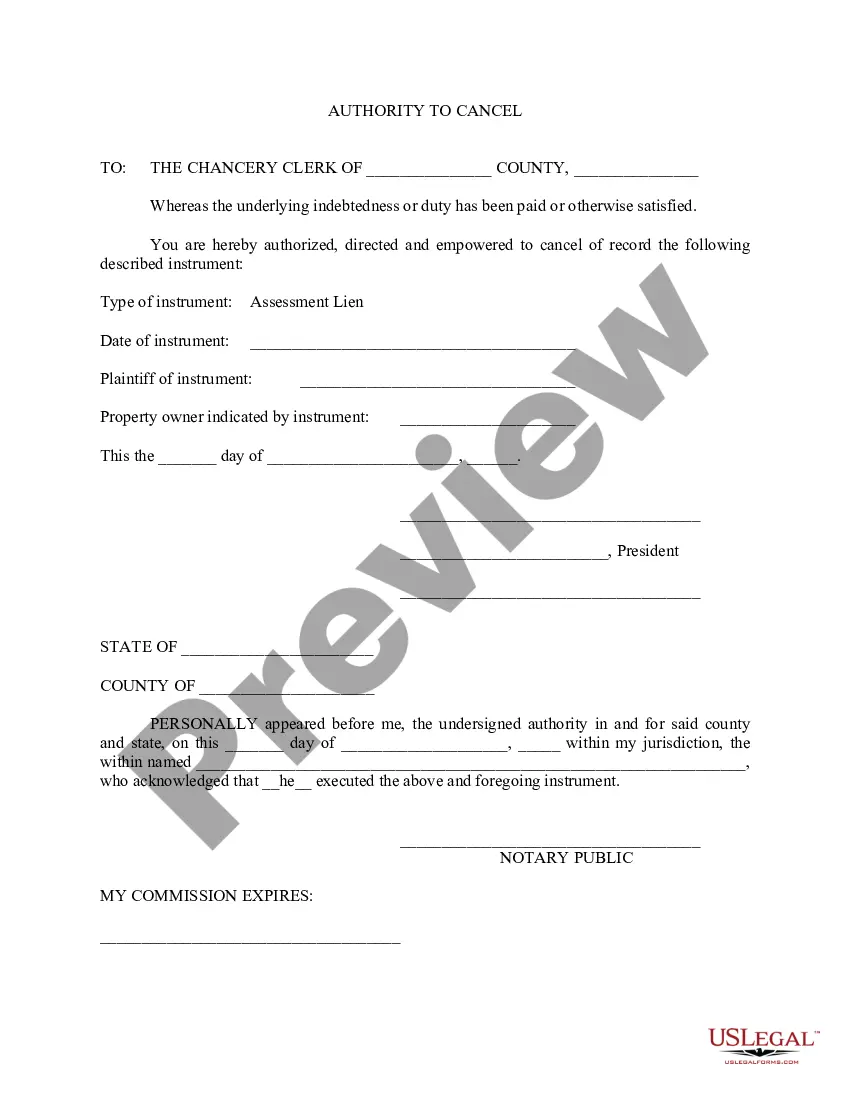
Release Letter Sample With Attachment In Michigan
Description

Get your form ready online
Our built-in tools help you complete, sign, share, and store your documents in one place.
Make edits, fill in missing information, and update formatting in US Legal Forms—just like you would in MS Word.
Download a copy, print it, send it by email, or mail it via USPS—whatever works best for your next step.
Sign and collect signatures with our SignNow integration. Send to multiple recipients, set reminders, and more. Go Premium to unlock E-Sign.
If this form requires notarization, complete it online through a secure video call—no need to meet a notary in person or wait for an appointment.
We protect your documents and personal data by following strict security and privacy standards.

Make edits, fill in missing information, and update formatting in US Legal Forms—just like you would in MS Word.

Download a copy, print it, send it by email, or mail it via USPS—whatever works best for your next step.

Sign and collect signatures with our SignNow integration. Send to multiple recipients, set reminders, and more. Go Premium to unlock E-Sign.

If this form requires notarization, complete it online through a secure video call—no need to meet a notary in person or wait for an appointment.

We protect your documents and personal data by following strict security and privacy standards.
Looking for another form?








Form popularity
FAQ
First, if no lawsuit is filed within a year, the homeowner can obtain a certificate from the circuit court clerk confirming that no lawsuit has been filed and the lien is removed by recording the clerk certificate with the register of deeds. The second way is through a bonding-off process.
Obtaining a Lien Release 1 Confirm the FDIC has the authority to assist with a lien release. 2 Compile Required Documents and Prepare Request for a Lien Release. 3 Register/Mail request to FDIC DRR Customer Service and Records Research.
Do Michigan lien waivers need to be notarized? No, the Michigan statutory lien waiver forms do not require notarization in order to be valid, only a signature by the claimant or the claimant's authorized agent is required.
A proof of service is, in almost all instances, required to be attached to documents that you are filing with the Court. This document is “proof” to the Court of the “service” you completed for the document you are filing.
Process may be served on a resident or nonresident individual by (1) delivering a summons and a copy of the complaint to the defendant personally; or (2) sending a summons and a copy of the complaint by registered or certified mail, return receipt requested, and delivery restricted to the addressee.
The lien is removed, meaning that the property cannot be sold. In addition, once filed, a lien cannot be removed unless the person who filed it files a document stating that the lien has been satisfied, or the lien is challenged in court and the court rules that the lien is not enforceable.
Lien Notices Are There to Protect and Inform You Contractors cannot file liens against you unless they issue a Preliminary Notice within 20 days of work commencing. This means that contractors who are not following California regulations also cannot file liens against you.
Under Michigan law, if a notice of intent is provided with less than 182 days remaining in the statute of limitations, the statute of limitations is “tolled” for the number of days remaining in the limitations period before the notice period expires.

