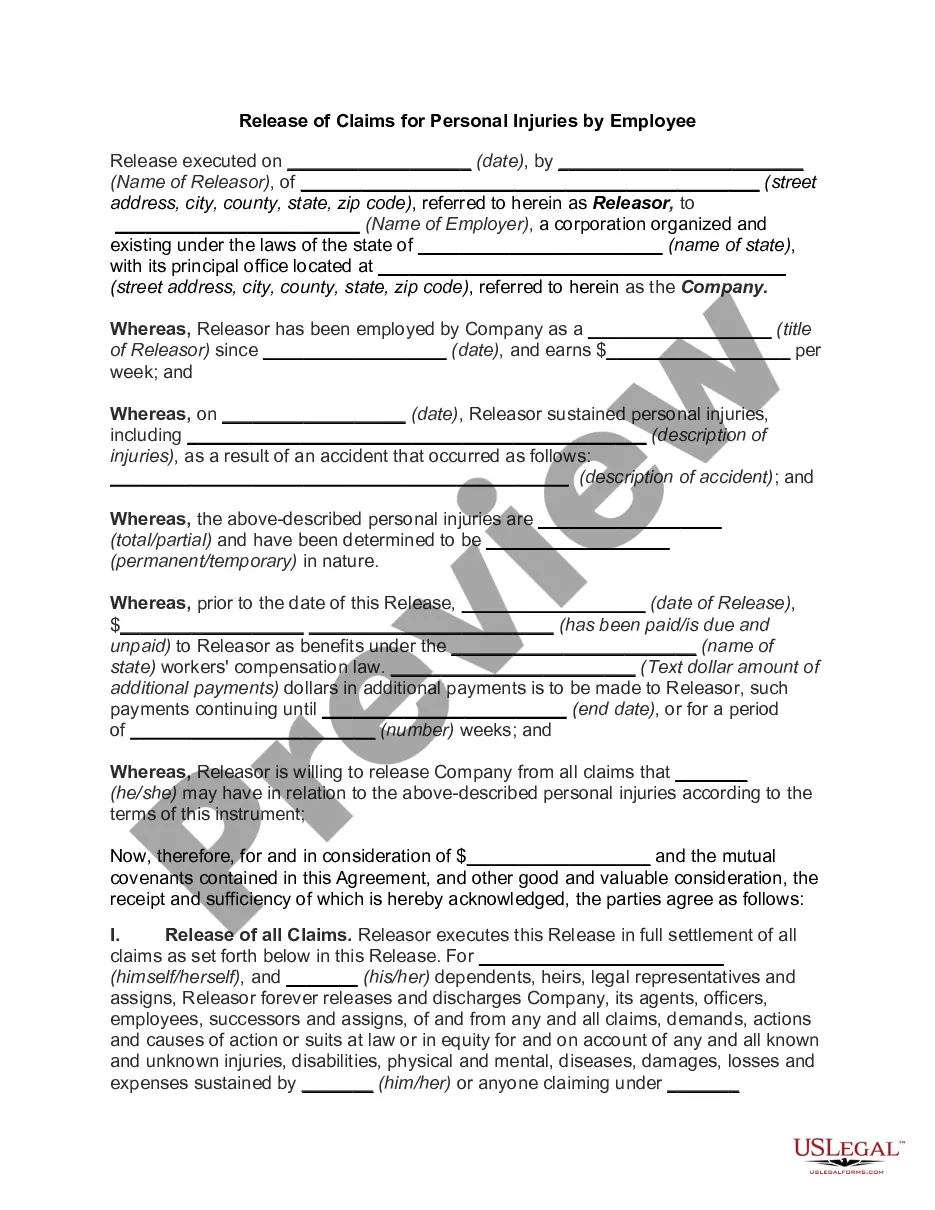
Release With Prejudice For Employees In Collin
Description

Get your form ready online
Our built-in tools help you complete, sign, share, and store your documents in one place.
Make edits, fill in missing information, and update formatting in US Legal Forms—just like you would in MS Word.
Download a copy, print it, send it by email, or mail it via USPS—whatever works best for your next step.
Sign and collect signatures with our SignNow integration. Send to multiple recipients, set reminders, and more. Go Premium to unlock E-Sign.
If this form requires notarization, complete it online through a secure video call—no need to meet a notary in person or wait for an appointment.
We protect your documents and personal data by following strict security and privacy standards.

Make edits, fill in missing information, and update formatting in US Legal Forms—just like you would in MS Word.

Download a copy, print it, send it by email, or mail it via USPS—whatever works best for your next step.

Sign and collect signatures with our SignNow integration. Send to multiple recipients, set reminders, and more. Go Premium to unlock E-Sign.

If this form requires notarization, complete it online through a secure video call—no need to meet a notary in person or wait for an appointment.

We protect your documents and personal data by following strict security and privacy standards.
Looking for another form?


Form popularity
FAQ
Yes, you can take legal action against a company for unfair treatment. California's employment laws protect individuals from discrimination, sexual harassment, and wrongful termination. If you believe you've been treated unfairly at work, it's essential to understand your rights and the legal avenues available to you.
Evidence takes several forms. It includes your testimony, which is the very first evidence gathered by EEOC. It also includes written materials such as evaluations, notes by your employer, letters, memos, and the like. You will be asked to provide any documents you may have that relate to your case.
The answer depends on your claims and willingness to pursue litigation. If your claims are strong and you are invested in the litigation process, it can be very “worth it” to feel you are standing up for accountability, getting compensation for your injuries, and incentivizing the company to change its ways.
The chances of winning your discrimination case can vary dramatically depending on the particular circumstances you face. When a lot of evidence has accumulated against your employer, such as emails and history of discriminatory remarks in front of multiple witnesses, your chances of winning a lawsuit are higher.
Unfair treatment may include (but is not limited to) the following types of specific behavior: denying a training opportunity afforded to other workers; withholding information needed to perform one's job; segregating disfavored workers from others; spreading lies or rumors about an employee;
If you're being treated unfairly at work, write down what's happening with dates and details. Talk to the person involved if you feel safe or report it to HR or a manager you trust. Get support from friends, coworkers or mentors. If nothing changes, you can file a complaint or talk to a lawyer.
In the formal legal world, a court case that is dismissed with prejudice means that it is dismissed permanently. A case dismissed with prejudice is over and done with, once and for all, and can't be brought back to court. A case dismissed without prejudice means the opposite.
You need to document it every time it happens and make notes of the contents of the unfair treatment, what was it specifically that was done or not done, date, time occurred and time finished, with any witnesses names and contact information.
Defending Yourself Against False Accusations at Work Remain Calm and Be Professional. Talk to a Lawyer. Contact HR. Get the Details of the Complaint. Gather Evidence. Find Witnesses and Present Evidence. Be Honest and Cooperate with Any Investigations. Avoid Your Accuser.
