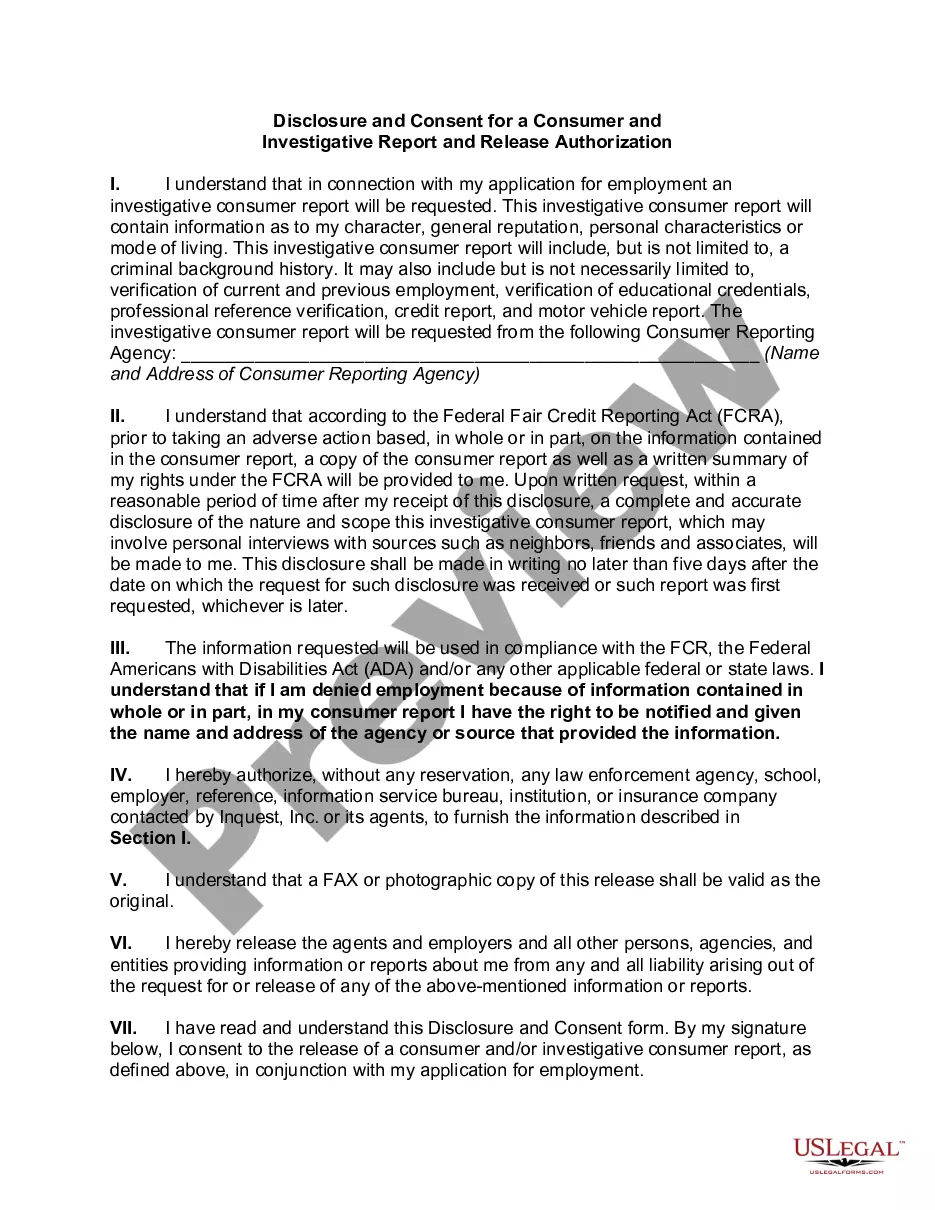
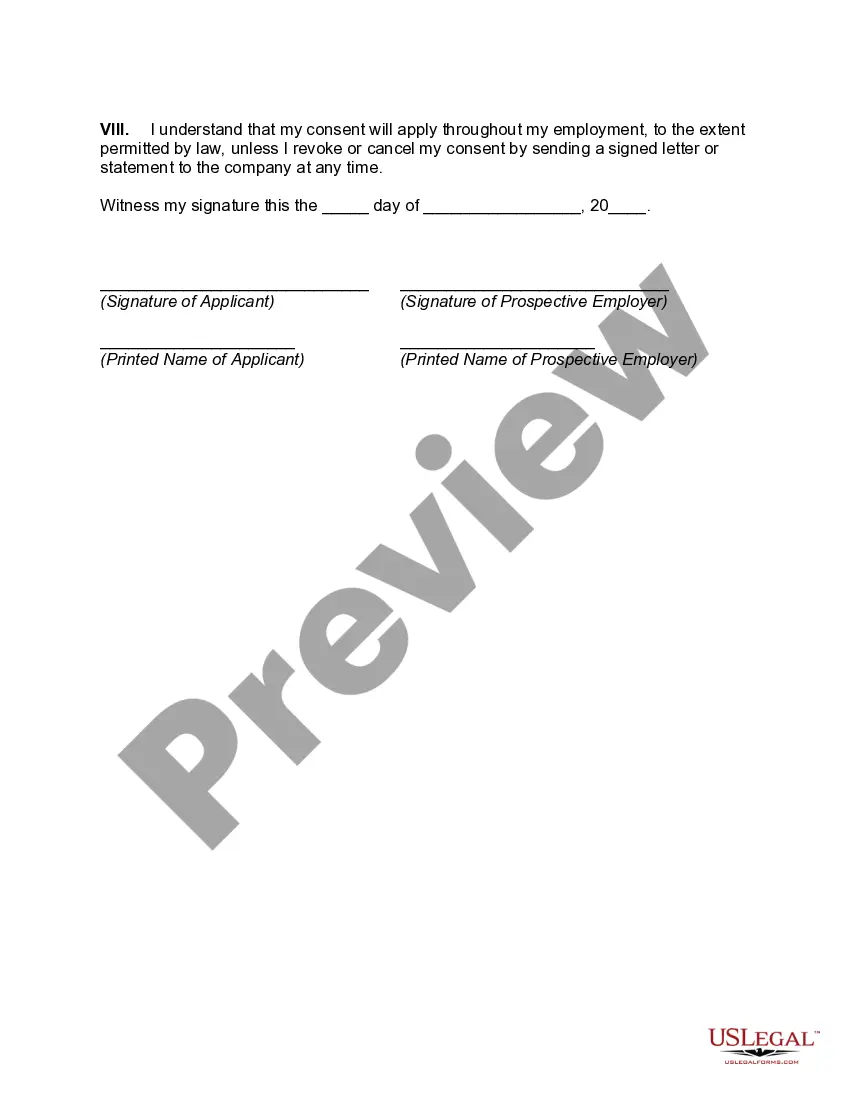
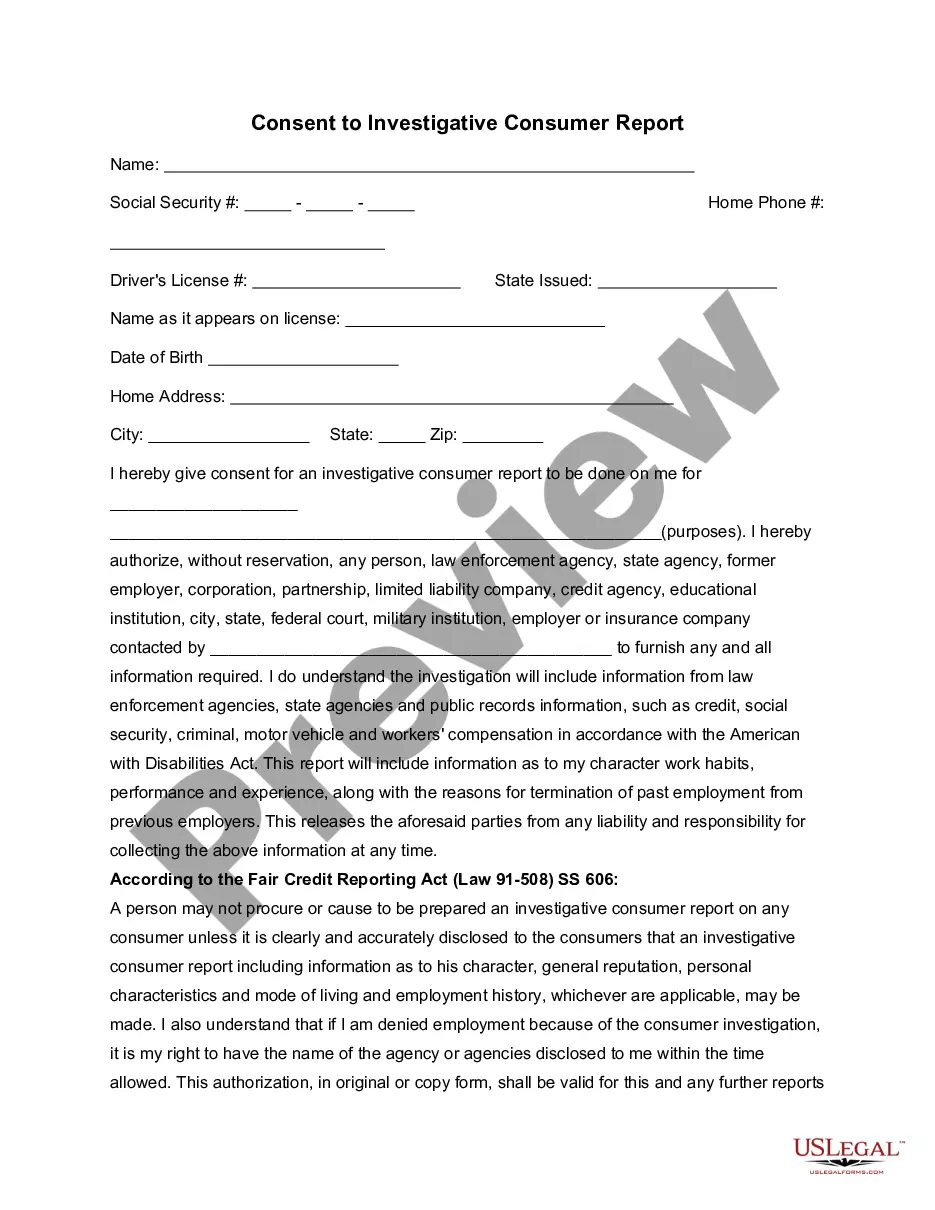
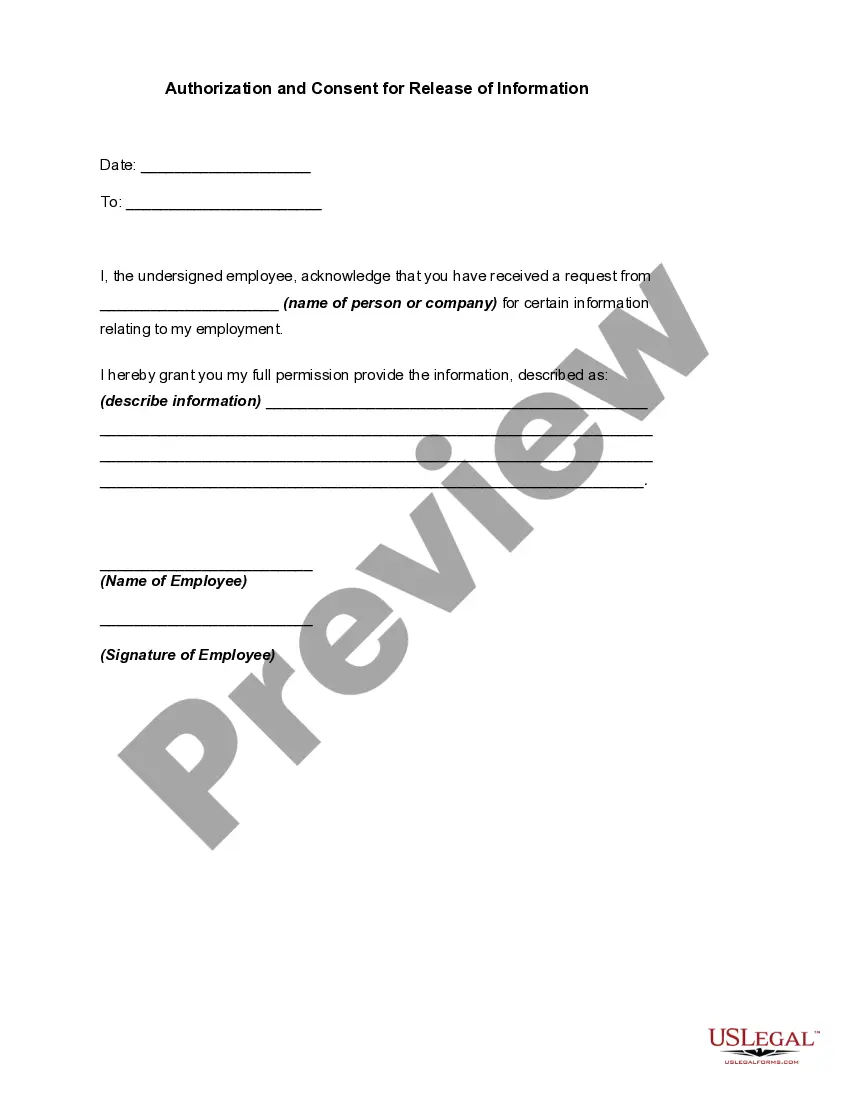
Consent Consumer Investigative For Employment In Texas
Description
Get your form ready online
Our built-in tools help you complete, sign, share, and store your documents in one place.
Make edits, fill in missing information, and update formatting in US Legal Forms—just like you would in MS Word.
Download a copy, print it, send it by email, or mail it via USPS—whatever works best for your next step.
Sign and collect signatures with our SignNow integration. Send to multiple recipients, set reminders, and more. Go Premium to unlock E-Sign.
If this form requires notarization, complete it online through a secure video call—no need to meet a notary in person or wait for an appointment.
We protect your documents and personal data by following strict security and privacy standards.

Make edits, fill in missing information, and update formatting in US Legal Forms—just like you would in MS Word.

Download a copy, print it, send it by email, or mail it via USPS—whatever works best for your next step.

Sign and collect signatures with our SignNow integration. Send to multiple recipients, set reminders, and more. Go Premium to unlock E-Sign.

If this form requires notarization, complete it online through a secure video call—no need to meet a notary in person or wait for an appointment.

We protect your documents and personal data by following strict security and privacy standards.
Looking for another form?




Form popularity
FAQ
Currently, there are 20 states – including California, Virginia, and Colorado, among others – that have comprehensive data privacy laws in place.
The Deceptive Trade Practices Act (DTPA) is the leading consumer protection legislation in Texas. This e-book provides comprehensive, in-depth, and practical information as well as forms and checklists for those involved in a DTPA lawsuit.
Texas employers should know that Texas courts recognize the following three of the four common law invasion of privacy claims: Intrusion upon the solitude or seclusion of another. Public disclosure of private facts. Appropriation of name or likeness.
The INFORM Consumers Act requires online marketplaces to “implement and maintain reasonable security procedures and practices.” That includes putting administrative, physical, and technical safeguards in place that are appropriate to the nature of the data and the purposes for which the data is used.
The Texas Data Privacy and Security Act regulates the collection, use, processing, and treatment of consumers' personal data. Businesses subject to the law who violate its regulations are subject to civil penalty.
The Texas Data Privacy and Security Act (TDPSA) establishes new laws for collecting, storing, processing, and selling consumer information linked to a specific individual. TDPSA was passed as House Bill 4 during the regular session of the 88th Texas Legislature. The law became effective July 1, 2024.
(a) A person may not obtain, possess, transfer, or use personal identifying information of another person without the other person's consent or effective consent and with intent to obtain a good, a service, insurance, an extension of credit, or any other thing of value in the other person's name.
Texas Data Privacy And Security Act. (“Act”) (effective July 1, 2024)1 The Act grants Texas residents several key rights over their personal data.
California Credit Reporting Agencies Act (CCRAA) Employers in California are limited when they can request a consumer report, which essentially means a credit report. Under the CCRAA, employers must have a “legitimate business need” to access a credit record.
The general rule in California is that an employer may not consider acquire or consider a person's credit report in making job decisions except for applicants for or employees in: managerial positions. positions with the state Department of Justice. law enforcement positions, including peace officers.
