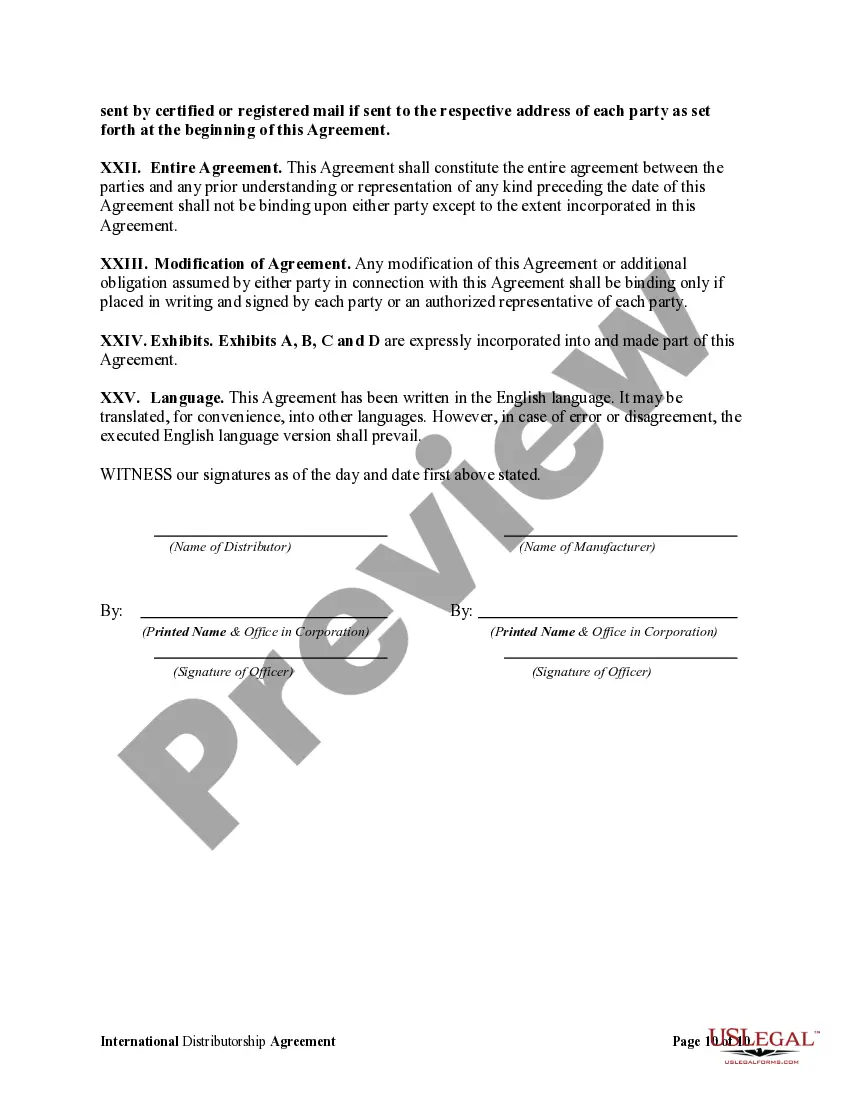
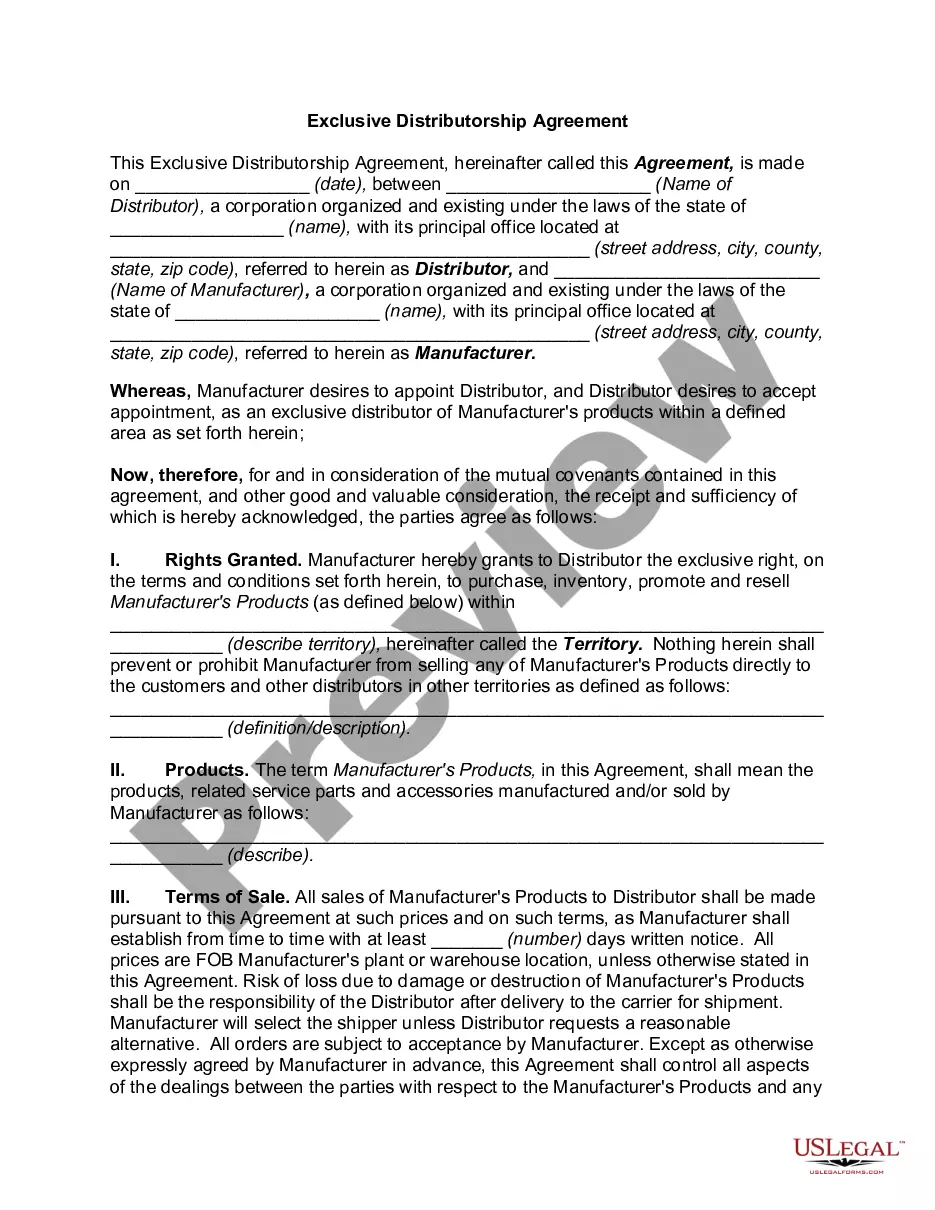
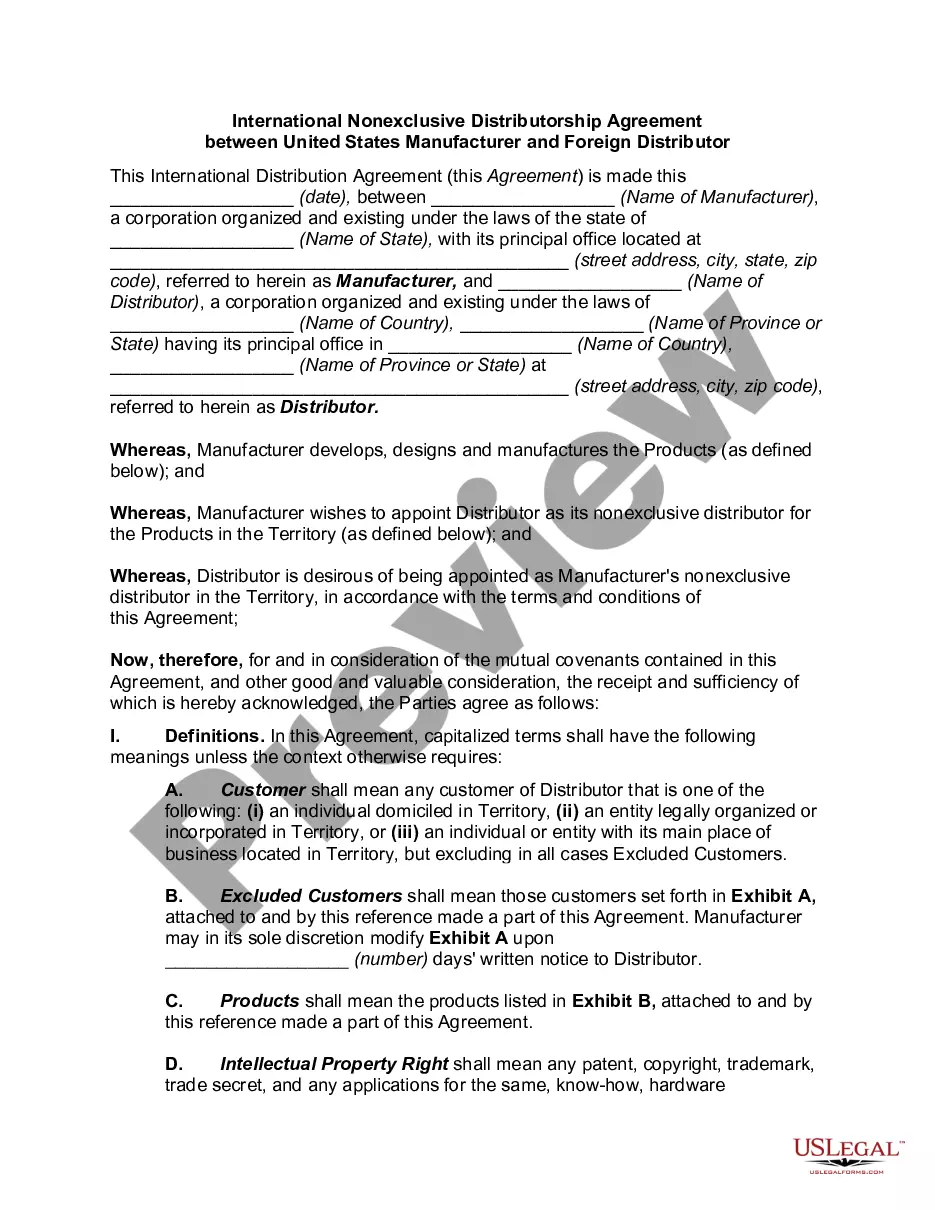
Distributorship Agreement Distributor With A In Suffolk
Description

Get your form ready online
Our built-in tools help you complete, sign, share, and store your documents in one place.
Make edits, fill in missing information, and update formatting in US Legal Forms—just like you would in MS Word.
Download a copy, print it, send it by email, or mail it via USPS—whatever works best for your next step.
Sign and collect signatures with our SignNow integration. Send to multiple recipients, set reminders, and more. Go Premium to unlock E-Sign.
If this form requires notarization, complete it online through a secure video call—no need to meet a notary in person or wait for an appointment.
We protect your documents and personal data by following strict security and privacy standards.

Make edits, fill in missing information, and update formatting in US Legal Forms—just like you would in MS Word.

Download a copy, print it, send it by email, or mail it via USPS—whatever works best for your next step.

Sign and collect signatures with our SignNow integration. Send to multiple recipients, set reminders, and more. Go Premium to unlock E-Sign.

If this form requires notarization, complete it online through a secure video call—no need to meet a notary in person or wait for an appointment.

We protect your documents and personal data by following strict security and privacy standards.
Looking for another form?









Form popularity
FAQ
1 Assess your market. The first step is to understand your target market and their needs, preferences, and behaviors. 2 Define your objectives. 3 Select your channels. 4 Evaluate your partners. 5 Design your processes. 6 Implement and monitor your plan. 7 Here's what else to consider.
The agreement should explicitly state the initial period during which the distributor will be engaged. In some cases, a supplier might opt for an initial trial period, during which the distributor's performance is evaluated against predefined sales targets or Key Performance Indicators (KPIs).
Prepare a contract Provide details of the parties. Describe services or results. Set out payment details. Assign intellectual property rights. Explain how to treat confidential information. Identify who is liable – indemnity. Provide insurance obligations. Outline any subcontracting agreements.
How to write an agreement letter Title your document. Provide your personal information and the date. Include the recipient's information. Address the recipient and write your introductory paragraph. Write a detailed body. Conclude your letter with a paragraph, closing remarks, and a signature. Sign your letter.
In terms of content, an Estate distribution letter should include: the deceased's personal details; a detailed and complete list of all assets and liabilities; the Beneficiary names and the details of their respective inheritances; any details on debt settlement and creditor communication;
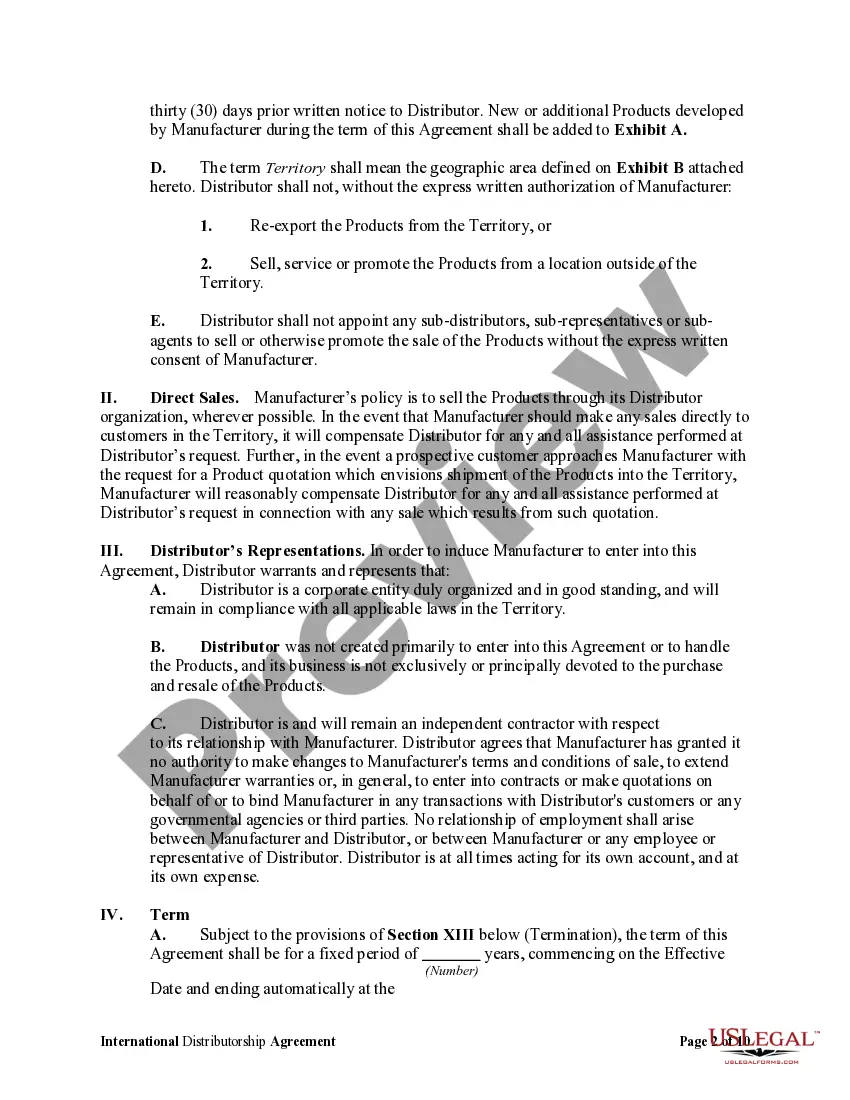
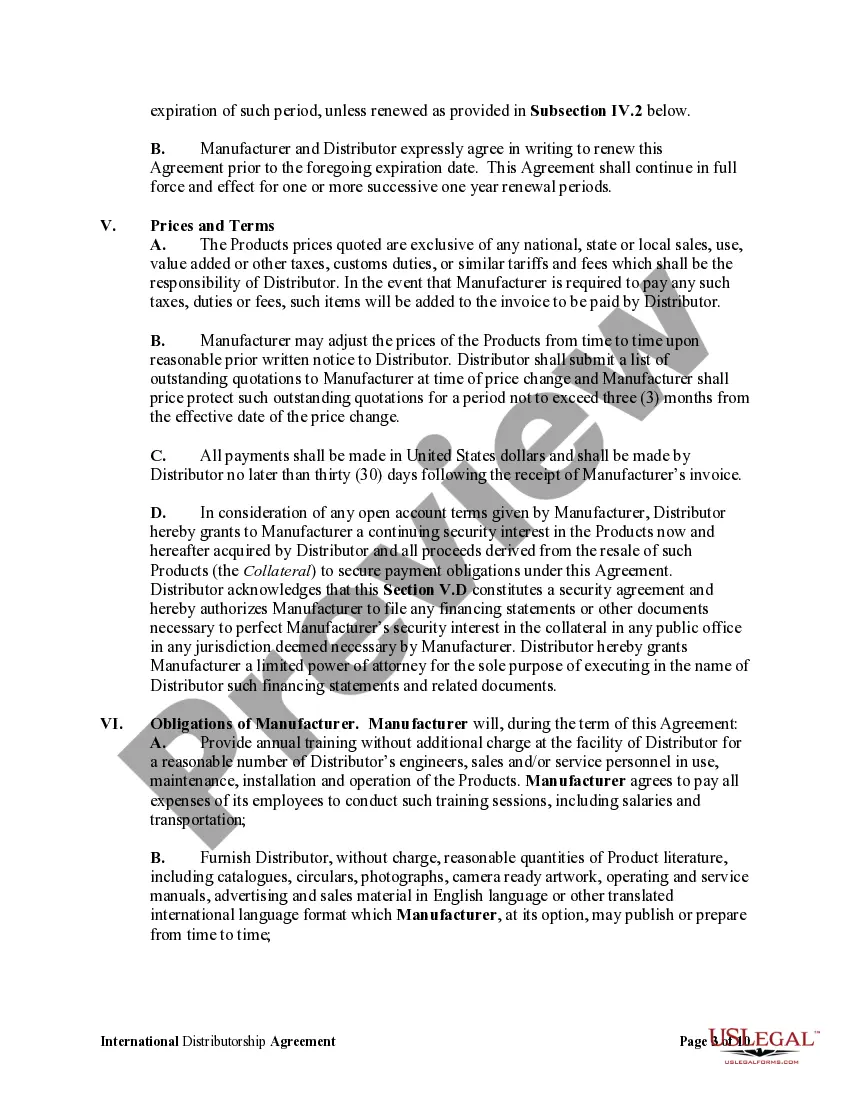
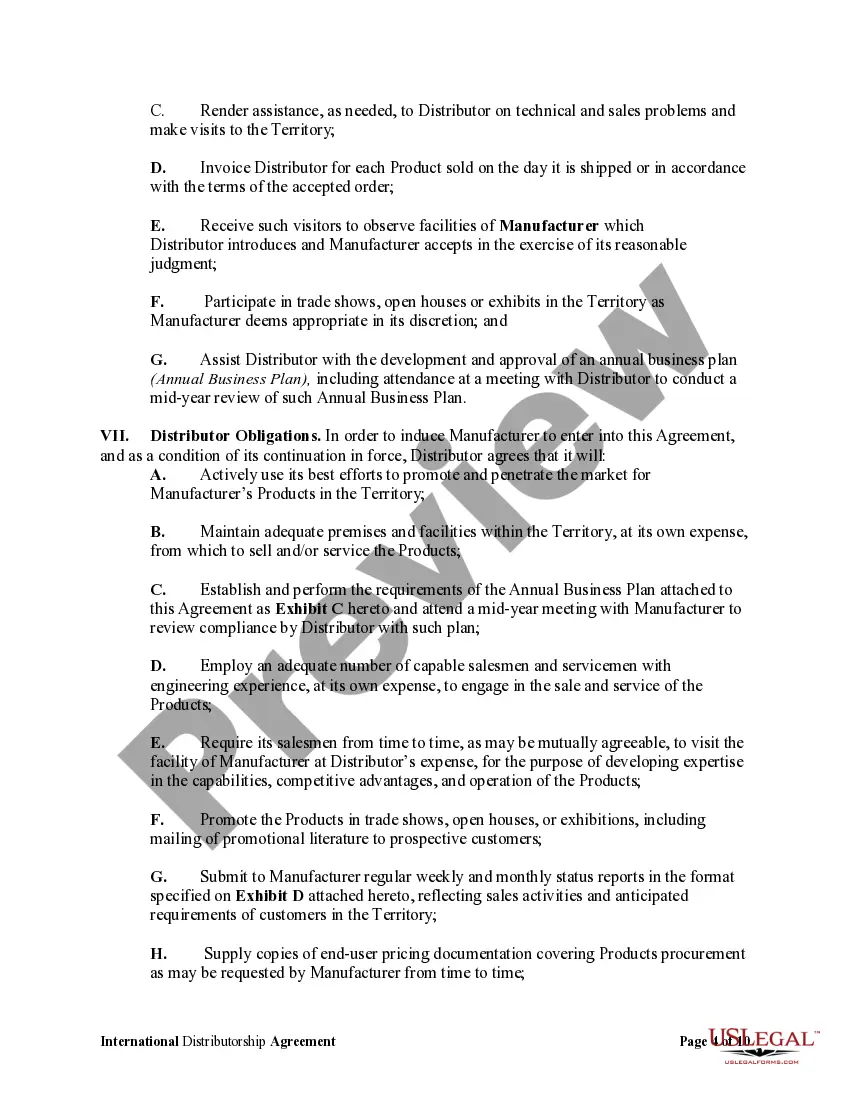
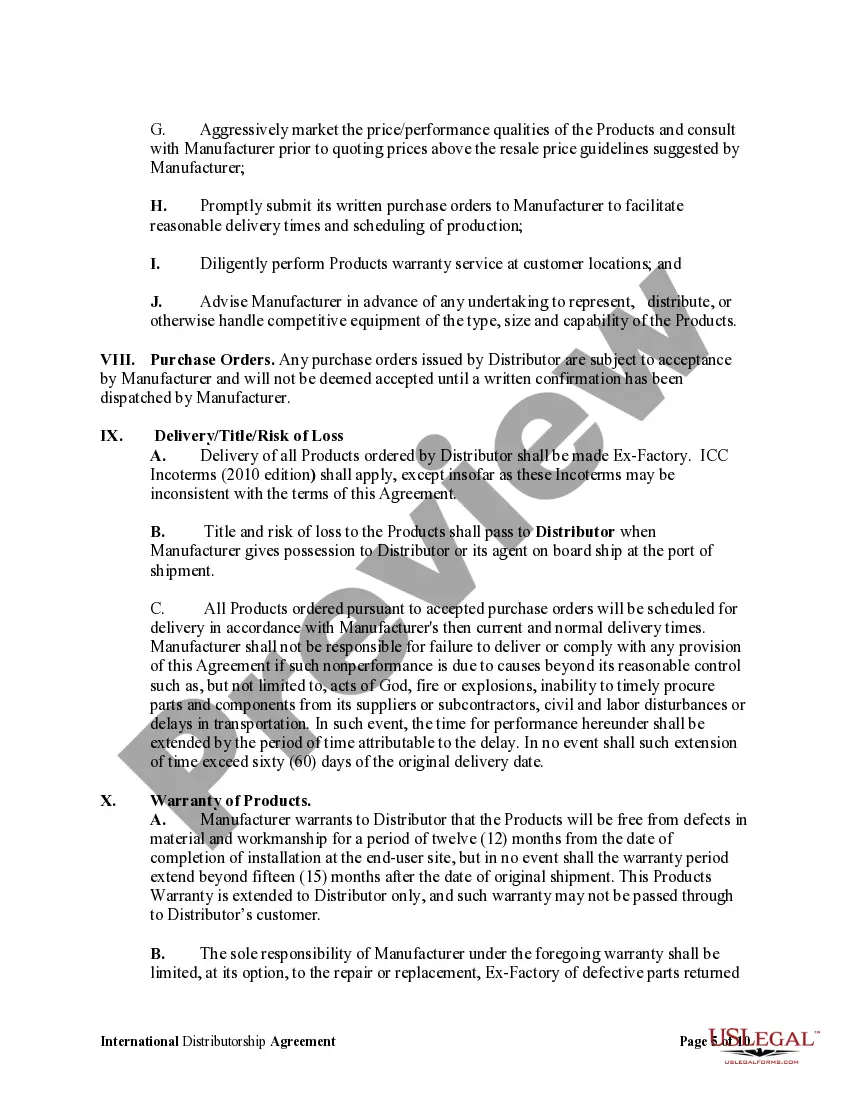
A distribution agreement, also known as a distributor agreement, is a contract between a supplying company with products to sell and another company that markets and sells the products. The distributor agrees to buy products from the supplier company and sell them to clients within certain geographical areas.
Manufacturer. The manufacturer is the party that creates the goods – the party that produced or made the cargo. Consignor. The consignor is the party that sells the cargo, and is usually a shipper. Consignee. Customs Agent. Origin & Destination Agent. Freight Forwarder. Shipping Carrier.
A distribution agreement, also known as a distributor agreement, is a contract between a supplying company with products to sell and another company that markets and sells the products. The distributor agrees to buy products from the supplier company and sell them to clients within certain geographical areas.
The basic elements of a distribution agreement include the term (time period for which the contract is in effect), terms and conditions of supply and the sales territories covered by the agreement (regions within the U.S. and/or international markets).
The agreement is usually between a manufacturer or vendor and a distributor but, in some cases, may involve two distributors or a distributor and some other channel entity.