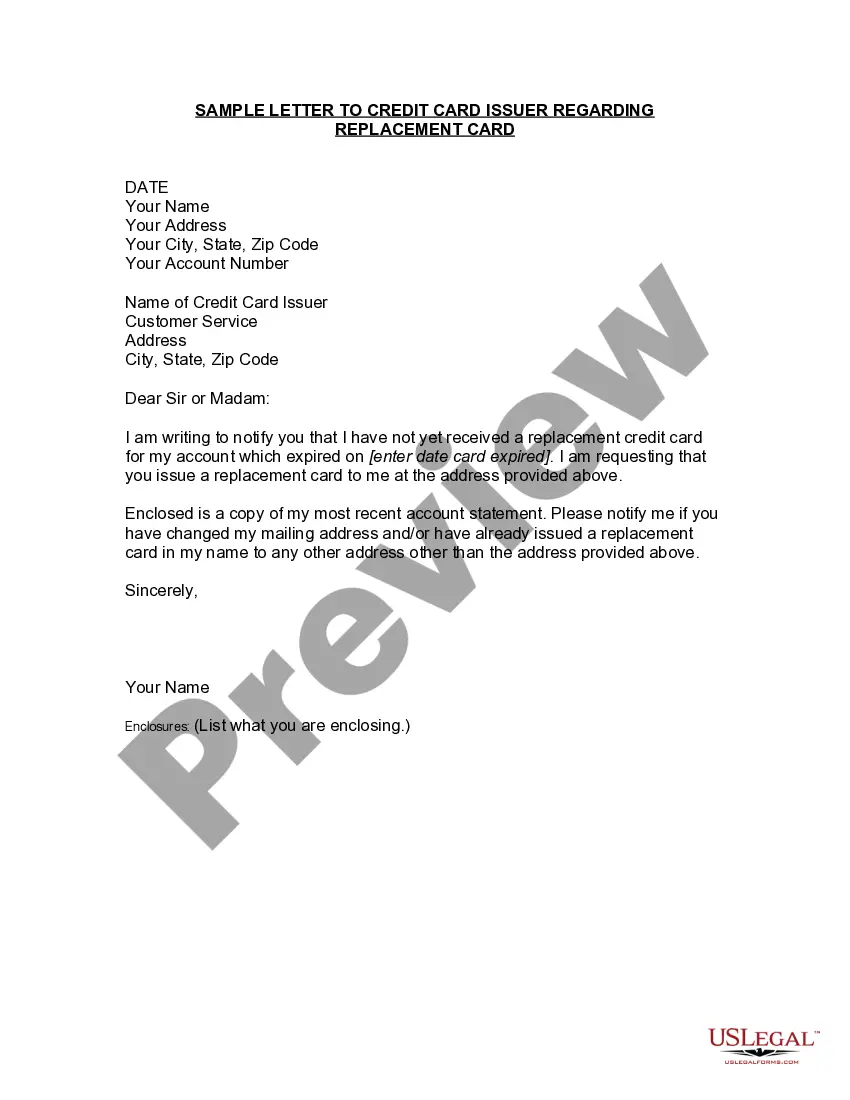
Distributorship Agreement Distributor With A In Sacramento
Description

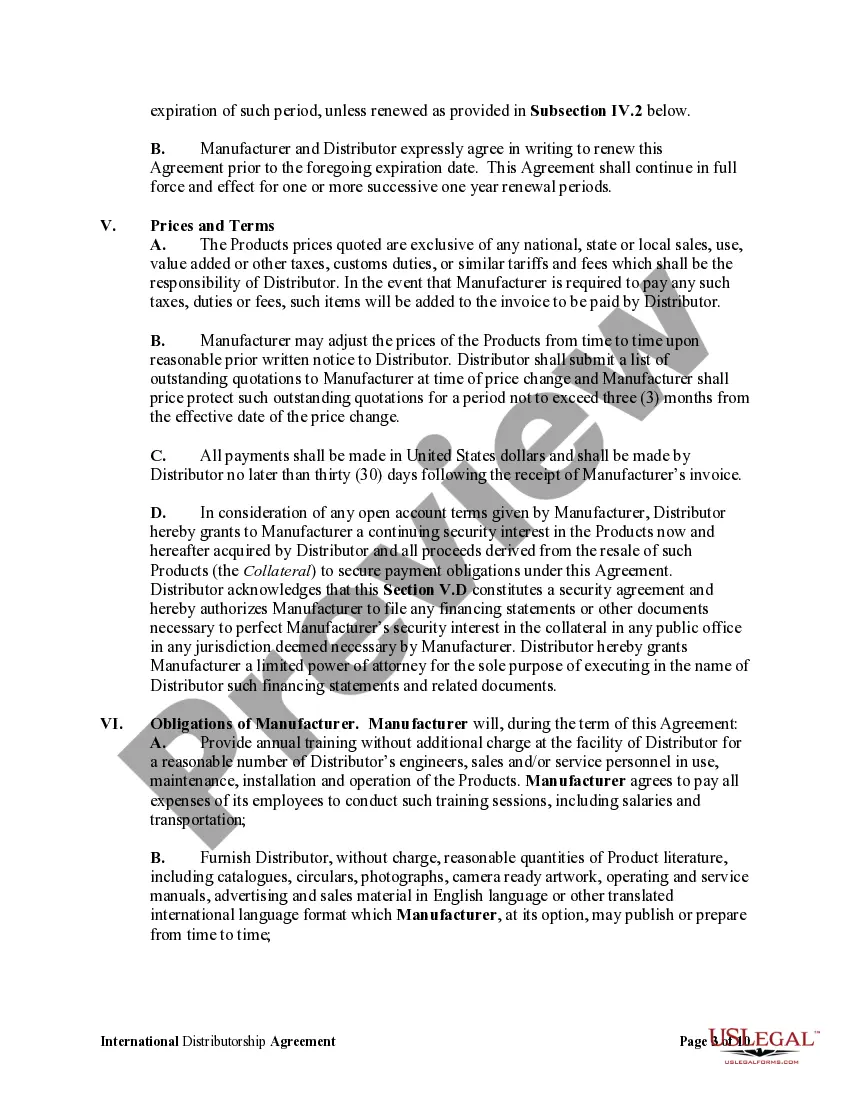
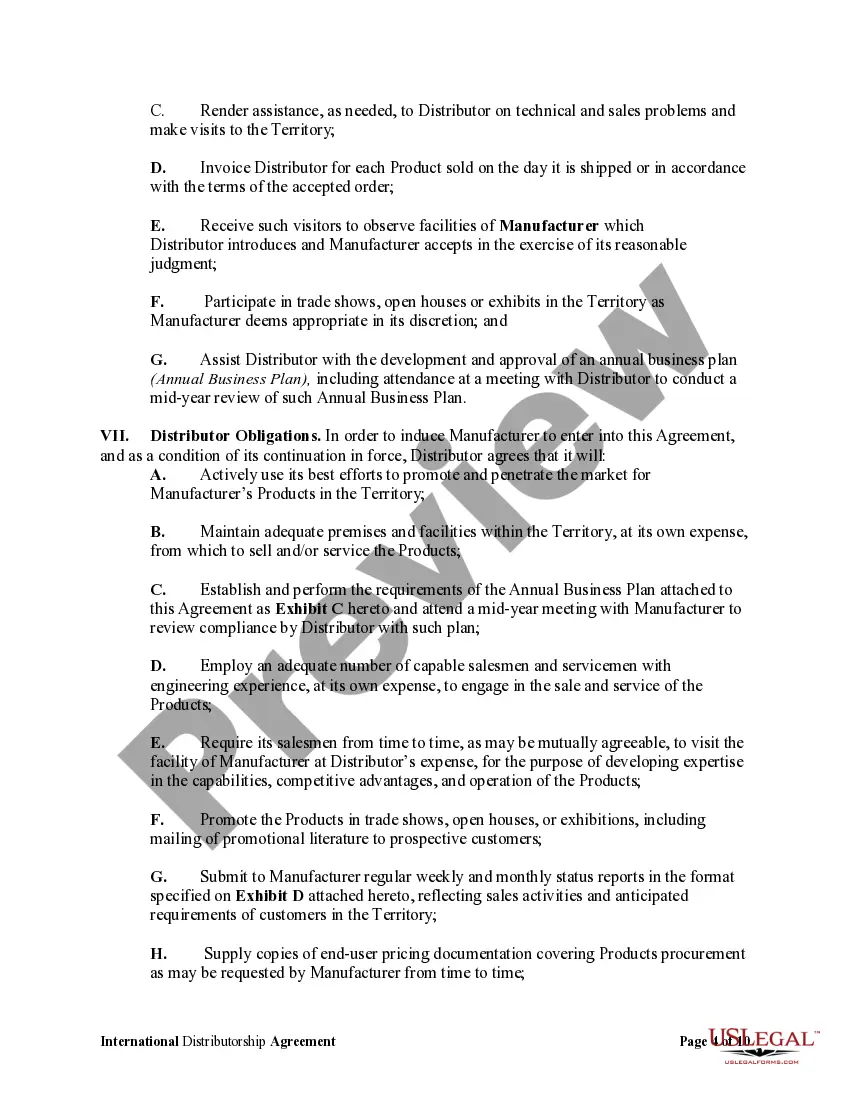
Get your form ready online
Our built-in tools help you complete, sign, share, and store your documents in one place.
Make edits, fill in missing information, and update formatting in US Legal Forms—just like you would in MS Word.
Download a copy, print it, send it by email, or mail it via USPS—whatever works best for your next step.
Sign and collect signatures with our SignNow integration. Send to multiple recipients, set reminders, and more. Go Premium to unlock E-Sign.
If this form requires notarization, complete it online through a secure video call—no need to meet a notary in person or wait for an appointment.
We protect your documents and personal data by following strict security and privacy standards.

Make edits, fill in missing information, and update formatting in US Legal Forms—just like you would in MS Word.

Download a copy, print it, send it by email, or mail it via USPS—whatever works best for your next step.

Sign and collect signatures with our SignNow integration. Send to multiple recipients, set reminders, and more. Go Premium to unlock E-Sign.

If this form requires notarization, complete it online through a secure video call—no need to meet a notary in person or wait for an appointment.

We protect your documents and personal data by following strict security and privacy standards.
Looking for another form?






Form popularity
FAQ
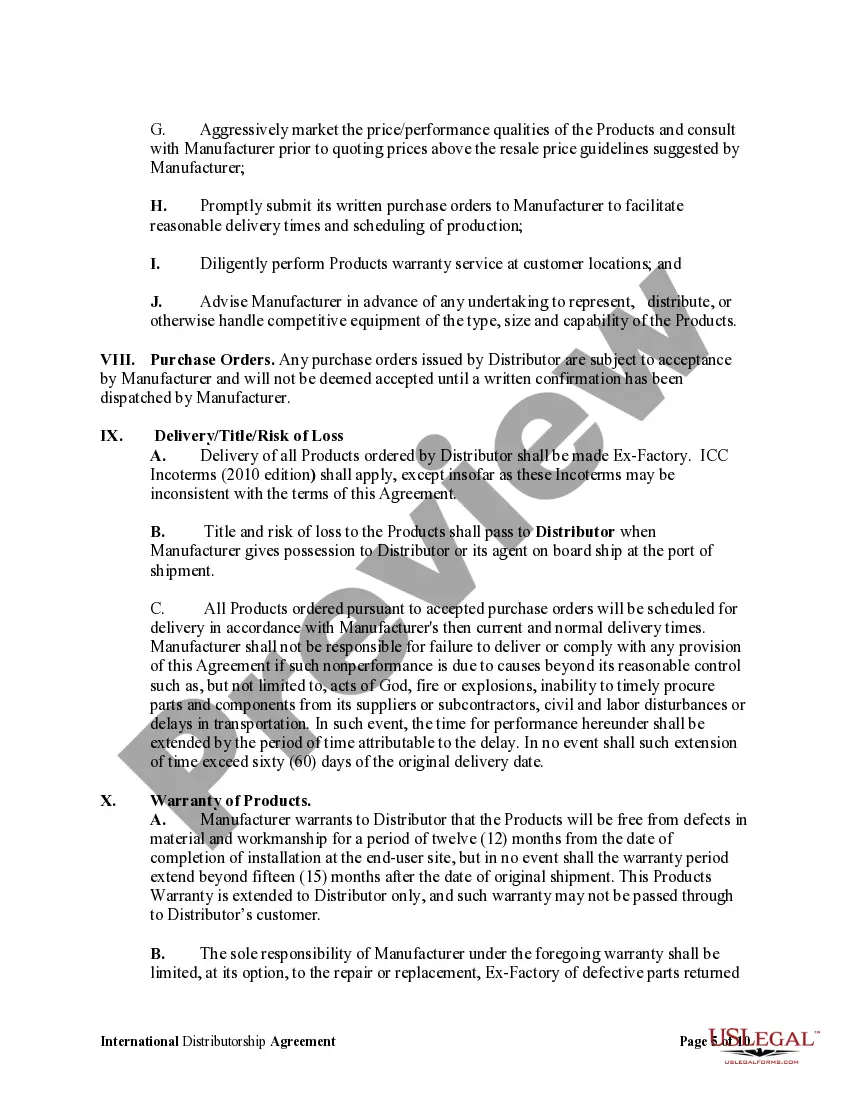
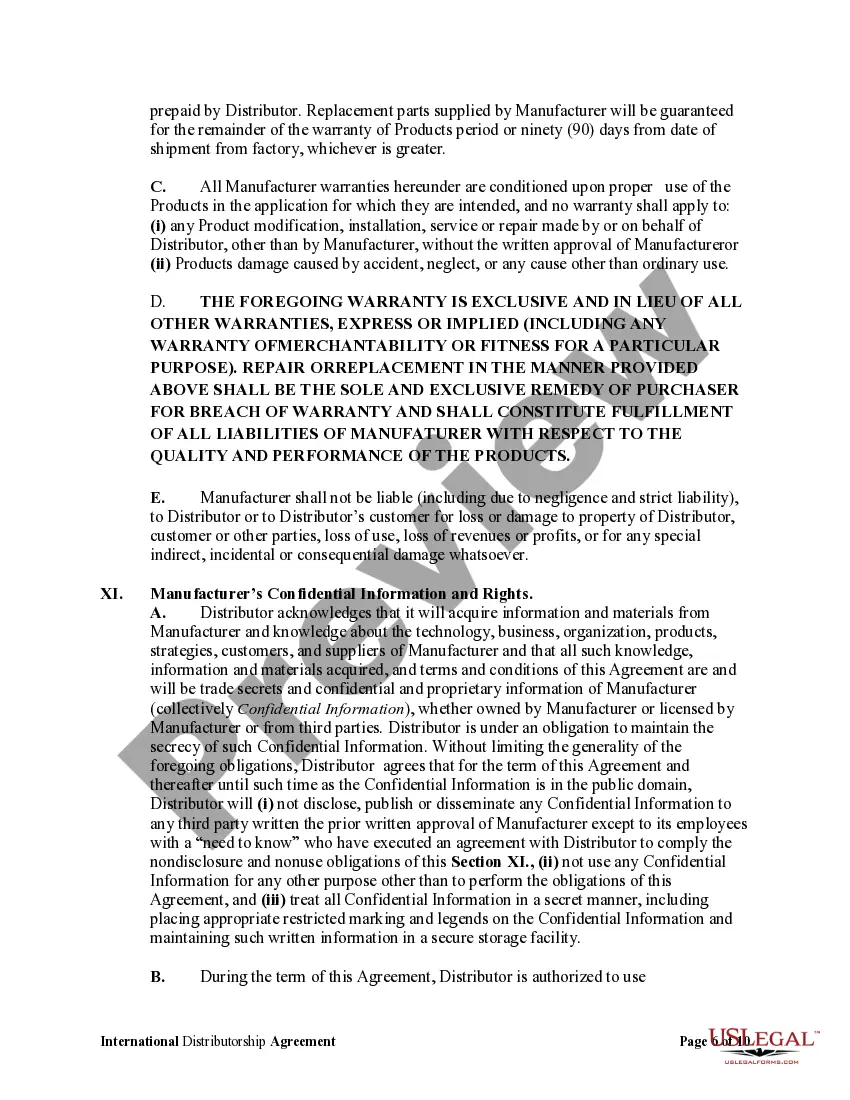
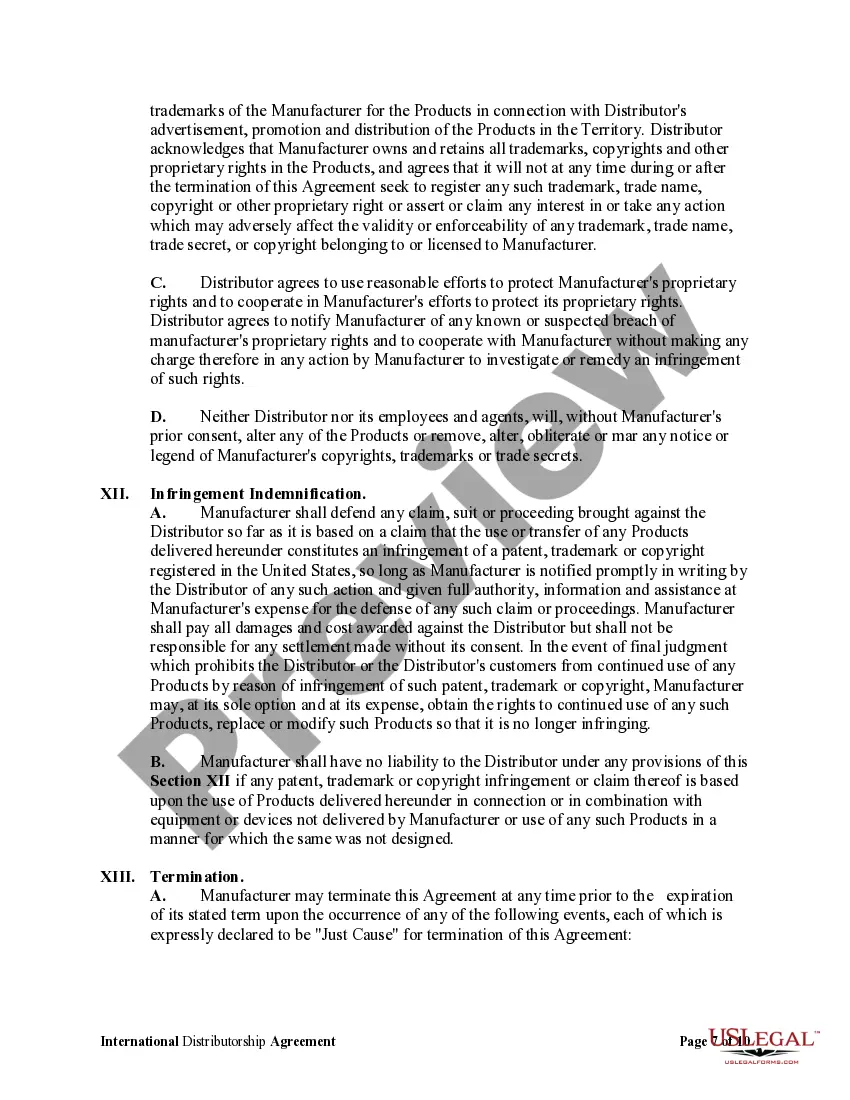
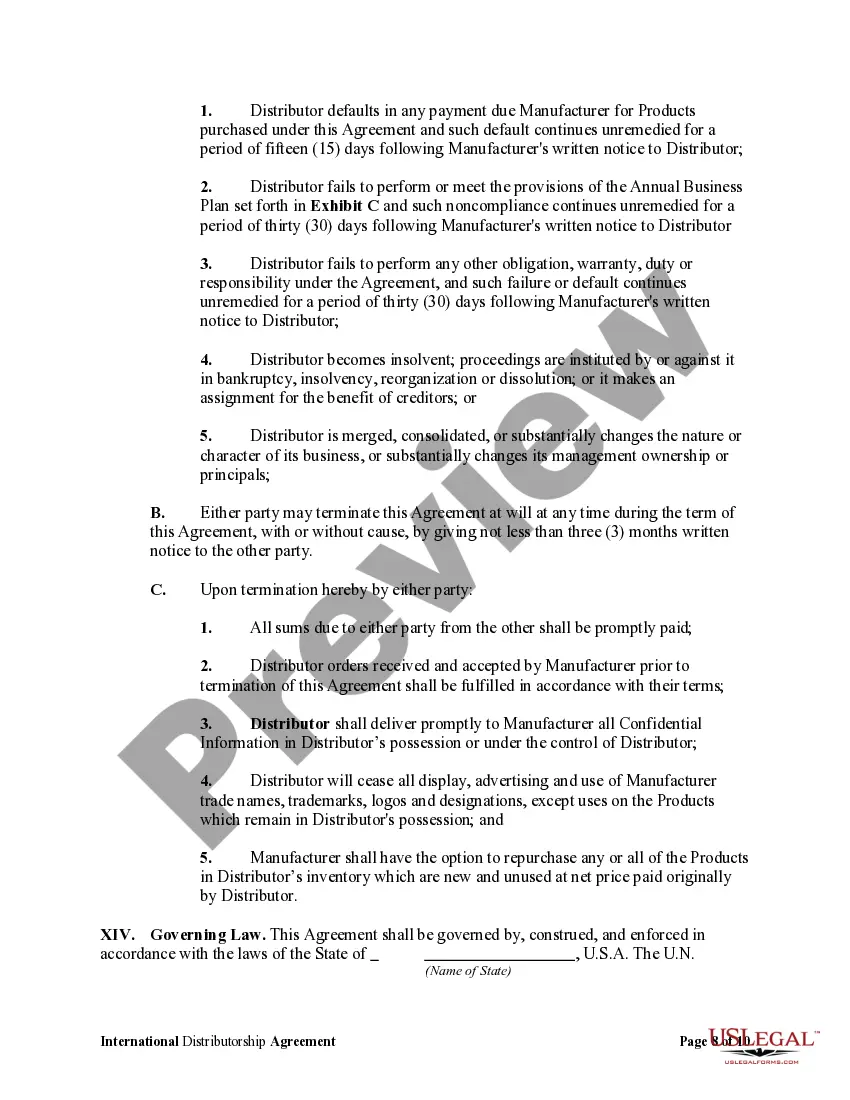
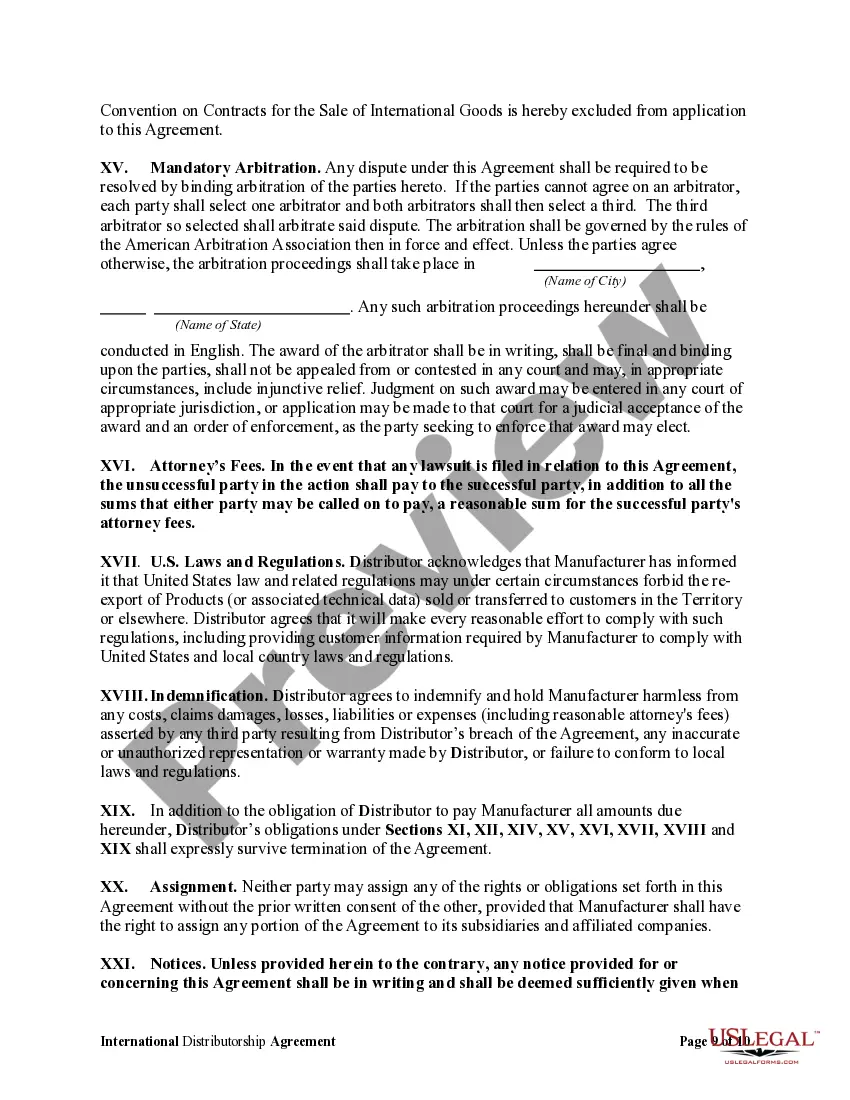
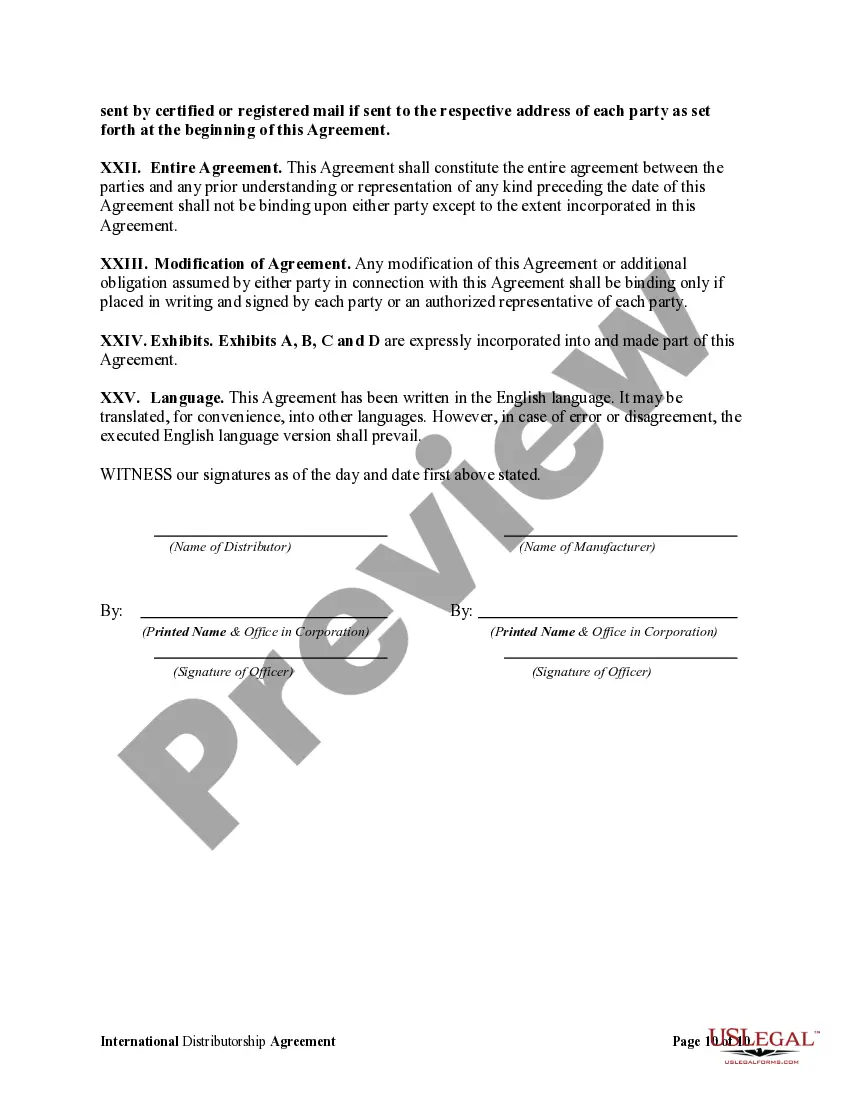
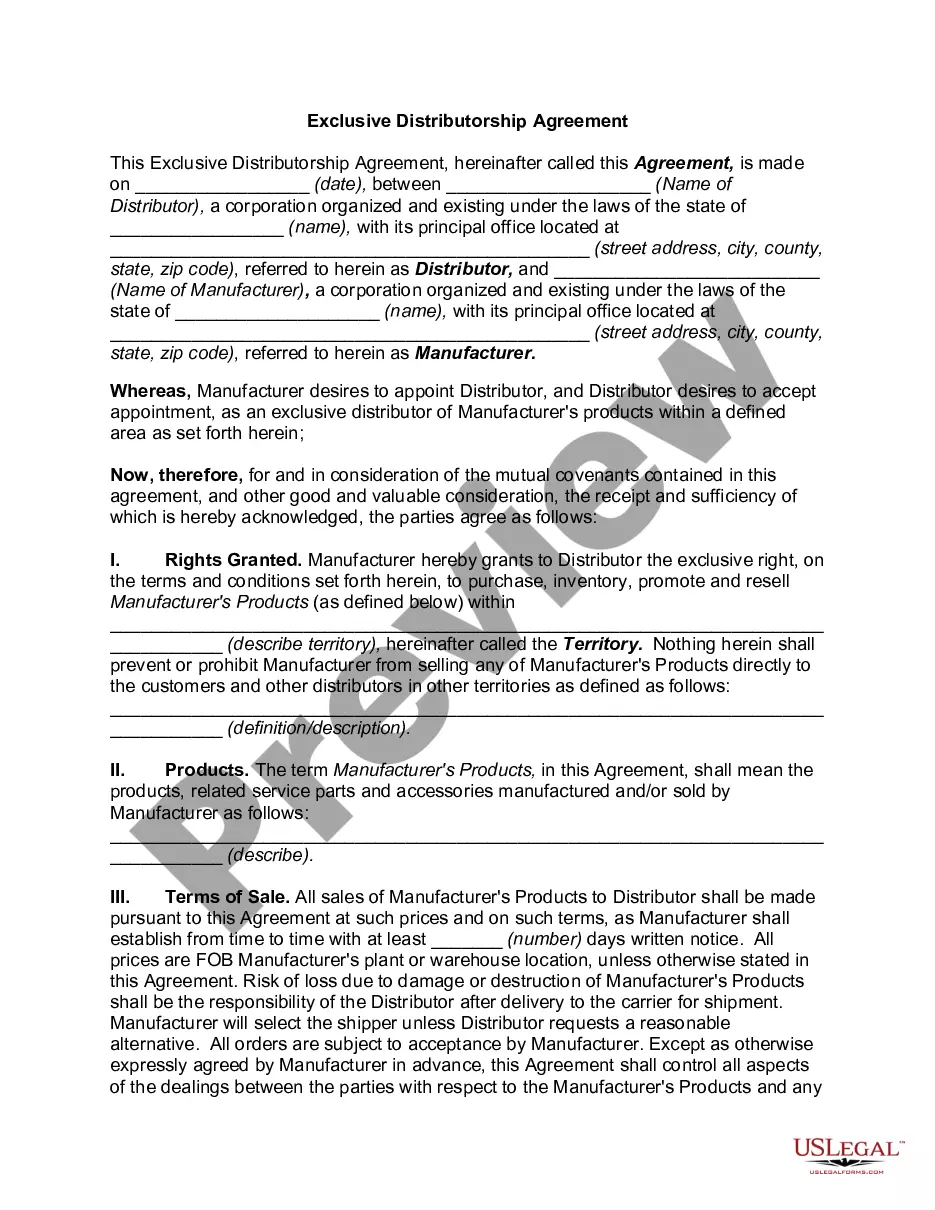
A Standard Clause providing a distributor with the exclusive right to resell products purchased from a manufacturer, producer, or other supplier within a specified geographic territory during the term of the underlying distribution agreement.
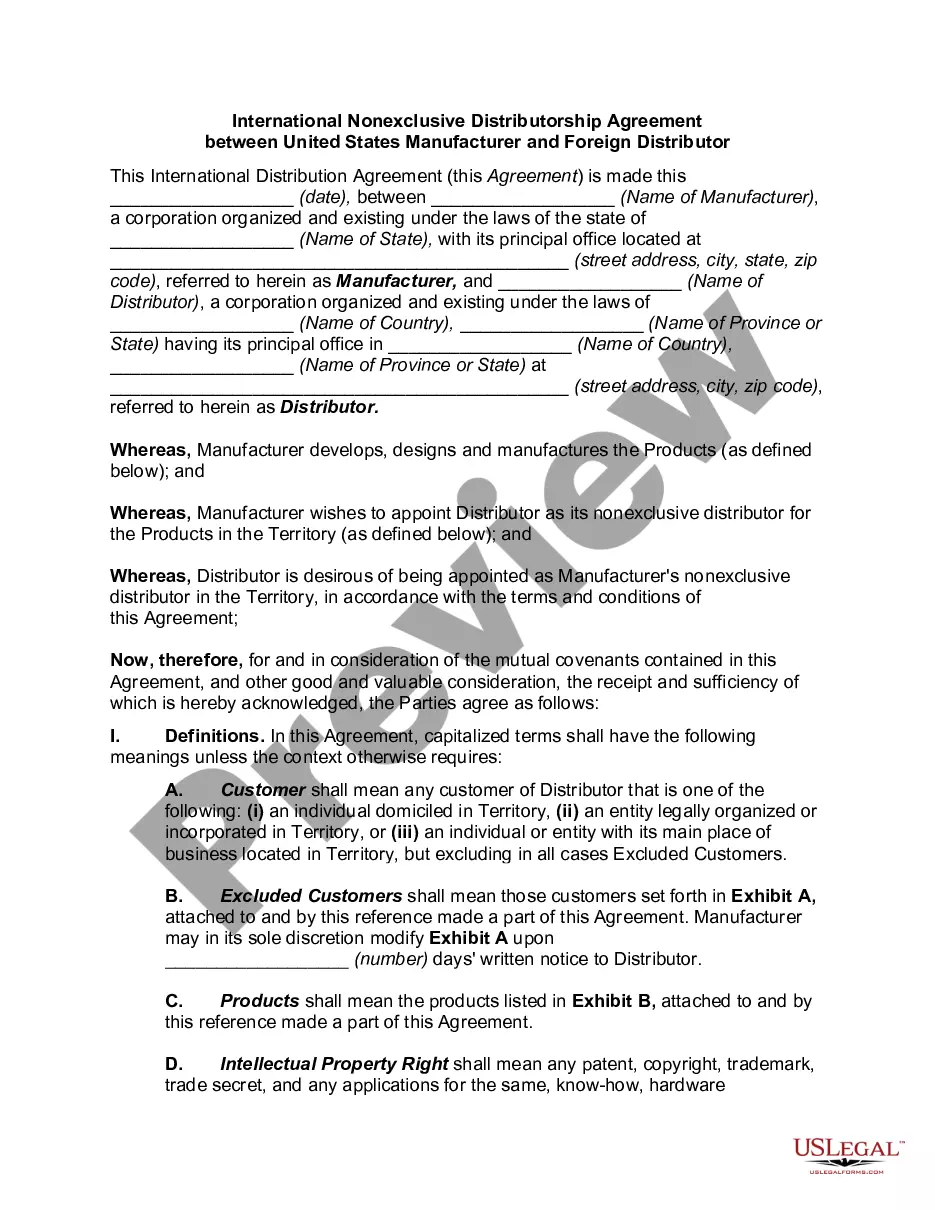
A distribution deal (also known as distribution contract or distribution agreement) is a legal agreement between one party and another, to handle distribution of a product. There are various forms of distribution deals. There are exclusive and non-exclusive distribution agreements.
The agreement is usually between a manufacturer or vendor and a distributor but, in some cases, may involve two distributors or a distributor and some other channel entity.
A distribution agreement is the perfect place to establish the sales goals and expectations for both parties. The manufacturer wants to ensure that the distributor will actively promote and sell its products in the designated territory or channel and generate a certain level of revenue and profit.
Either way, it is important to understand the key distinctions between these two types of agreements. A distribution deal is an agreement between a musician and a distributor, in which the distributor agrees to help the musician get their music into the hands of consumers.
Examples of companies that use exclusive distribution include Apple for its high-priced and luxury products, as well as companies like Lamborghini, BMW, Rolex, and Mercedes. These companies appoint only a few distributors to cover a specific region, maintaining exclusivity in their distribution agreements.
An exclusive reseller agreement grants the right of exclusivity to said reseller, limiting other companies from selling the same products within the agreed-upon geographic region. It also includes terms on how the reseller will be compensated for their services, as well as delivery times and service level agreements.
In an exclusive agreement, the specified distributor will be the sole distributor with the right to sell the product within a particular geographic region or within multiple regions. If the arrangement is nonexclusive, the manufacturer or vendor may supply other distributors, sometimes competing in the same market.
Differences between agency and distribution An agent is appointed to negotiate or conclude contracts on the supplier's behalf. A distributor effectively becomes the supplier and contracts are made directly between the distributor and the customer.