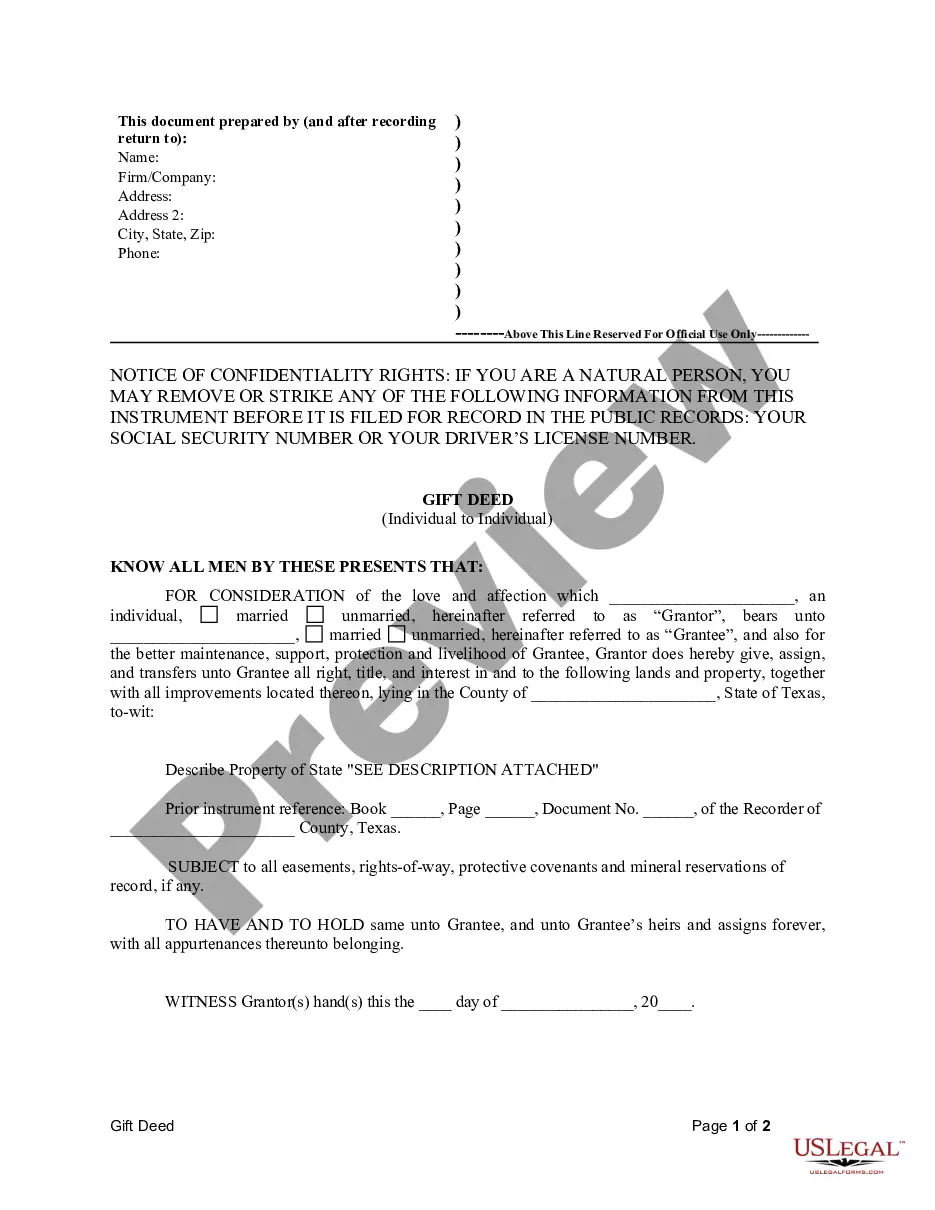
Distributorship Agreement Sample With Gst In Minnesota
Description

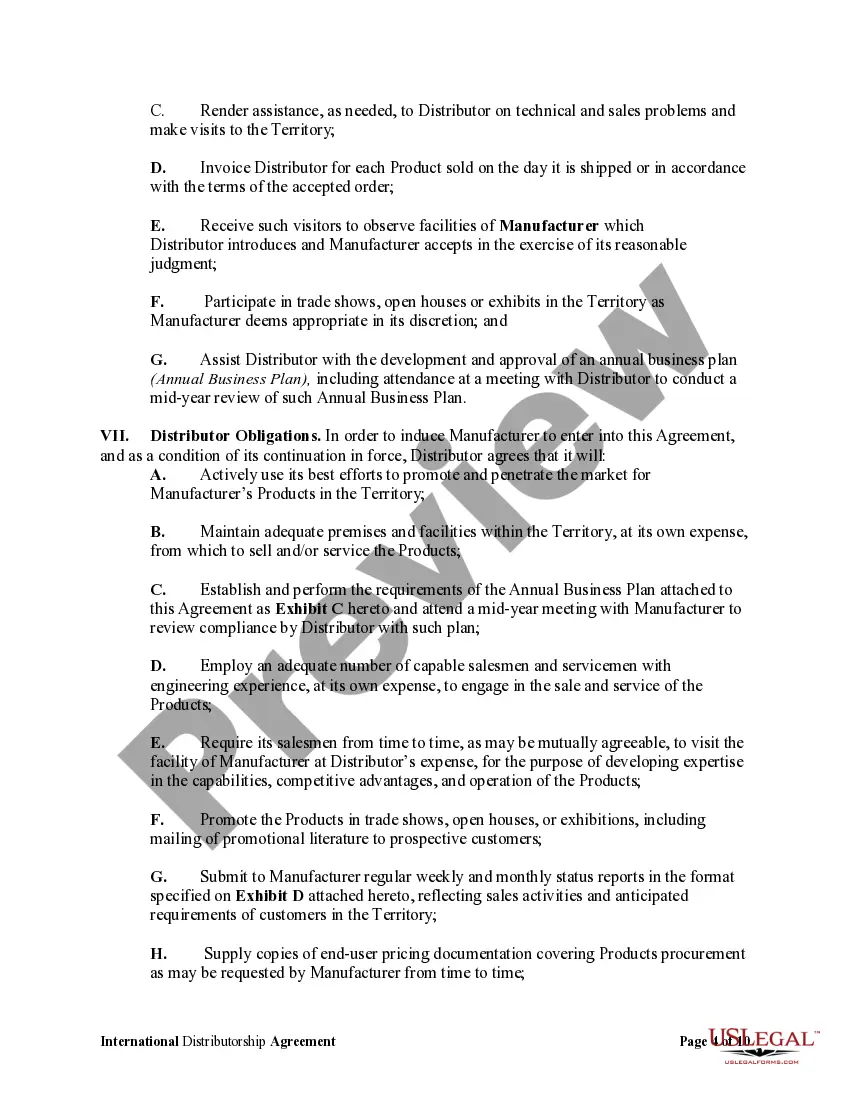
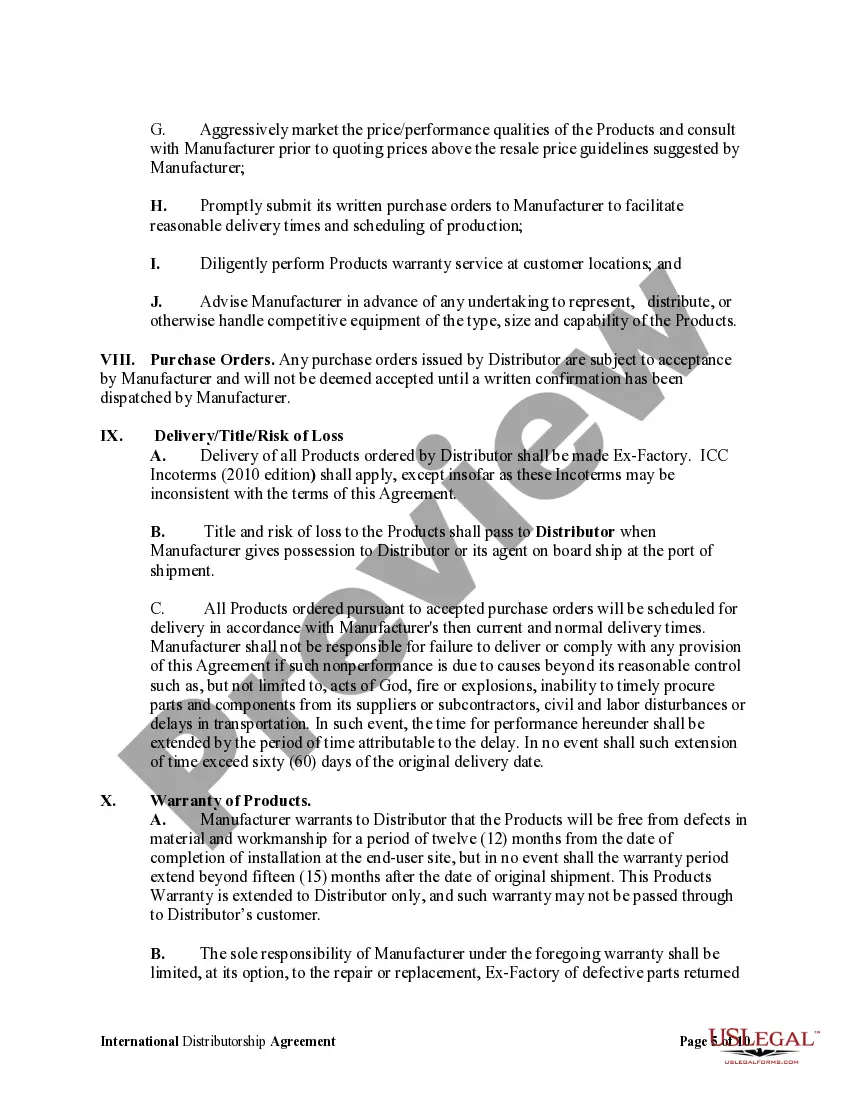
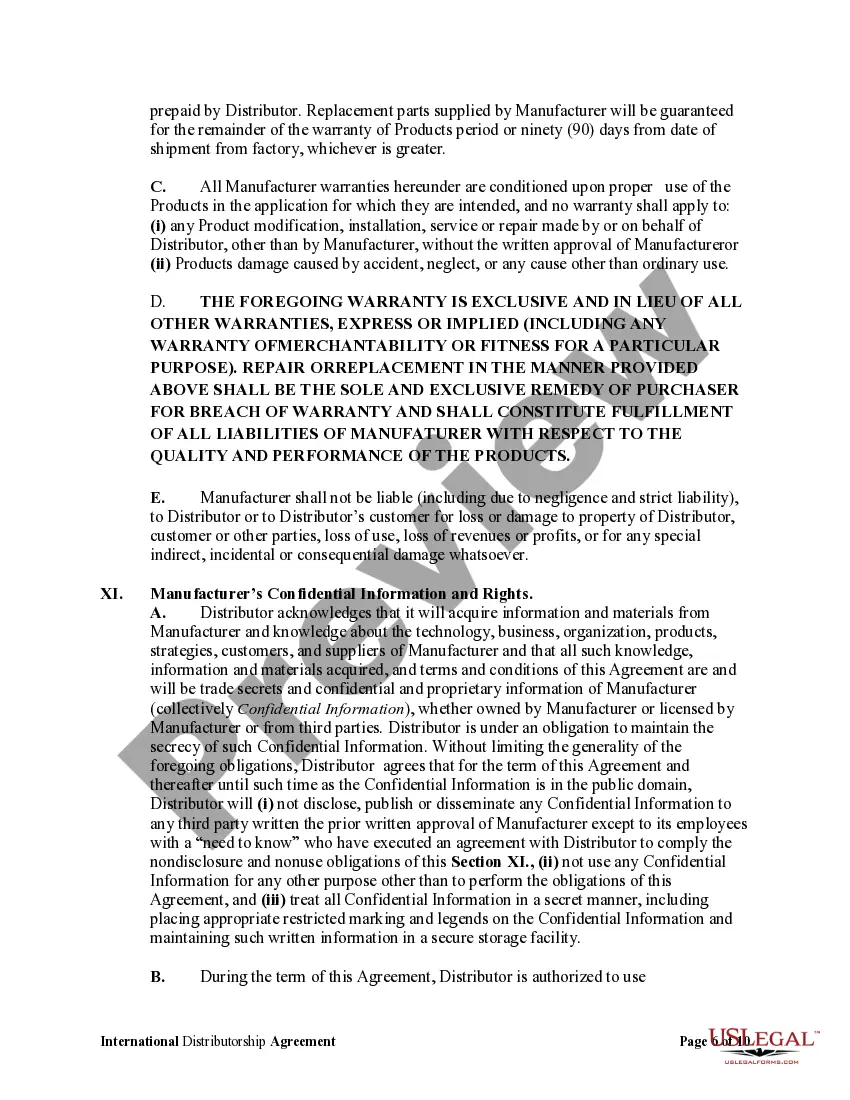
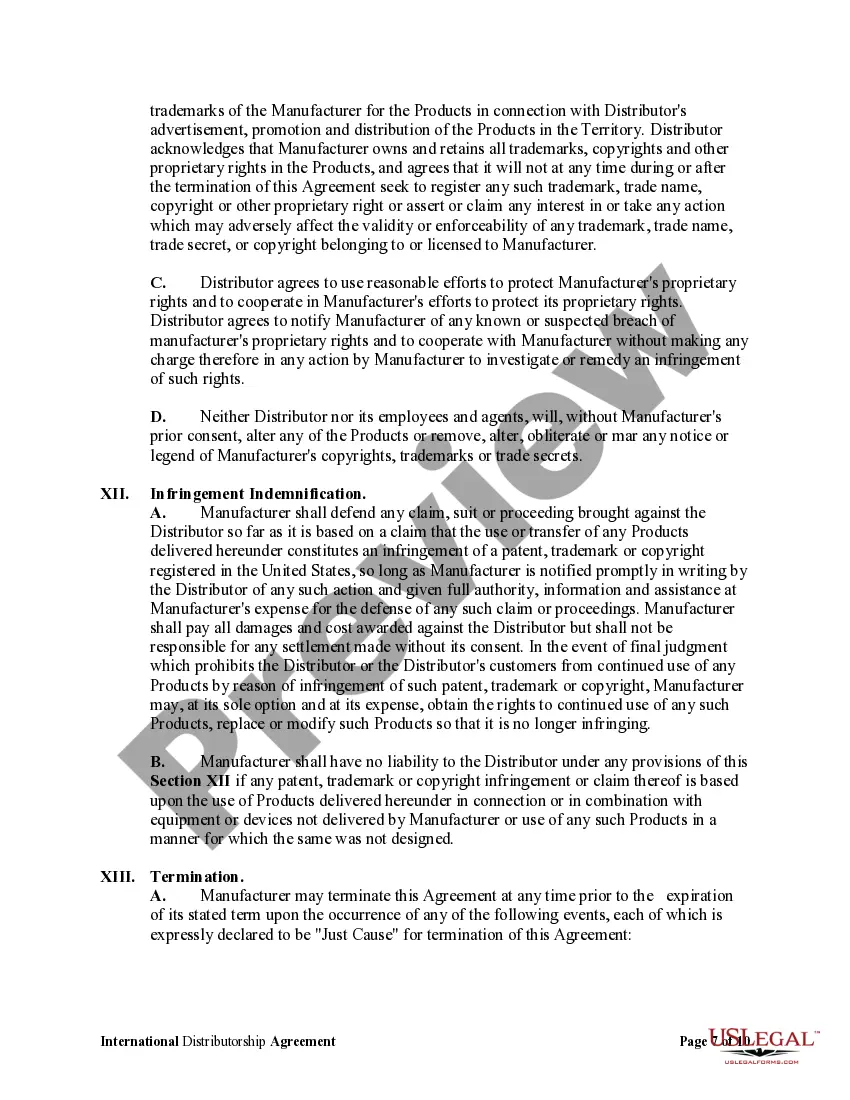
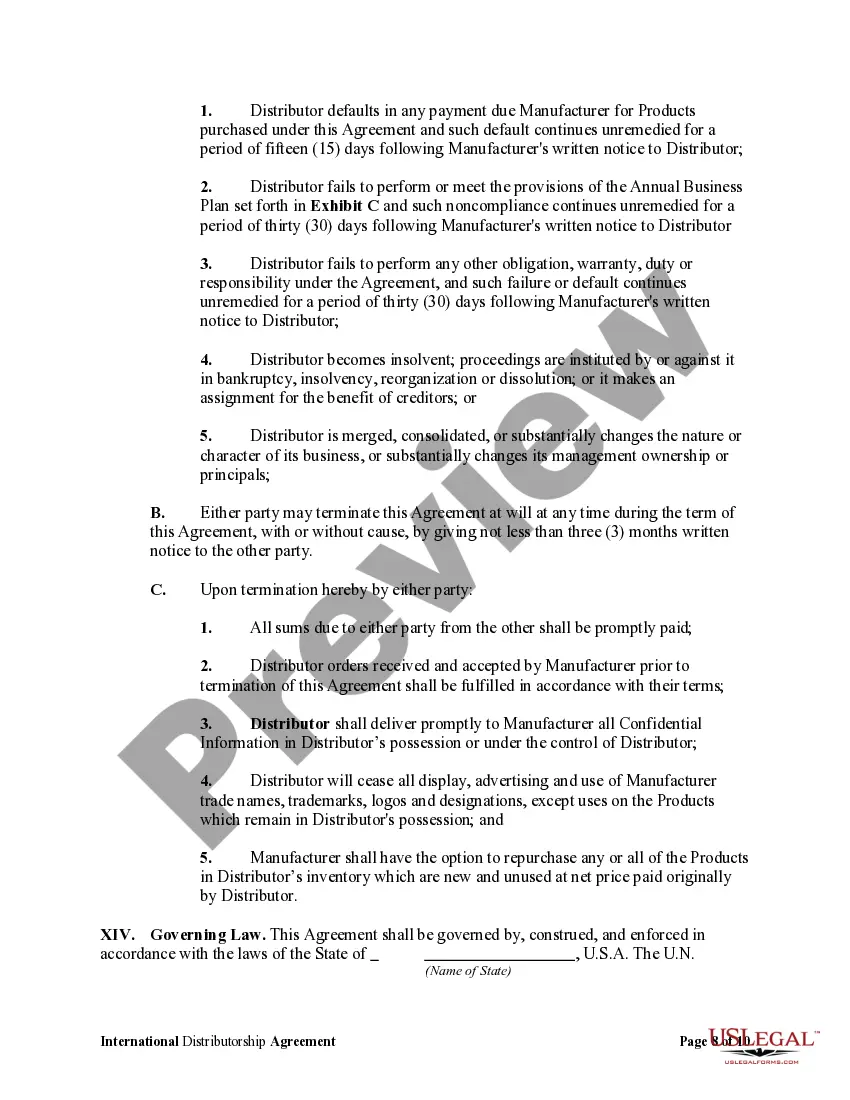
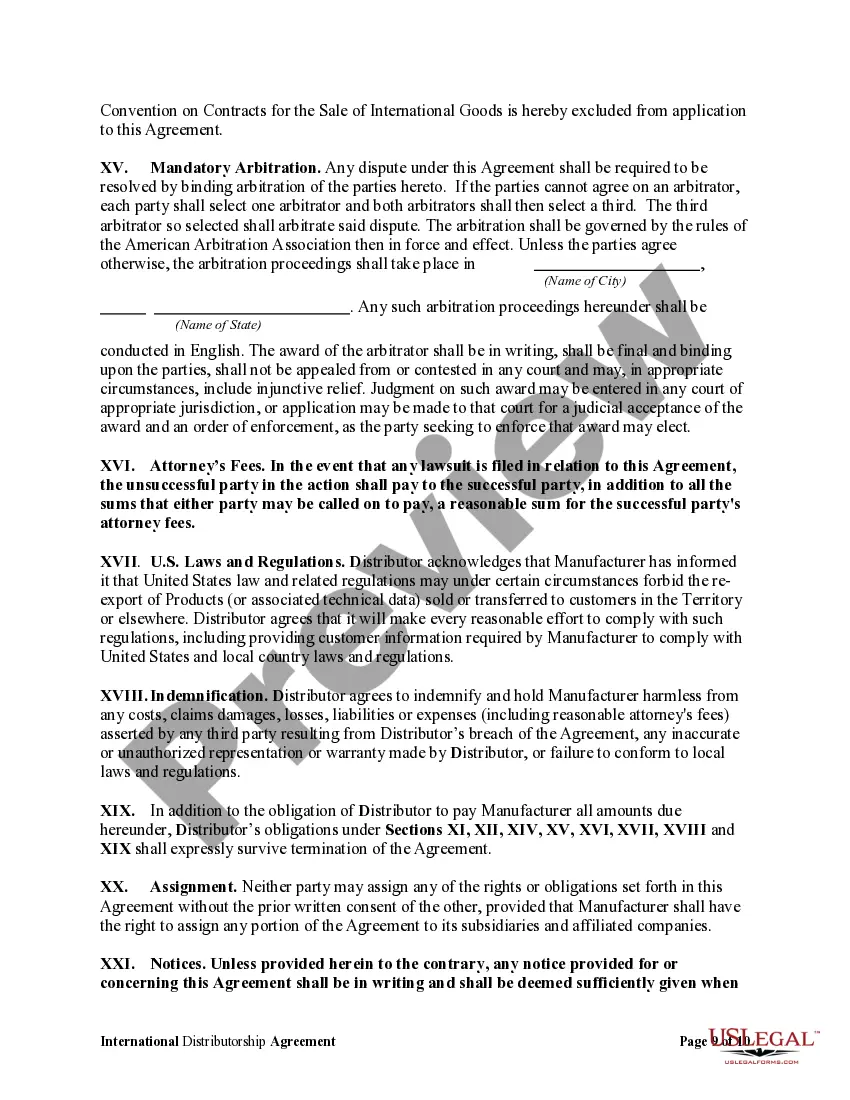
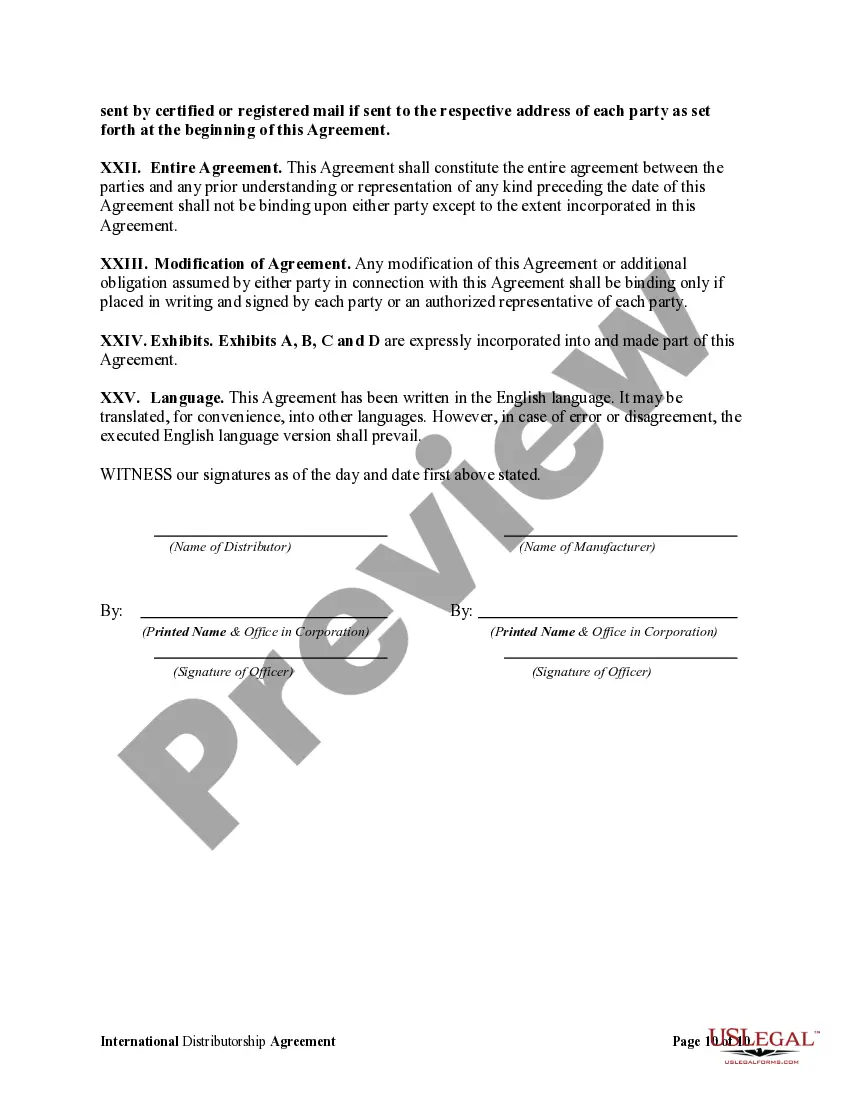
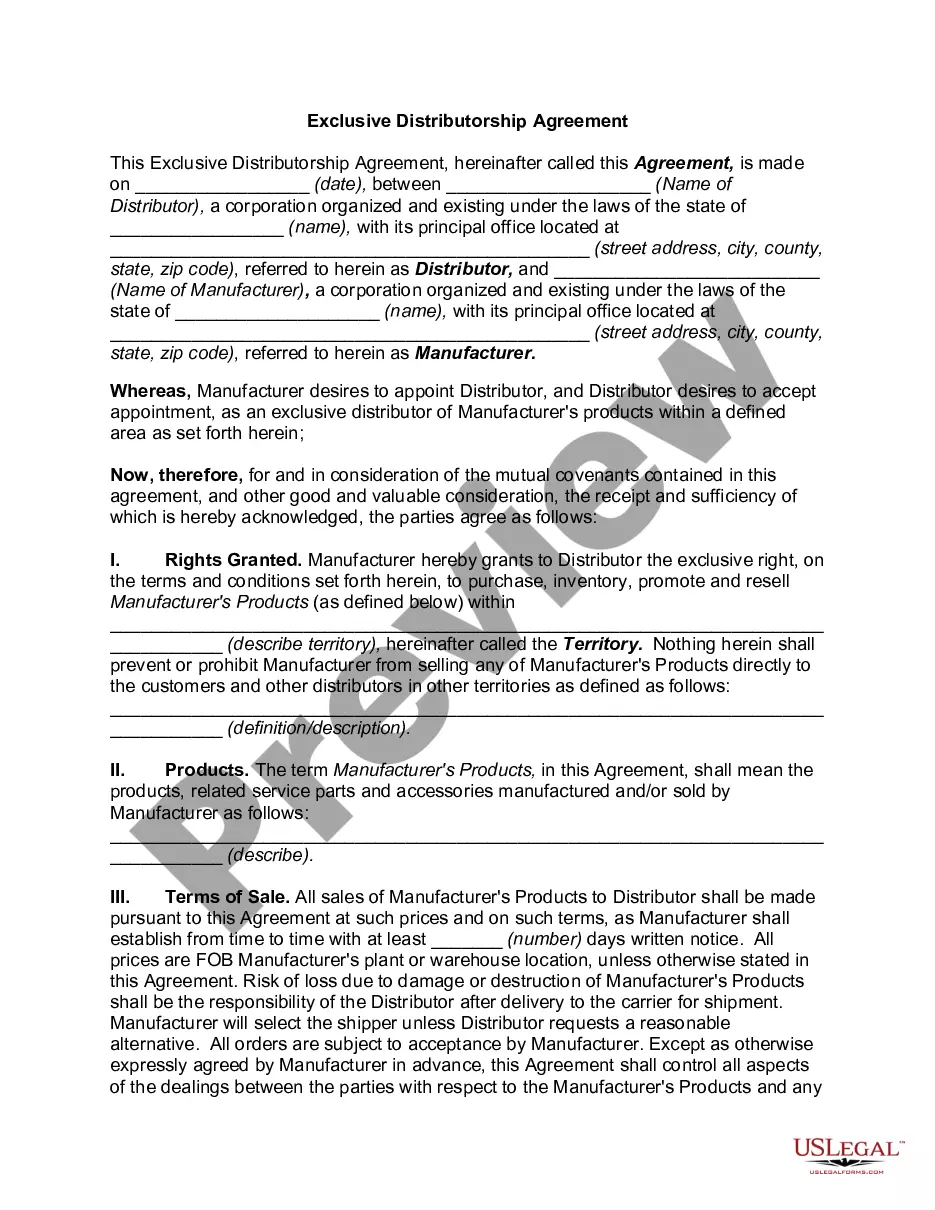
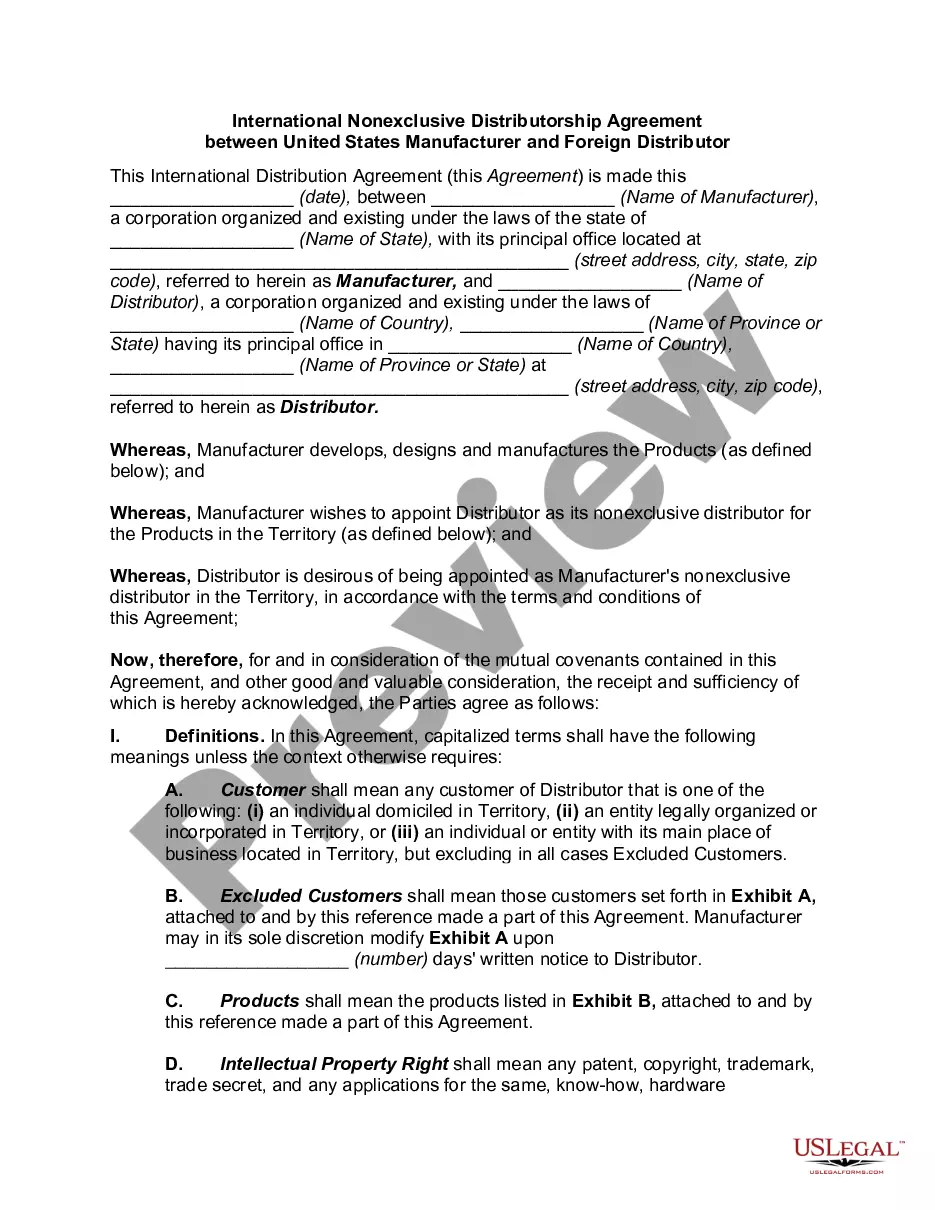
Get your form ready online
Our built-in tools help you complete, sign, share, and store your documents in one place.
Make edits, fill in missing information, and update formatting in US Legal Forms—just like you would in MS Word.
Download a copy, print it, send it by email, or mail it via USPS—whatever works best for your next step.
Sign and collect signatures with our SignNow integration. Send to multiple recipients, set reminders, and more. Go Premium to unlock E-Sign.
If this form requires notarization, complete it online through a secure video call—no need to meet a notary in person or wait for an appointment.
We protect your documents and personal data by following strict security and privacy standards.

Make edits, fill in missing information, and update formatting in US Legal Forms—just like you would in MS Word.

Download a copy, print it, send it by email, or mail it via USPS—whatever works best for your next step.

Sign and collect signatures with our SignNow integration. Send to multiple recipients, set reminders, and more. Go Premium to unlock E-Sign.

If this form requires notarization, complete it online through a secure video call—no need to meet a notary in person or wait for an appointment.

We protect your documents and personal data by following strict security and privacy standards.
Looking for another form?







Form popularity
FAQ
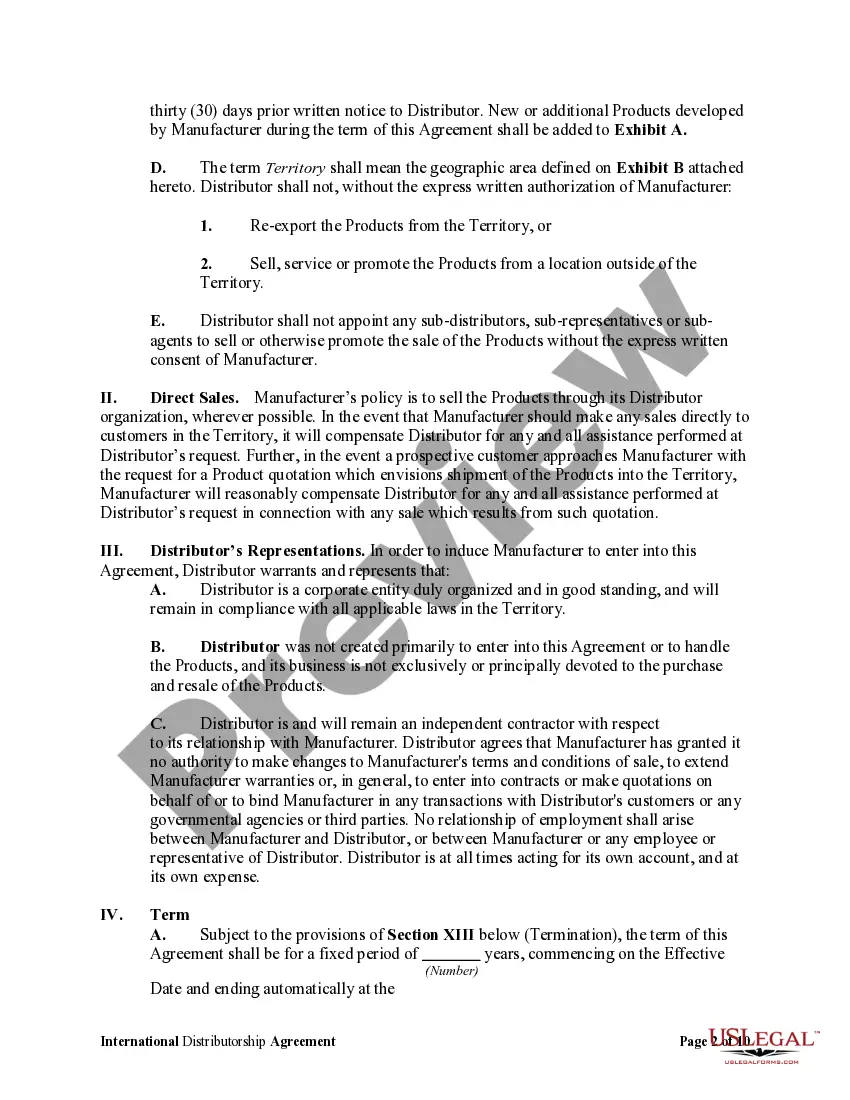
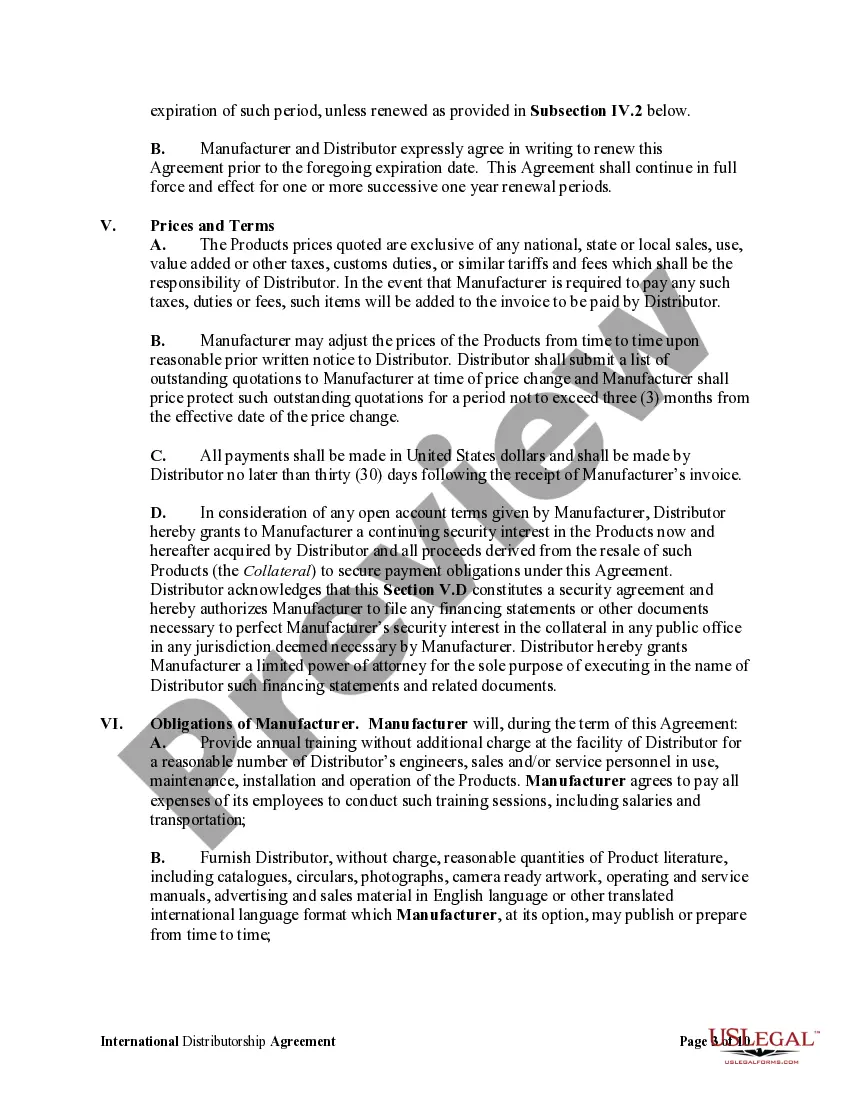
A distribution agreement, also known as a distributor agreement, is a contract between a supplying company with products to sell and another company that markets and sells the products. The distributor agrees to buy products from the supplier company and sell them to clients within certain geographical areas.
A distribution agreement is a contract between a manufacturer and a distributor. The manufacturer grants the distributor the right to sell its products or services in a specified territory or market.
An agreement of license between a trademark owner and a manufacturer is an official document that states that the manufacturer of a product has the permission to manufacture the product by the company or the individual who has trademarked it.
This is a manufacturing agreement, under which the manufacturer is obligated to produce and supply products that are specified by the customer. Typically, a detailed product specification will be provided, and this may be incorporated into the agreement or supplied as and when required by the customer.
A vendor contract (otherwise known as a vendor agreement) is a business contract between two parties covering the exchange of goods or services in return for compensation. Vendor contracts establish the business relationship conditions and include details on each party's obligations under the contract.
In general, you need a sales tax permit in Minnesota if you have a physical presence or meet economic nexus requirements.
Minnesota does have a “small seller exemption” for filers. If a business has less than 200 transactions or has gross receipts of less than $100,000, it does not need to collect and remit Minnesota sales tax.
Some customers are exempt from paying sales tax under Minnesota law. Examples include government agencies, some nonprofit organizations, and merchants purchasing goods for resale. Sellers are required to collect a valid exemption or resale certificate from buyers to validate each exempt transaction.
Furthermore, services are not taxable unless specifically included by law. Examples of taxable services include lodging, laundry and cleaning services, pet grooming, lawn care, digital downloads, and telecommunications. A remote seller is a retailer that does not have a physical presence in the state.
No, the IRS issues an EIN or (federal tax ID number), whereas a seller's permit is a tax ID that your state issues for local tax.