Letters To Lawyers Examples In Sacramento
Description


Get your form ready online
Our built-in tools help you complete, sign, share, and store your documents in one place.
Make edits, fill in missing information, and update formatting in US Legal Forms—just like you would in MS Word.
Download a copy, print it, send it by email, or mail it via USPS—whatever works best for your next step.
Sign and collect signatures with our SignNow integration. Send to multiple recipients, set reminders, and more. Go Premium to unlock E-Sign.
If this form requires notarization, complete it online through a secure video call—no need to meet a notary in person or wait for an appointment.
We protect your documents and personal data by following strict security and privacy standards.

Make edits, fill in missing information, and update formatting in US Legal Forms—just like you would in MS Word.

Download a copy, print it, send it by email, or mail it via USPS—whatever works best for your next step.

Sign and collect signatures with our SignNow integration. Send to multiple recipients, set reminders, and more. Go Premium to unlock E-Sign.

If this form requires notarization, complete it online through a secure video call—no need to meet a notary in person or wait for an appointment.

We protect your documents and personal data by following strict security and privacy standards.
Looking for another form?







Form popularity
FAQ
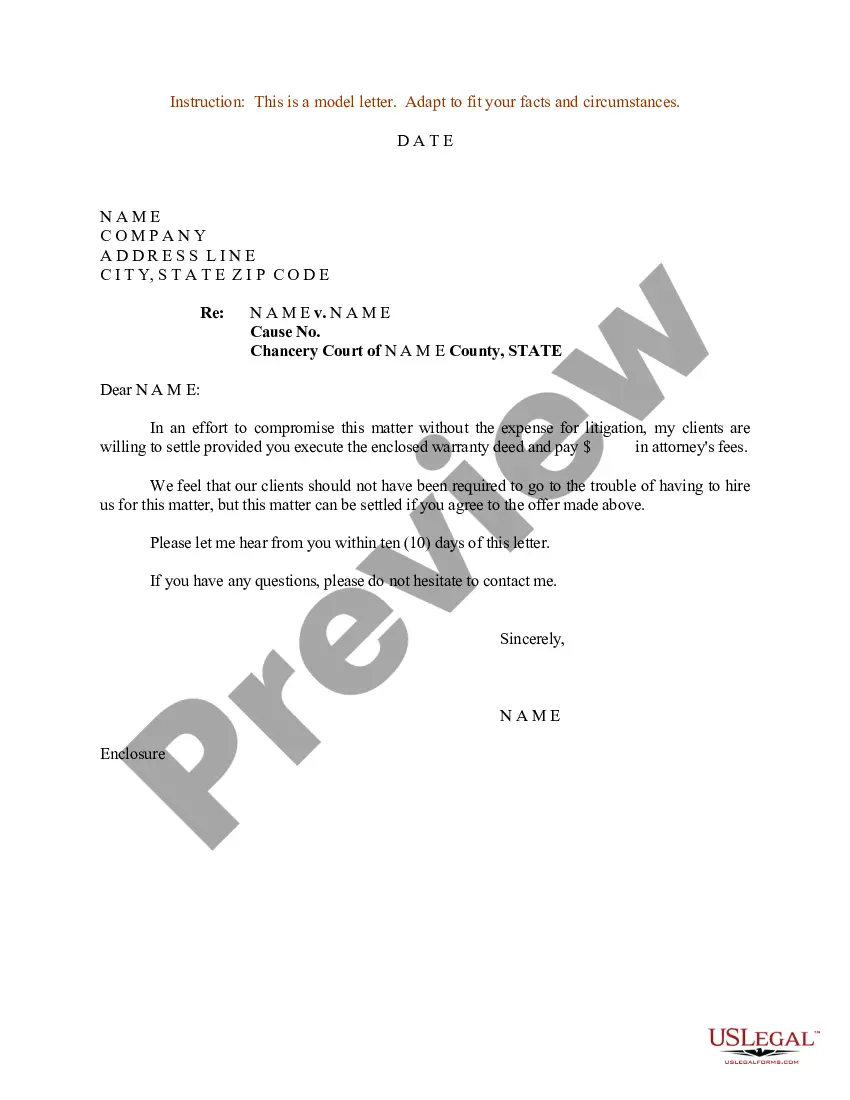
Formatting the Letter Decide whether to follow "full block" or "modified block" format. Write your address. Write the date. Insert your attorney's name and address. Reference your case number. Greet your attorney. Write out the body of the letter. Close the letter.
Hiring an attorney to write a single letter is almost never enough to produce results. If you're going to fight, be prepared to fight. That doesn't mean you have to run off and file a lawsuit, but it does mean that you should be prepared to go a few rounds with your employer. If you're not, that's fine.
Frequently Asked Questions (FAQ) Type your letter. Concisely review the main facts. Be polite. Write with your goal in mind. Ask for exactly what you want. Set a deadline. End the letter by stating you will promptly pursue legal remedies if the other party does not meet your demand. Make and keep copies.
Quick Reference. A letter written by a solicitor, usually threatening to take a matter to court. From: solicitor's letter in A Dictionary of Finance and Banking »
Ensure the letter is dated particularly if it is to refer to deadlines, for example for the return of information by a prescribed time. Ensure the addressee and address are correct. Use an initial heading to identify clearly the matter being discussed in the correspondence.
“Sincerely” is one often used by lawyers. When writing to someone without referring to them by name (e.g. “Dear Sir or Madam”), the convention in the US is to sign off with “Yours truly” (or something similar) and the convention in the UK is to sign off with “Yours faithfully” (or something similar).
Clarity and Brevity: Lawyers are often busy, so make your email concise and to the point. Avoid long-winded explanations and stick to the essential facts. Professional Tone: Maintain a respectful and professional tone throughout your email. Avoid using slang or overly casual language.
Here are some tips to make sure your cover letter stands out: Use professional yet engaging language. Do your homework on the law firm to whom you're applying. If you have any awards or recognitions, make sure you mention them. Mention your competencies. Proofread and spellcheck your legal cover letter.