Debt Settlement Letter Sample With Bank In Riverside
Description


Get your form ready online
Our built-in tools help you complete, sign, share, and store your documents in one place.
Make edits, fill in missing information, and update formatting in US Legal Forms—just like you would in MS Word.
Download a copy, print it, send it by email, or mail it via USPS—whatever works best for your next step.
Sign and collect signatures with our SignNow integration. Send to multiple recipients, set reminders, and more. Go Premium to unlock E-Sign.
If this form requires notarization, complete it online through a secure video call—no need to meet a notary in person or wait for an appointment.
We protect your documents and personal data by following strict security and privacy standards.

Make edits, fill in missing information, and update formatting in US Legal Forms—just like you would in MS Word.

Download a copy, print it, send it by email, or mail it via USPS—whatever works best for your next step.

Sign and collect signatures with our SignNow integration. Send to multiple recipients, set reminders, and more. Go Premium to unlock E-Sign.

If this form requires notarization, complete it online through a secure video call—no need to meet a notary in person or wait for an appointment.

We protect your documents and personal data by following strict security and privacy standards.
Looking for another form?







Form popularity
FAQ
Legally yes you can negotiate. Practically they have no reason to. As for debt consolidation loans go just make sure you check out the company extremely well.
Settlement Letter - Confirms the amount to settle debt up to a specified date. Letter of Indebtedness - Confirms the amount owed to date as of the letter's date. Letter of Non-Indebtedness - Confirms no outstanding debt.
Lenders apply debt forgiveness in several ways, including through directly negotiated settlements or government programs. You can also approach industry professionals such as debt counselors to assist with repayment plans. However, it's important to keep in mind that debt forgiveness is relatively rare.
Most creditors are able to consider writing off their debt when they are convinced that your situation means that pursuing the debt is unlikely to be successful, especially if the amount is small.
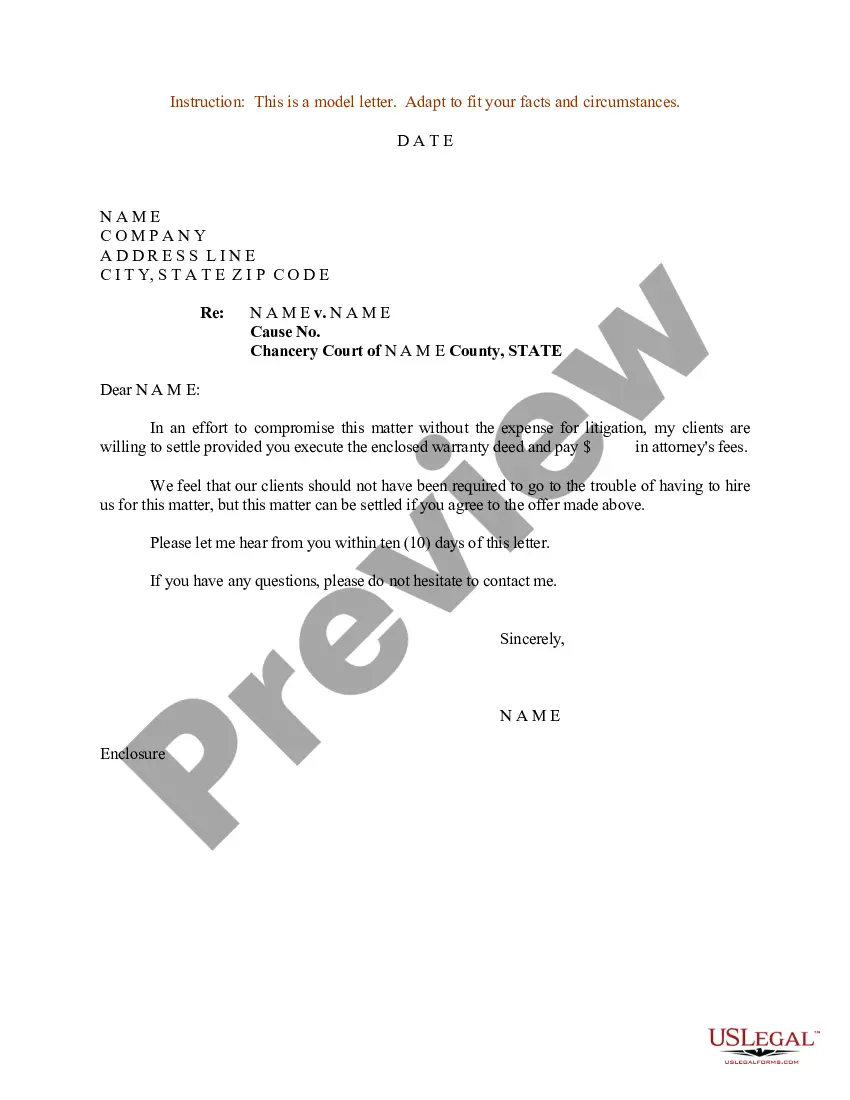
Explain your circumstances and propose a settlement amount. The lender might counteroffer, and the goal is to reach a mutually agreeable amount. 4. Get It in Writing: Once a settlement amount is agreed upon, ensure you receive a written agreement from the lender.
In some instances of serious financial hardship, your lender or credit card provider may be willing to settle your outstanding balance for less than what you owe — provided you can offer them a large lump-sum payment.
I am writing this letter to state that on _ (Day) i.e. (Date), I got relieved from your _ (Company/ Organization) but my full and final settlement has not been done. I request you to kindly do the full and final settlement and send me all dues (if any).
Consult a Credit Counselor Determine If Negotiation Is Right for You. Set Your Terms. Tell the Truth and Keep a Consistent Story. Learn Your Rights Under the Fair Debt Collection Practices Act (FDCPA) Keep Detailed Communication Notes. Negotiate with Creditors Directly. Get All Agreements in Writing.