Arbitration Case Law Examples In Suffolk
Description



Get your form ready online
Our built-in tools help you complete, sign, share, and store your documents in one place.
Make edits, fill in missing information, and update formatting in US Legal Forms—just like you would in MS Word.
Download a copy, print it, send it by email, or mail it via USPS—whatever works best for your next step.
Sign and collect signatures with our SignNow integration. Send to multiple recipients, set reminders, and more. Go Premium to unlock E-Sign.
If this form requires notarization, complete it online through a secure video call—no need to meet a notary in person or wait for an appointment.
We protect your documents and personal data by following strict security and privacy standards.

Make edits, fill in missing information, and update formatting in US Legal Forms—just like you would in MS Word.

Download a copy, print it, send it by email, or mail it via USPS—whatever works best for your next step.

Sign and collect signatures with our SignNow integration. Send to multiple recipients, set reminders, and more. Go Premium to unlock E-Sign.

If this form requires notarization, complete it online through a secure video call—no need to meet a notary in person or wait for an appointment.

We protect your documents and personal data by following strict security and privacy standards.
Looking for another form?






Form popularity
FAQ
If your case involves factors like privacy concerns, the need for a quicker resolution, or the desire to avoid a public jury trial, arbitration might be an ideal solution. However, if you're worried about the finality of the arbitrator's decision or the potential for bias, you might prefer the traditional court route.
In some instances, you may be able to sue if you signed a valid arbitration agreement. While courts generally favor arbitration agreements, they will allow you to file a lawsuit if either you didn't understand your rights or your claims fall outside the arbitration provision's scope.
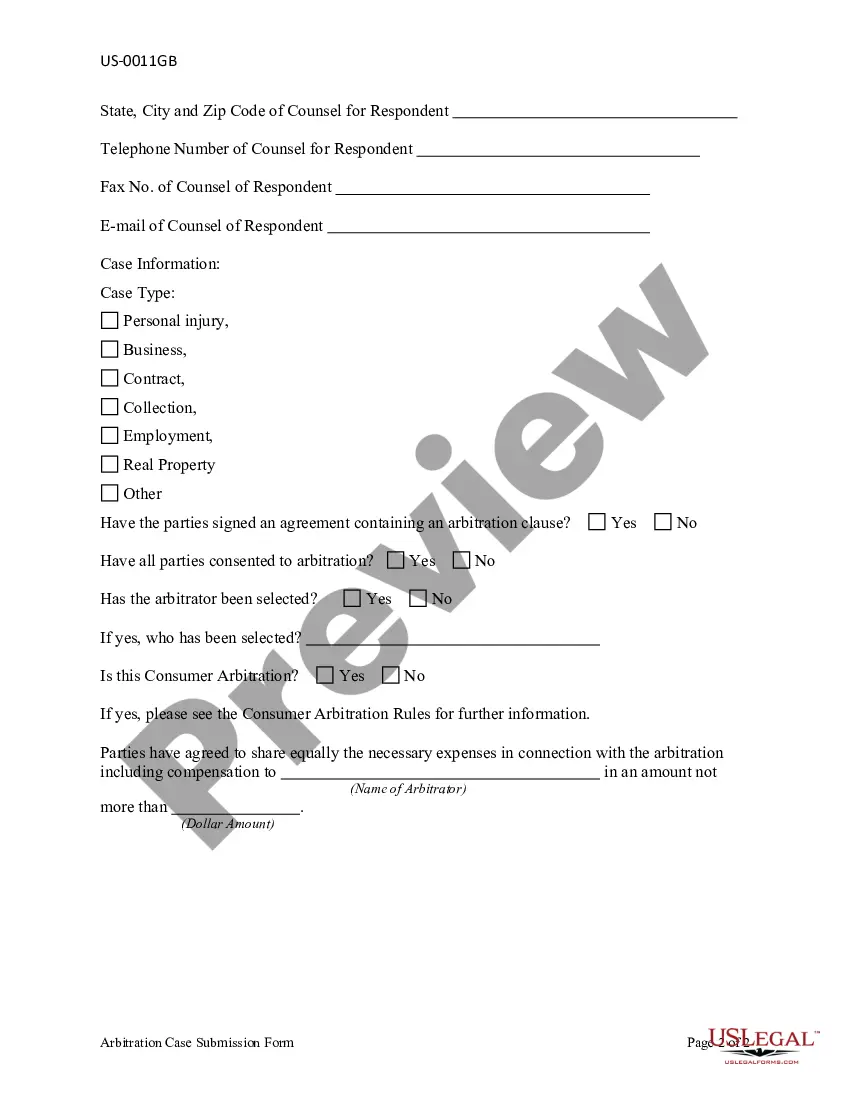
Most general civil cases valued at $50,000 and under may be ordered to judicial arbitration or to civil, court-ordered mediation (Local Rule 3210 (pdf )). Eligible case types include personal injury, business, contracts, collections, employment, and certain real property matters.
Cases that are $50,000 or less must go into arbitration. Examples include a personal injury case from an automobile accident, a disagreement about a contract, or some other type of case that doesn't involve criminal charges.
Arbitration is often used to resolve disputes in labor and employment matters. For example, an employee might file a grievance with his or her employer, alleging that the employer has violated the terms of the employment agreement.
Always get straight to the merits without berating the other side or whining about how badly it has treated you. Another threat to your credibility is the “kitchen sink” arbitration demand or a response that includes numerous claims or defenses that have little chance of succeeding.
A claimant will typically start arbitration by sending a document known as a “request for arbitration” or a “notice to arbitrate” to its opponent.
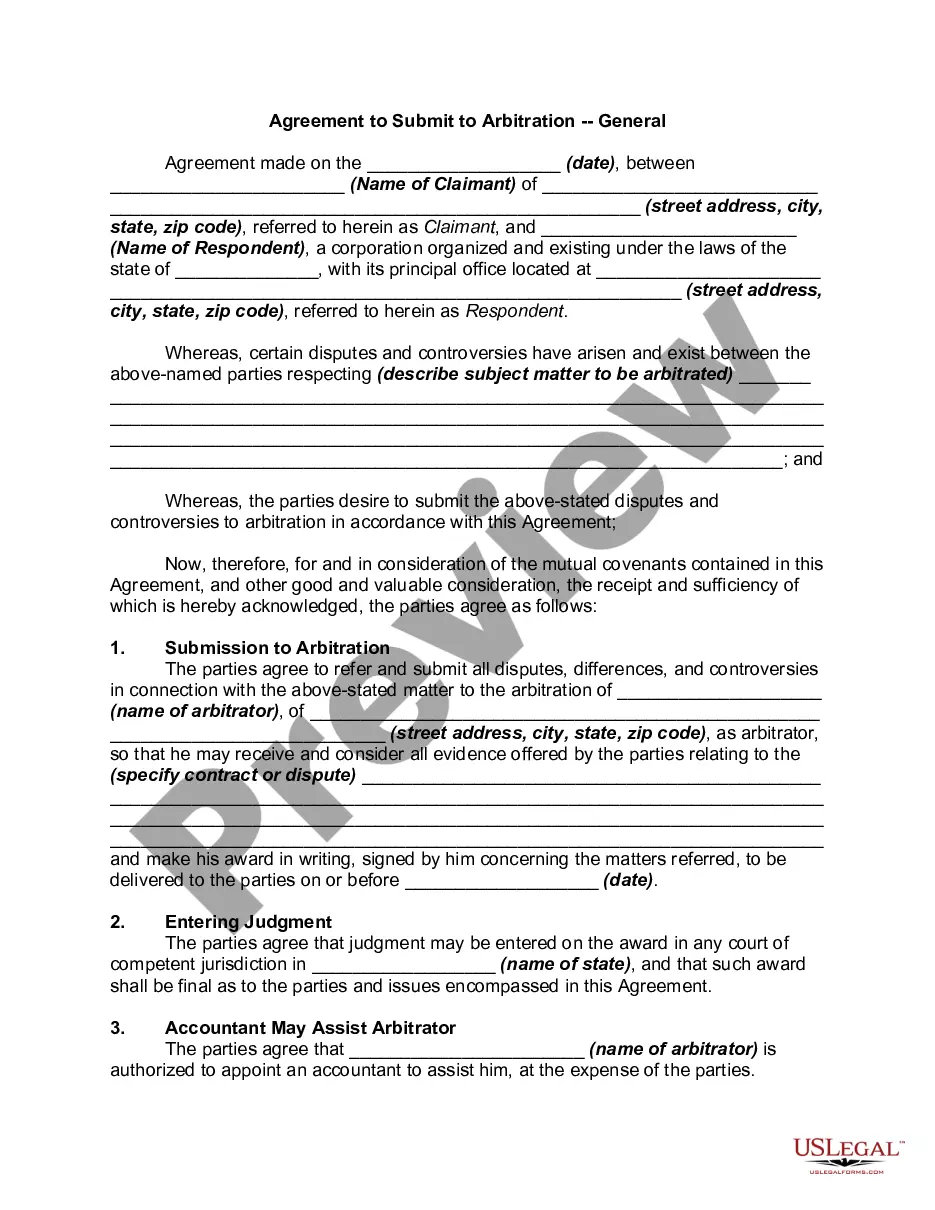
Generally speaking, all that is required to commence an arbitration is a simple statement – called a “demand” – that (a) identifies the party(ies) against whom a claim is being asserted, (b) describes the nature of the claim (e.g., breach of contract, breach of fiduciary duty), (c) states the amount of any monetary ...
In general, a Request for Arbitration or a Notice of Arbitration must contain the names of each of the parties, the names of the parties' representatives, a description of the dispute giving rise to claims, a statement of the relief sought, a description of the agreement containing the arbitration clause, the choice of ...
These cases range from breach of contract or licensing agreements, business torts, and franchise to construction and infrastructure disputes in companies from start-ups to the Fortune 500 in a variety of industries.