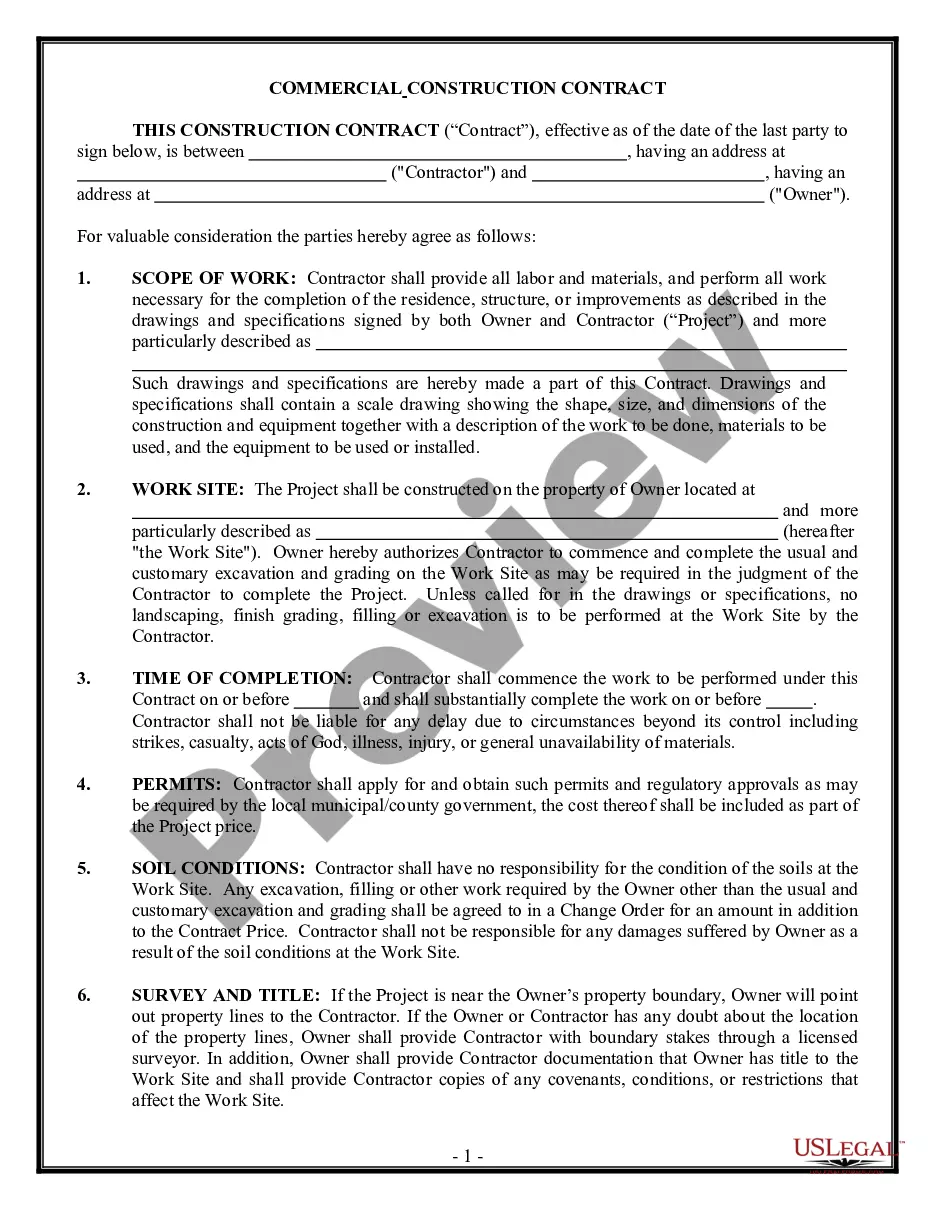
Arbitration Case Sample With No Experience In Philadelphia
Description



Get your form ready online
Our built-in tools help you complete, sign, share, and store your documents in one place.
Make edits, fill in missing information, and update formatting in US Legal Forms—just like you would in MS Word.
Download a copy, print it, send it by email, or mail it via USPS—whatever works best for your next step.
Sign and collect signatures with our SignNow integration. Send to multiple recipients, set reminders, and more. Go Premium to unlock E-Sign.
If this form requires notarization, complete it online through a secure video call—no need to meet a notary in person or wait for an appointment.
We protect your documents and personal data by following strict security and privacy standards.

Make edits, fill in missing information, and update formatting in US Legal Forms—just like you would in MS Word.

Download a copy, print it, send it by email, or mail it via USPS—whatever works best for your next step.

Sign and collect signatures with our SignNow integration. Send to multiple recipients, set reminders, and more. Go Premium to unlock E-Sign.

If this form requires notarization, complete it online through a secure video call—no need to meet a notary in person or wait for an appointment.

We protect your documents and personal data by following strict security and privacy standards.
Looking for another form?










Form popularity
FAQ
Before the arbitration hearing each side should: organize their arguments; identify and organize documentary evidence and testimony that supports the arguments; and make sure they have complied with CRC 3.820 prohibiting ex parte communication with the arbitrator.
Attorneys licensed in California can join panels at local bar associations and gain experience arbitrating such disputes with little delay. Honing basic lawyering skills like research, writing, and trial advocacy can help aspiring arbitrators build a foundation from which to transition to a career as a neutral.
After drafting the Motion to Compel Arbitration, you'll need to file it with the court clerk. You can do this in person or let an attorney do it for you if you have one. Filing requirements vary from one court to another; you need to consult with the court clerk about local rules for filing that apply to your case.
Much like the opening statement in a trial, your arbitration statement should lay out what the “evidence” – the written material – will show regarding the proper credit on the project. The Arbitration Statement is not established fact, just your assessment of the material.
Always get straight to the merits without berating the other side or whining about how badly it has treated you. Another threat to your credibility is the “kitchen sink” arbitration demand or a response that includes numerous claims or defenses that have little chance of succeeding.
There are typically seven stages of the arbitration process: Claimant Files a Claim. Respondent Submits Answer. Parties Select Arbitrators. Parties Attend Initial Prehearing Conference. Parties Exchange Discovery. Parties Attend Hearings. Arbitrators Deliberate and Render Award.
Parties will need to provide material evidence during the arbitration process. Some arbitrators may require that some types of evidence (such as invoices, pictures, and party correspondence) be presented in a specific format, such as in a binder and labeled in a certain order.
A claimant will typically start arbitration by sending a document known as a “request for arbitration” or a “notice to arbitrate” to its opponent.
The minimum criteria for qualification to be an Arbitrator in Philadelphia includes: (1) membership of the Bar of the Supreme Court of Pennsylvania; (2) active practice of law for a minimum of one year subsequent to admission to the Bar of the Supreme Court of Pennsylvania for panelists (five years to sit as the ...
The brief should include identification of the parties, a concise description of the facts, and applicable case law and statutes. The briefs should be submitted to the arbitrator at least 2 days prior to the arbitration hearing.