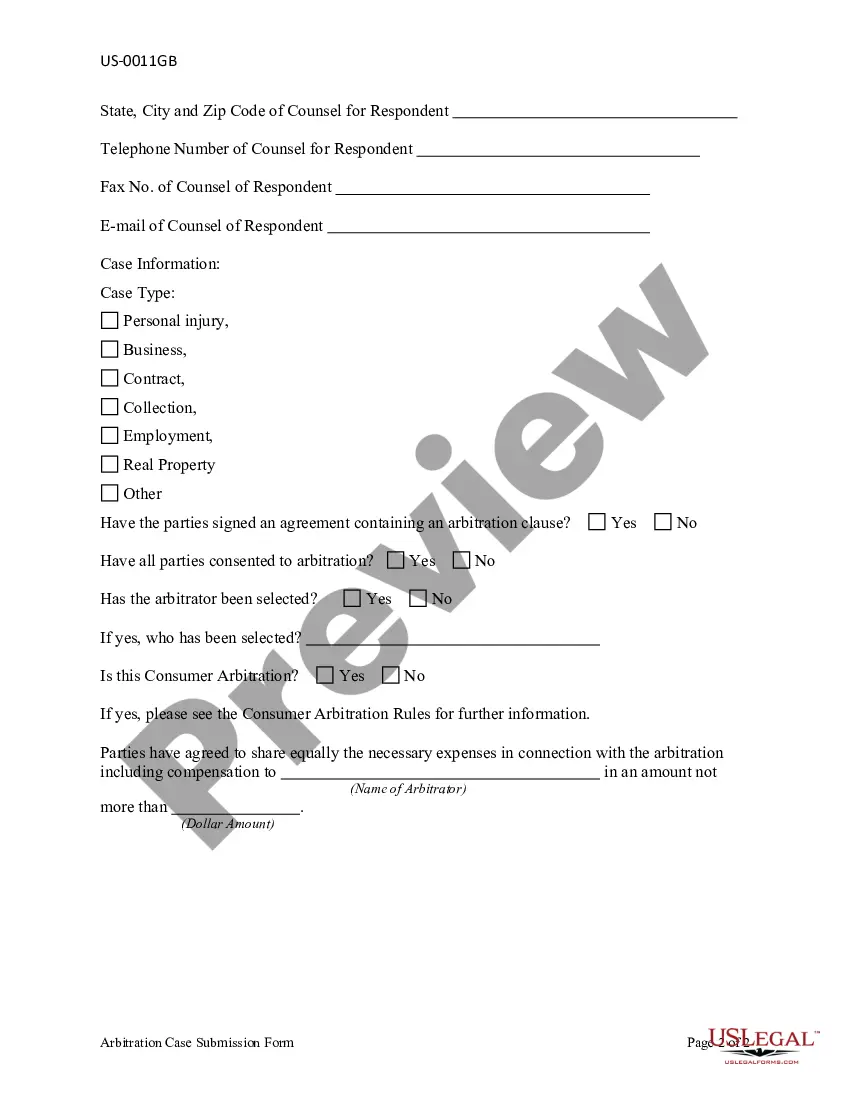
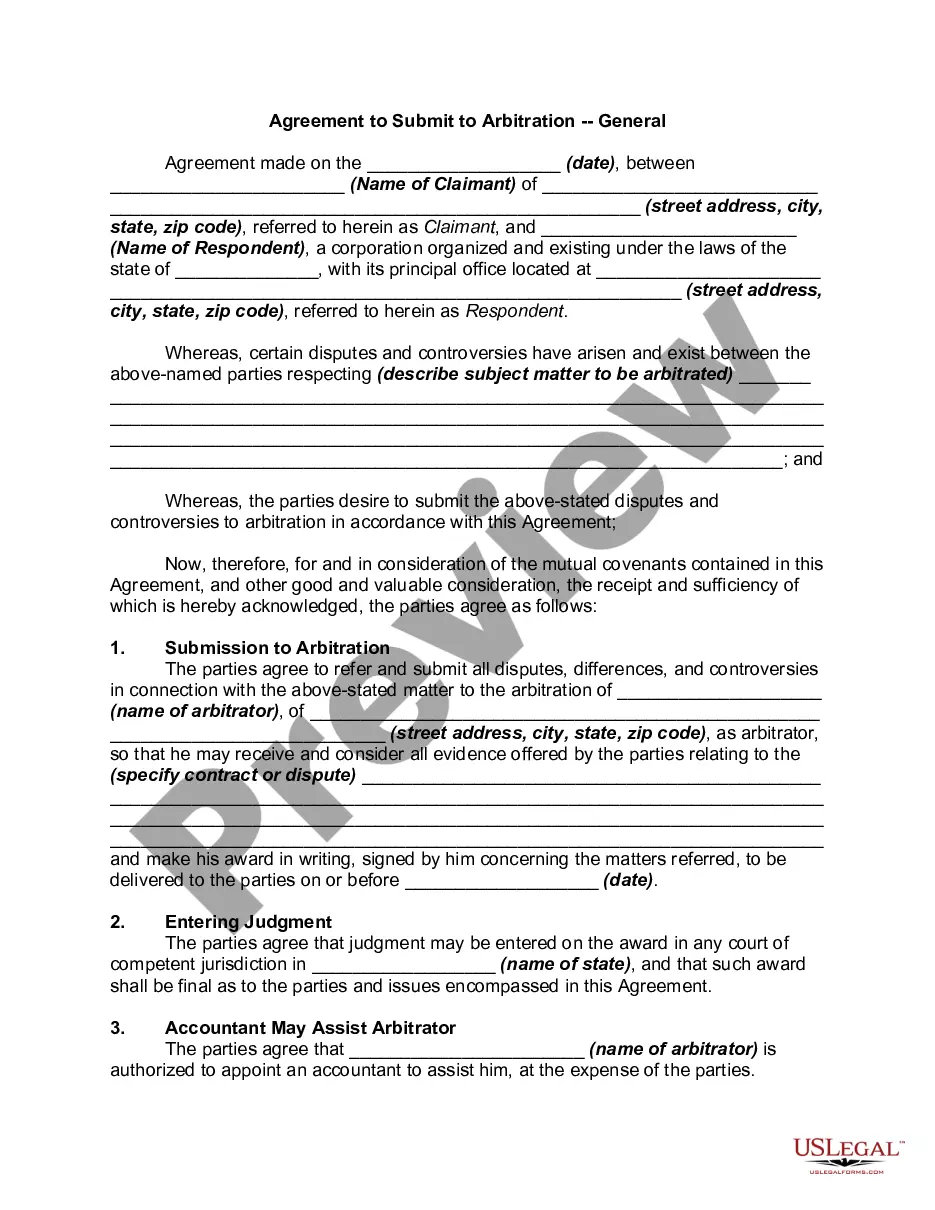
Arbitration Case Statement Forums In Ohio
Description



Get your form ready online
Our built-in tools help you complete, sign, share, and store your documents in one place.
Make edits, fill in missing information, and update formatting in US Legal Forms—just like you would in MS Word.
Download a copy, print it, send it by email, or mail it via USPS—whatever works best for your next step.
Sign and collect signatures with our SignNow integration. Send to multiple recipients, set reminders, and more. Go Premium to unlock E-Sign.
If this form requires notarization, complete it online through a secure video call—no need to meet a notary in person or wait for an appointment.
We protect your documents and personal data by following strict security and privacy standards.

Make edits, fill in missing information, and update formatting in US Legal Forms—just like you would in MS Word.

Download a copy, print it, send it by email, or mail it via USPS—whatever works best for your next step.

Sign and collect signatures with our SignNow integration. Send to multiple recipients, set reminders, and more. Go Premium to unlock E-Sign.

If this form requires notarization, complete it online through a secure video call—no need to meet a notary in person or wait for an appointment.

We protect your documents and personal data by following strict security and privacy standards.
Looking for another form?




Form popularity
FAQ
In most cases, the party that started the arbitration initially by filing a claim will present their case first and the opposing party will then have an opportunity to present their defense, but the arbitrator will ultimately decide the order.
But two unspoken reasons are also driving the trend toward arbitration. First is the fact that arbitration results tend to favor employers over employees. There are lots of institutional reasons for this bias, starting with the fact that the corporation is responsible for actually paying the fees for the arbitrator.
Arguments should flow easily from the relevant facts and applicable law. Avoid exaggerating the strengths of your case as well as disparaging the opposing side. Remember that professionalism and credibility are critical to persuasiveness.
Resolving disputes through arbitration, rather than litigation, benefits consumers, employees, and businesses–the only ones that do not benefit from arbitration are plaintiffs' lawyers.
Ohio has a public policy favoring the enforcement of arbitration provisions in contracts and ORC 2711.01(A) provides that such provisions will be enforced unless grounds exist in law or equity for revocation of the contract.
Arguments should flow easily from the relevant facts and applicable law. Avoid exaggerating the strengths of your case as well as disparaging the opposing side. Remember that professionalism and credibility are critical to persuasiveness.
Much like the opening statement in a trial, your arbitration statement should lay out what the “evidence” – the written material – will show regarding the proper credit on the project. The Arbitration Statement is not established fact, just your assessment of the material.
Parties will need to provide material evidence during the arbitration process. Some arbitrators may require that some types of evidence (such as invoices, pictures, and party correspondence) be presented in a specific format, such as in a binder and labeled in a certain order.
If the arbitration is mandatory and binding, the parties waive their rights to use the court system and have a judge or jury decide the case. If the arbitrator's award is unfair or illogical, a consumer may well be stuck with it without a chance for recourse.
In conclusion, an effective opening statement will tell the arbitrator in a concise, courteous fashion exactly what the factual situation in the case is, what the issues are, how the advocate wants the arbitrator to rule on the issues, and exactly what relief is being requested.