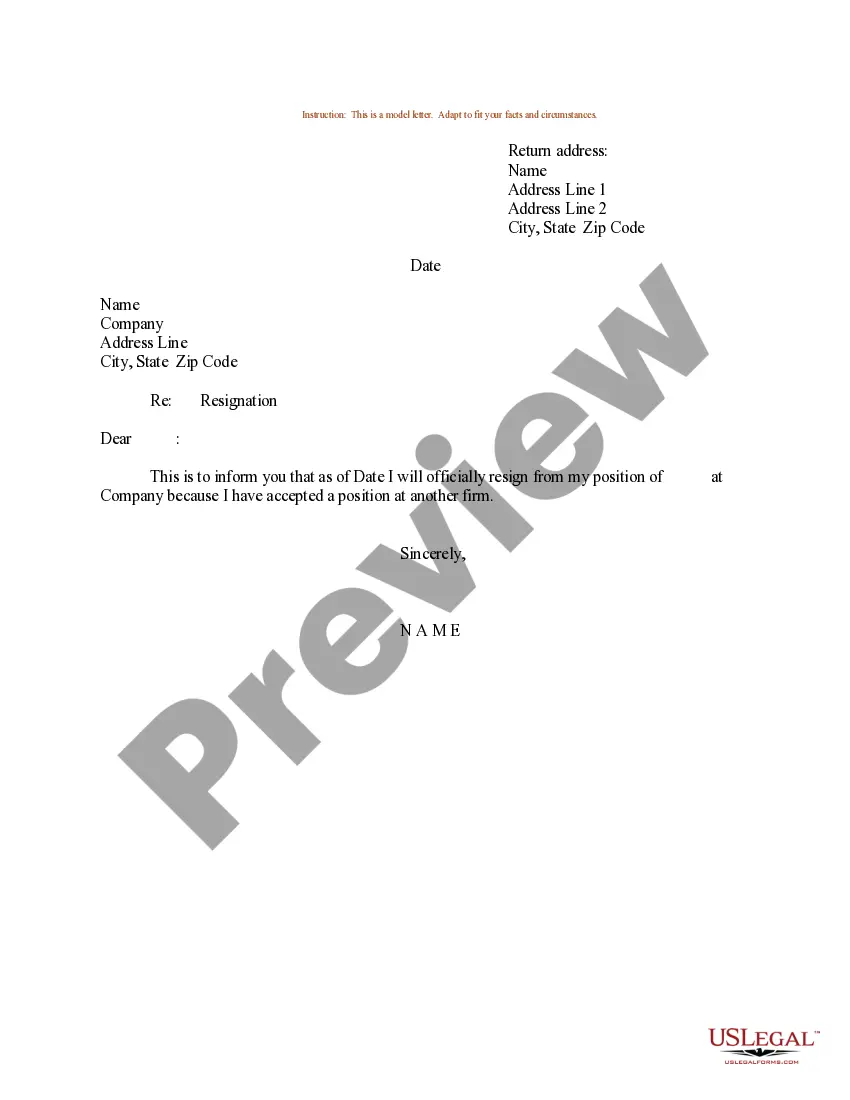
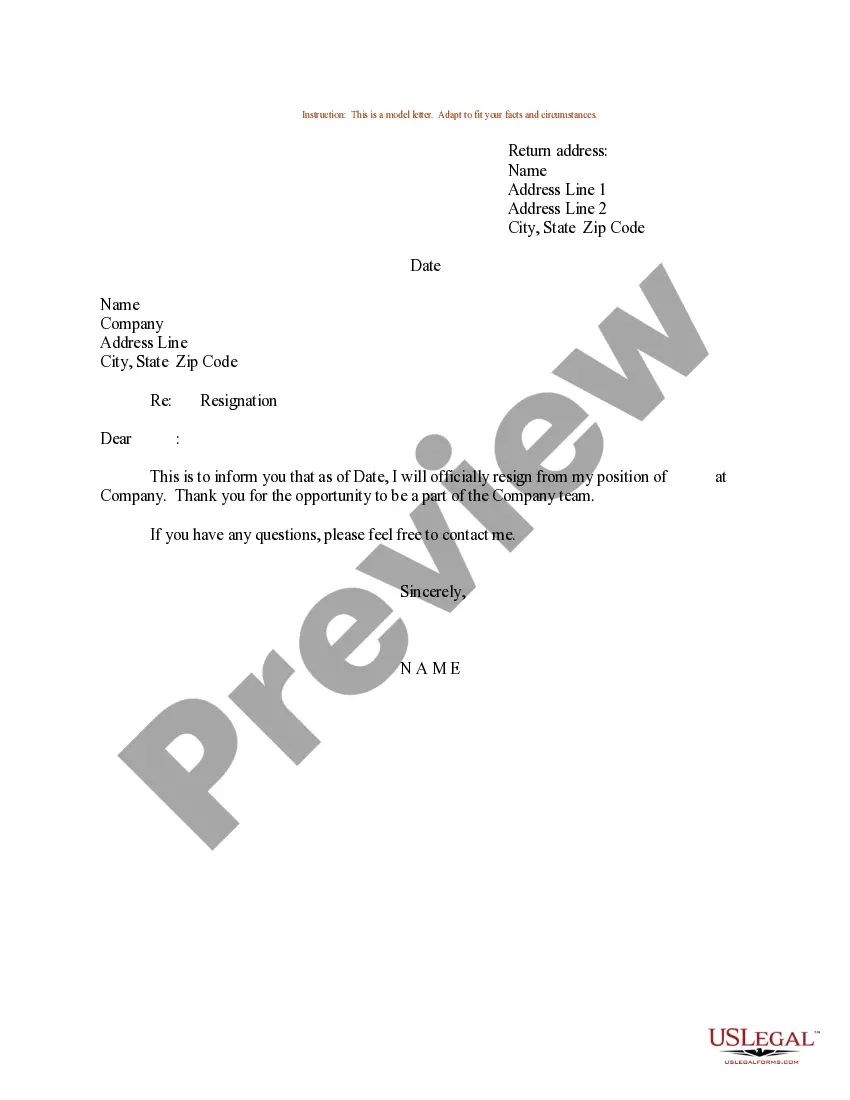
Format For Resignation Letter In Bank In Wake
Description

Get your form ready online
Our built-in tools help you complete, sign, share, and store your documents in one place.
Make edits, fill in missing information, and update formatting in US Legal Forms—just like you would in MS Word.
Download a copy, print it, send it by email, or mail it via USPS—whatever works best for your next step.
Sign and collect signatures with our SignNow integration. Send to multiple recipients, set reminders, and more. Go Premium to unlock E-Sign.
If this form requires notarization, complete it online through a secure video call—no need to meet a notary in person or wait for an appointment.
We protect your documents and personal data by following strict security and privacy standards.

Make edits, fill in missing information, and update formatting in US Legal Forms—just like you would in MS Word.

Download a copy, print it, send it by email, or mail it via USPS—whatever works best for your next step.

Sign and collect signatures with our SignNow integration. Send to multiple recipients, set reminders, and more. Go Premium to unlock E-Sign.

If this form requires notarization, complete it online through a secure video call—no need to meet a notary in person or wait for an appointment.

We protect your documents and personal data by following strict security and privacy standards.
Looking for another form?










Form popularity
FAQ
Most companies ask you to deliver your resignation letter to your direct supervisor. You may also write to a letter to someone else, such as a more senior manager or member of human resources. Your employee handbook may have information about whom to address when sending a resignation letter.
Dear Supervisor's Name, I am writing to inform you that I have decided to resign from my position as Job Title at Company Name. My last day of work will be Date. I want to take this opportunity to thank you and the entire team for the valuable experience and support provided during my time at Company Name.
A simple, “Resignation: Name” is good enough. Add contact details, company name, and date. Address your manager. State your decision to resign and last day of work. Provide a reason for leaving (optional) ... Express your gratitude in good faith. 6. Make a closing statement. End with a formal closing.
Dear Manager's Name, I am writing to inform you of my resignation from my position at Company Name, effective two weeks from today, Last Working Day. I appreciate the opportunities for professional development that I have experienced during my time here. Thank you for your understanding and support.
Typically, you should submit your resignation letter to your direct manager. This allows them to acknowledge your decision and discuss the next steps. However, it's also a good practice to send a copy to HR, especially if your company has specific procedures for resignations.
2. Begin with a salutation. Address the letter to your manager or HR representative. You can begin with their name, such as “Ms.
When writing a professional resignation letter, address it to the right person. This is either your current line manager or the HR department. Writing “To whom it may concern” is unprofessional.
Yes, it's generally a good idea to inform your manager before sending a resignation letter to HR. Here are a few reasons why: Professional Courtesy: Notifying your manager first shows respect for their role and allows them to prepare for your departure.
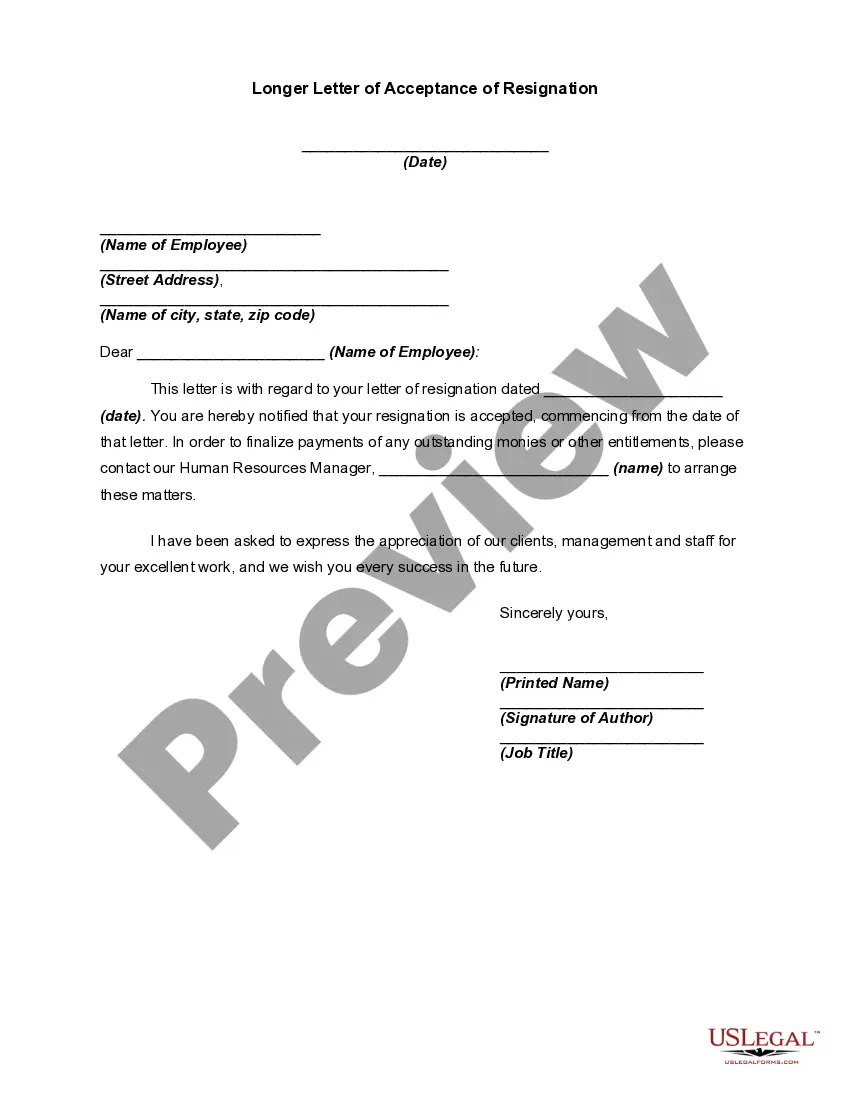
Time and date, address, statement of resignation, last day of work, statement of gratitude, next steps or important information, and your signature. Done.
