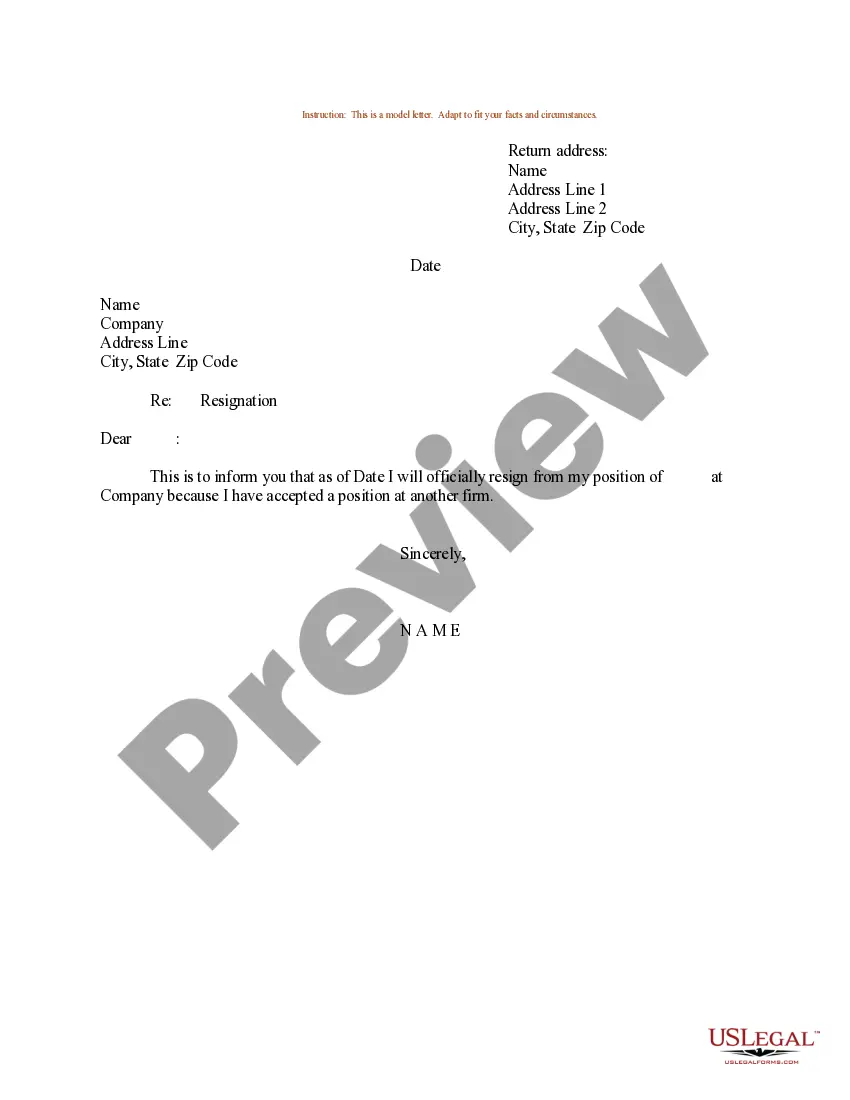
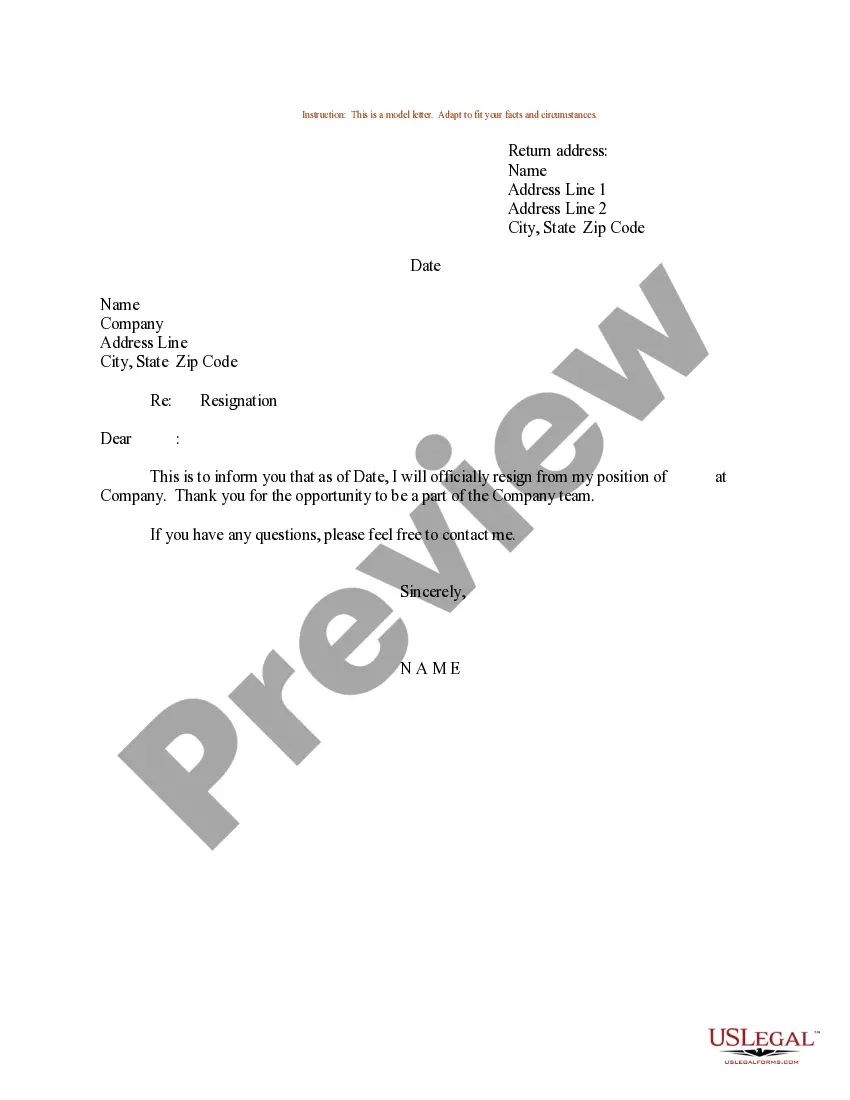
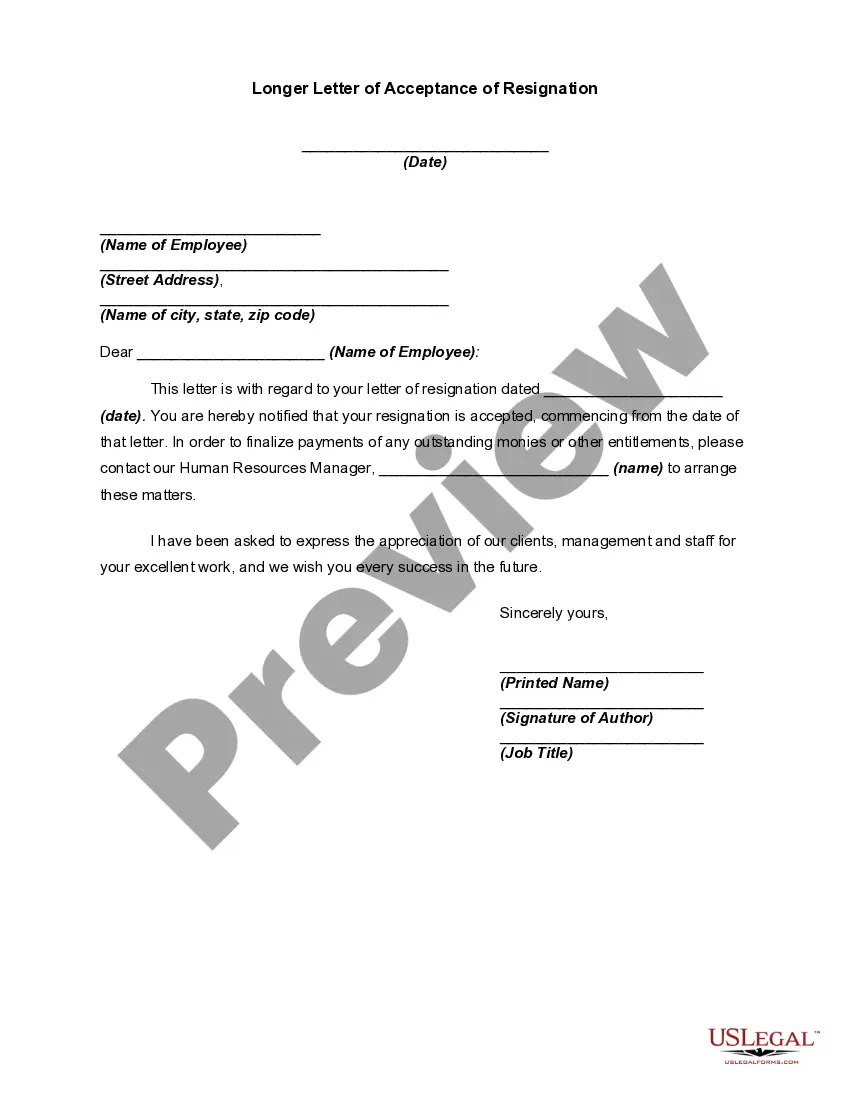
Resignation Accepted With Prejudice In Virginia
Description

Get your form ready online
Our built-in tools help you complete, sign, share, and store your documents in one place.
Make edits, fill in missing information, and update formatting in US Legal Forms—just like you would in MS Word.
Download a copy, print it, send it by email, or mail it via USPS—whatever works best for your next step.
Sign and collect signatures with our SignNow integration. Send to multiple recipients, set reminders, and more. Go Premium to unlock E-Sign.
If this form requires notarization, complete it online through a secure video call—no need to meet a notary in person or wait for an appointment.
We protect your documents and personal data by following strict security and privacy standards.

Make edits, fill in missing information, and update formatting in US Legal Forms—just like you would in MS Word.

Download a copy, print it, send it by email, or mail it via USPS—whatever works best for your next step.

Sign and collect signatures with our SignNow integration. Send to multiple recipients, set reminders, and more. Go Premium to unlock E-Sign.

If this form requires notarization, complete it online through a secure video call—no need to meet a notary in person or wait for an appointment.

We protect your documents and personal data by following strict security and privacy standards.
Looking for another form?








Form popularity
FAQ
The easy answer is that it's better to resign than to be fired. Often an employer will even give an employee the option of resigning when faced with a termination.
An employer cannot reject your resignation. However, you should always follow the right process so that you're not in breach of your contract. You should talk to your employer about how and when other people are told about your resignation. For example, whether it'll be you or your manager who tells them.
In the formal legal world, a court case that is dismissed with prejudice means that it is dismissed permanently. A case dismissed with prejudice is over and done with, once and for all, and can't be brought back to court. A case dismissed without prejudice means the opposite.
Prejudice is usually a high sanction by the court. If the court dismisses the case with prejudice, it means the plaintiff will be barred from bringing this claim ever again. Thus, court will only issue a dismissal with prejudice in certain situations.
Whereas a case that is dismissed “with prejudice” is dismissed permanently, a case that is dismissed “without prejudice” is only dismissed temporarily. This temporary dismissal means that the plaintiff is allowed to re-file charges, alter the claim, or bring the case to another court.
In a court case, prejudice signals if the judge has made what's deemed to be a final decision on a case. “With prejudice” means the decision is final. “Without prejudice” means it's not final and subject to future inquiry.
Johnston confirmed that at-will employment remains a fundamental legal doctrine in Virginia; one that does not require either employers or employees to provide advance notice of an intention to end the employment relationship.
A case dismissed with prejudice is over and done with, once and for all, and can't be brought back to court. A case dismissed without prejudice means the opposite.
The 5-Step Workplace Grievance Process Step 1: Informal meeting. Step 2: Supervisor meeting and documentation. Step 3: Escalation to management. Step 4: Escalation to top company representatives. Step 5: Referral to arbitration.
The 5-Step Workplace Grievance Process Step 1: Informal meeting. Step 2: Supervisor meeting and documentation. Step 3: Escalation to management. Step 4: Escalation to top company representatives. Step 5: Referral to arbitration.

