Resignation Accepted With Prejudice In Utah
Description
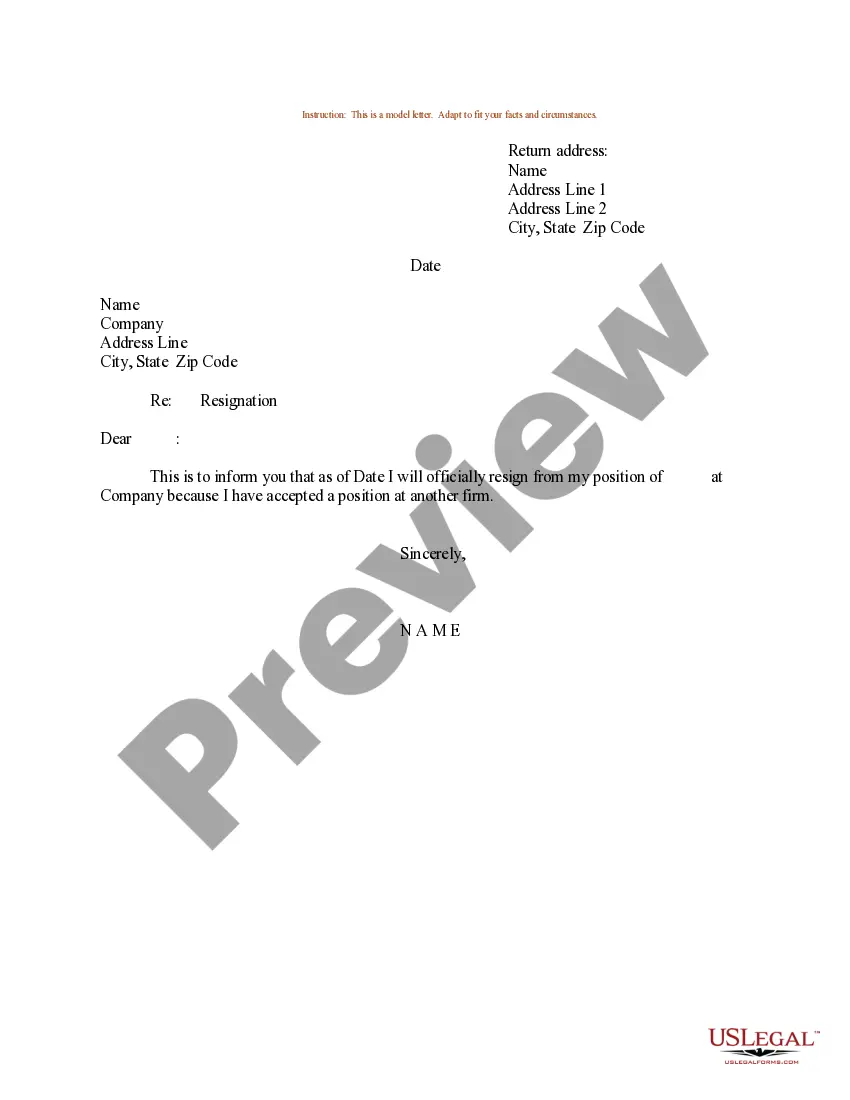
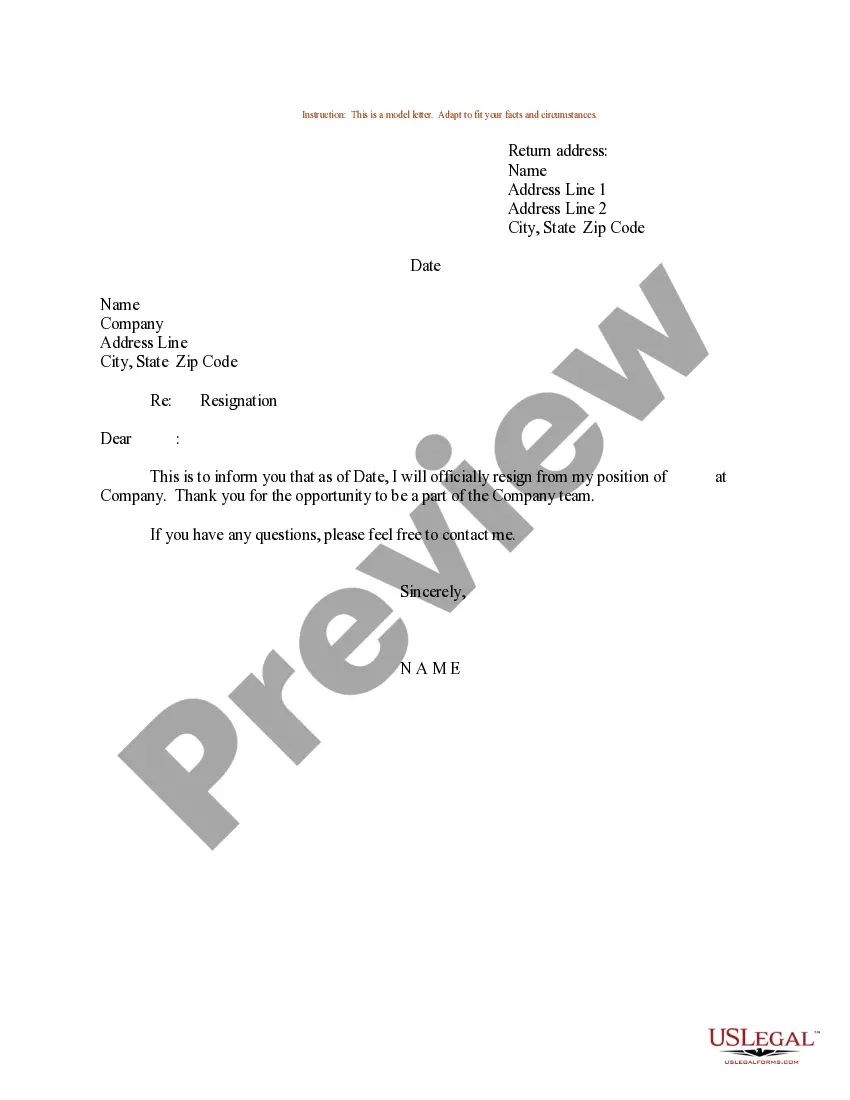
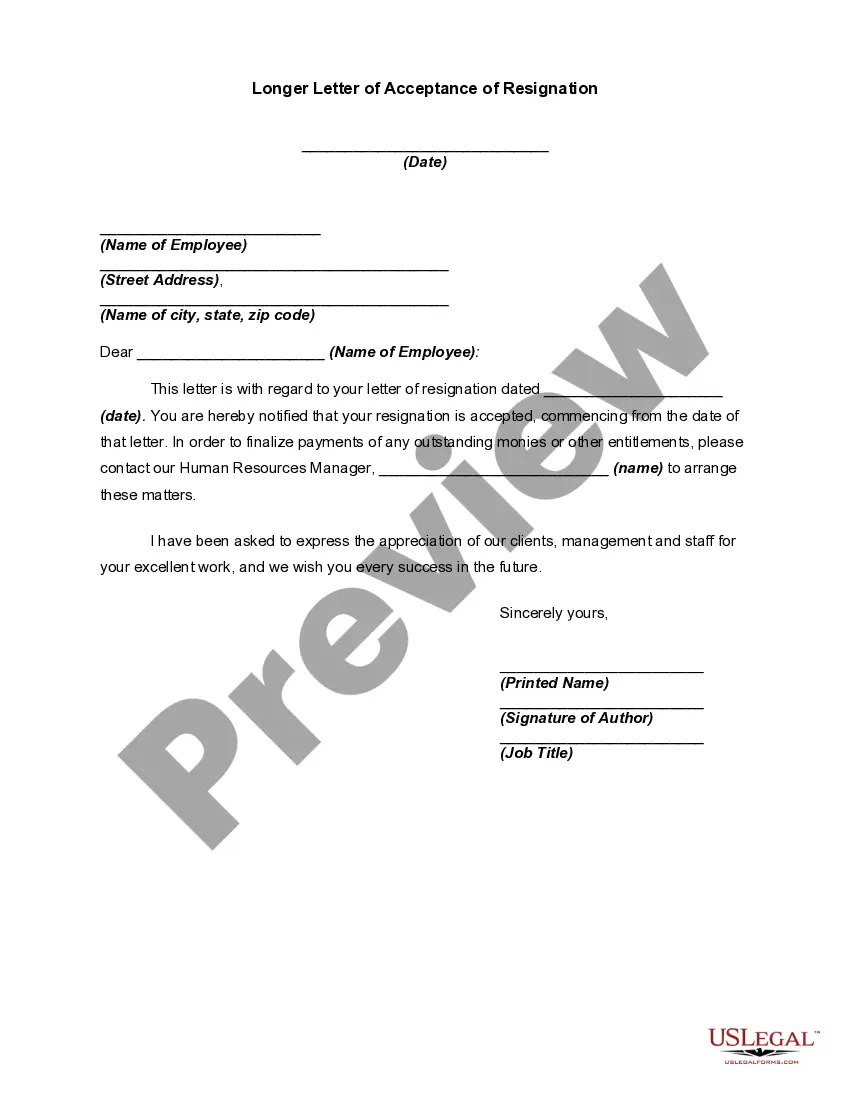

Get your form ready online
Our built-in tools help you complete, sign, share, and store your documents in one place.
Make edits, fill in missing information, and update formatting in US Legal Forms—just like you would in MS Word.
Download a copy, print it, send it by email, or mail it via USPS—whatever works best for your next step.
Sign and collect signatures with our SignNow integration. Send to multiple recipients, set reminders, and more. Go Premium to unlock E-Sign.
If this form requires notarization, complete it online through a secure video call—no need to meet a notary in person or wait for an appointment.
We protect your documents and personal data by following strict security and privacy standards.

Make edits, fill in missing information, and update formatting in US Legal Forms—just like you would in MS Word.

Download a copy, print it, send it by email, or mail it via USPS—whatever works best for your next step.

Sign and collect signatures with our SignNow integration. Send to multiple recipients, set reminders, and more. Go Premium to unlock E-Sign.

If this form requires notarization, complete it online through a secure video call—no need to meet a notary in person or wait for an appointment.

We protect your documents and personal data by following strict security and privacy standards.
Looking for another form?




Form popularity
FAQ
This rule applies to the dismissal of any counterclaim, crossclaim, or third-party claim. A claimant's voluntary dismissal under paragraph (a)(1) must be made before a responsive pleading is served or, if there is no responsive pleading, before evidence is introduced at a trial or hearing.
For a case to be dismissed “with prejudice” means that the case is dismissed permanently, it cannot be brought back to court, and the charges cannot be refiled. A case that is “dismissed with prejudice” is completely and permanently over.
The process for this kind of motion follows the general motion process. This kind of dismissal is "without prejudice," which means it is possible for the plaintiff or counterclaimant to bring their claim again in the future by asking the court to set aside or "undo" the dismissal.
Prejudice is usually a high sanction by the court. If the court dismisses the case with prejudice, it means the plaintiff will be barred from bringing this claim ever again. Thus, court will only issue a dismissal with prejudice in certain situations.
In Utah, employees can quit without giving notice, as it is an at-will employment state. However, providing notice is often considered a professional courtesy and may be required by contract in some cases.
Understanding Case Dismissal Without Prejudice in California Dismissal without prejudice is a legal term indicating that the case has been dismissed but can be reopened at some point.
Utah employees also sue their employers for breach of an employment contract or under the public policy exception to the employment at-will doctrine.
When a case is dismissed with prejudice, it is permanently over. A case is dismissed with prejudice when there is no reason to bring it back to court. An example would be if a judge determines a lawsuit as insignificant or the issue has been resolved.
The resignation is complete upon acceptance by the employer. An employee must therefore be careful and circumspect in filing his resignation because if he changes his mind, he needs to re-apply for the job as held in Intertrod Maritime, Inc. vs. NLRC (G.R.
(“In order to establish a constructive discharge, an employee must plead and prove, by the usual preponderance of the evidence standard, that the employer either intentionally created or knowingly permitted working conditions that were so intolerable or aggravated at the time of the employee's resignation that a ...

