Sample Of Resignation Letter With Reason In Pima
Description

Get your form ready online
Our built-in tools help you complete, sign, share, and store your documents in one place.
Make edits, fill in missing information, and update formatting in US Legal Forms—just like you would in MS Word.
Download a copy, print it, send it by email, or mail it via USPS—whatever works best for your next step.
Sign and collect signatures with our SignNow integration. Send to multiple recipients, set reminders, and more. Go Premium to unlock E-Sign.
If this form requires notarization, complete it online through a secure video call—no need to meet a notary in person or wait for an appointment.
We protect your documents and personal data by following strict security and privacy standards.

Make edits, fill in missing information, and update formatting in US Legal Forms—just like you would in MS Word.

Download a copy, print it, send it by email, or mail it via USPS—whatever works best for your next step.

Sign and collect signatures with our SignNow integration. Send to multiple recipients, set reminders, and more. Go Premium to unlock E-Sign.

If this form requires notarization, complete it online through a secure video call—no need to meet a notary in person or wait for an appointment.

We protect your documents and personal data by following strict security and privacy standards.
Looking for another form?









Form popularity
FAQ
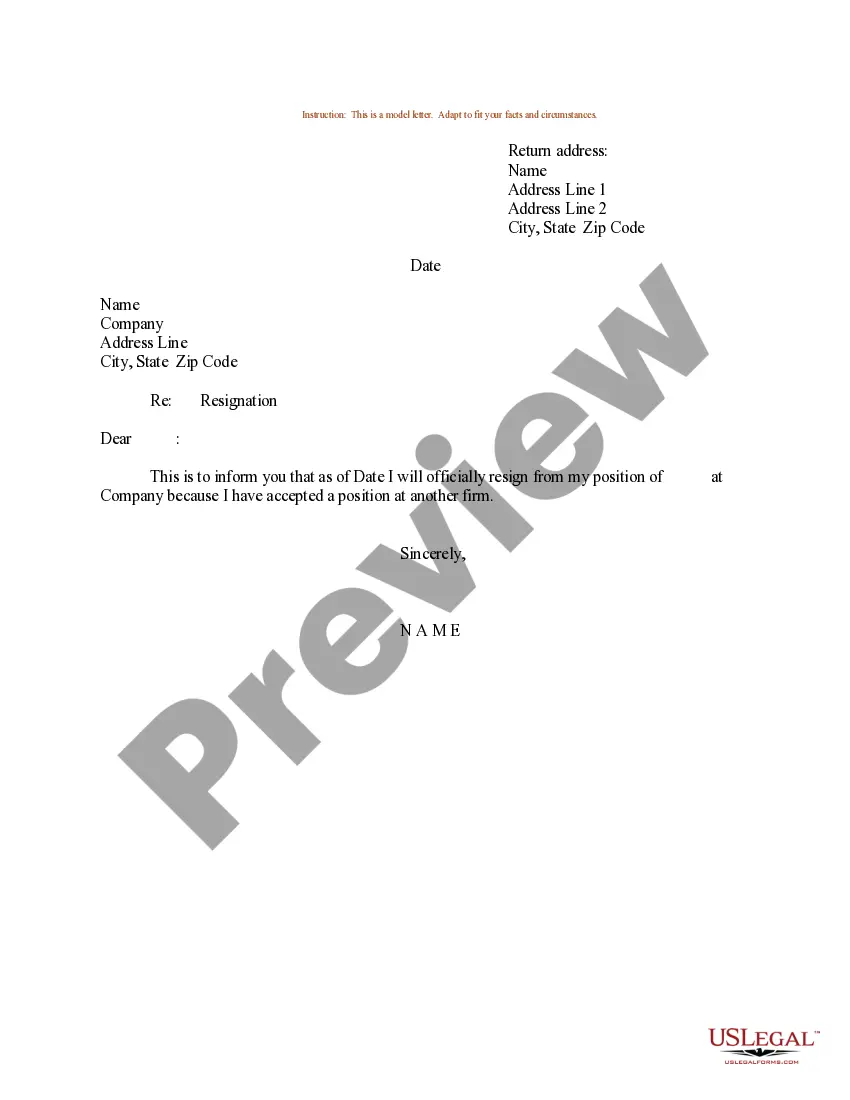
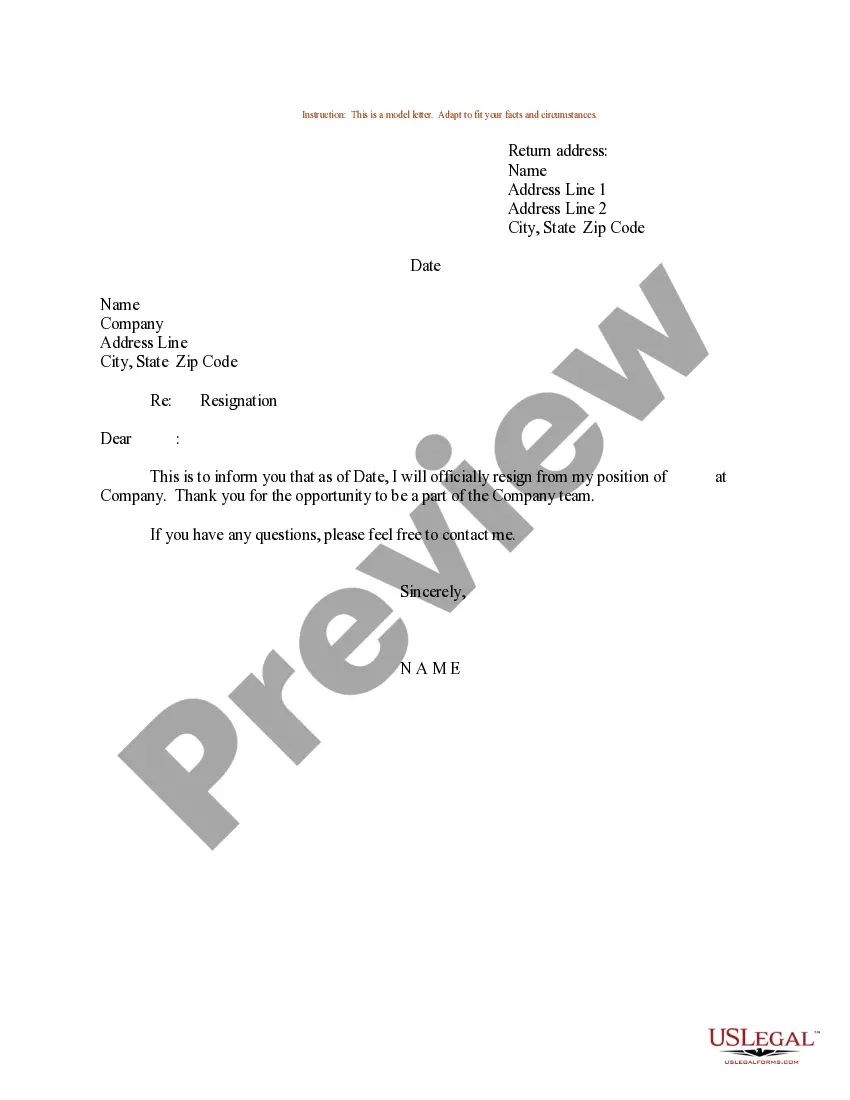
How To Write A Resignation Letter With A Reason? State your intention in the subject line. Include an opening salutation. Give the resignation reason and date. Provide supporting details. Express gratitude for the job opportunity. Offer assistance with the transition. End with a closing salutation. Sign the resignation letter.
How to write a resignation letter with a reason State your intention and resignation date. Summarize why you're leaving. Provide supporting details. Thank your employer for the job opportunity. Offer assistance with the transition.
No, you are not legally required to provide a reason for your resignation in most situations. However, it is often considered professional and courteous to do so, especially if you have a good relationship with your employer.
No, you are not legally required to provide a reason for your resignation in most situations. However, it is often considered professional and courteous to do so, especially if you have a good relationship with your employer.
No, you are not legally required to provide a reason for your resignation in most situations. However, it is often considered professional and courteous to do so, especially if you have a good relationship with your employer.
Don't say (or to be correct: write) anything in a resignation letter that is negative about the company, its management or other employees, even if this is the reason you are leaving; and however temping it may be to momentarily make you feel better or empowered.
To write a proper resignation letter, the key points include stating your intention to resign in the subject line, clarifying the reason for your decision, expressing gratitude for the job opportunity, and offering transition assistance before you leave.
Complete the Heading. Write a Formal Salutation. Make a Statement of Resignation. State Your Last Day of Employment. Mention You're Resigning Due to Personal Reasons. Show Your Gratitude to the Company. Personalize Your Letter. Highlight the Next Steps.
I wanted to let you know that I've decided to resign from my position at XYZ Company, effective (date). I want to express my gratitude for the opportunities and experiences I've had here, and for the support and guidance you've provided me during my time at the company.
No, you are not legally required to provide a reason for your resignation in most situations. However, it is often considered professional and courteous to do so, especially if you have a good relationship with your employer.

