Contract Law For Minors In Sacramento
Description

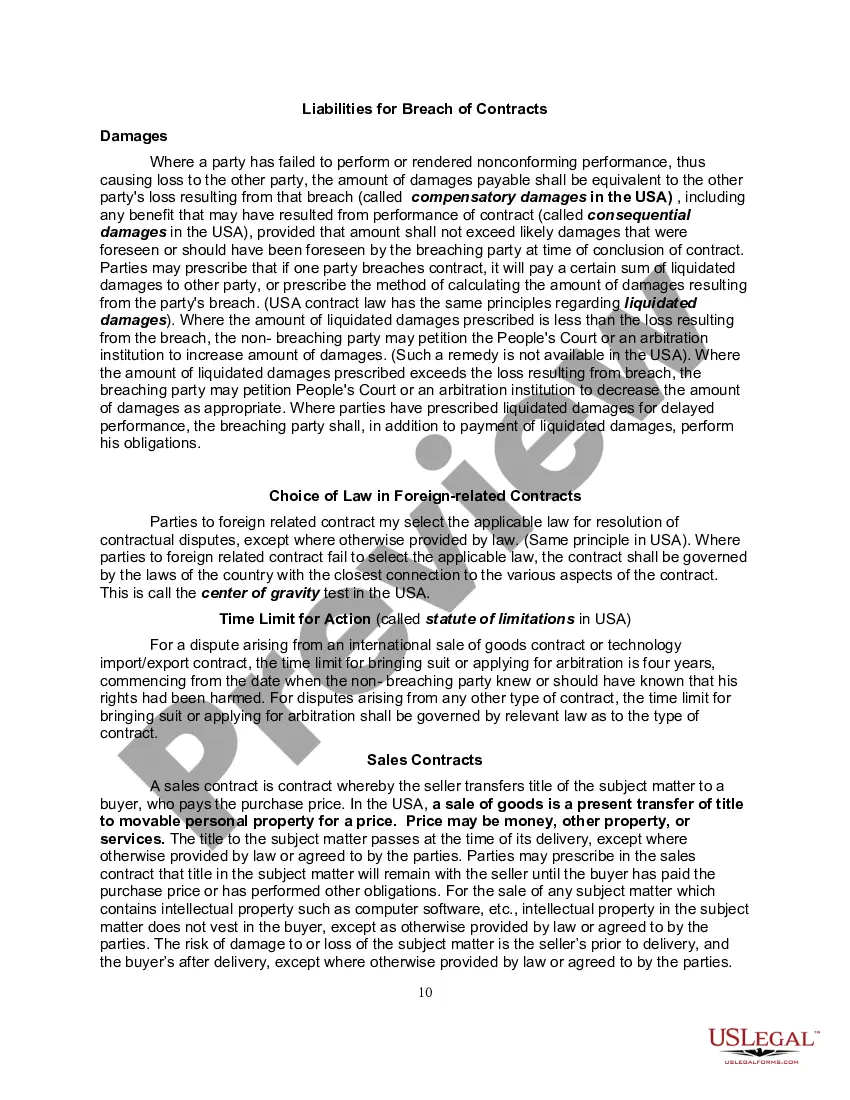


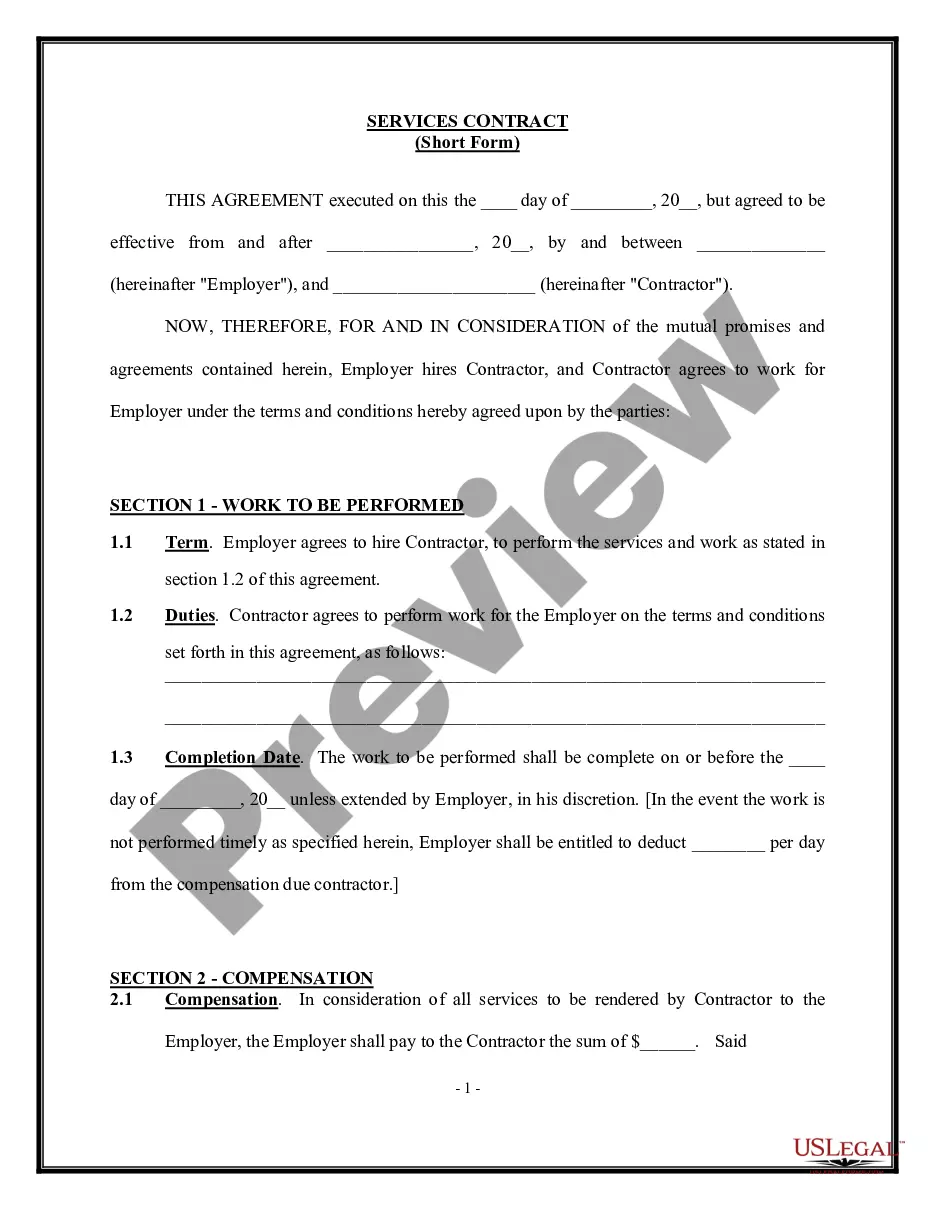
Get your form ready online
Our built-in tools help you complete, sign, share, and store your documents in one place.
Make edits, fill in missing information, and update formatting in US Legal Forms—just like you would in MS Word.
Download a copy, print it, send it by email, or mail it via USPS—whatever works best for your next step.
Sign and collect signatures with our SignNow integration. Send to multiple recipients, set reminders, and more. Go Premium to unlock E-Sign.
If this form requires notarization, complete it online through a secure video call—no need to meet a notary in person or wait for an appointment.
We protect your documents and personal data by following strict security and privacy standards.

Make edits, fill in missing information, and update formatting in US Legal Forms—just like you would in MS Word.

Download a copy, print it, send it by email, or mail it via USPS—whatever works best for your next step.

Sign and collect signatures with our SignNow integration. Send to multiple recipients, set reminders, and more. Go Premium to unlock E-Sign.

If this form requires notarization, complete it online through a secure video call—no need to meet a notary in person or wait for an appointment.

We protect your documents and personal data by following strict security and privacy standards.
Looking for another form?
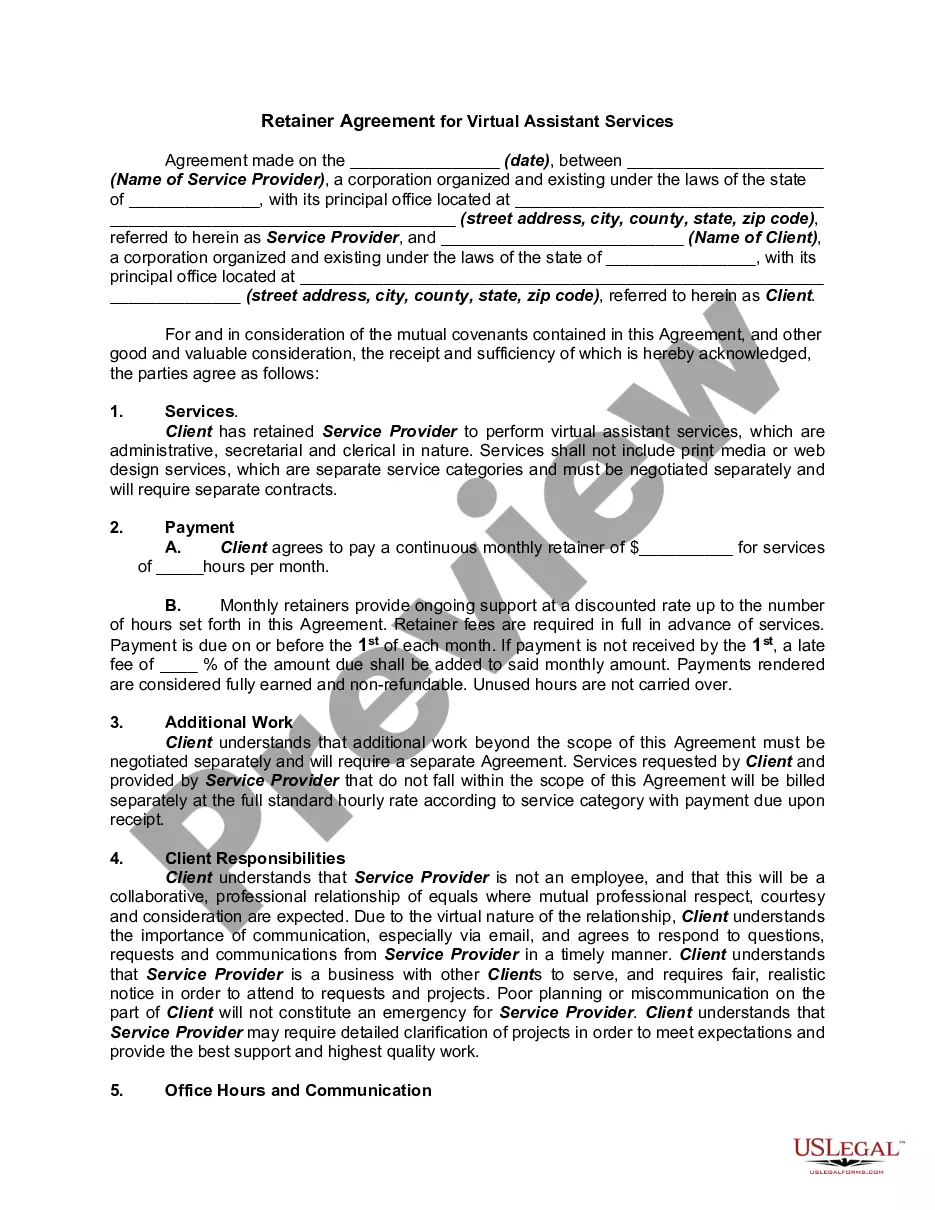
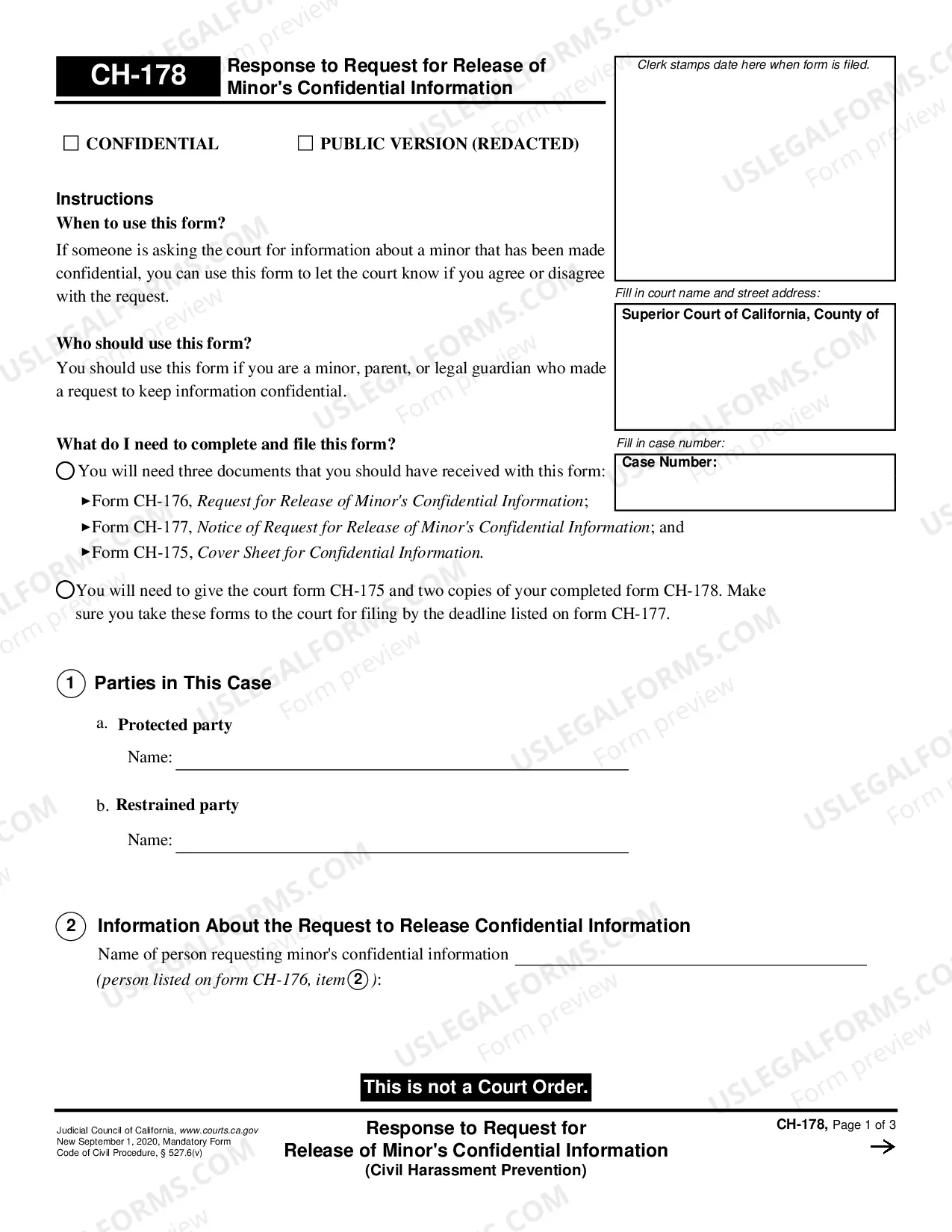




Form popularity
FAQ
In general, minors are considered not to have the legal capacity to enter into the contract, which is why contracts involving minors can be voided. Only the minor, however, has the right to void the contract.
In most states, minors are not legally able to enter into contracts, and any contract they do enter into is considered voidable . However, parents can be held liable for contracts made by their minor children if they have given their consent or if the contract is for necessaries such as food, clothing, or shelter .
By: Diana Budninskiy, Esq. In California, a contract with a minor (anyone under the age of 18) can generally be disaffirmed by the minor. 1 A disaffirmed contract is not enforceable.
The law recognizes a minor as lacking the capacity to contract. Therefore, contracts with a minor are voidable. This, however, does not apply to the circumstances where minors are legally allowed to get into a contract and be fully obliged to the terms and conditions. Examples of such circumstances include necessities.
Small claims basics Generally, you can only sue for up to $12,500 in small claims court (or up to $6,250 if you're a business). You can ask a lawyer for advice before you go to court, but you can't have one with you in court.
Records such as court orders, divorce decrees, and wills are only available from the Sacramento Superior Court: For court orders or divorce records contact the Civil Division at (916) 874-5522. For wills and other probate records contact the Probate Unit at (916) 875-3400.
Conclusion: Going to small claims court may be worth it for $500, but it will determine how you weigh your costs versus benefits. At a minimum, it is worth it to send a demand letter.
Monetary Limits Usually, the most "a natural person" can ask for is $12,500; however, you are limited to filing no more than two claims anywhere in the State of California for over $2,500 in one calendar year. You may file an unlimited amount of claims for $2,500 or less.
1.06 Tentative Ruling System. (A) In all civil law and motion, writ, and other departments as designated, a Tentative Ruling System is utilized. On the afternoon of the court day before each calendar, the judge will publish a tentative ruling on each matter on the next day's calendar.
