Contract Law For Construction In Montgomery
Description



Get your form ready online
Our built-in tools help you complete, sign, share, and store your documents in one place.
Make edits, fill in missing information, and update formatting in US Legal Forms—just like you would in MS Word.
Download a copy, print it, send it by email, or mail it via USPS—whatever works best for your next step.
Sign and collect signatures with our SignNow integration. Send to multiple recipients, set reminders, and more. Go Premium to unlock E-Sign.
If this form requires notarization, complete it online through a secure video call—no need to meet a notary in person or wait for an appointment.
We protect your documents and personal data by following strict security and privacy standards.
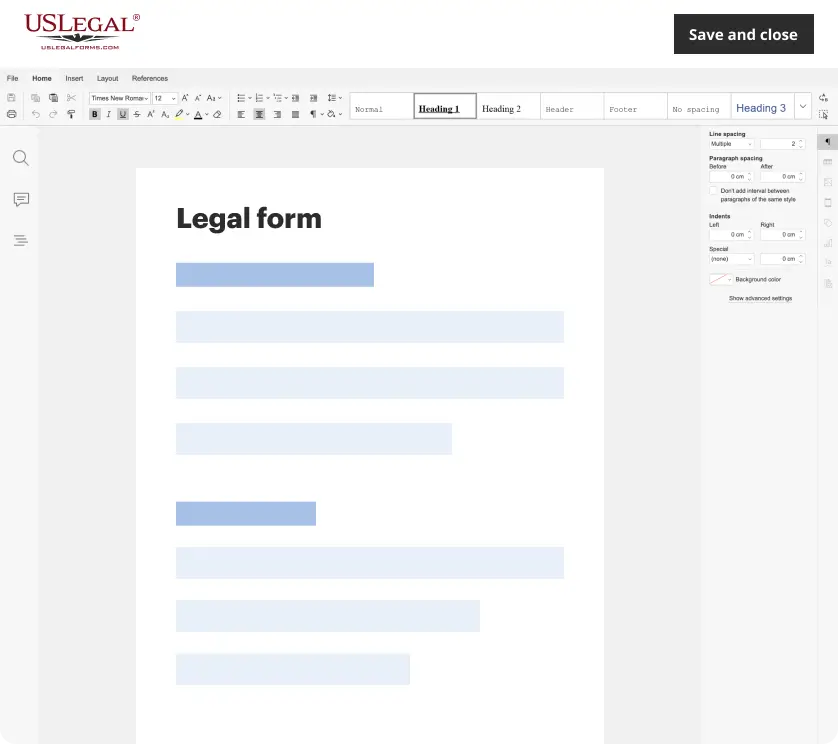
Make edits, fill in missing information, and update formatting in US Legal Forms—just like you would in MS Word.
Download a copy, print it, send it by email, or mail it via USPS—whatever works best for your next step.
Sign and collect signatures with our SignNow integration. Send to multiple recipients, set reminders, and more. Go Premium to unlock E-Sign.
If this form requires notarization, complete it online through a secure video call—no need to meet a notary in person or wait for an appointment.
We protect your documents and personal data by following strict security and privacy standards.
Looking for another form?






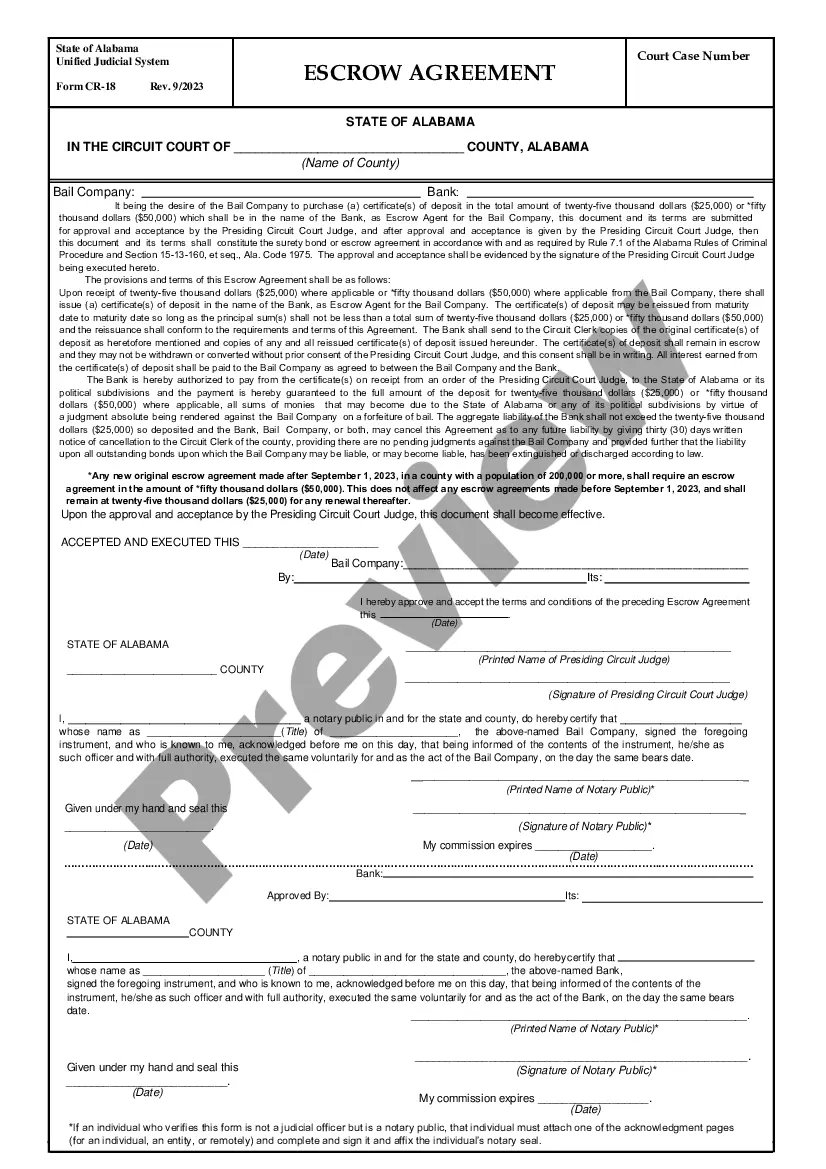



Form popularity
FAQ
Do you need a license to be a handyman? While there is no specific handyman license, if you work on residential homes, Maryland law requires contractors and subcontractors to obtain licenses from the Home Improvement Commission (MHIC).
That contract must include specific information about your rights and responsibilities. In addition, any changes made to that contract must be in writing, be legible, be easy to understand, and inform you of your rights to cancel or rescind the contract.
The rules of contract construction call on several different types of meaning. These include plain meaning, use meaning, subjective meaning, objective meaning, purpose, and belief and intent. The correct approach to contract interpretation differs ing to the facts of the case and the legal question at issue.
§ 8-601. Section 8-601 - Acting as contractor or selling a home improvement without license (a) Except as otherwise provided in this title, a person may not act or offer to act as a contractor in the State unless the person has a contractor license.
Construction law covers a wide range of legal issues including contract, negligence, bonds and bonding, guarantees and sureties, liens and other security interests, tendering, construction claims, and related consultancy contracts.
Three rules generally accepted in construction of contracts are the plain meaning rule, the enforceability rule and the interpretation that favors the non-drafting party. The plain meaning rule states that the ordinary and prevailing usage will be applied to the words in the contract.
Construction law facilitates the drafting, negotiation, and enforcement of comprehensive contracts that safeguard the interests of all stakeholders. From procurement agreements to subcontractor arrangements, robust contracts mitigate risks and prevent potential disputes.
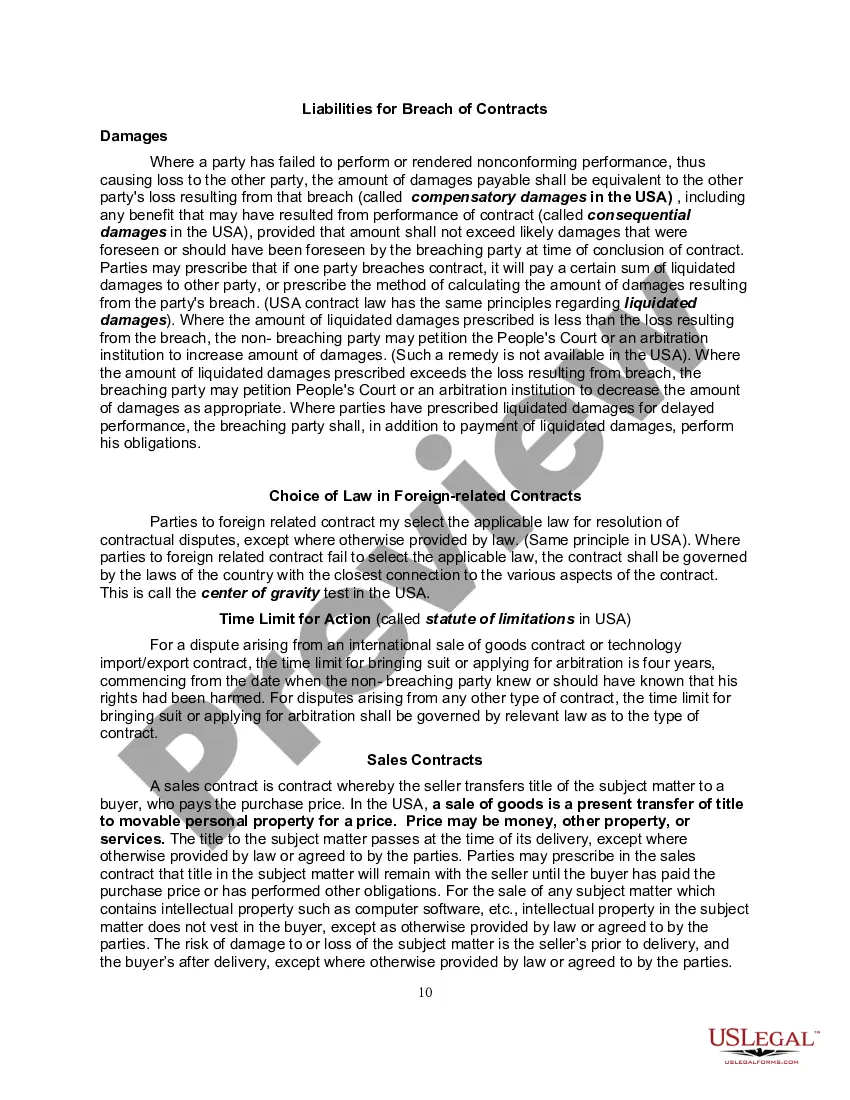
There are four essential elements of forming a contract: offer, acceptance, consideration, and intention to create legal relations. Beyond this, the terms of the contract must also be unambiguous, and the parties must have the mental capacity to agree.
First, to become a contract attorney, one must earn a bachelor's degree and graduate with good grades. It is recommended, but not required, to earn a degree in a legally-related field, such as criminal justice or political science. Before applying for law school, you must take the LSAT and get a good score.
