Contract Law In Uk In Fairfax
Description

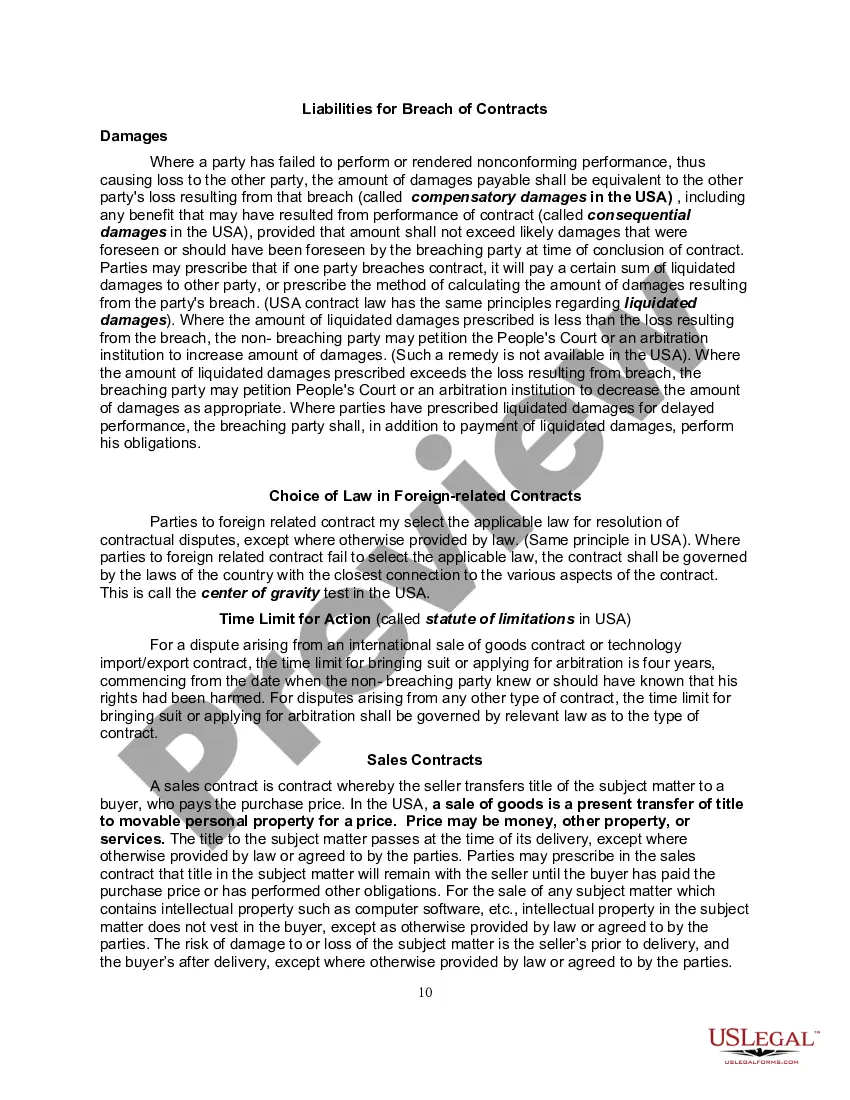



Get your form ready online
Our built-in tools help you complete, sign, share, and store your documents in one place.
Make edits, fill in missing information, and update formatting in US Legal Forms—just like you would in MS Word.
Download a copy, print it, send it by email, or mail it via USPS—whatever works best for your next step.
Sign and collect signatures with our SignNow integration. Send to multiple recipients, set reminders, and more. Go Premium to unlock E-Sign.
If this form requires notarization, complete it online through a secure video call—no need to meet a notary in person or wait for an appointment.
We protect your documents and personal data by following strict security and privacy standards.

Make edits, fill in missing information, and update formatting in US Legal Forms—just like you would in MS Word.

Download a copy, print it, send it by email, or mail it via USPS—whatever works best for your next step.

Sign and collect signatures with our SignNow integration. Send to multiple recipients, set reminders, and more. Go Premium to unlock E-Sign.

If this form requires notarization, complete it online through a secure video call—no need to meet a notary in person or wait for an appointment.

We protect your documents and personal data by following strict security and privacy standards.
Looking for another form?









Form popularity
FAQ
There are four essential elements of forming a contract: offer, acceptance, consideration, and intention to create legal relations. Beyond this, the terms of the contract must also be unambiguous, and the parties must have the mental capacity to agree.
A basic binding contract must comprise four key elements: offer, acceptance, consideration and intent to create legal relations.
Regardless of whether the contract is verbal or written, it has to include: an offer. an acceptance. an intention to create a legal relationship. a consideration (usually monetary).
How to draft a contract between two parties: A step-by-step checklist Know your parties. Agree on the terms. Set clear boundaries. Spell out the consequences. Specify how you will resolve disputes. Cover confidentiality. Check the legality of the contract. Open it up to negotiation.
Lesson Summary. A contract is a legal agreement between two or more parties in which they agree to each other's rights and responsibilities. Offer, acceptance, awareness, consideration, and capacity are the five elements of an enforceable contract.
Regardless of whether the contract is verbal or written, it has to include: an offer. an acceptance. an intention to create a legal relationship. a consideration (usually monetary).
The first requisite of a contract is that the parties should have reached agreement. Generally speaking, an agreement is reached when one party makes an offer, which is accepted by another party. In deciding whether the parties have reached agreement, the courts will apply an objective test.
These are called the 'terms' of the contract. Employees and employers must stick to a contract until it ends (for example, by an employer or employee giving notice or an employee being dismissed) or until the terms are changed (usually by agreement between the employee and employer).
The traditional route is to get a law degree or a related degree, take the LPC – by 2032, the LPC will be completely phased out – and the SQE if you have a non-law degree. After the SQE you'll need to get a TC at a law firm, preferably one with a strong showing in contract law.
