Requesting Discovery Form With 2 Points In Maryland
Description
Get your form ready online
Our built-in tools help you complete, sign, share, and store your documents in one place.
Make edits, fill in missing information, and update formatting in US Legal Forms—just like you would in MS Word.
Download a copy, print it, send it by email, or mail it via USPS—whatever works best for your next step.
Sign and collect signatures with our SignNow integration. Send to multiple recipients, set reminders, and more. Go Premium to unlock E-Sign.
If this form requires notarization, complete it online through a secure video call—no need to meet a notary in person or wait for an appointment.
We protect your documents and personal data by following strict security and privacy standards.

Make edits, fill in missing information, and update formatting in US Legal Forms—just like you would in MS Word.

Download a copy, print it, send it by email, or mail it via USPS—whatever works best for your next step.

Sign and collect signatures with our SignNow integration. Send to multiple recipients, set reminders, and more. Go Premium to unlock E-Sign.

If this form requires notarization, complete it online through a secure video call—no need to meet a notary in person or wait for an appointment.

We protect your documents and personal data by following strict security and privacy standards.
Looking for another form?








Form popularity
FAQ
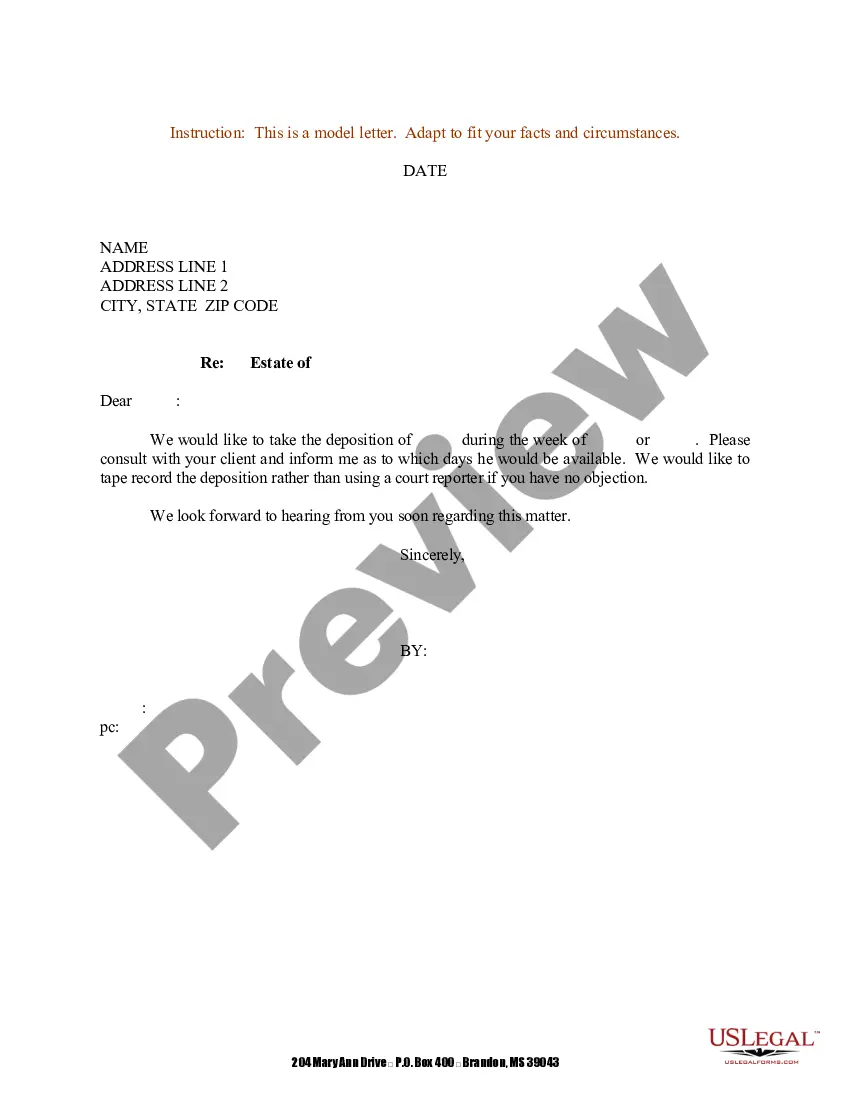
Any party to an action may cause the testimony of a person, whether or not a party, to be taken by deposition for the purpose of discovery or for use as evidence in the action or for both purposes.
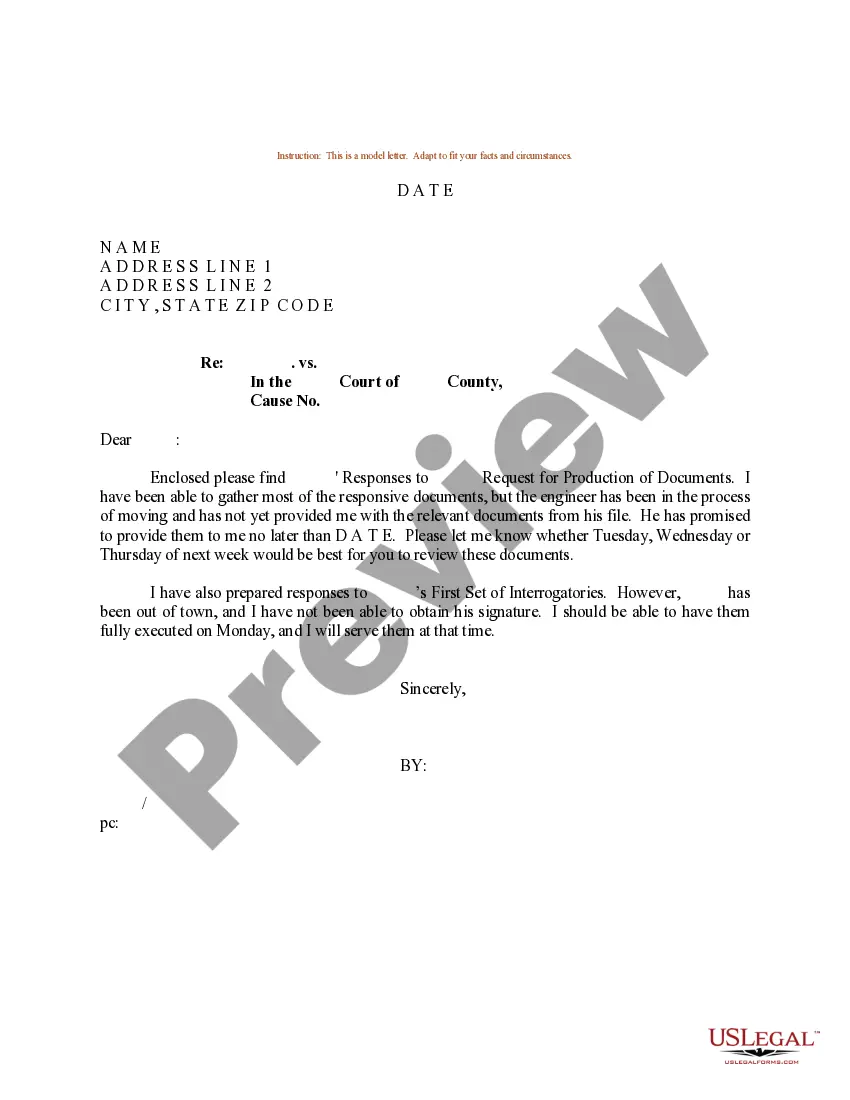
A party may obtain discovery regarding any matter, not privileged, including the existence, description, nature, custody, condition, and location of any documents or other tangible things and the identity and location of persons having knowledge of any discoverable matter, if the matter sought is relevant to the ...
Parties usually send their discovery requests and responses to the other party electronically, by email. But, parties may also send or respond to discovery requests by U.S. mail or a parcel service. Discovery requests and responses should not be sent to the Administrative Judge, except to support a motion.
Retain Your Response and Proof of Service You do not need to file your response or proof of service with the court. If the other party claims you did not respond, you may use these documents to defend yourself against a Motion to Compel.
All discovery must be completed not later than 15 days before the date set for the arbitration hearing unless the court, upon a showing of good cause, makes an order granting an extension of the time within which discovery must be completed.
A party may obtain discovery regarding any matter, not privileged, including the existence, description, nature, custody, condition, and location of any documents or other tangible things and the identity and location of persons having knowledge of any discoverable matter, if the matter sought is relevant to the ...
Discovery is the formal process by which the parties to a case in court exchange information about the case. This includes information about the witnesses and evidence to be presented at trial. Its purpose is to make the parties aware of the evidence which may be presented at trial.
In a limited civil case (cases less than $25,000, or $35,000 if filed after Jan. 1, 2024) you may ask each party only 35 questions total, whether they are form interrogatories, special interrogatories, requests for admission, or requests for production.
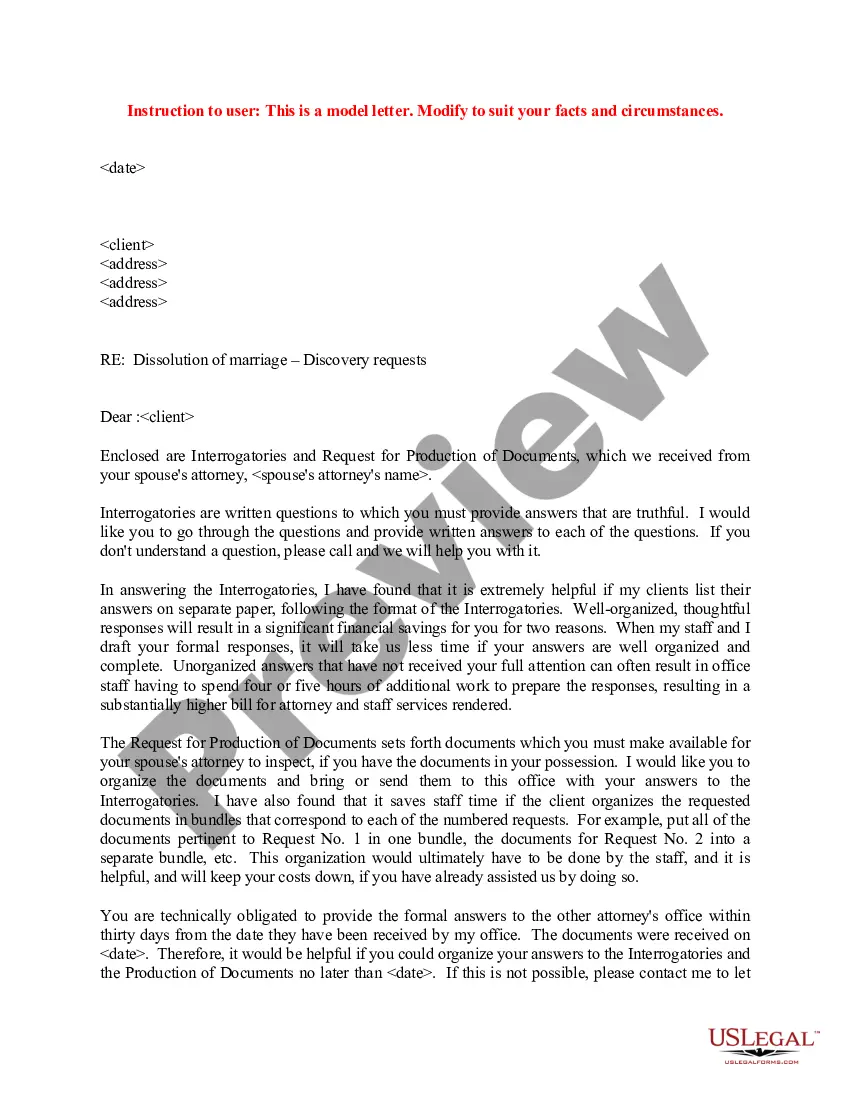
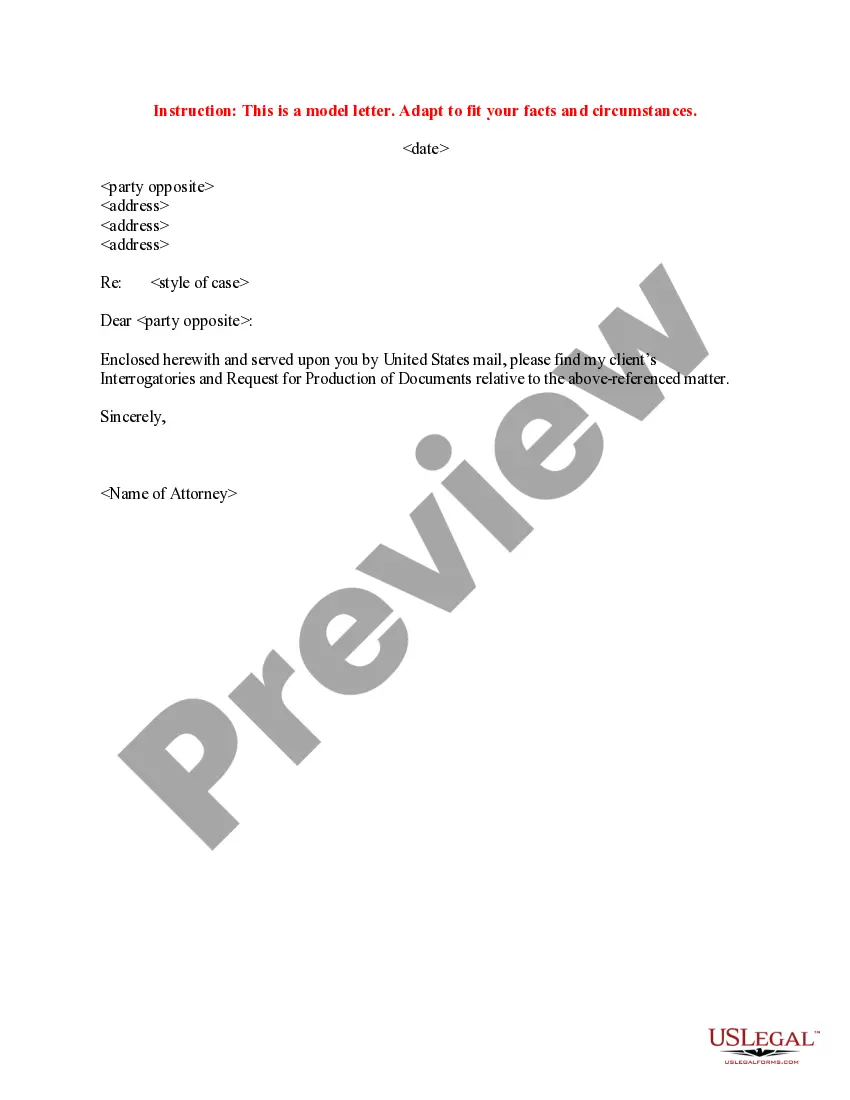
Maryland Rule of Procedure 2-421 controls how and when interrogatories are sent and responded to in circuit court cases. A request for admissions is a list of statements sent to another party. The receiving party must admit or deny each statement.
If a subpoena is to be served on the person to be examined, it shall be served at least ten days before the date of the deposition. If the deposition is to be recorded by electronic audio or audio-video means, the notice shall specify the method of recording.

