Acceptance Resignation Letter Withdrawal In Tarrant
Description
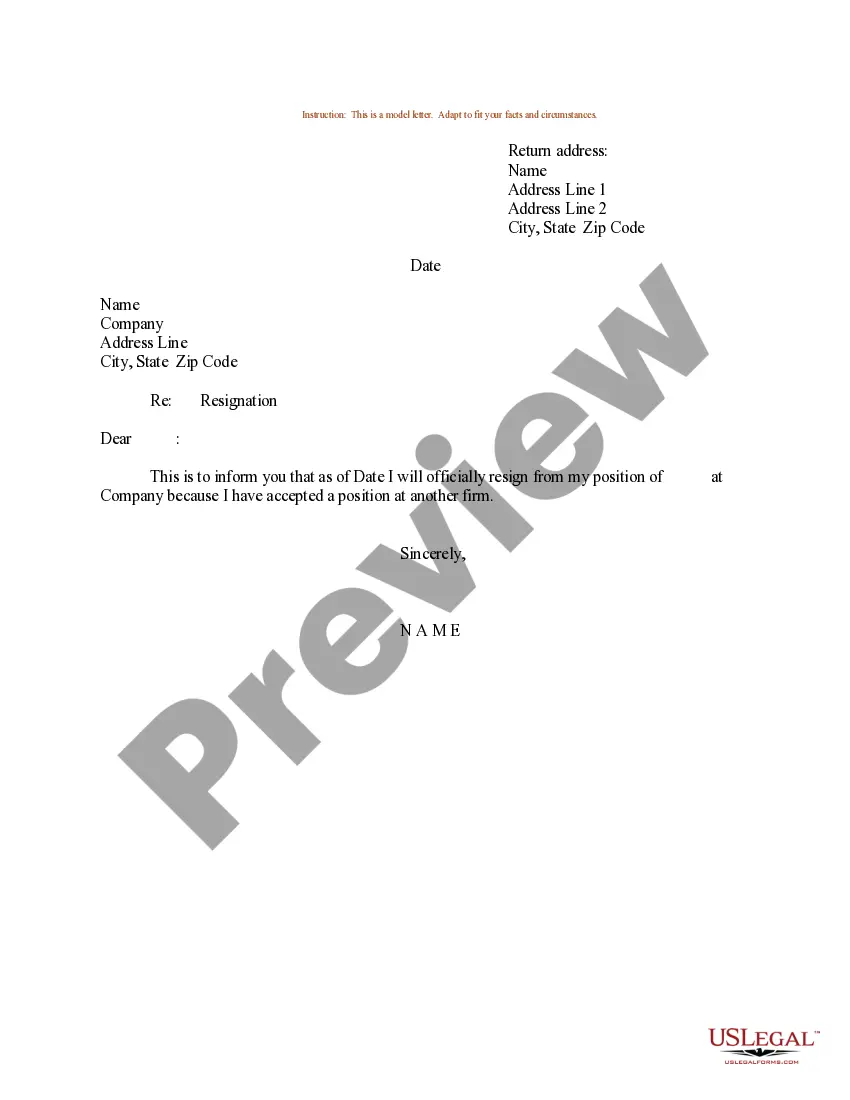
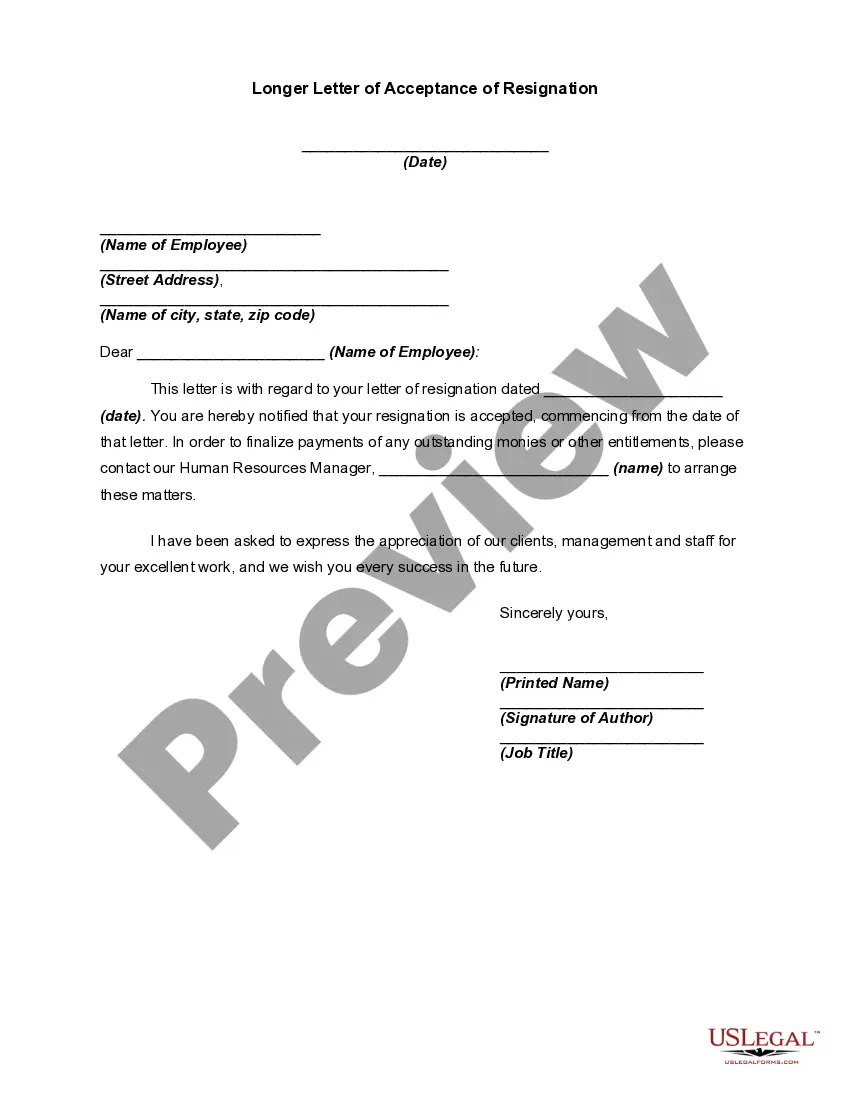

Get your form ready online
Our built-in tools help you complete, sign, share, and store your documents in one place.
Make edits, fill in missing information, and update formatting in US Legal Forms—just like you would in MS Word.
Download a copy, print it, send it by email, or mail it via USPS—whatever works best for your next step.
Sign and collect signatures with our SignNow integration. Send to multiple recipients, set reminders, and more. Go Premium to unlock E-Sign.
If this form requires notarization, complete it online through a secure video call—no need to meet a notary in person or wait for an appointment.
We protect your documents and personal data by following strict security and privacy standards.

Make edits, fill in missing information, and update formatting in US Legal Forms—just like you would in MS Word.

Download a copy, print it, send it by email, or mail it via USPS—whatever works best for your next step.

Sign and collect signatures with our SignNow integration. Send to multiple recipients, set reminders, and more. Go Premium to unlock E-Sign.

If this form requires notarization, complete it online through a secure video call—no need to meet a notary in person or wait for an appointment.

We protect your documents and personal data by following strict security and privacy standards.
Looking for another form?







Form popularity
FAQ
WITHDRAWAL OF NOTICE If an employee has provided a notice of resignation in clear and unambiguous terms then the notice cannot be withdrawn unless the employer consents to the withdrawal.
The employee therefore has no right to withdraw the resignation without the agreement of the other party – the employer. In other words, the employee has no legal right which entitles him to unilaterally withdraw his resignation. The same principle applies to other issues revolving around the employment contract.
Are there any exceptions to withdrawing a resignation? While the general rule is that notice cannot be unilaterally withdrawn, the party receiving the notice needs to satisfy themselves that the giver of the notice really did intend to give notice of resignation (or dismissal).
Follow these steps to write a resignation acceptance letter: Use the right formatting and structure. Include the date and contact information. Include a salutation. Accept the resignation. Include the final date of employment. Add other information. Express appreciation. Add a complimentary close.
Here's how to withdraw your resignation letter: Address your boss. Address the letter to the person to whom you sent your initial resignation letter. Retraction statement. Ask to keep your job. Apologise for the disruption. Give your reasons. Promote your qualities. Discuss the future. Be polite.
In many cases, you can cancel your resignation, but it ultimately depends on your employer's policies and their willingness to accommodate your request. It's crucial to consult your employee handbook or HR department to understand the specific procedures and timelines for retracting your resignation.
The general rule is that once an employee has resigned, it cannot be reversed unless the employer agrees to it. There isn't a legal obligation to accept a cancellation within a certain time-frame. The only situation in which an employee may have a case, is if the resignation is done in the heat of the moment.
Your employer does not have to accept your request to withdraw your resignation. However, they should give it serious consideration, especially if: you very quickly changed your mind about resigning.
Here's how to withdraw your resignation letter: Address your boss. Address the letter to the person to whom you sent your initial resignation letter. Retraction statement. Ask to keep your job. Apologise for the disruption. Give your reasons. Promote your qualities. Discuss the future. Be polite.
#1 Use formal language. #2 State a clear response. #3 Express understanding. #4 Show gratitude. #5 Outline the next steps clearly. #6 Wish them well.

