Resignation Acceptance Letter With Short Notice In Santa Clara
Description
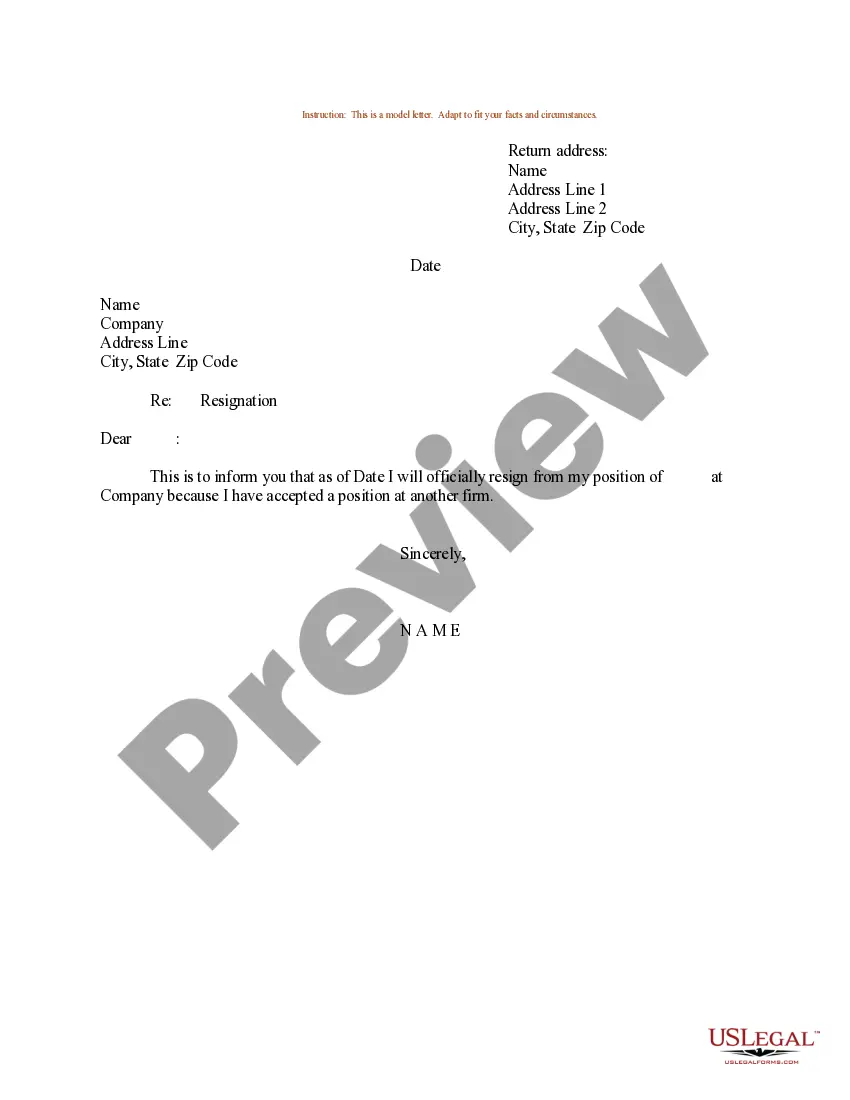
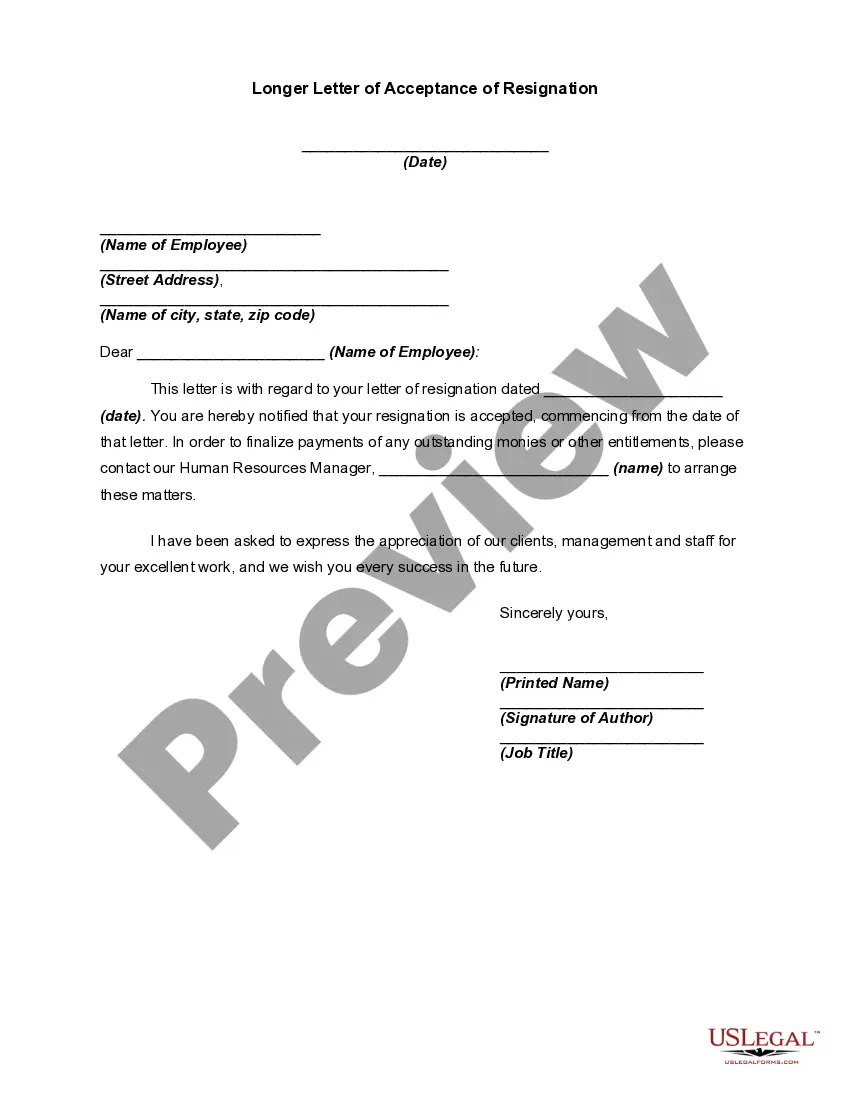

Get your form ready online
Our built-in tools help you complete, sign, share, and store your documents in one place.
Make edits, fill in missing information, and update formatting in US Legal Forms—just like you would in MS Word.
Download a copy, print it, send it by email, or mail it via USPS—whatever works best for your next step.
Sign and collect signatures with our SignNow integration. Send to multiple recipients, set reminders, and more. Go Premium to unlock E-Sign.
If this form requires notarization, complete it online through a secure video call—no need to meet a notary in person or wait for an appointment.
We protect your documents and personal data by following strict security and privacy standards.

Make edits, fill in missing information, and update formatting in US Legal Forms—just like you would in MS Word.

Download a copy, print it, send it by email, or mail it via USPS—whatever works best for your next step.

Sign and collect signatures with our SignNow integration. Send to multiple recipients, set reminders, and more. Go Premium to unlock E-Sign.

If this form requires notarization, complete it online through a secure video call—no need to meet a notary in person or wait for an appointment.

We protect your documents and personal data by following strict security and privacy standards.
Looking for another form?







Form popularity
FAQ
A short notice resignation letter informs an employer of an employee's intent to resign with less than the standard two weeks' notice. To write a short notice resignation letter, include your position and effective date, explain your reason and express gratitude.
Follow these steps to write a resignation acceptance letter: Use the right formatting and structure. Include the date and contact information. Include a salutation. Accept the resignation. Include the final date of employment. Add other information. Express appreciation. Add a complimentary close.
How to write a short-notice resignation letter Clearly state your resignation and last day of employment. Express your regret for the short notice. Provide an explanation. Offer help with the handover process. Thank the employer for the opportunity. End with your signature and contact info.
1) Know What Your Notice Period is. 2) Be Persistent. 3) Use Your Remaining Holiday Days. 4) Shorten Your Notice Period by Finding Your Replacement. 5) Ask to be put on Gardening Leave. 6) Break Your Contract. 7) Counter Offer and an Exit Interview.
Dear (Recipient's Name), I am writing to inform you of my immediate resignation from my position at (Company Name). After careful consideration, I have decided that it is in my best interest to conclude my employment with (Company Name) effective immediately.
Choose the Right Time: Schedule a meeting with your manager or HR at a convenient time. Avoid busy periods or stressful times for the team. Be Professional: Start the conversation by expressing gratitude for the opportunities you've had at the company. Then, clearly state your request for a reduced notice period.
Choose the Right Time: Schedule a meeting with your manager or HR at a convenient time. Avoid busy periods or stressful times for the team. Be Professional: Start the conversation by expressing gratitude for the opportunities you've had at the company. Then, clearly state your request for a reduced notice period.
You can ensure a smooth transition when resigning immediately by being transparent about your reasons for leaving, expressing your sincere appreciation for your time spent at the company, and offering to assist with the transition process until your final day.
How to write an immediate resignation letter Include the date you plan to leave. Explain the situation clearly and concisely. Be positive and professional. Express gratitude. Include any questions you have. Include your contact information. Proofread your letter. Send your letter to your employer and HR.
Accept the resignation Be direct and to the point and, in the first sentence, acknowledge the receipt of their letter of resignation and formally accept it. Depending on the employee and the circumstances of their departure, you may want to add your regrets about their decision in the first paragraph.

