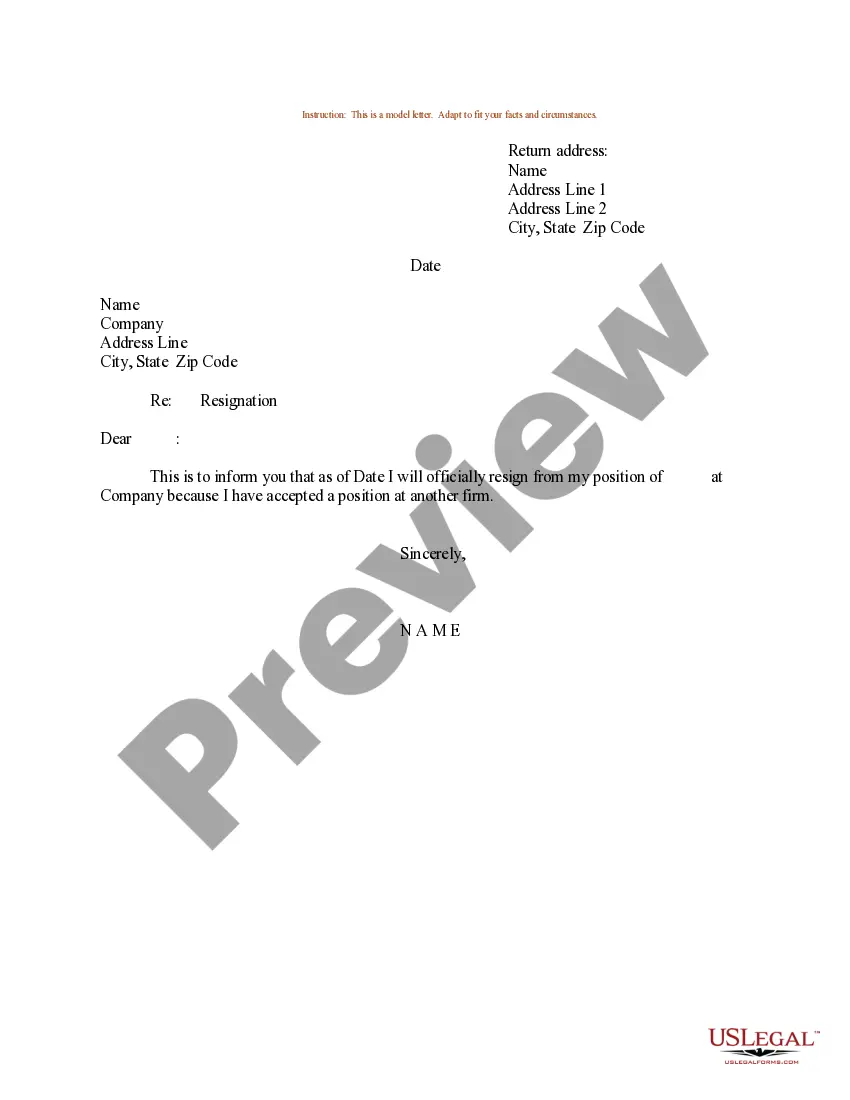
Resignation Letter For Approval In Fulton
Description

Get your form ready online
Our built-in tools help you complete, sign, share, and store your documents in one place.
Make edits, fill in missing information, and update formatting in US Legal Forms—just like you would in MS Word.
Download a copy, print it, send it by email, or mail it via USPS—whatever works best for your next step.
Sign and collect signatures with our SignNow integration. Send to multiple recipients, set reminders, and more. Go Premium to unlock E-Sign.
If this form requires notarization, complete it online through a secure video call—no need to meet a notary in person or wait for an appointment.
We protect your documents and personal data by following strict security and privacy standards.

Make edits, fill in missing information, and update formatting in US Legal Forms—just like you would in MS Word.

Download a copy, print it, send it by email, or mail it via USPS—whatever works best for your next step.

Sign and collect signatures with our SignNow integration. Send to multiple recipients, set reminders, and more. Go Premium to unlock E-Sign.

If this form requires notarization, complete it online through a secure video call—no need to meet a notary in person or wait for an appointment.

We protect your documents and personal data by following strict security and privacy standards.
Looking for another form?






Form popularity
FAQ
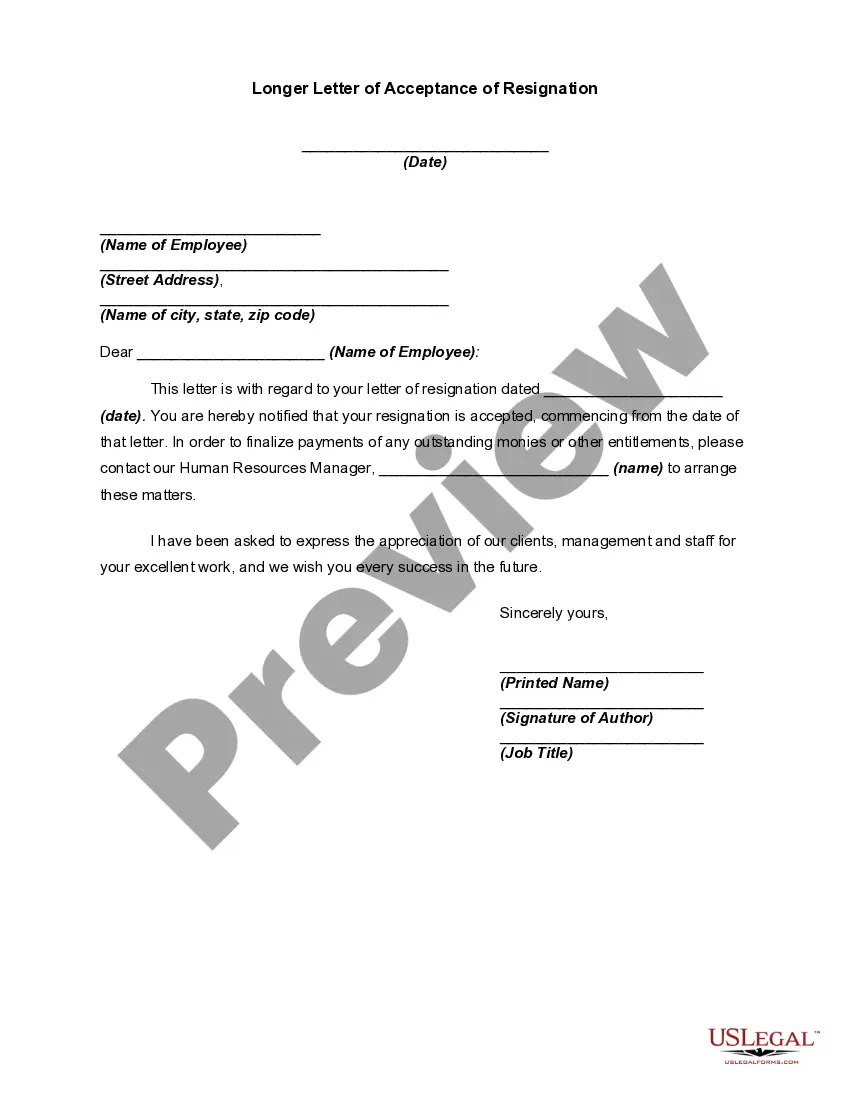
Yes, a resignation acceptance letter is necessary to ensure legal and administrative compliance, smooth transition, clarity, and professionalism.
Follow these steps to write a resignation acceptance letter: Use the right formatting and structure. Include the date and contact information. Include a salutation. Accept the resignation. Include the final date of employment. Add other information. Express appreciation. Add a complimentary close.
Here are steps you can follow to create a professional and concise letter: Acknowledge employee's desire to resign. Confirm the last day of employment. Request assistance with the transition. Provide a recommendation. Include your contact information.
I am writing to request a resignation acceptance letter, which confirms the acceptance of my resignation and outlines the next steps in the process. I understand that this is a standard practice in many organizations, and I would greatly appreciate receiving a resignation acceptance letter as soon as possible.
You do not have to respond formally when someone tells you they're resigning. But it's good practice to respond in writing. Your response should include: that you've received the employee's resignation.
I am writing to formally acknowledge receipt of your resignation notice on date. As you requested, your final day of work at Company Name will be end date. It is with great regret that we see you go. It has been a pleasure working with you these past X years, and we appreciate your contribution to the company.
Acceptance of a resignation tendered by an employee is necessary to make the resignation effective.
After number of days of my last working day, I regret to state that I have yet not received the relieving letter. I need to submit the relieving letter to my new company for completing the onboarding process. I earnestly request you to release my relieving letter at the earliest.
How to Write a Resignation Letter A greeting: Start formal. A statement of resignation. Offer help with transitioning. Thank your employer for giving you a chance to be a part of their company, and for their time. Leave your contact information for your employer. Sign off with “Sincerely” or “Thank you”
A simple, “Resignation: Name” is good enough. Add contact details, company name, and date. Address your manager. State your decision to resign and last day of work. Provide a reason for leaving (optional) ... Express your gratitude in good faith. 6. Make a closing statement. End with a formal closing.

