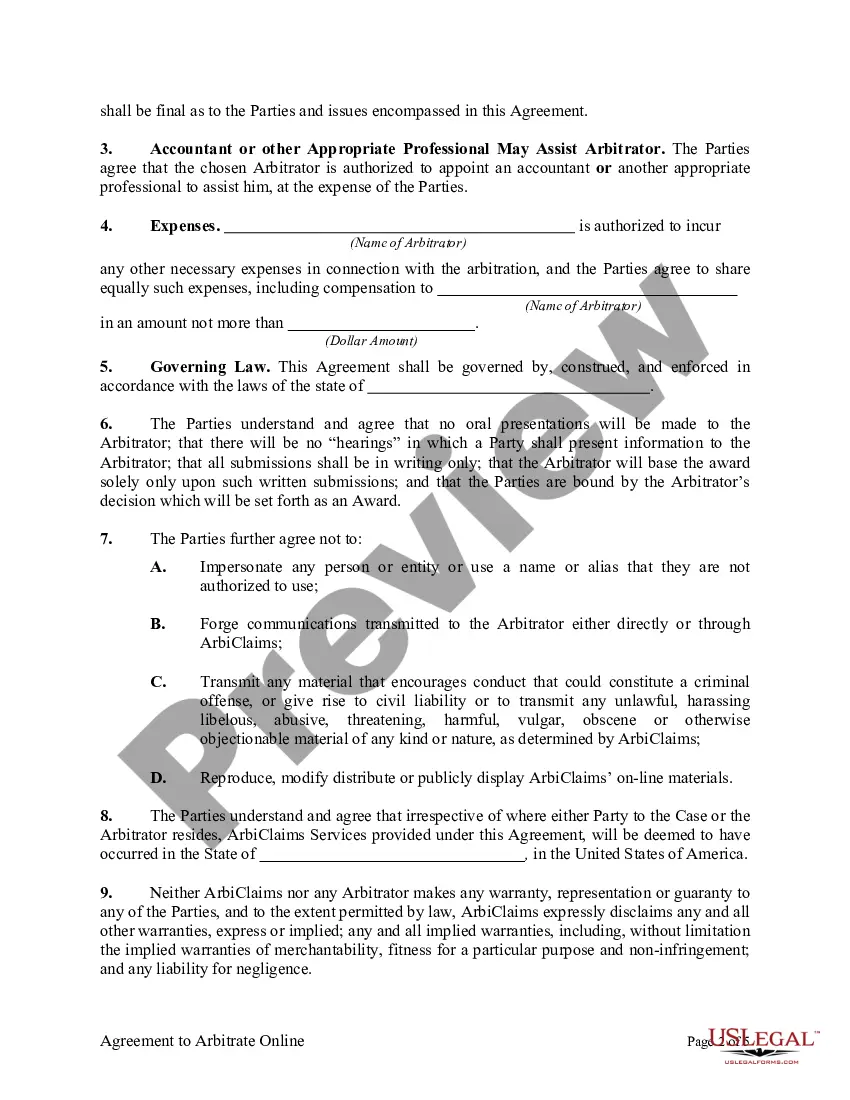
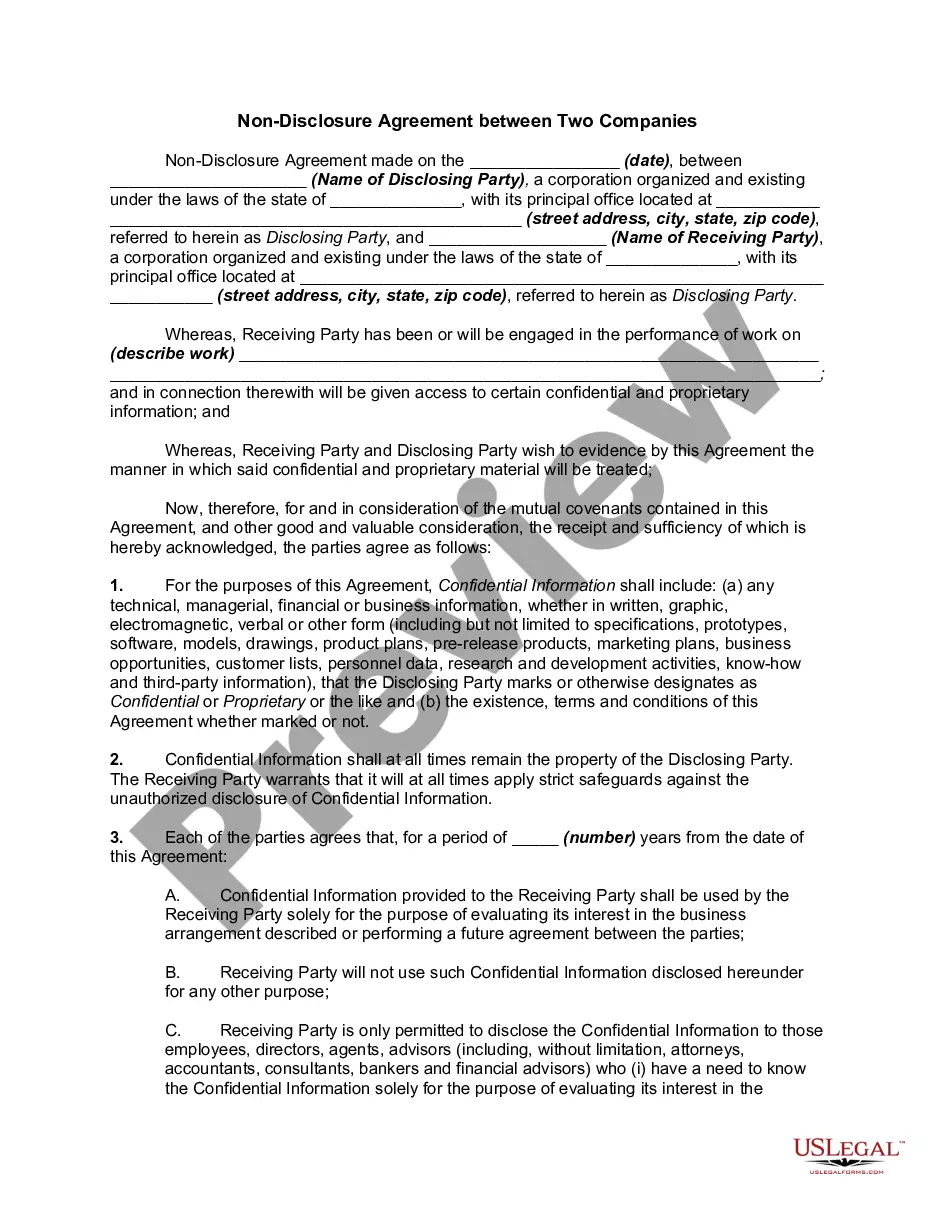
Agreement Arbitration Sample For Divorce In Washington
Description





Get your form ready online
Our built-in tools help you complete, sign, share, and store your documents in one place.
Make edits, fill in missing information, and update formatting in US Legal Forms—just like you would in MS Word.
Download a copy, print it, send it by email, or mail it via USPS—whatever works best for your next step.
Sign and collect signatures with our SignNow integration. Send to multiple recipients, set reminders, and more. Go Premium to unlock E-Sign.
If this form requires notarization, complete it online through a secure video call—no need to meet a notary in person or wait for an appointment.
We protect your documents and personal data by following strict security and privacy standards.

Make edits, fill in missing information, and update formatting in US Legal Forms—just like you would in MS Word.

Download a copy, print it, send it by email, or mail it via USPS—whatever works best for your next step.

Sign and collect signatures with our SignNow integration. Send to multiple recipients, set reminders, and more. Go Premium to unlock E-Sign.

If this form requires notarization, complete it online through a secure video call—no need to meet a notary in person or wait for an appointment.

We protect your documents and personal data by following strict security and privacy standards.
Looking for another form?









Form popularity
FAQ
A Washington marital settlement agreement is a document used in an uncontested divorce to establish the terms of the dissolution of marriage. Terms in the agreement govern alimony payments, child custody, child support payments, and the division of property and assets, among other matters.
While parties are not required to have an attorney to participate in arbitration, arbitration is a final, legally-binding process that may impact a party's rights. As such, parties may want to consider consulting an attorney at any time before, during, or after the arbitration.
An arbitration proceeding is similar to a regular court trial. The main difference is that arbitration can be either binding or non-binding, as agreed in advance by the disputing parties. If binding arbitration has been chosen, the decision or award is final.
(1) An agreement contained in a record to submit to arbitration any existing or subsequent controversy arising between the parties to the agreement is valid, enforceable, and irrevocable except upon a ground that exists at law or in equity for the revocation of contract.
An arbitration proceeding is similar to a regular court trial. The main difference is that arbitration can be either binding or non-binding, as agreed in advance by the disputing parties. If binding arbitration has been chosen, the decision or award is final.
Divorce can be a stressful and complicated process but with the proper steps and procedures, it can go smoother for couples in Washington State seeking to end their marriage. Washington law does not require couples to mediate, but it is strongly suggested.
Arbitration must be commenced as follows: (a) If the matter is not settled through mediation under RCW 11.96A. 300, or the court orders that mediation is not required, a party may commence arbitration by serving written notice of arbitration on all other parties or the parties' virtual representatives.
Both sides will give opening and closing statements, present evidence, and call and cross examine witnesses in front of the arbitrator. After each side presents their case, the arbitrator will issue their decision within the time allotted in the arbitration agreement.
The Scope of the Clause. This section of the clause is critical; it sets the boundaries for which disputes the tribunal is authorised to determine. Choice of Rules. The Number of Arbitrators. Appointing Authority. Choice of Venue. The language of the proceedings. Finality. Exclusion of the right of appeal.
(1) An agreement contained in a record to submit to arbitration any existing or subsequent controversy arising between the parties to the agreement is valid, enforceable, and irrevocable except upon a ground that exists at law or in equity for the revocation of contract.
