Agreement Arbitrate Sample With Contract In Suffolk
Description

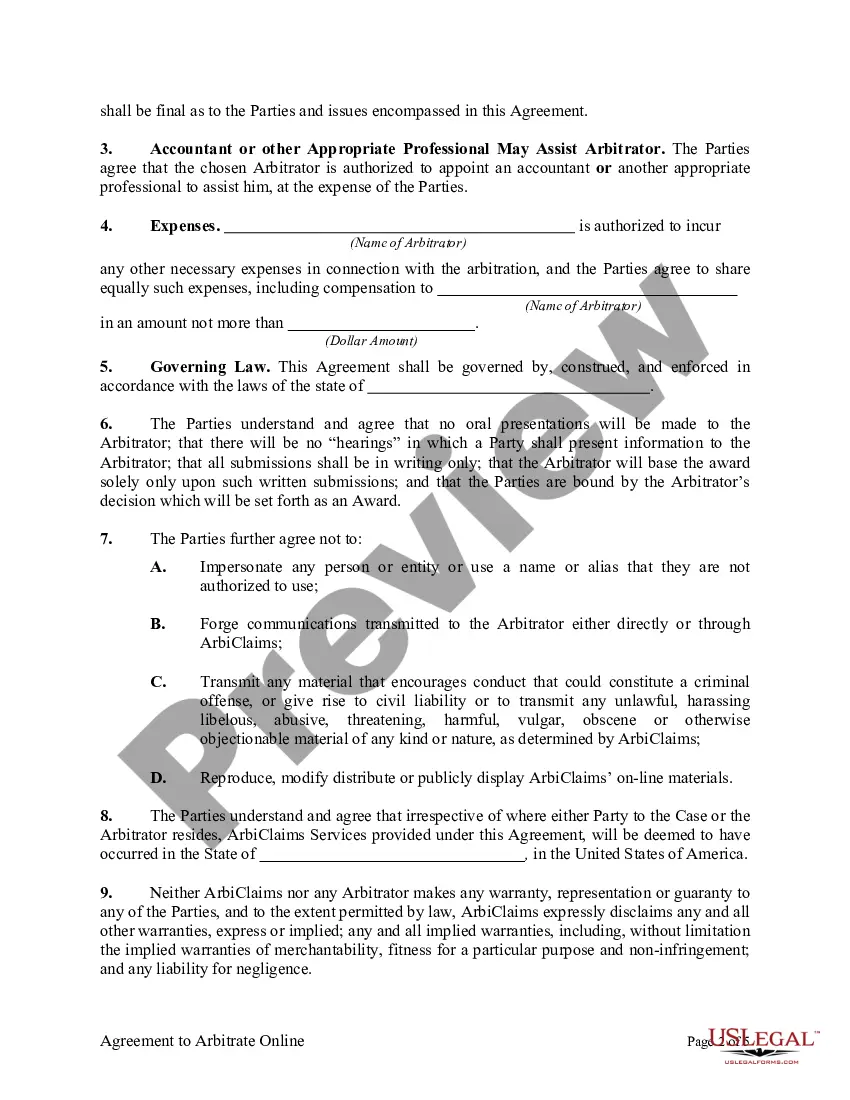
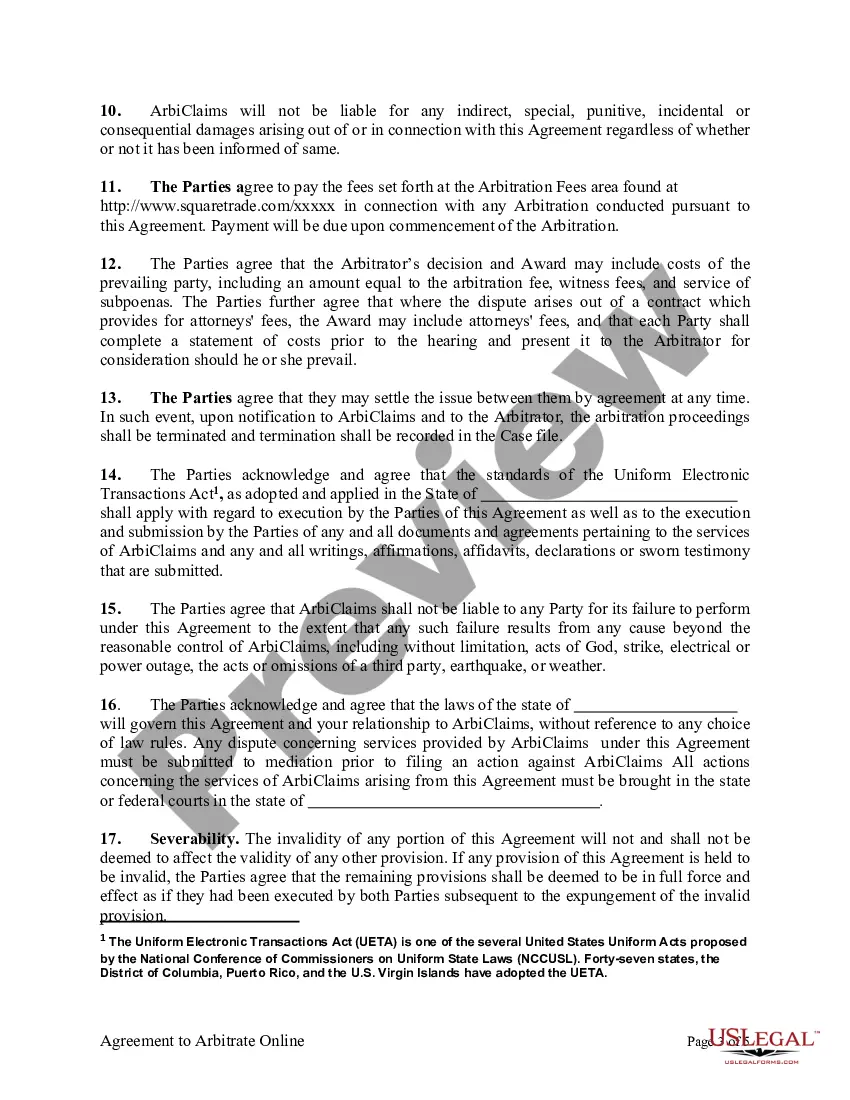




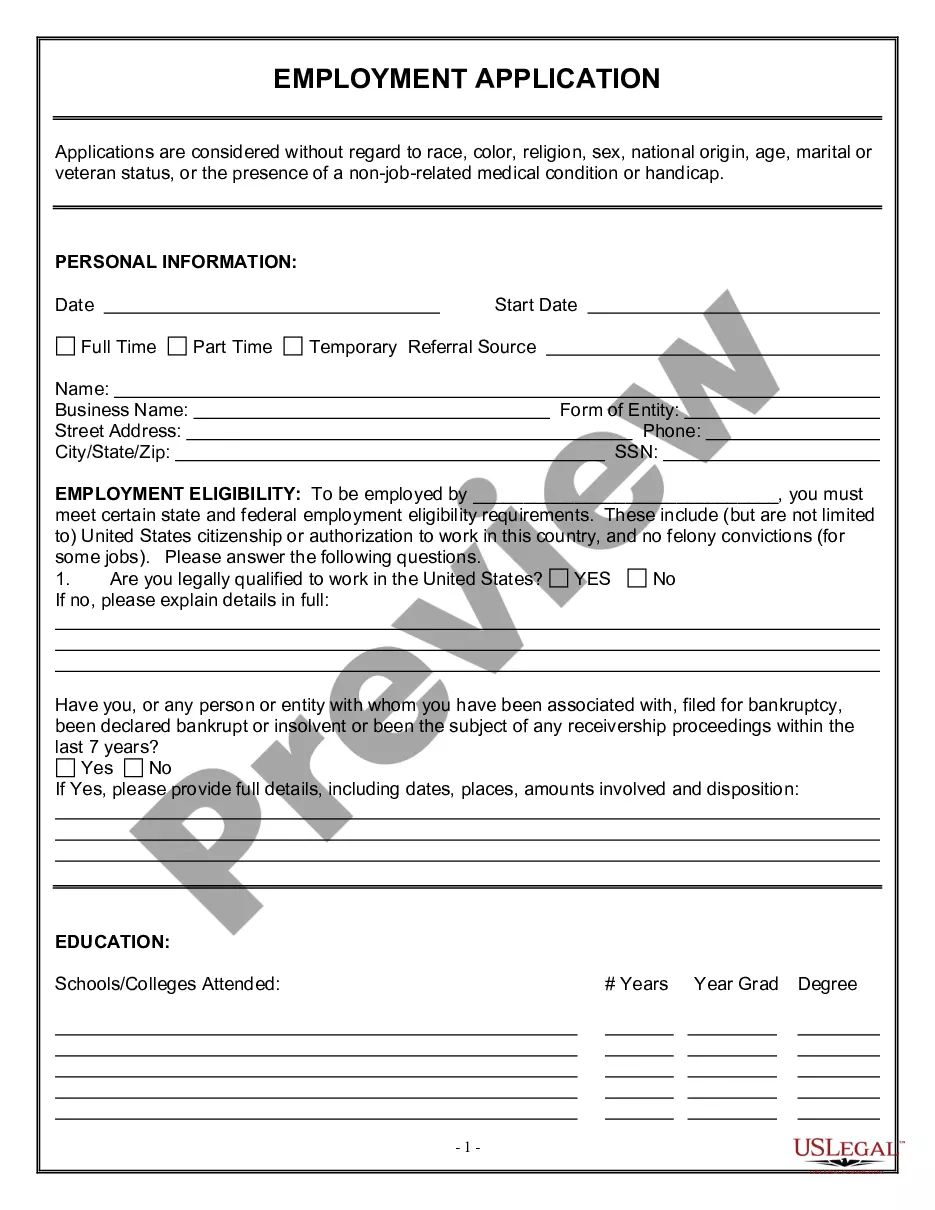
Get your form ready online
Our built-in tools help you complete, sign, share, and store your documents in one place.
Make edits, fill in missing information, and update formatting in US Legal Forms—just like you would in MS Word.
Download a copy, print it, send it by email, or mail it via USPS—whatever works best for your next step.
Sign and collect signatures with our SignNow integration. Send to multiple recipients, set reminders, and more. Go Premium to unlock E-Sign.
If this form requires notarization, complete it online through a secure video call—no need to meet a notary in person or wait for an appointment.
We protect your documents and personal data by following strict security and privacy standards.

Make edits, fill in missing information, and update formatting in US Legal Forms—just like you would in MS Word.

Download a copy, print it, send it by email, or mail it via USPS—whatever works best for your next step.

Sign and collect signatures with our SignNow integration. Send to multiple recipients, set reminders, and more. Go Premium to unlock E-Sign.

If this form requires notarization, complete it online through a secure video call—no need to meet a notary in person or wait for an appointment.

We protect your documents and personal data by following strict security and privacy standards.
Looking for another form?









Form popularity
FAQ
The form cannot be filed electronically.
How do I start my Small Claims or Commercial Small Claims case? You or someone else may start your case by filling out a Complaint Form (DC-283). The Complaint Form describes your claim to the Court. You may file by mail or you may file in person at one of the District Court courthouses.
Arbitration agreements require that persons who signed them resolve any disputes by binding arbitration, rather than in court before a judge and/or jury. What is binding arbitration? Binding arbitration involves the submission of a dispute to a neutral party who hears the case and makes a decision.
A claimant will typically start arbitration by sending a document known as a “request for arbitration” or a “notice to arbitrate” to its opponent.
Arbitration is a common method for litigating contract disputes and is often used in lieu of going to court. Generally speaking, arbitration is like a private court. It is used when two parties have a dispute and wish to avoid the lengthy and expensive process of litigation in a public court of law.
A claimant will typically start arbitration by sending a document known as a “request for arbitration” or a “notice to arbitrate” to its opponent.
Forced arbitration clauses generally bind the consumer—not the company. The way many forced arbitration clauses are written, the seller retains its rights to take any complaint to court while the consumer can only initiate arbitration. Arbitration is a private system without a judge, jury, or a right to an appeal.
Arbitrations, like Steel Path, are unlocked when completing all of the nodes in the Origin System and do not require Duviri interaction.
Necessary Elements Details of the Parties. Details of the relationship between the parties. Demand for Arbitration. The mention of agreement/contract (if any). The mention of already existing arbitration agreement between the parties pursuant to which the concerned notice of arbitration has been sent (if any).
The other unacknowledged motivation behind forced employment arbitration is that employers want to keep disputes a secret. By forcing employees to litigate their disputes in a private setting, corporations can avoid the bad press that accompanies trials.
