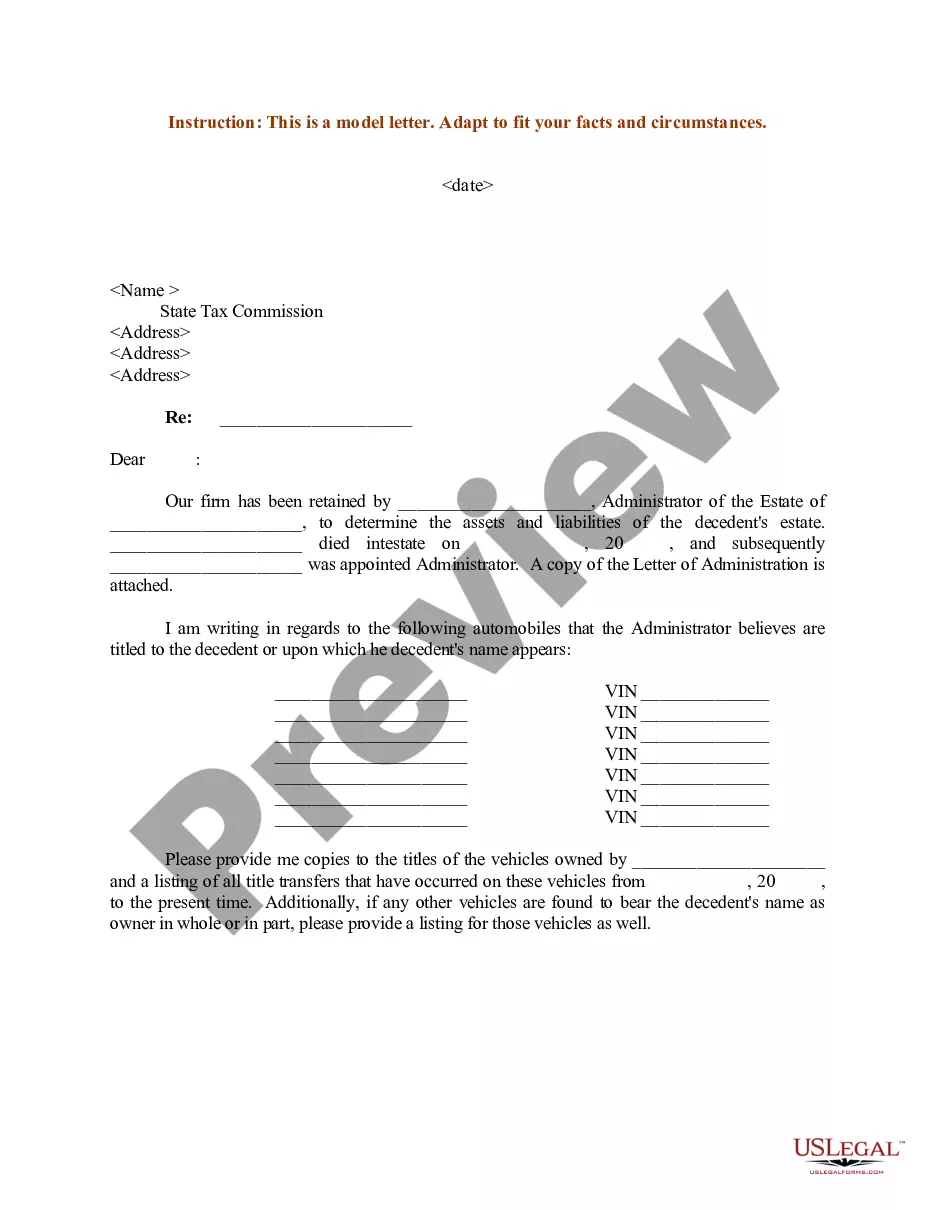
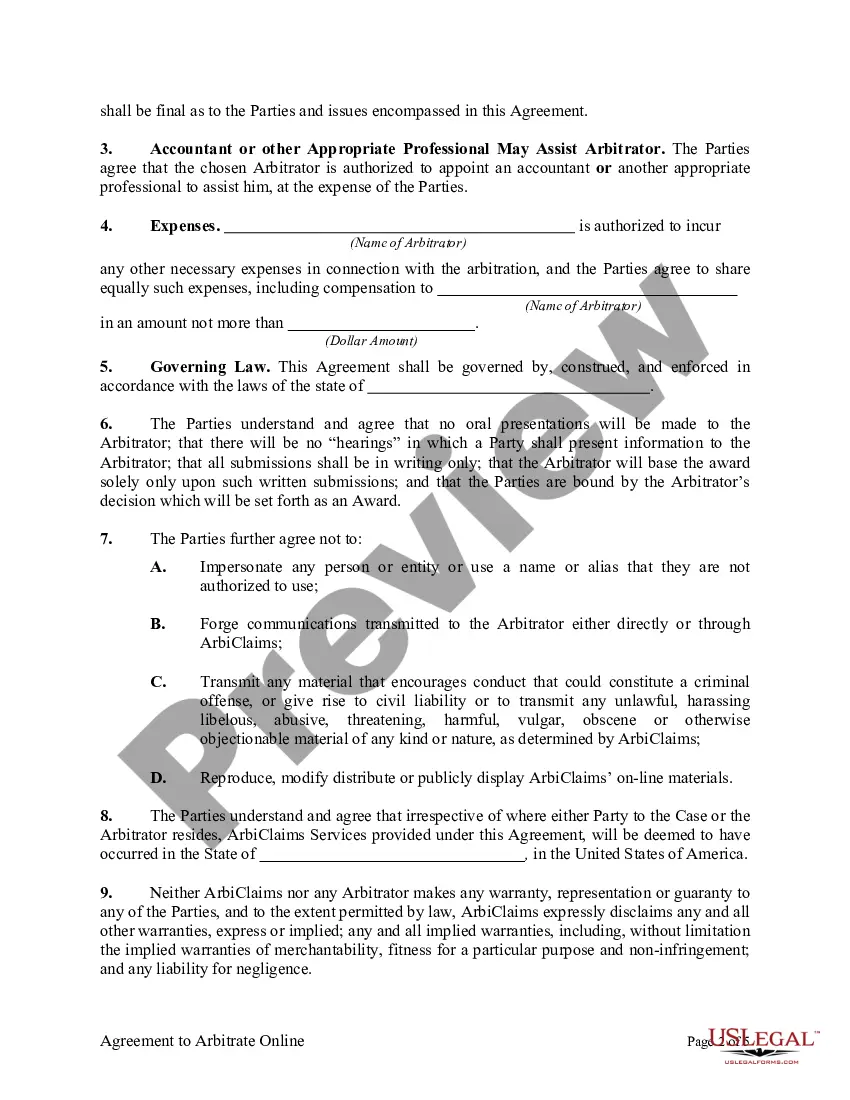
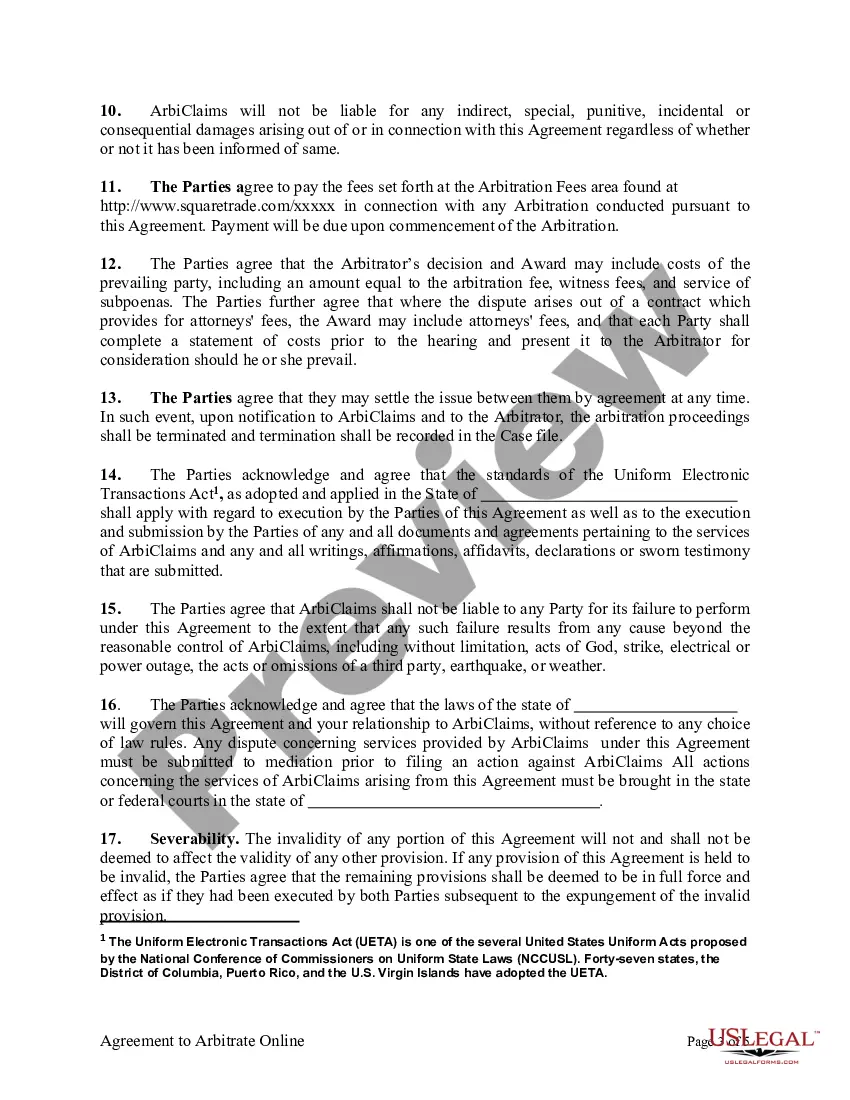
Agreement For Arbitration In San Bernardino
Description





Get your form ready online
Our built-in tools help you complete, sign, share, and store your documents in one place.
Make edits, fill in missing information, and update formatting in US Legal Forms—just like you would in MS Word.
Download a copy, print it, send it by email, or mail it via USPS—whatever works best for your next step.
Sign and collect signatures with our SignNow integration. Send to multiple recipients, set reminders, and more. Go Premium to unlock E-Sign.
If this form requires notarization, complete it online through a secure video call—no need to meet a notary in person or wait for an appointment.
We protect your documents and personal data by following strict security and privacy standards.

Make edits, fill in missing information, and update formatting in US Legal Forms—just like you would in MS Word.

Download a copy, print it, send it by email, or mail it via USPS—whatever works best for your next step.

Sign and collect signatures with our SignNow integration. Send to multiple recipients, set reminders, and more. Go Premium to unlock E-Sign.

If this form requires notarization, complete it online through a secure video call—no need to meet a notary in person or wait for an appointment.

We protect your documents and personal data by following strict security and privacy standards.
Looking for another form?








Form popularity
FAQ
The pure “costs follow the event” rule (the loser pays all costs and fees). The pro rata “costs follow the event” rule (the loser pays costs and fees in proportion with the outcome). The parties share costs and fees equally, or share costs equally with fees borne by each side.
Probably the easiest first step is to begin by reaching out to arbitrators and other neutrals who you know and ask them for advice and honest feedback about how you would be received by other advocates. All an arbitrator has is their reputation and it's good to know what yours is.
Either Party to a contract in which there is an Arbitration clause can either himself or through an authorised agent may invoke Arbitration so as to refer the dispute to arbitration, as per provisions of the arbitration clause.
In other words, a party's right to refer a dispute to arbitration depends on the existence of an agreement (the “arbitration agreement”) between them and the other parties to the dispute that the dispute may be referred to arbitration.
Under California law, you cannot be fired solely for refusing to sign an arbitration agreement. The California Labor Code provides strong protections for employees, ensuring that refusal to sign an arbitration agreement cannot be used as grounds for termination.
California law permits employers not to hire you if you refuse to sign an arbitration agreement. An arbitration agreement is where you waive your right to sue in the event of a dispute.
Arbitration is a procedure in which a dispute is submitted, by agreement of the parties, to one or more arbitrators who make a binding decision on the dispute. In choosing arbitration, the parties opt for a private dispute resolution procedure instead of going to court.
In entering into an arbitration agreement, the parties agree to refer their dispute to a neutral tribunal to decide their rights and obligations. Although sometimes described as a form of alternative dispute resolution, arbitration is not the same as mediation or conciliation.
Arbitrations usually involve one or more hearings before the tribunal, where the parties' lawyers put forward arguments and question the other party's witnesses and experts. Hearings can last from half a day to many weeks or even months depending on the issues at stake.
To give you an idea of the process that arbitration typically involves, the American Arbitration Association describes artibtration as having five main steps: Filing and initiation. Arbitrator selection. Preliminary hearing. Information exchange and preparation. Hearings. Post hearing submissions. Award.