Agreement To Arbitrate Pdf In Palm Beach
Description

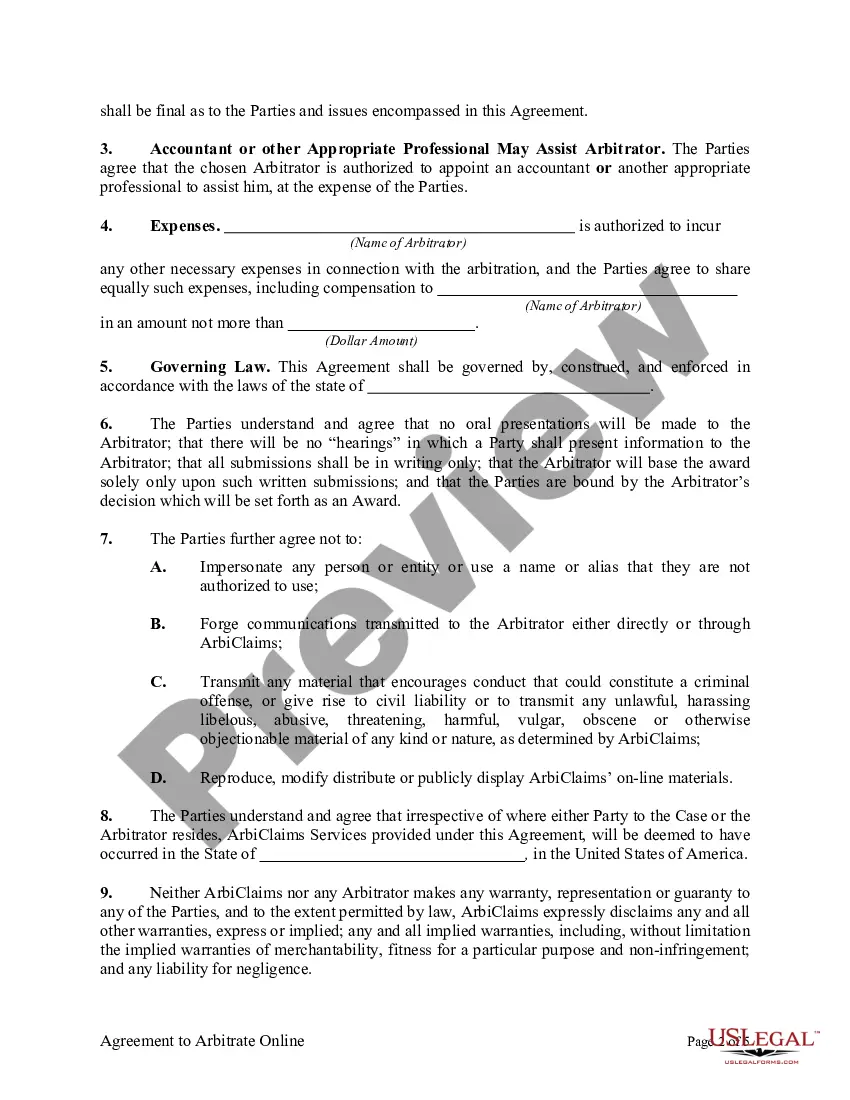
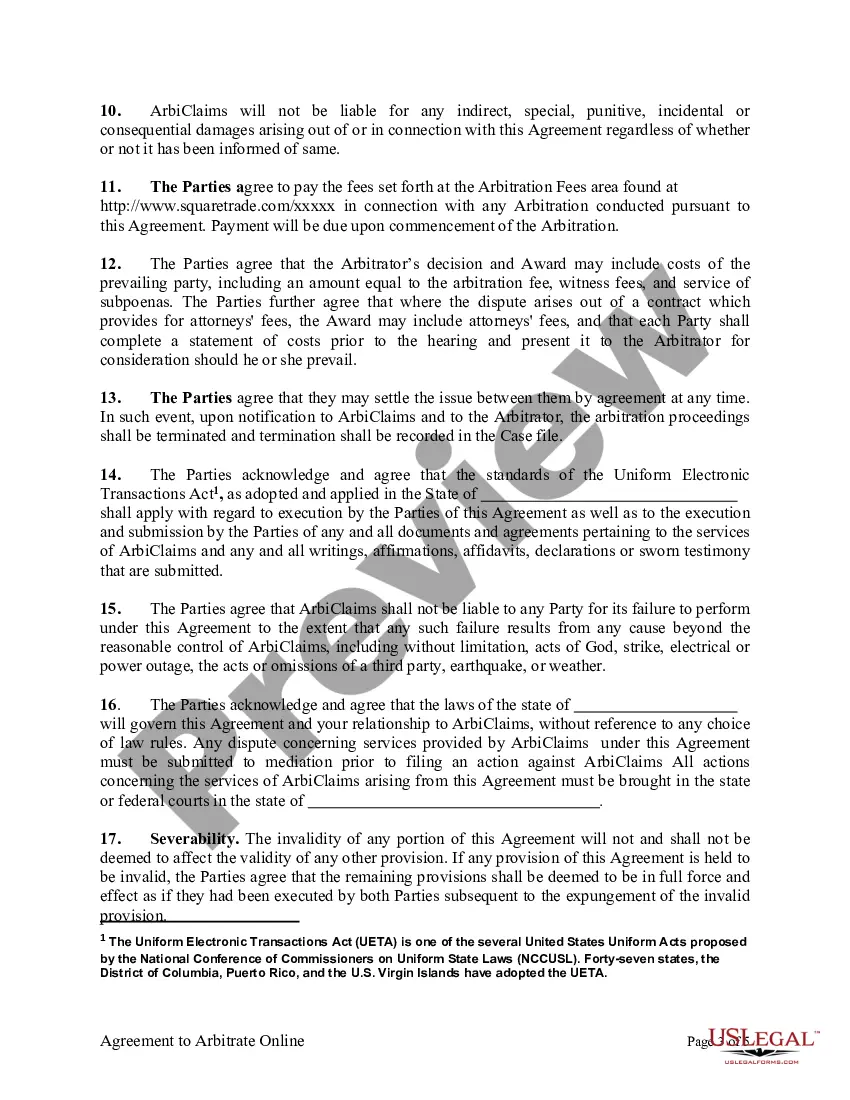




Get your form ready online
Our built-in tools help you complete, sign, share, and store your documents in one place.
Make edits, fill in missing information, and update formatting in US Legal Forms—just like you would in MS Word.
Download a copy, print it, send it by email, or mail it via USPS—whatever works best for your next step.
Sign and collect signatures with our SignNow integration. Send to multiple recipients, set reminders, and more. Go Premium to unlock E-Sign.
If this form requires notarization, complete it online through a secure video call—no need to meet a notary in person or wait for an appointment.
We protect your documents and personal data by following strict security and privacy standards.

Make edits, fill in missing information, and update formatting in US Legal Forms—just like you would in MS Word.

Download a copy, print it, send it by email, or mail it via USPS—whatever works best for your next step.

Sign and collect signatures with our SignNow integration. Send to multiple recipients, set reminders, and more. Go Premium to unlock E-Sign.

If this form requires notarization, complete it online through a secure video call—no need to meet a notary in person or wait for an appointment.

We protect your documents and personal data by following strict security and privacy standards.
Looking for another form?
Form popularity
FAQ
Arbitration might be the right choice for some cases. Limited discovery rights and costs might be useful when less is at stake. Arbitration might feel less adversarial, which could be an advantage where ongoing relationships are hoped to be preserved. Arbitration lends some confidentiality.
(1) An agreement contained in a record to submit to arbitration any existing or subsequent controversy arising between the parties to the agreement is valid, enforceable, and irrevocable except upon a ground that exists at law or in equity for the revocation of a contract.
The Scope of the Clause. This section of the clause is critical; it sets the boundaries for which disputes the tribunal is authorised to determine. Choice of Rules. The Number of Arbitrators. Appointing Authority. Choice of Venue. The language of the proceedings. Finality. Exclusion of the right of appeal.
In Florida, arbitration agreements are governed by both state and federal laws. The Federal Arbitration Act (FAA) applies to interstate commerce contracts, while Florida's Arbitration Code outlines the rules for agreements not subject to the FAA.
In some instances, you may be able to sue if you signed a valid arbitration agreement. While courts generally favor arbitration agreements, they will allow you to file a lawsuit if either you didn't understand your rights or your claims fall outside the arbitration provision's scope.
The Florida Supreme Court has clarified that, effective immediately, a sole or chief court-appointed arbitrator must be a Bar member in good standing for the past five years, unless the parties agree in writing to allow someone eligible to practice law in any U.S. jurisdiction during that time.
Arbitration is a dispute resolution process whereby a neutral third person or panel, called an arbitrator or arbitration panel, considers the facts and arguments presented by the parties and renders a decision, which may be binding or nonbinding. Fla. Stat. Section 44.1011.
There is no public policy in favor of forcing arbitration of issues the parties have not agreed to arbitrate. Citation. It follows that when presented with a petition to compel arbitration, the trial court's first task is to determine whether the parties have in fact agreed to arbitrate the dispute.
For instance, if an arbitration agreement is signed as part of the initial employment contract, your employment can be valid consideration – You give up your rights to potential legal action in exchange for a job. However, what constitutes valid consideration in the employment context varies from state to state.