Agreement Arbitration Document With Bank In Michigan
Description

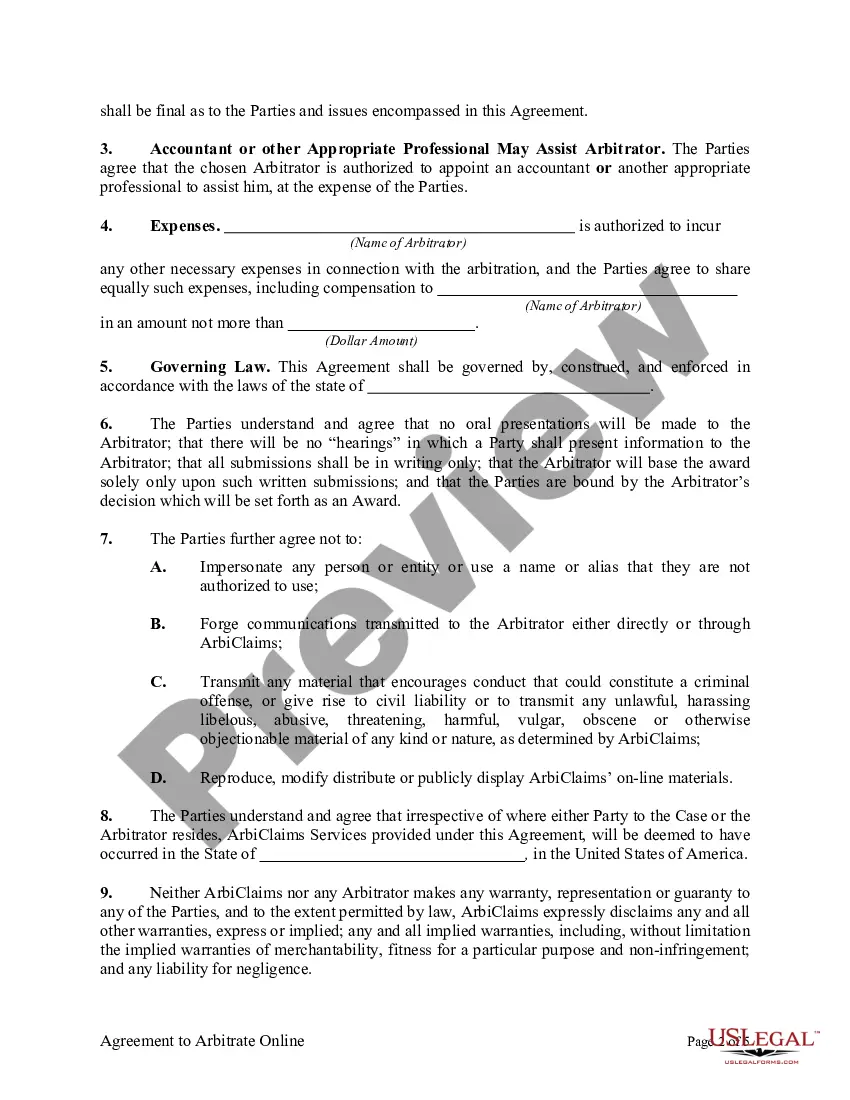
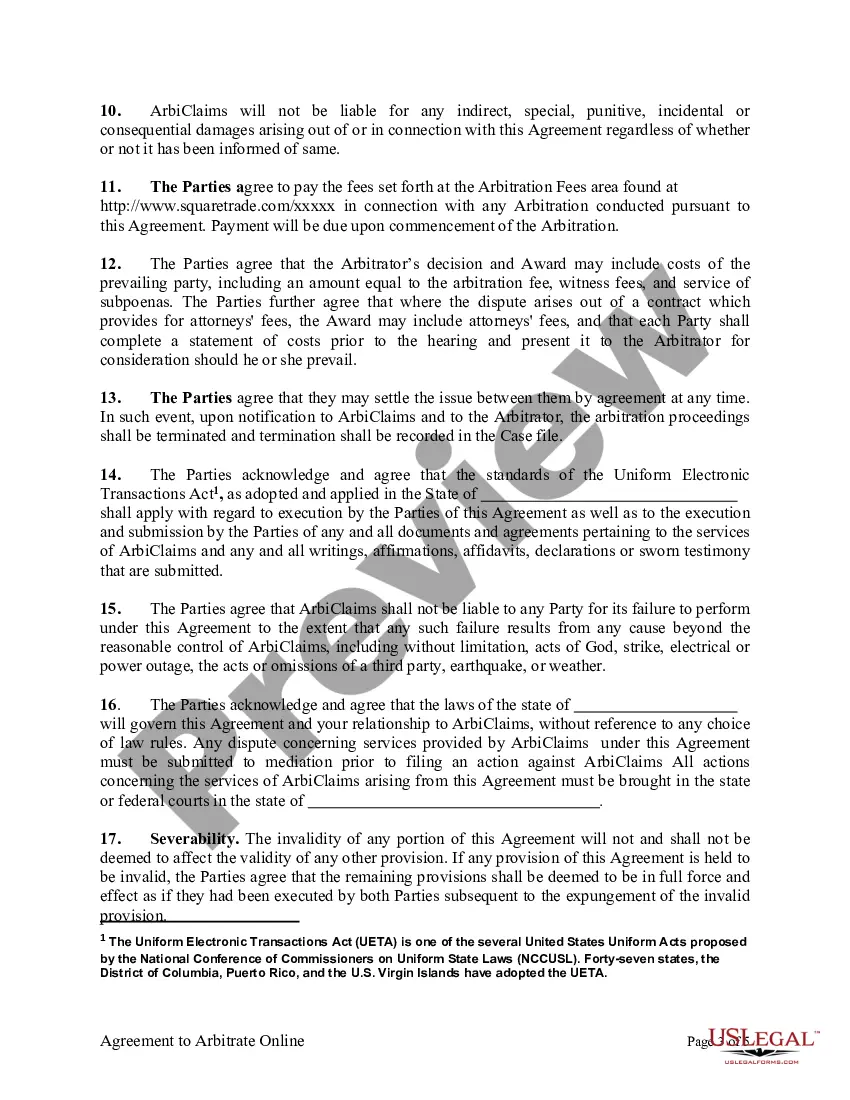





Get your form ready online
Our built-in tools help you complete, sign, share, and store your documents in one place.
Make edits, fill in missing information, and update formatting in US Legal Forms—just like you would in MS Word.
Download a copy, print it, send it by email, or mail it via USPS—whatever works best for your next step.
Sign and collect signatures with our SignNow integration. Send to multiple recipients, set reminders, and more. Go Premium to unlock E-Sign.
If this form requires notarization, complete it online through a secure video call—no need to meet a notary in person or wait for an appointment.
We protect your documents and personal data by following strict security and privacy standards.

Make edits, fill in missing information, and update formatting in US Legal Forms—just like you would in MS Word.

Download a copy, print it, send it by email, or mail it via USPS—whatever works best for your next step.

Sign and collect signatures with our SignNow integration. Send to multiple recipients, set reminders, and more. Go Premium to unlock E-Sign.

If this form requires notarization, complete it online through a secure video call—no need to meet a notary in person or wait for an appointment.

We protect your documents and personal data by following strict security and privacy standards.
Looking for another form?


Form popularity
FAQ
(1) An agreement contained in a record to submit to arbitration any existing or subsequent controversy arising between the parties to the agreement is valid, enforceable, and irrevocable except on a ground that exists at law or in equity for the revocation of a contract.
Arbitration is a contract-based form of binding dispute resolution. In other words, a party's right to refer a dispute to arbitration depends on the existence of an agreement (the “arbitration agreement”) between them and the other parties to the dispute that the dispute may be referred to arbitration.
Arbitration is increasingly being recognised, including in the banking and financial sector, as a means of resolving disputes that can meet the needs of parties who are no longer satisfied with the characteristics - and often the timeframe - of litigation before national courts.
A form of ADR, arbitration involves both parties presenting their case to a neutral third party (an arbitrator) who considers the issues and gives their decision (called an award). An arbitrator has the power to make a range of awards depending on the circumstances of the case. Awards may include: Monetary compensation.
Always get straight to the merits without berating the other side or whining about how badly it has treated you. Another threat to your credibility is the “kitchen sink” arbitration demand or a response that includes numerous claims or defenses that have little chance of succeeding.
Outline a concise factual background and then move on to a discussion of the issues at the heart of the case. Your arguments should flow easily from the relevant facts and applicable law. And, by all means, avoid exaggeration of the strengths of your case as well as disparagement of the opposing side.
The Scope of the Clause. This section of the clause is critical; it sets the boundaries for which disputes the tribunal is authorised to determine. Choice of Rules. The Number of Arbitrators. Appointing Authority. Choice of Venue. The language of the proceedings. Finality. Exclusion of the right of appeal.
Parties: The right parties need to be party to the arbitration agreement. This can be a problem where the contractual counterparty is a newly incorporated joint venture without assets or a state owned entity. The arbitration agreement should include the party against whom any award will be enforced.
The Scope of the Clause. This section of the clause is critical; it sets the boundaries for which disputes the tribunal is authorised to determine. Choice of Rules. The Number of Arbitrators. Appointing Authority. Choice of Venue. The language of the proceedings. Finality. Exclusion of the right of appeal.