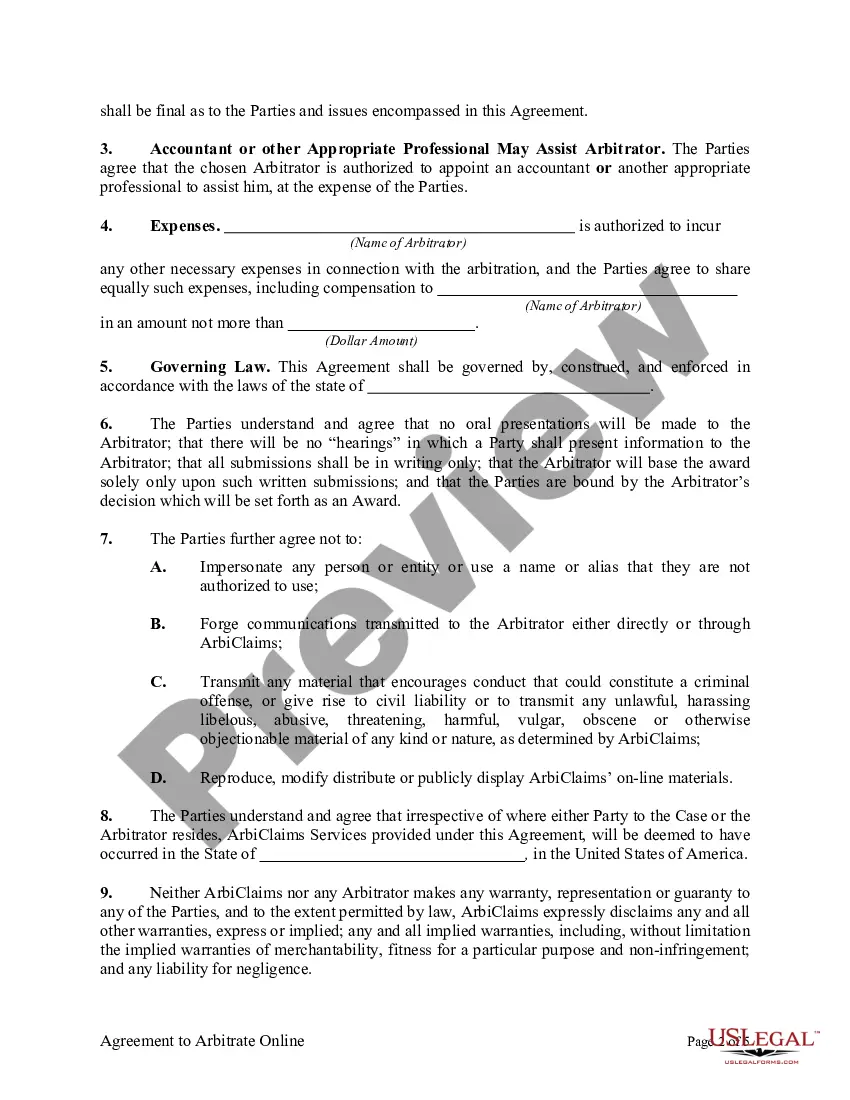
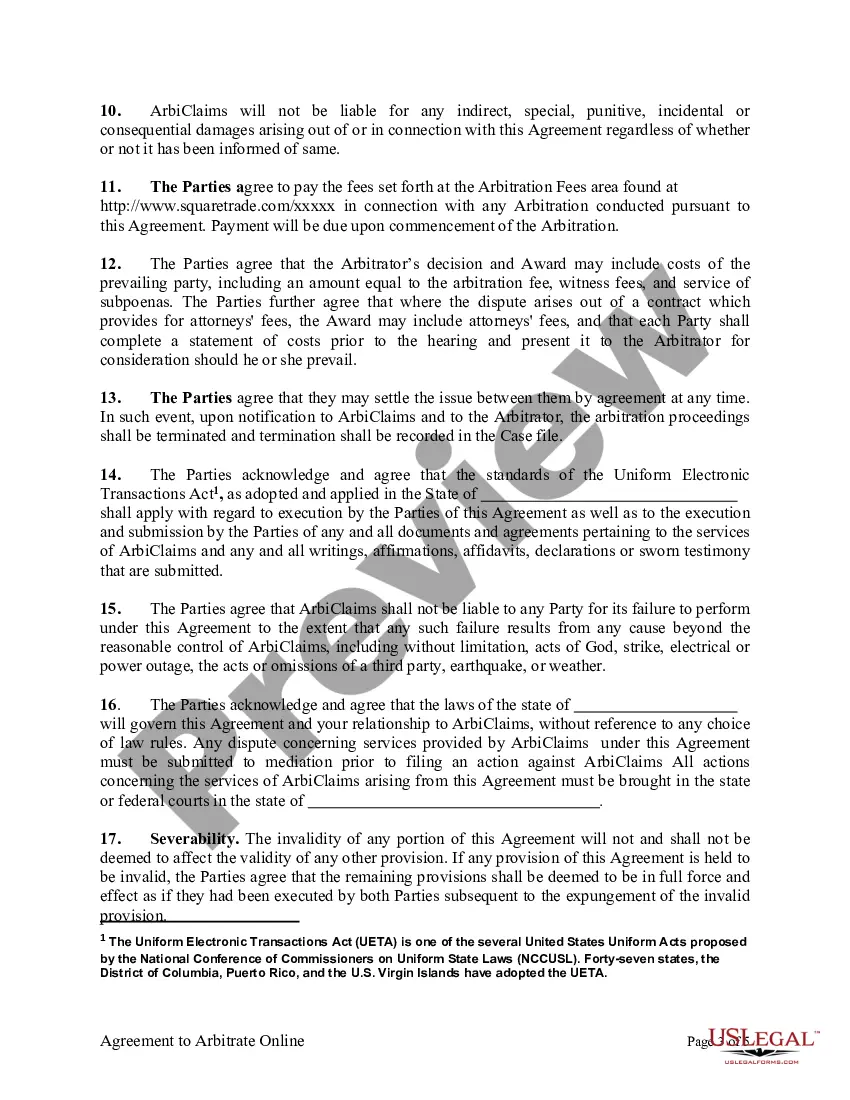
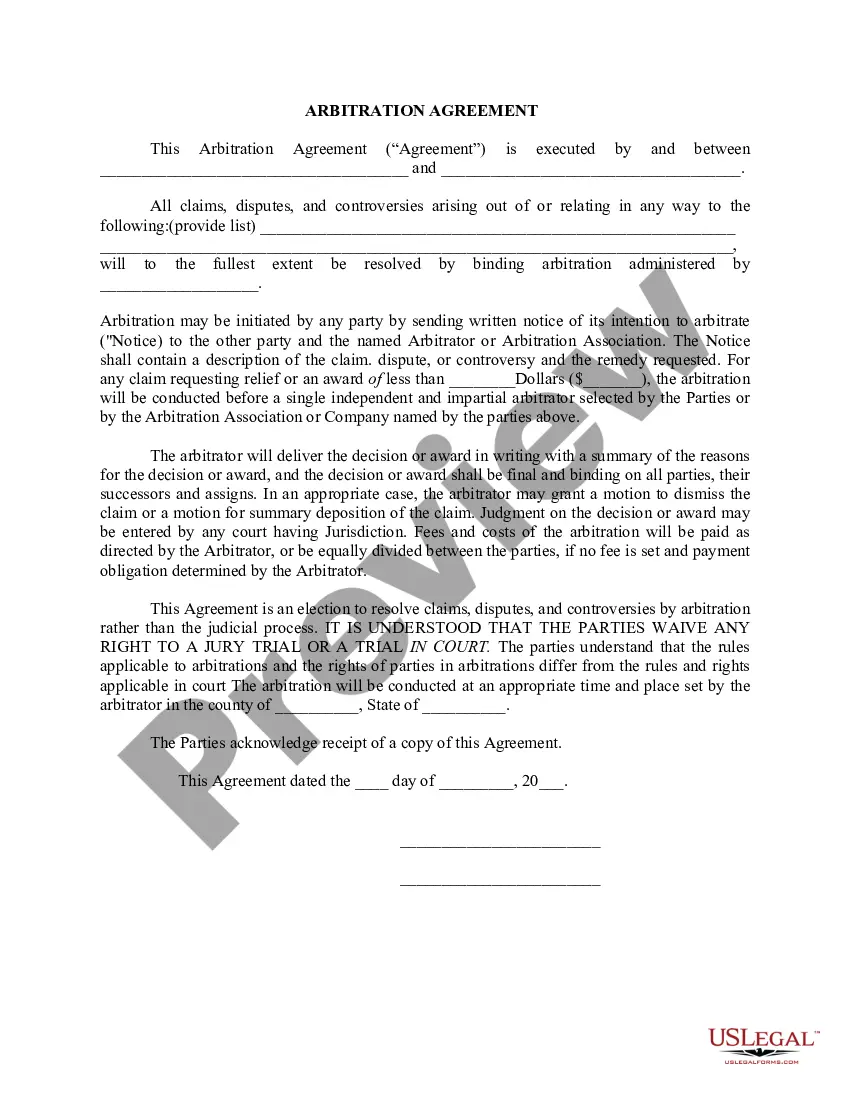
Arbitration Agreement Format In Massachusetts
Description





Get your form ready online
Our built-in tools help you complete, sign, share, and store your documents in one place.
Make edits, fill in missing information, and update formatting in US Legal Forms—just like you would in MS Word.
Download a copy, print it, send it by email, or mail it via USPS—whatever works best for your next step.
Sign and collect signatures with our SignNow integration. Send to multiple recipients, set reminders, and more. Go Premium to unlock E-Sign.
If this form requires notarization, complete it online through a secure video call—no need to meet a notary in person or wait for an appointment.
We protect your documents and personal data by following strict security and privacy standards.

Make edits, fill in missing information, and update formatting in US Legal Forms—just like you would in MS Word.

Download a copy, print it, send it by email, or mail it via USPS—whatever works best for your next step.

Sign and collect signatures with our SignNow integration. Send to multiple recipients, set reminders, and more. Go Premium to unlock E-Sign.

If this form requires notarization, complete it online through a secure video call—no need to meet a notary in person or wait for an appointment.

We protect your documents and personal data by following strict security and privacy standards.
Looking for another form?








Form popularity
FAQ
The Massachusetts Act adopted the central provision of the FAA, which makes both pre and post dispute agreements to arbitrate “valid, enforceable and irrevocable,” except on the grounds for the revocation of other contracts. M.G.L. c. 251 § 1.
Drafting the “perfect” arbitration agreement Clear and precise language. Clarity and brevity are key to avoiding an unenforceable arbitration clause and the costs and delays that follow. Scope. Seat of arbitration. Governing law. Arbitral Rules. Language. Arbitrators. Other common issues.
Your letter of arbitration should be concise, professional, and factual. Follow the standard business letter format, including your name and contact information at the top. Ensure that your writing is clear, and avoid using jargon or technical terms that may not be familiar to the reader.
Arbitration is a dispute resolution mechanism agreed on by parties, which involves the appointment of one or more ar- bitrators to preside over and to make a final decision on a dispute between two or more parties – instead of approaching a court of law to resolve the dispute.
"A dispute having arisen between the parties concerning , the parties hereby agree that the dispute shall be referred to and finally resolved by arbitration under the LCIA Rules. The number of arbitrators shall be one/three. The seat, or legal place, of arbitration shall be City and/or Country.
The Scope of the Clause. This section of the clause is critical; it sets the boundaries for which disputes the tribunal is authorised to determine. Choice of Rules. The Number of Arbitrators. Appointing Authority. Choice of Venue. The language of the proceedings. Finality. Exclusion of the right of appeal.
After drafting the Motion to Compel Arbitration, you'll need to file it with the court clerk. You can do this in person or let an attorney do it for you if you have one. Filing requirements vary from one court to another; you need to consult with the court clerk about local rules for filing that apply to your case.
Drafting the “perfect” arbitration agreement Clear and precise language. Clarity and brevity are key to avoiding an unenforceable arbitration clause and the costs and delays that follow. Scope. Seat of arbitration. Governing law. Arbitral Rules. Language. Arbitrators. Other common issues.
The Scope of the Clause. This section of the clause is critical; it sets the boundaries for which disputes the tribunal is authorised to determine. Choice of Rules. The Number of Arbitrators. Appointing Authority. Choice of Venue. The language of the proceedings. Finality. Exclusion of the right of appeal.
Arbitration is less formal than court, though you and the other party may appear at an arbitration hearing, present evidence, or call and question each other's witnesses. An arbitrator or panel makes a decision or award once you've presented your case. The decision is legally binding.
