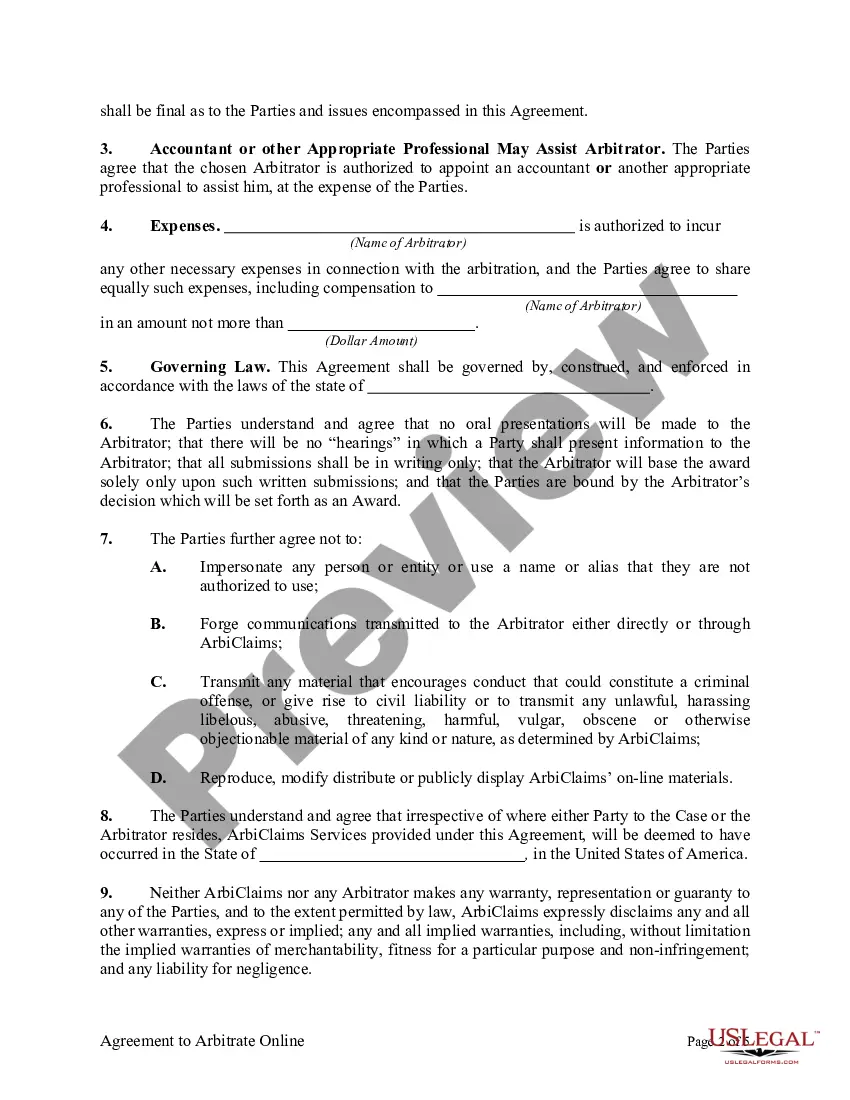
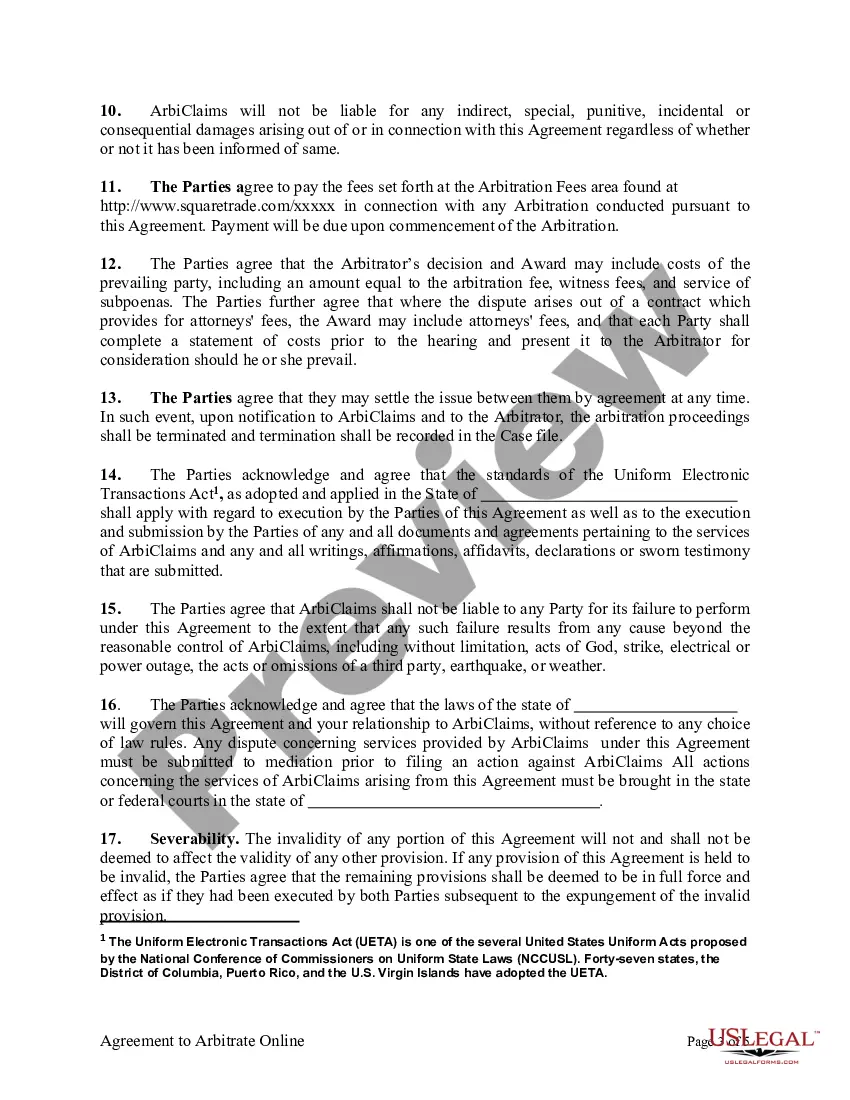
Arbitration Agreement Format India In Maricopa
Description






Get your form ready online
Our built-in tools help you complete, sign, share, and store your documents in one place.
Make edits, fill in missing information, and update formatting in US Legal Forms—just like you would in MS Word.
Download a copy, print it, send it by email, or mail it via USPS—whatever works best for your next step.
Sign and collect signatures with our SignNow integration. Send to multiple recipients, set reminders, and more. Go Premium to unlock E-Sign.
If this form requires notarization, complete it online through a secure video call—no need to meet a notary in person or wait for an appointment.
We protect your documents and personal data by following strict security and privacy standards.

Make edits, fill in missing information, and update formatting in US Legal Forms—just like you would in MS Word.

Download a copy, print it, send it by email, or mail it via USPS—whatever works best for your next step.

Sign and collect signatures with our SignNow integration. Send to multiple recipients, set reminders, and more. Go Premium to unlock E-Sign.

If this form requires notarization, complete it online through a secure video call—no need to meet a notary in person or wait for an appointment.

We protect your documents and personal data by following strict security and privacy standards.
Looking for another form?






Form popularity
FAQ
Compulsory Arbitration is a mandatory program for disputes valued under $50,000. A court-appointed arbitrator reviews the case to decide a just resolution and award.
There are five main stages to the arbitration process: (i) initial pleadings; (ii) panel selection; (iii) scheduling; (iv) discovery; (v) trial prep; and (vi) final hearing.
It is a legal technique for the resolution of dispute outside the courts, wherein the parties to a dispute refer it to one or more persons namely arbitrator(s) by whose decision (the “award”) they agree to be bound. The Indian law with respect to the arbitration is largely based on the English Common Law.
16th August, 1996. An Act to consolidate and amend the law relating to domestic arbitration, international commercial arbitration and enforcement of foreign arbitral awards as also to define the law relating to conciliation and for matters connected therewith or incidental thereto. 1.
The Scope of the Clause. This section of the clause is critical; it sets the boundaries for which disputes the tribunal is authorised to determine. Choice of Rules. The Number of Arbitrators. Appointing Authority. Choice of Venue. The language of the proceedings. Finality. Exclusion of the right of appeal.
Mandatory binding arbitration often requires the parties to waive specific rights. Specifically, the relevant contract provision removes or limits a party from suing if they feel wronged. They must go to arbitration instead. It also takes away their right to appeal any decision.
An arbitration agreement, being a contract governed by the Indian Contract Act, 1872 (ICA), will be void and unenforceable if executed by a person who is not competent to contract, for example, a minor or a person of unsound mind.
Compulsory arbitration is arbitration of labor disputes which laws of some communities force the two sides, labor and management, to undergo. These laws mostly apply when the possibility of a strike seriously affects the public interest.
