Arbitration Agreement In Dallas
Description

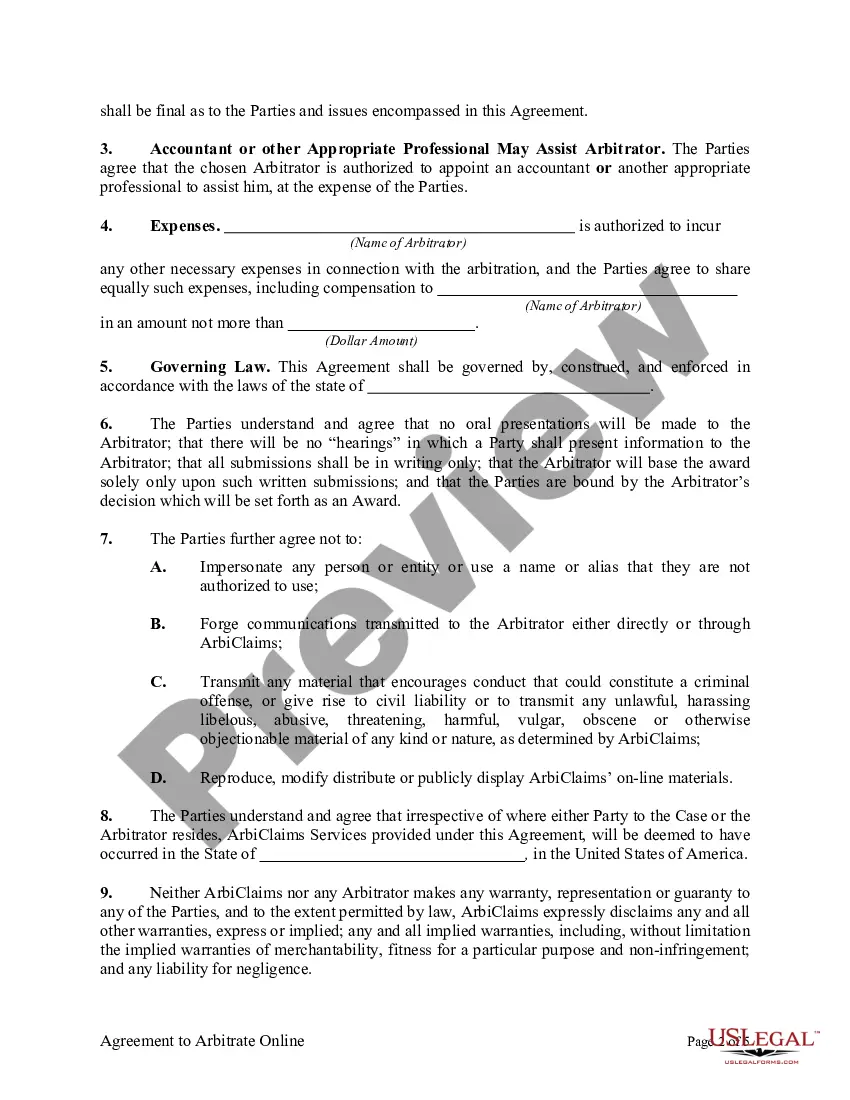
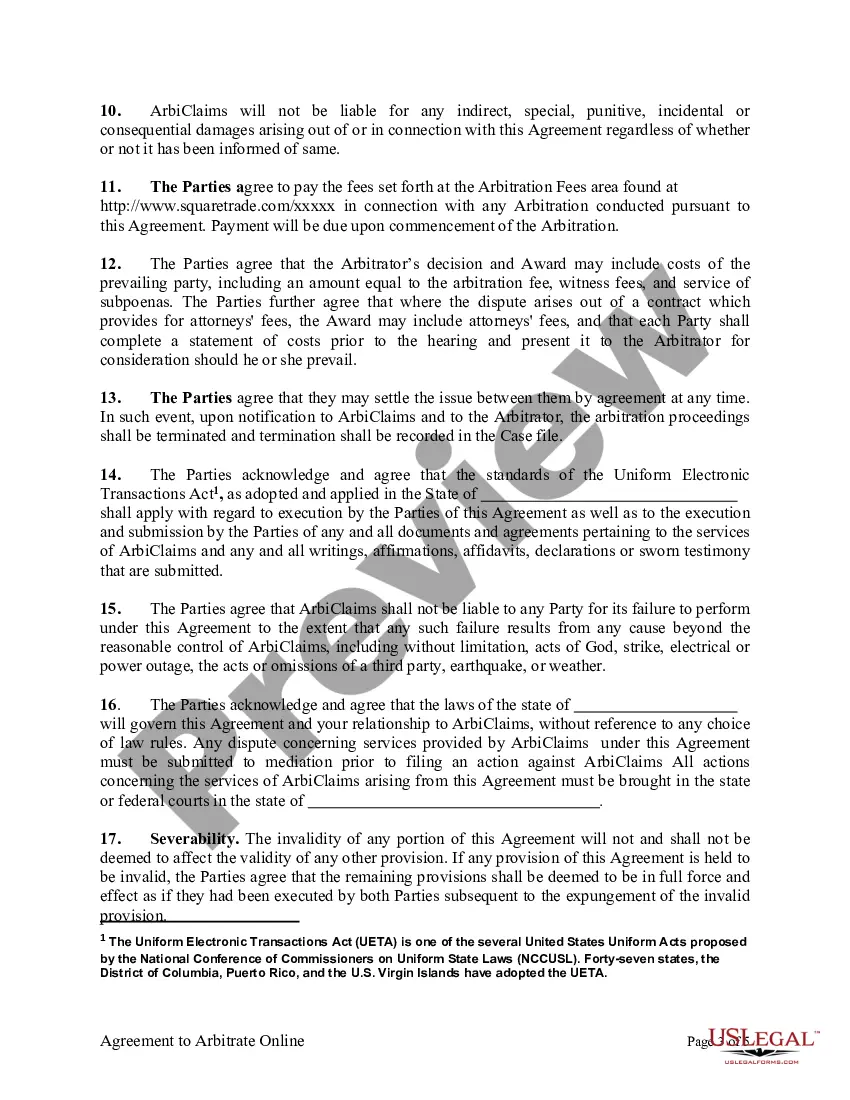

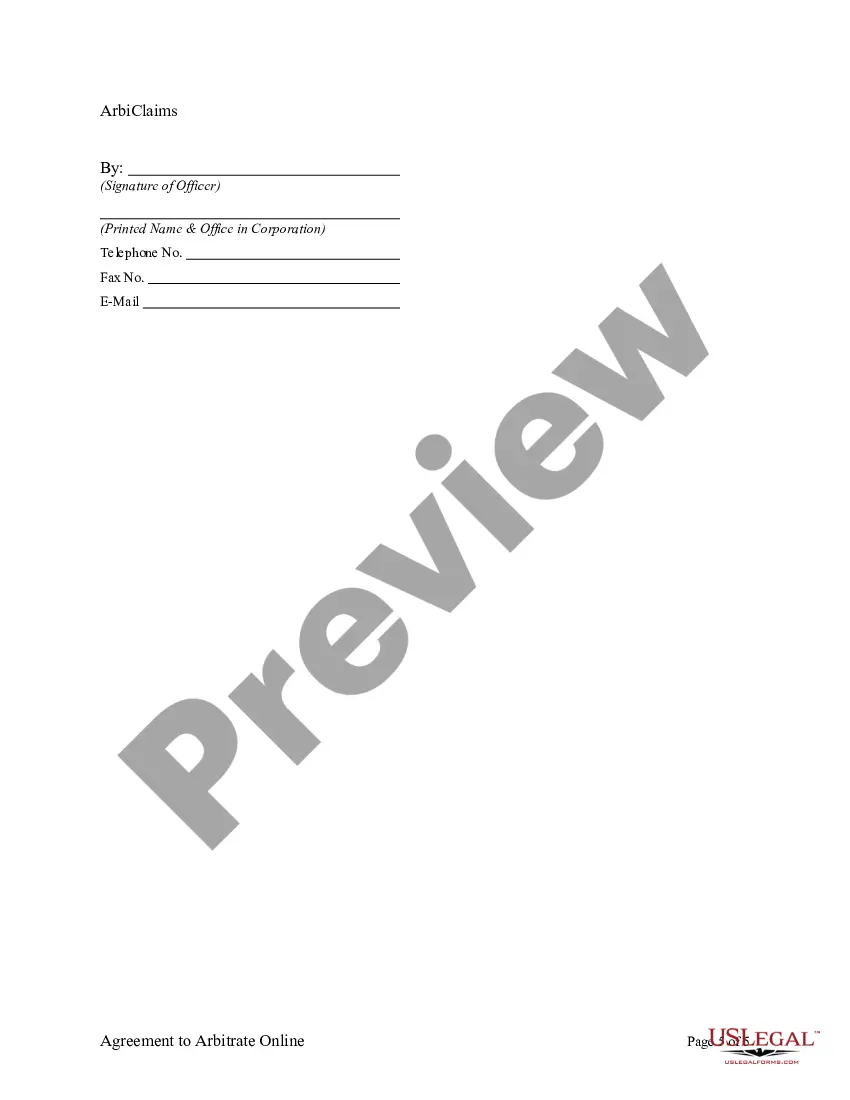



Get your form ready online
Our built-in tools help you complete, sign, share, and store your documents in one place.
Make edits, fill in missing information, and update formatting in US Legal Forms—just like you would in MS Word.
Download a copy, print it, send it by email, or mail it via USPS—whatever works best for your next step.
Sign and collect signatures with our SignNow integration. Send to multiple recipients, set reminders, and more. Go Premium to unlock E-Sign.
If this form requires notarization, complete it online through a secure video call—no need to meet a notary in person or wait for an appointment.
We protect your documents and personal data by following strict security and privacy standards.

Make edits, fill in missing information, and update formatting in US Legal Forms—just like you would in MS Word.

Download a copy, print it, send it by email, or mail it via USPS—whatever works best for your next step.

Sign and collect signatures with our SignNow integration. Send to multiple recipients, set reminders, and more. Go Premium to unlock E-Sign.

If this form requires notarization, complete it online through a secure video call—no need to meet a notary in person or wait for an appointment.

We protect your documents and personal data by following strict security and privacy standards.
Looking for another form?






Form popularity
FAQ
If you've been sued for a debt, check your credit card agreement for an arbitration clause and file a Motion to Compel Arbitration into the case to avoid going to court. To find your arbitration clause, read the fine print, look for dispute resolution key terms, and utilize the CFPB's credit card agreement database.
In general, arbitration decisions are for the most part private and confidential and they are published only if the parties and the arbitrator agree on making the decision available. There are a variety of commercially available services which publish those decisions.
Publicity: Arbitration proceedings are usually private, which can be beneficial for employers seeking to keep disputes out of the public eye.
If you've been sued for a debt, check your credit card agreement for an arbitration clause and file a Motion to Compel Arbitration into the case to avoid going to court. To find your arbitration clause, read the fine print, look for dispute resolution key terms, and utilize the CFPB's credit card agreement database.
However, the Texas Supreme Court has ruled that an employer can simply notify at-will employees of the details of an arbitration program it is adopting, and the employees can be bound to that arbitration program by continuing their employment, even if they never sign anything.
At arbitration, the arbitrator will listen as the parties offer evidence about the issues. Witnesses will answer questions under oath, and each party will explain its side of the case. After the arbitration, the arbitrator will review the evidence and make a decision (enter an award) on each issue.
Under Section 171.001 of the TAA, written agreements to arbitrate are generally valid and enforceable in Texas.
A Texas court that has jurisdiction over the parties and the dispute may enforce an arbitration agreement and render judgment on the award (Tex. Civ. Prac. & Rem.
Texas law will routinely uphold arbitration clauses. However, before submitting to arbitration, all Texans who want their day in court should be sure that the agreement is enforceable. It is tough but you can still avoid an arbitration clause.
To file the parties' request for arbitration, mail or fax DWC Form-044 to: Chief Clerk of Proceedings, Hearings. Texas Department of Insurance, Division of Workers' Compensation. Hearings, Mail Code HRG. PO Box 12050. Austin, TX 78711-2050. or. 512-804-4011 (fax number)
