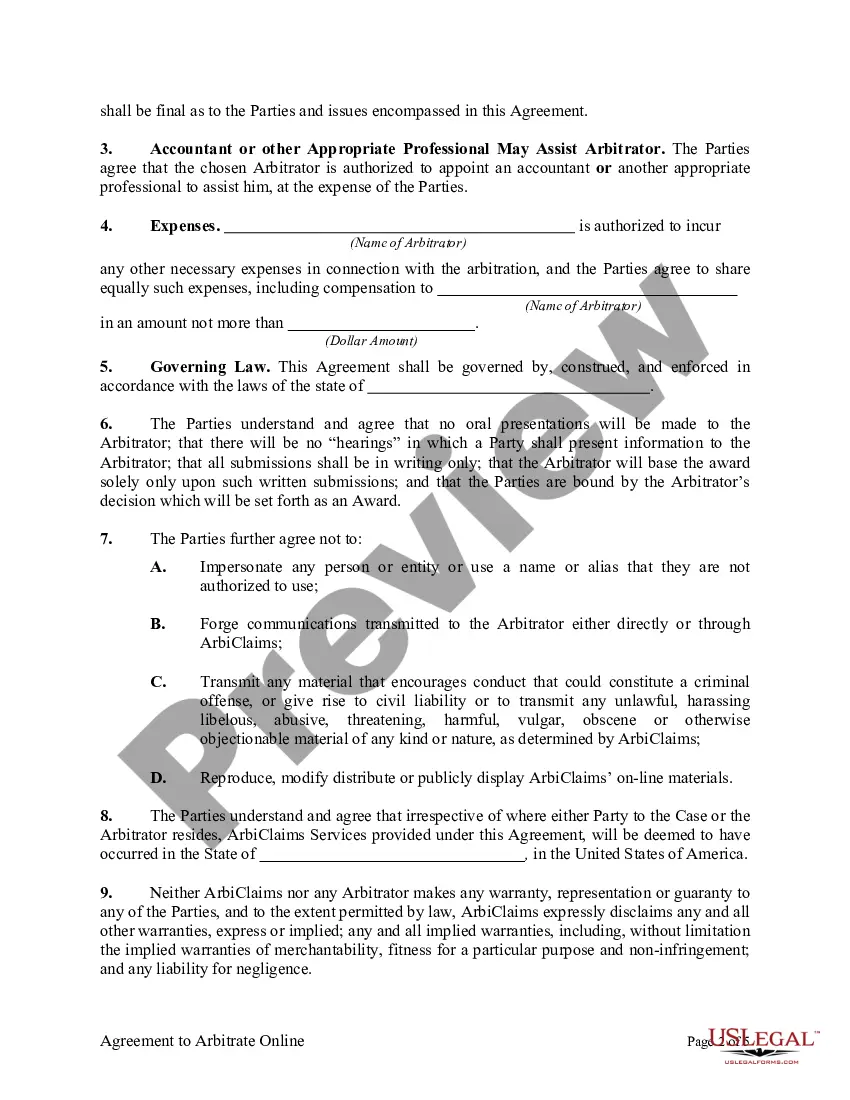
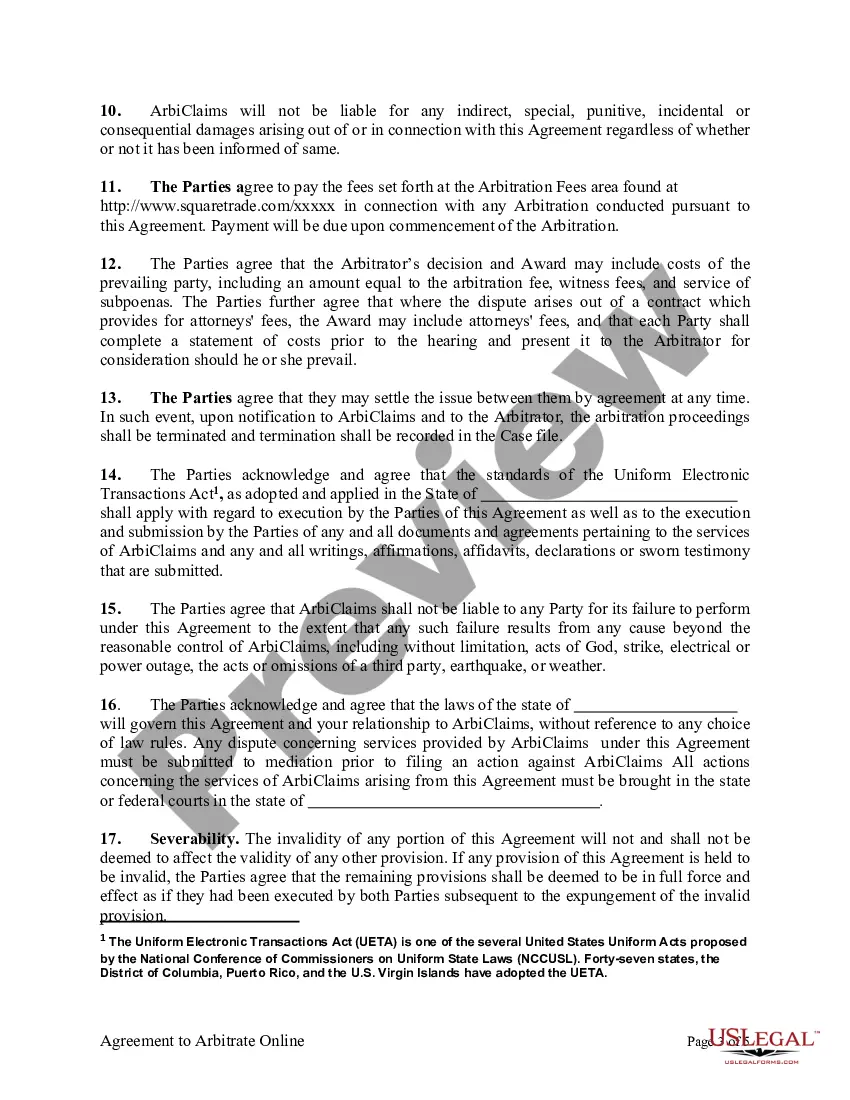
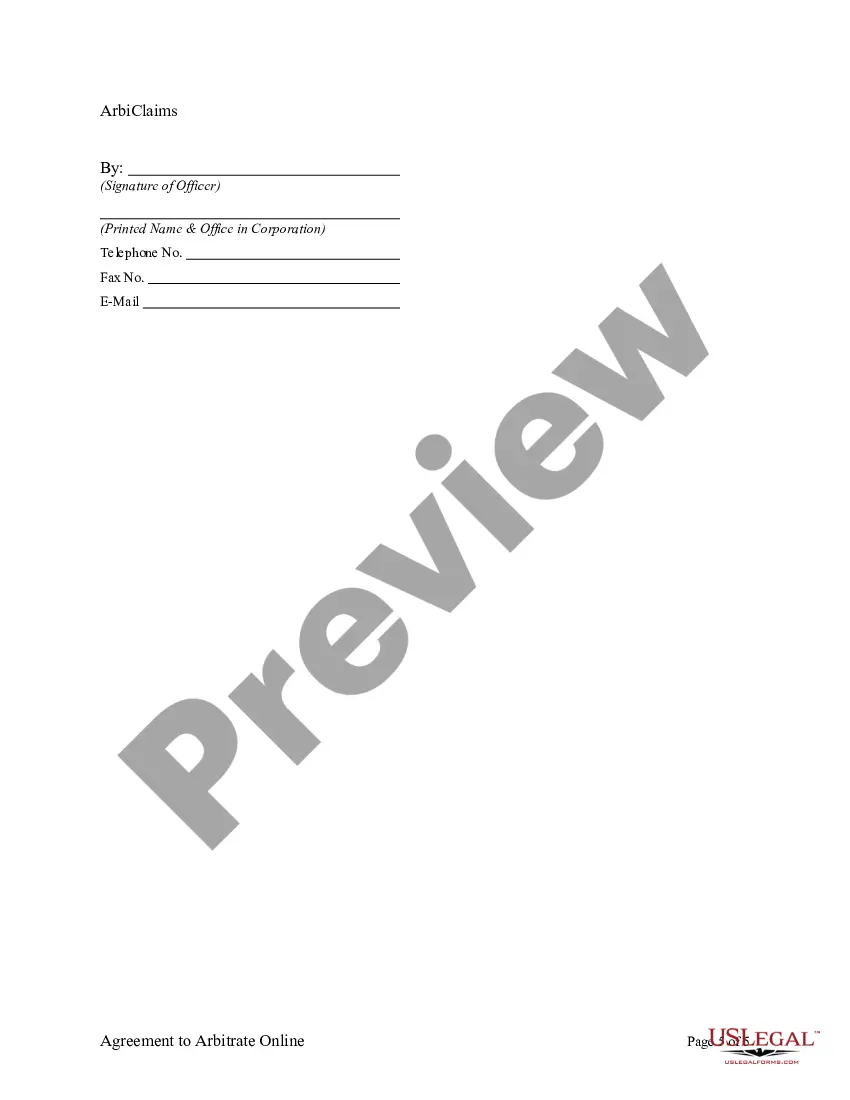
Agreement Arbitrate Sample For Insurance In Allegheny
Description





Get your form ready online
Our built-in tools help you complete, sign, share, and store your documents in one place.
Make edits, fill in missing information, and update formatting in US Legal Forms—just like you would in MS Word.
Download a copy, print it, send it by email, or mail it via USPS—whatever works best for your next step.
Sign and collect signatures with our SignNow integration. Send to multiple recipients, set reminders, and more. Go Premium to unlock E-Sign.
If this form requires notarization, complete it online through a secure video call—no need to meet a notary in person or wait for an appointment.
We protect your documents and personal data by following strict security and privacy standards.

Make edits, fill in missing information, and update formatting in US Legal Forms—just like you would in MS Word.

Download a copy, print it, send it by email, or mail it via USPS—whatever works best for your next step.

Sign and collect signatures with our SignNow integration. Send to multiple recipients, set reminders, and more. Go Premium to unlock E-Sign.

If this form requires notarization, complete it online through a secure video call—no need to meet a notary in person or wait for an appointment.

We protect your documents and personal data by following strict security and privacy standards.
Looking for another form?





Form popularity
FAQ
The Scope of the Clause. This section of the clause is critical; it sets the boundaries for which disputes the tribunal is authorised to determine. Choice of Rules. The Number of Arbitrators. Appointing Authority. Choice of Venue. The language of the proceedings. Finality. Exclusion of the right of appeal.
(a) During Court Proceedings. In all Family Division proceedings, the court may designate a member of the court staff or the proponent of evidence to serve as custodian during and throughout court proceedings, and the custodian's name shall be placed on the record.
In voluntary or non-binding arbitration, the insurer and the policyholder agree to meet with an arbitrator to review the claim. Once the arbitrator makes their decision on the claim, both parties then have the option to accept or reject it. If the decision is ultimately denied, the case can then be appealed.
"A dispute having arisen between the parties concerning , the parties hereby agree that the dispute shall be referred to and finally resolved by arbitration under the LCIA Rules. The number of arbitrators shall be one/three. The seat, or legal place, of arbitration shall be City and/or Country.
Arbitration. The arbitration system in Allegheny County is compulsory non-binding arbitration with a ceiling of $50,000 on civil damage awards.
In voluntary or non-binding arbitration, the insurer and the policyholder agree to meet with an arbitrator to review the claim. Once the arbitrator makes their decision on the claim, both parties then have the option to accept or reject it. If the decision is ultimately denied, the case can then be appealed.
The jurisdictional limits of compulsory arbitration in the Pennsylvania state courts vary considerably with, for example, all cases involving up to $50,000 being referred to arbitration in Philadelphia, Montgomery, Lehigh, Bucks, and Lancaster Counties, whereas the limit is set at $35,000 in Dauphin County, $30,000 in ...
What is compulsory arbitration in the Pennsylvania Courts of Common Pleas? Pursuant to the Pennsylvania Judicial Code, compulsory arbitration is authorized within each county, and each county sets an aggregate amount in controversy for which arbitration shall be required.
