Stockholder Meeting With Example
Description



Get your form ready online
Our built-in tools help you complete, sign, share, and store your documents in one place.
Make edits, fill in missing information, and update formatting in US Legal Forms—just like you would in MS Word.
Download a copy, print it, send it by email, or mail it via USPS—whatever works best for your next step.
Sign and collect signatures with our SignNow integration. Send to multiple recipients, set reminders, and more. Go Premium to unlock E-Sign.
If this form requires notarization, complete it online through a secure video call—no need to meet a notary in person or wait for an appointment.
We protect your documents and personal data by following strict security and privacy standards.

Make edits, fill in missing information, and update formatting in US Legal Forms—just like you would in MS Word.

Download a copy, print it, send it by email, or mail it via USPS—whatever works best for your next step.

Sign and collect signatures with our SignNow integration. Send to multiple recipients, set reminders, and more. Go Premium to unlock E-Sign.

If this form requires notarization, complete it online through a secure video call—no need to meet a notary in person or wait for an appointment.

We protect your documents and personal data by following strict security and privacy standards.
Looking for another form?

How to fill out Annual Stockholder Meeting Minutes - Corporate Resolutions?
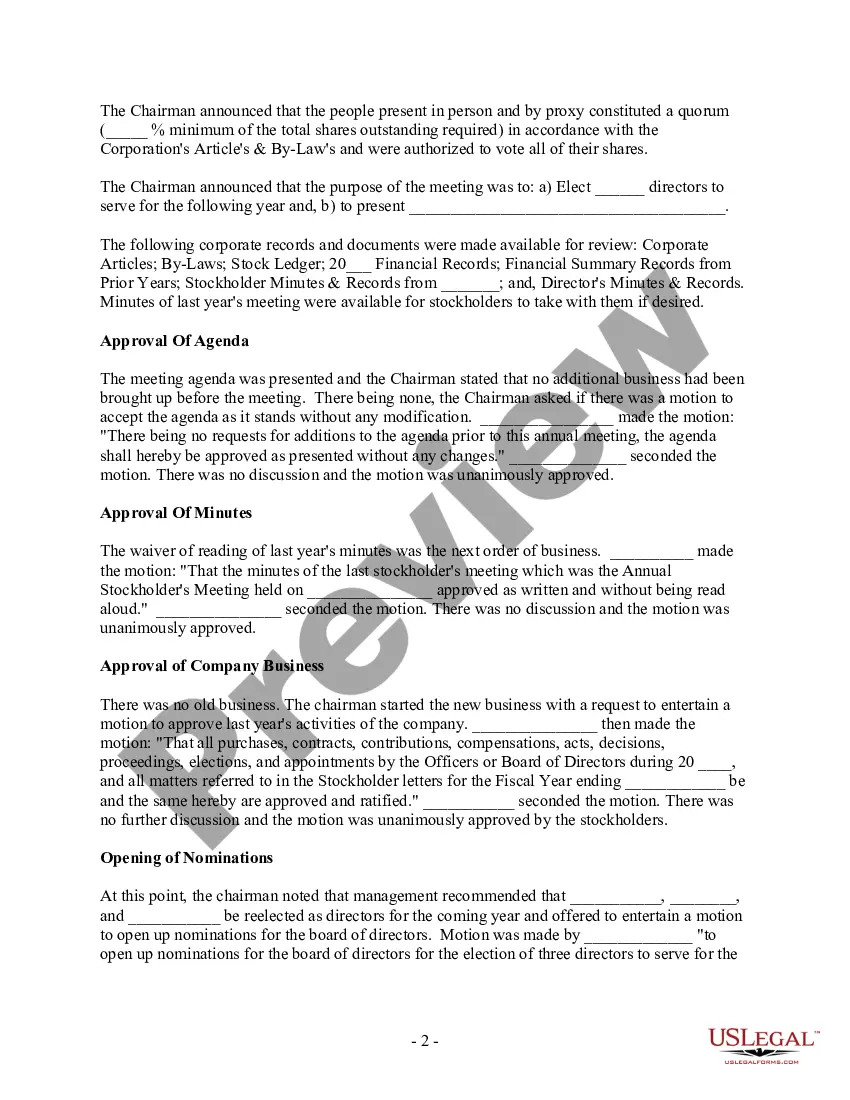
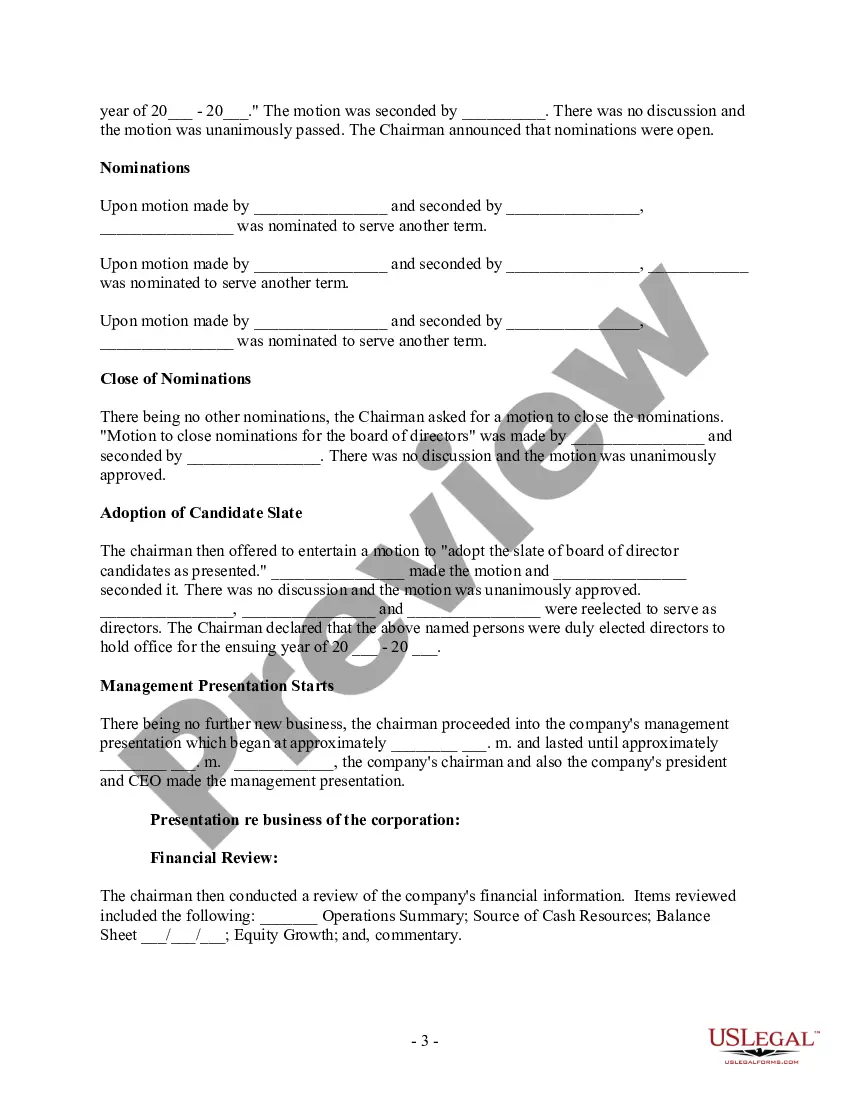
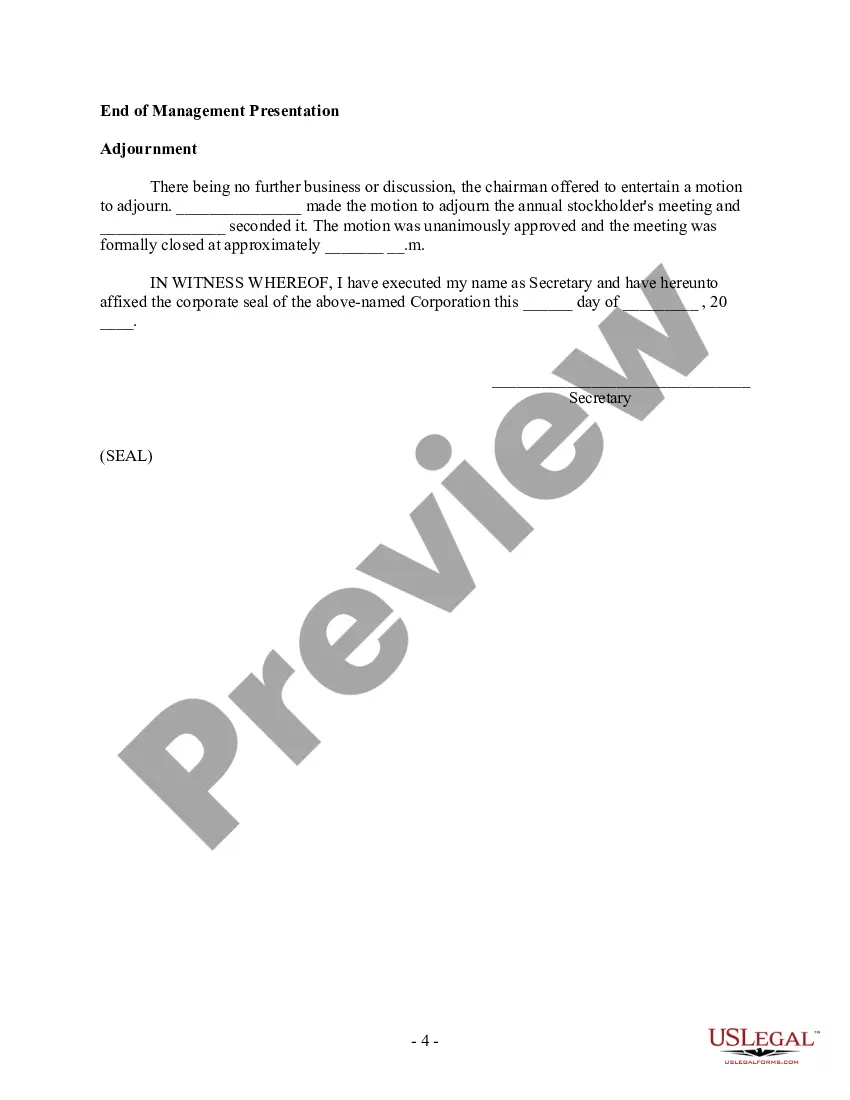
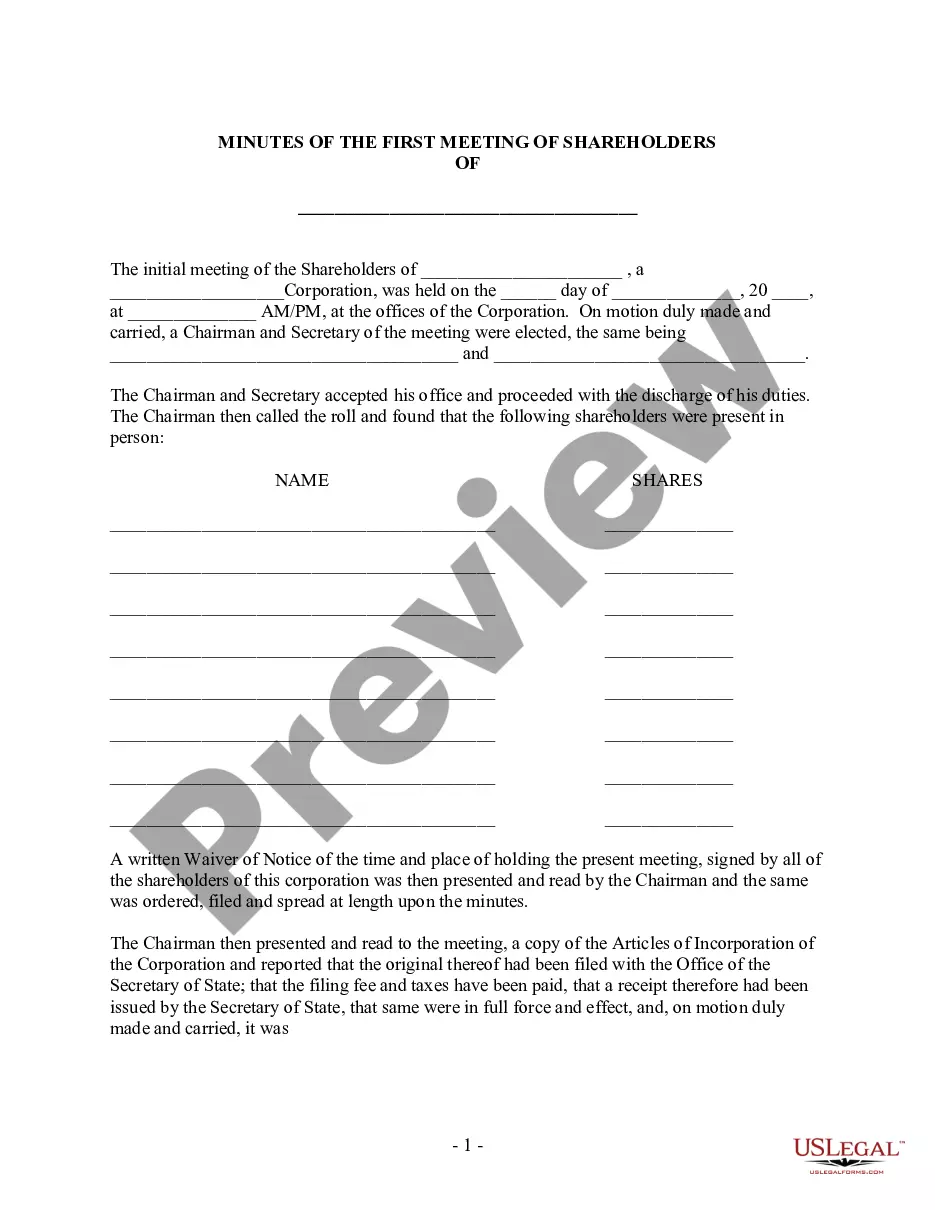
The Stockholder Assembly With Example you observe on this page is a reusable formal template composed by expert attorneys in adherence to federal and local regulations.
For over 25 years, US Legal Forms has supplied individuals, businesses, and lawyers with more than 85,000 validated, state-specific documents for any commercial and personal circumstances. It’s the quickest, simplest, and most dependable method to acquire the documentation you require, as the service ensures the highest degree of data protection and anti-virus safeguards.
Register for US Legal Forms to gain access to certified legal templates for all of life's situations at your disposal.
- Search for the document you require and assess it.
- Examine the example you explored and view it or inspect the form details to confirm it meets your needs. If it does not, use the search function to find the appropriate one. Click Buy Now once you've found the template you need.
- Register and Log In.
- Select the pricing plan that fits you and set up an account. Use PayPal or a credit card for a swift payment. If you already possess an account, Log In and verify your subscription to proceed.
- Acquire the editable template.
- Choose the format you desire for your Stockholder Assembly With Example (PDF, DOCX, RTF) and save the template on your device.
- Fill out and sign the documentation.
- Print the template to complete it manually. Alternatively, utilize an online versatile PDF editor to quickly and precisely fill out and sign your form with a valid signature.
- Download your documents once more.
- Use the same document again whenever required. Access the My documents tab in your profile to redownload any previously saved forms.
Form popularity
FAQ
The primary purpose of annual meetings is to allow shareholders to elect the directors responsible for overseeing the company and its strategic direction. Shareholders may also be asked to vote on matters proposed by management or other shareholders.
The shareholder meeting (also known as the Annual General Meeting or AGM) is one of a company's primary corporate governance vehicles. During the meeting, the company's owners (the shareholders) ratify decisions on topics determined by law and by the corporate bylaws.
Shareholder meetings are generally administrative sessions that follow a specific format set forth well in advance of the meeting. The format dictates parliamentary procedure, the amount of time allocated for each speaker, and procedures for shareholders who wish to make statements.
Before the meeting takes place, the following materials must be disseminated to the shareholders: Proposed resolutions. Company reports. Supporting documentation. Meeting minutes from the prior annual meeting.
For example, if there is a deadlock on the board of directors or a shareholder dispute regarding control or ownership of the company, calling an EGM can provide a forum for shareholders to voice their concerns, vote on proposed resolutions, and help resolve the dispute.