Writing Minutes For A Board Meeting In San Bernardino
Description




Form popularity
FAQ
Taking the minutes at a meeting involves proper documentation and at a board meeting, is one of the duties performed by a company secretary. You need to correctly record the attendance at the meeting with the corresponding time and be objective when filling the minutes template.
Who is responsible for taking minutes for a meeting? The corporate secretary generally takes notes and prepares meeting minutes. If there is no specific role for this in your company, the job should rotate between people who know how to take notes for a meeting.
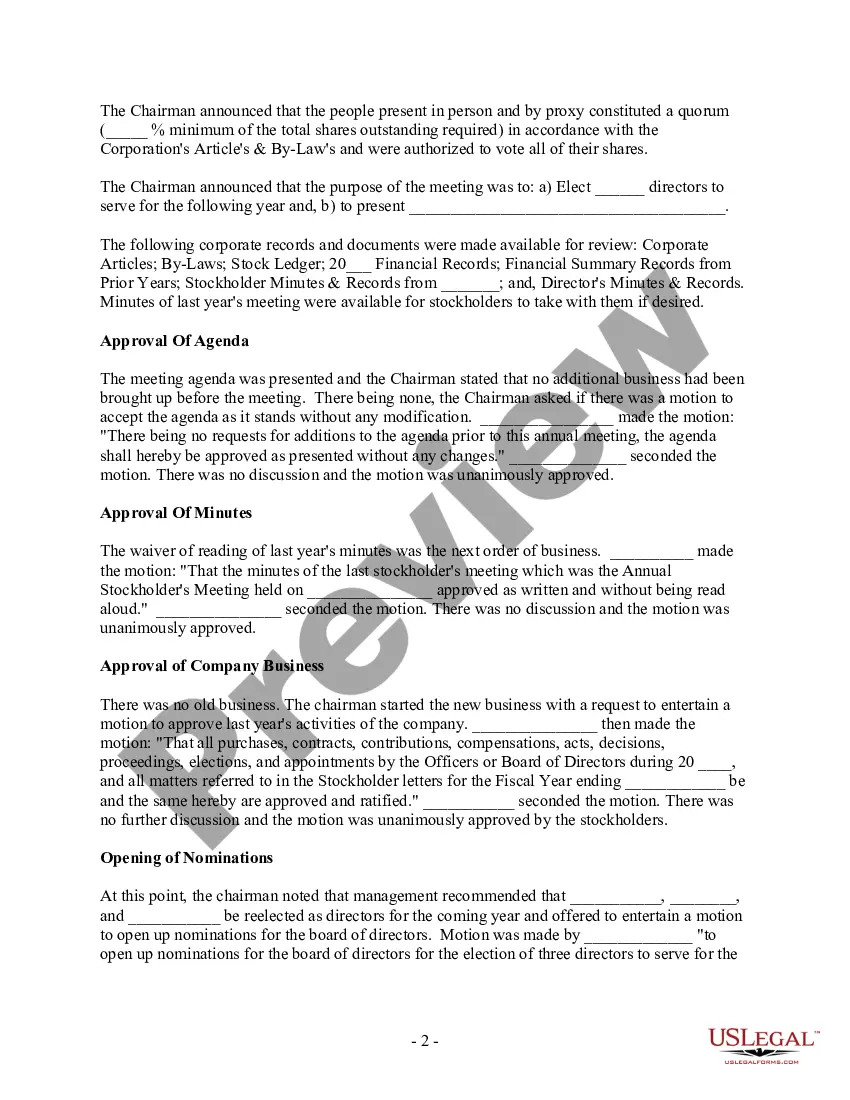
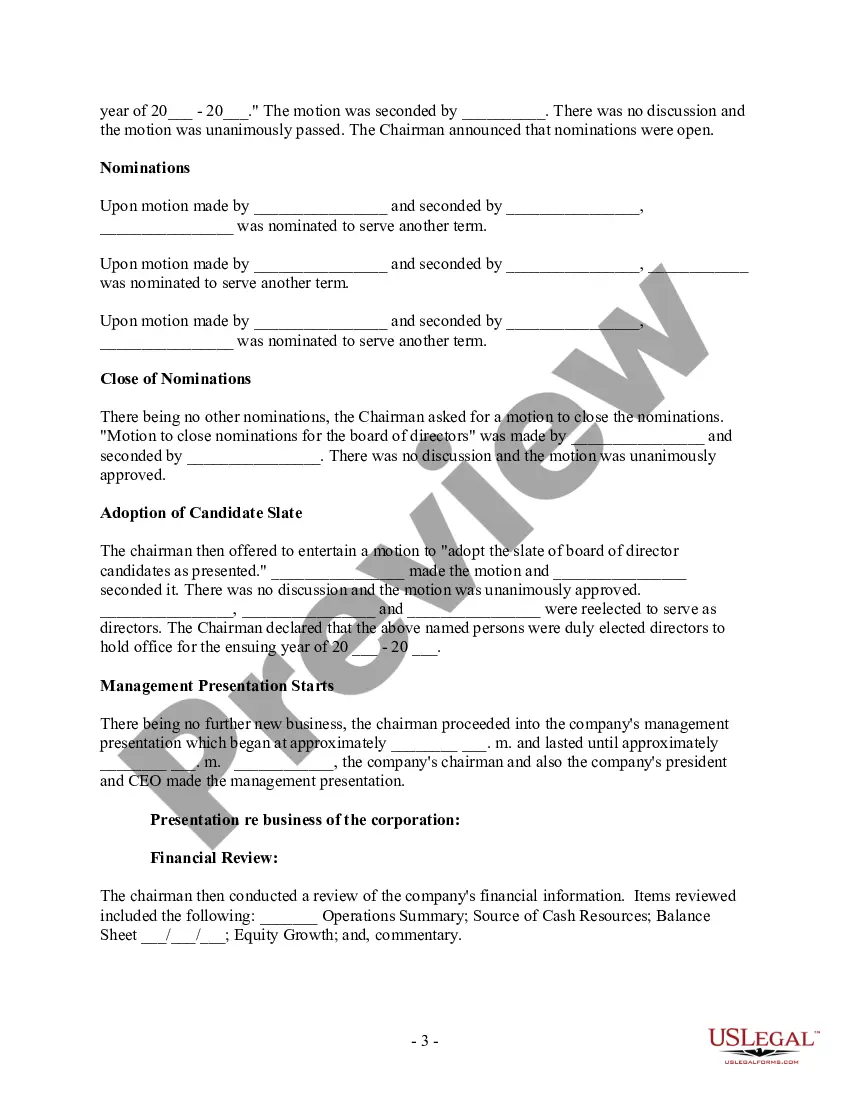
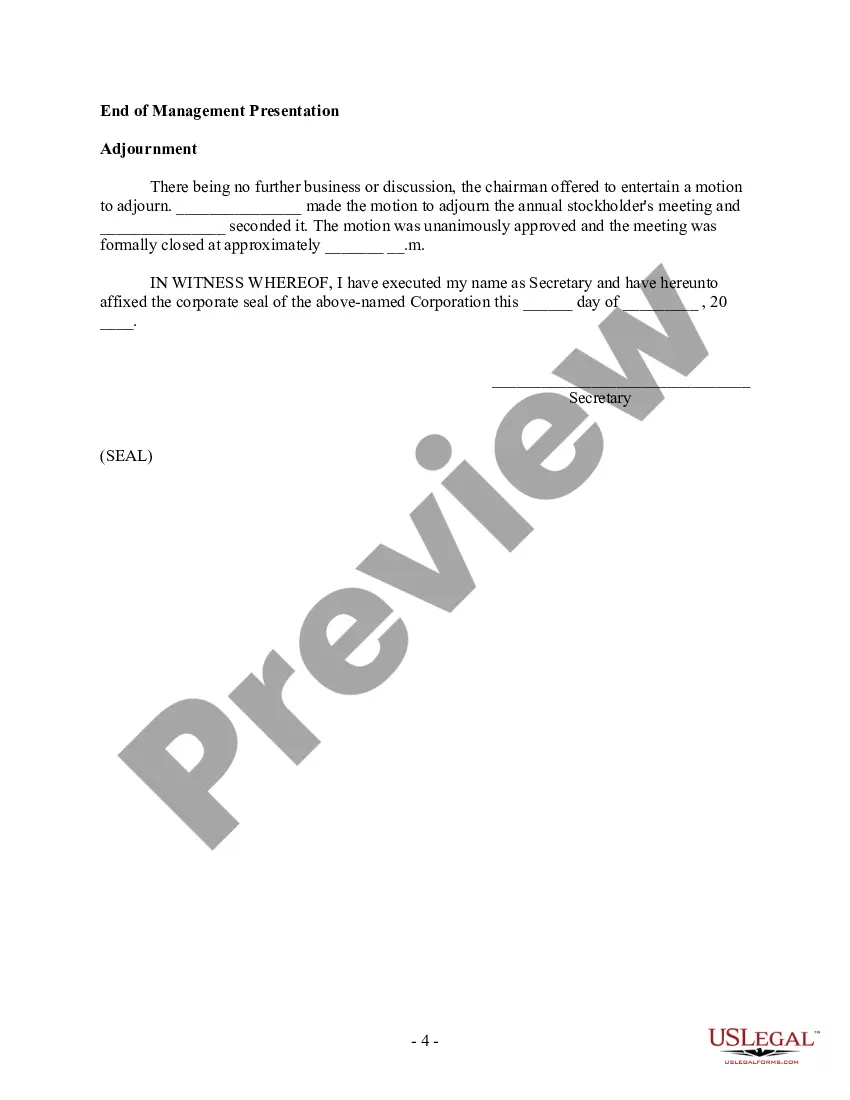
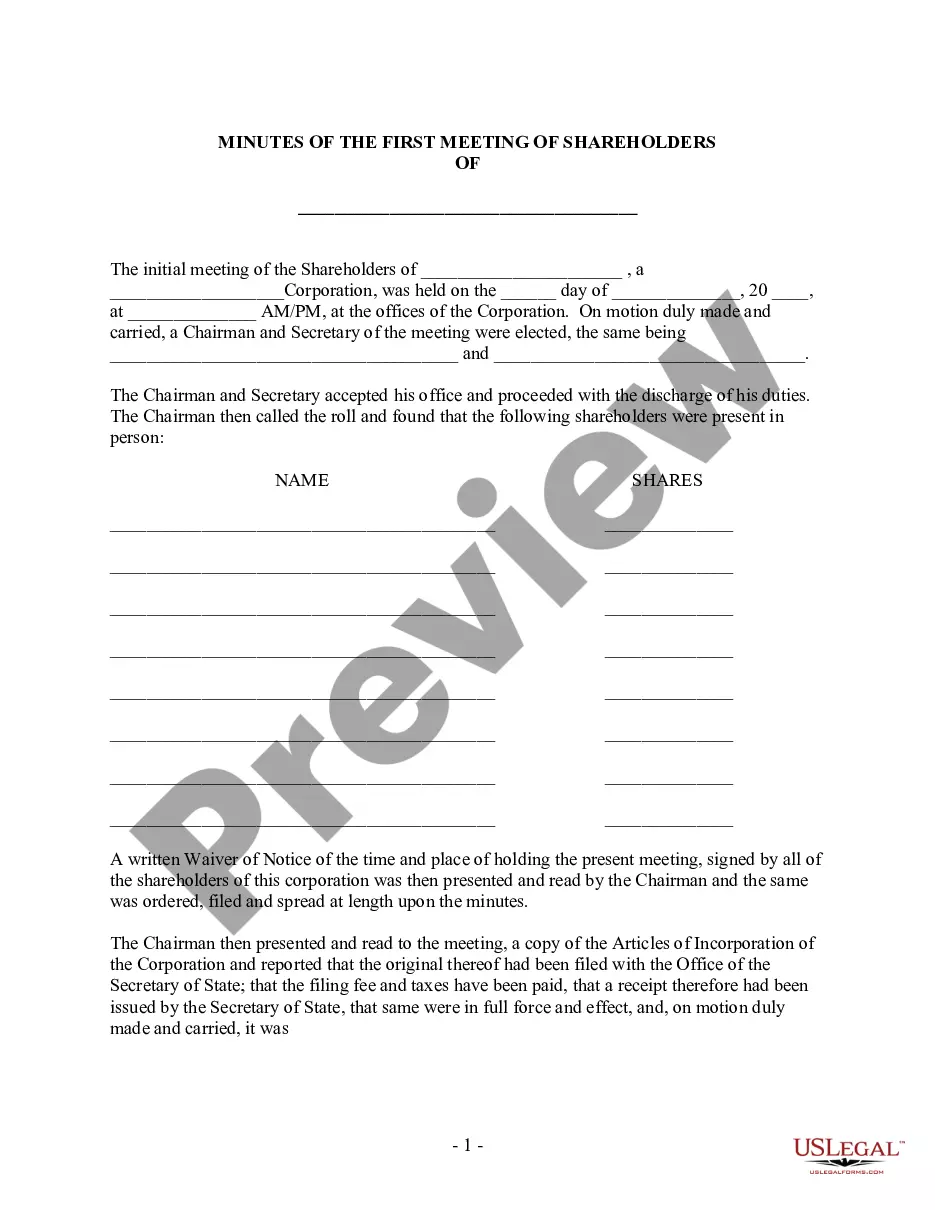
The basic features of meeting minutes are the date, time, location and attendees, followed by a record of the board's actions, including brief descriptions of any presentations or topics discussed, specific resolutions adopted, and finally, general resolutions.
They highlight the key issues that are discussed, motions proposed or voted on, and activities to be undertaken. The minutes of a meeting are usually taken by a designated member of the group. Their task is to provide an accurate record of what transpired during the meeting.
6 bonus tips for more effective board meeting minutes Preparation is everything. Prepare yourself for the specific board meeting you'll be taking notes for. Aim for concise and precise. Use an objective voice. Keep board members accountable. Don't be afraid to ask for clarification. Timing is key.
Robert's Rules (Section -16) state that “the minutes should contain mainly a record of what was done at the meeting, not what was said by the members.” Minutes are not transcripts of meetings; rather, the document contains a record of actions taken by the body, organized by the meeting's order of business (agenda).
They describe the actions and decisions that managers take at company meetings. A secretary or acting secretary usually takes the meeting minutes, but the task can be delegated to almost any capable individual.
What makes board minutes legally binding? Accurate content: Minutes must reflect the facts of the meeting without including personal opinions or verbatim debates. Approval: The chairman or designated authority must review and approve the minutes for them to become an official and legal record.
What to include when writing meeting minutes? Meeting basics like name, place, date and time ... List of meeting participants. Meeting purpose. Agenda items. Next meeting date and place. Documents to be included in the meeting report. Key action items.
