Stockholder Meeting Format In Cuyahoga
Description

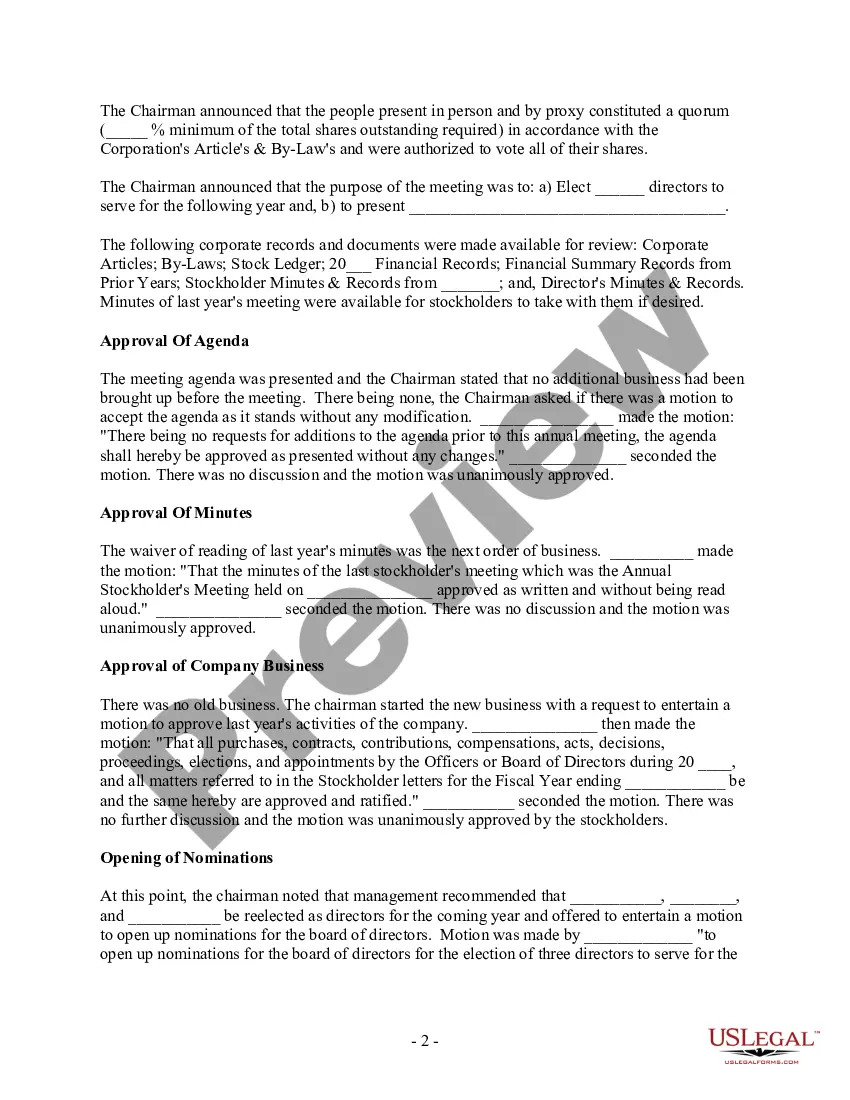
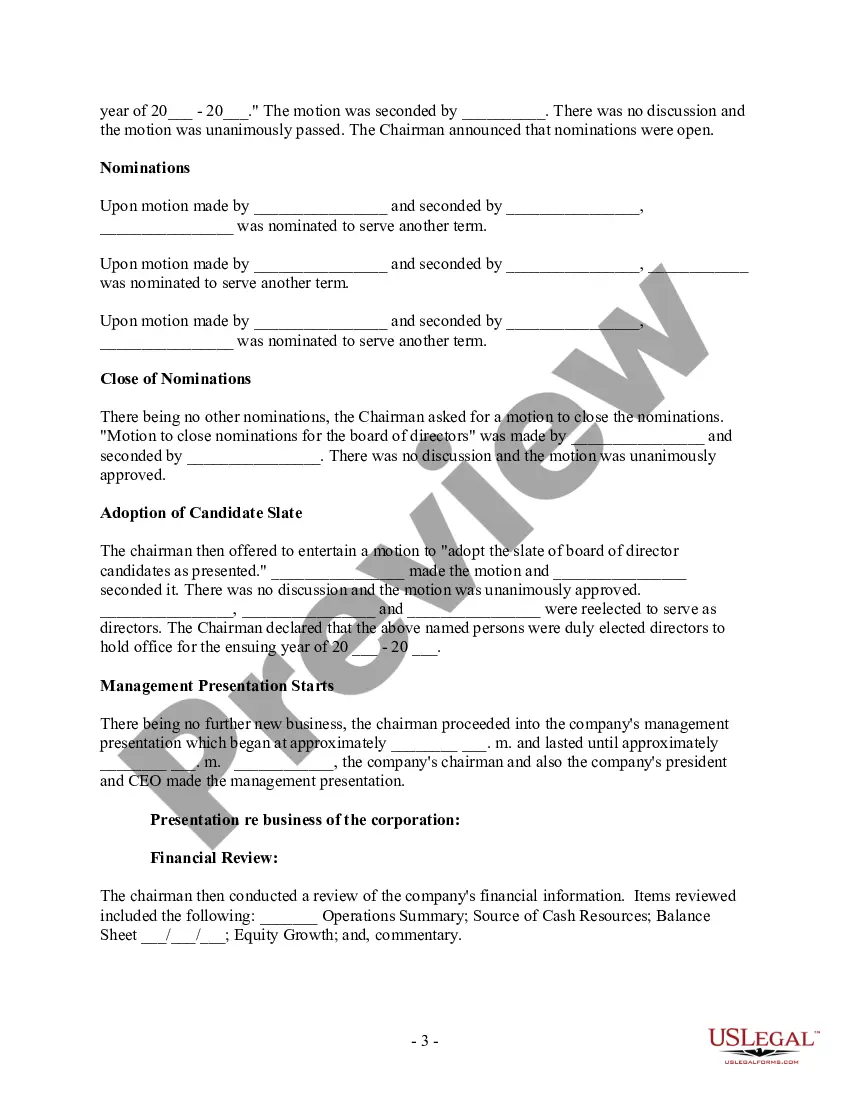
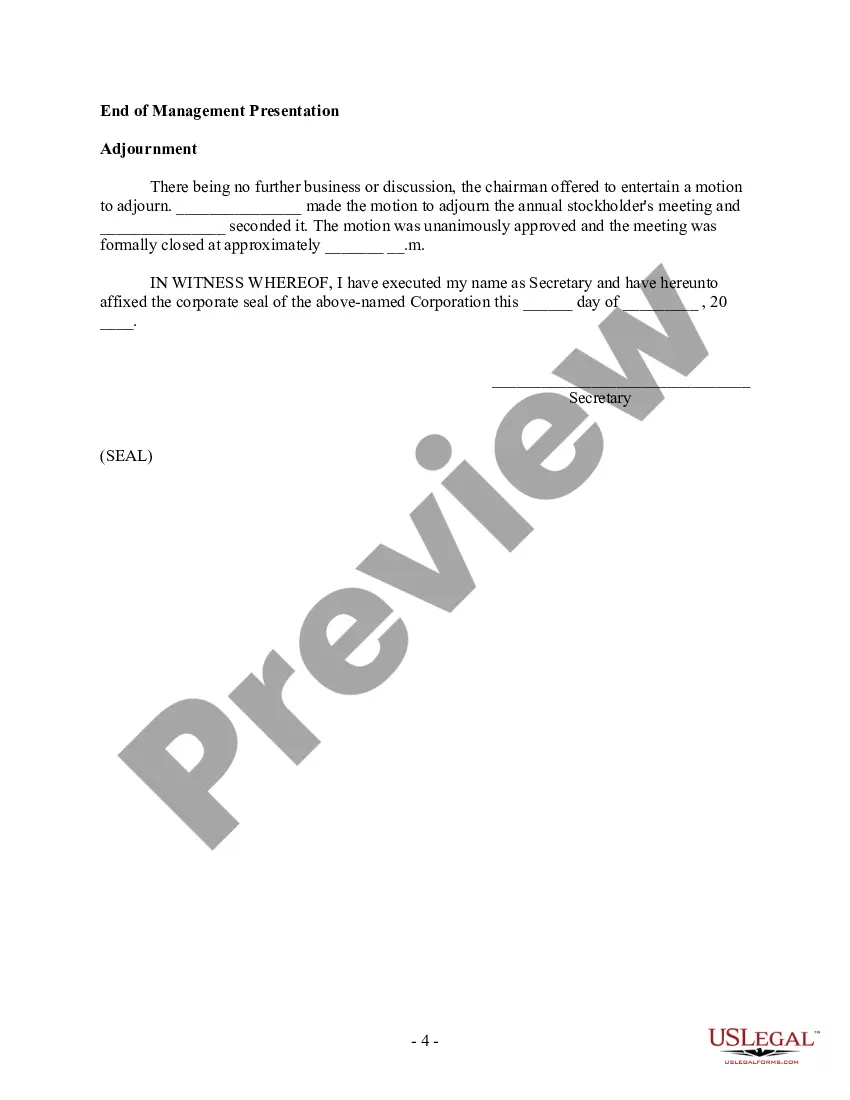

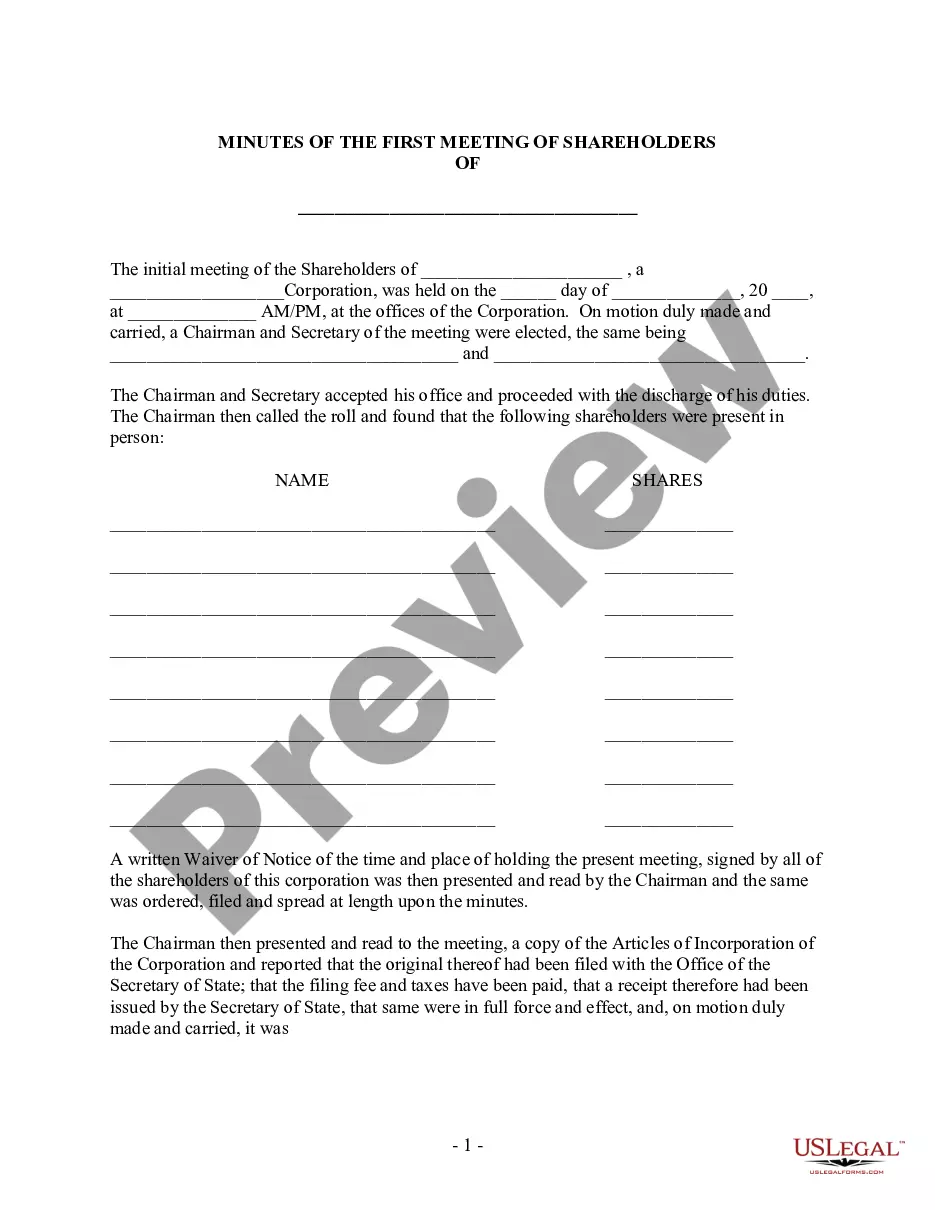

Get your form ready online
Our built-in tools help you complete, sign, share, and store your documents in one place.
Make edits, fill in missing information, and update formatting in US Legal Forms—just like you would in MS Word.
Download a copy, print it, send it by email, or mail it via USPS—whatever works best for your next step.
Sign and collect signatures with our SignNow integration. Send to multiple recipients, set reminders, and more. Go Premium to unlock E-Sign.
If this form requires notarization, complete it online through a secure video call—no need to meet a notary in person or wait for an appointment.
We protect your documents and personal data by following strict security and privacy standards.

Make edits, fill in missing information, and update formatting in US Legal Forms—just like you would in MS Word.

Download a copy, print it, send it by email, or mail it via USPS—whatever works best for your next step.

Sign and collect signatures with our SignNow integration. Send to multiple recipients, set reminders, and more. Go Premium to unlock E-Sign.

If this form requires notarization, complete it online through a secure video call—no need to meet a notary in person or wait for an appointment.

We protect your documents and personal data by following strict security and privacy standards.
Looking for another form?






Form popularity
FAQ
While shareholders' meetings represent ownership, board meetings embody the company's leadership. The board of directors, acting as a bridge between management and shareholders, is responsible for making strategic decisions, overseeing management, and safeguarding the company's long-term interests.
The special meeting aims to enable the shareholders to know the company's affairs and vote on the management's recommendations in the proposed resolution. The shareholders are equally essential in the decision-making process.
While corporate board members are present at shareholder meetings, the main voice in these settings is that of the investors. Owning company stock provides holders with equity and, depending on the type of stock they own, the right to vote during shareholder meetings.
As the name implies, an annual general meeting (AGM) is a yearly meeting where shareholders and board members converge to discuss business matters, review financial reports, and vote on the election or removal of company directors. AGMs are mandatory for both public and private companies.
While the shareholder is the owner of the company, the directors control the company's internal affairs and management, including the completion of various tax, regulatory and legal compliances. The same person can assume both the roles unless articles of association of the company explicitly prohibits it.
For management, the annual meeting presents an opportunity to obtain shareholder approval of matters required under state or federal law, including, most significantly, the election of directors. The primary purpose of the annual meeting is to have shareholders act on the matters presented to them for a vote.
The CUYAHOGA COUNTY DISTRICT BOARD OF HEALTH was created to respond to the growth of the greater Cleveland community beyond Cleveland's city limits. The health problems of the suburbs and townships were first addressed in 1920, when a full-time county health commissioner was appointed due to efforts at the state level.
Home to Lake Erie and 18 reservations collectively known as the Cleveland Metroparks, there is no shortage of natural beauty in Cuyahoga County. We are also home to four professional sports teams and have the second-largest theatre district in the country.
Cleveland was founded in 1796, the result of a Connecticut Land Company survey of a 3.3-million-acres on the shores of Lake Erie that it would originally call, “The Western Reserve.” Named after General Moses Cleaveland, the City of Cleveland was incorporated in 1836.
The Cuyahoga County Community Health Improvement Plan and Implementation Strategy aims to address the top concerns in the county that can be addressed collaboratively, including access to healthy food, community safety, accessible and affordable healthcare, behavioral health, and structural racism and trust.
