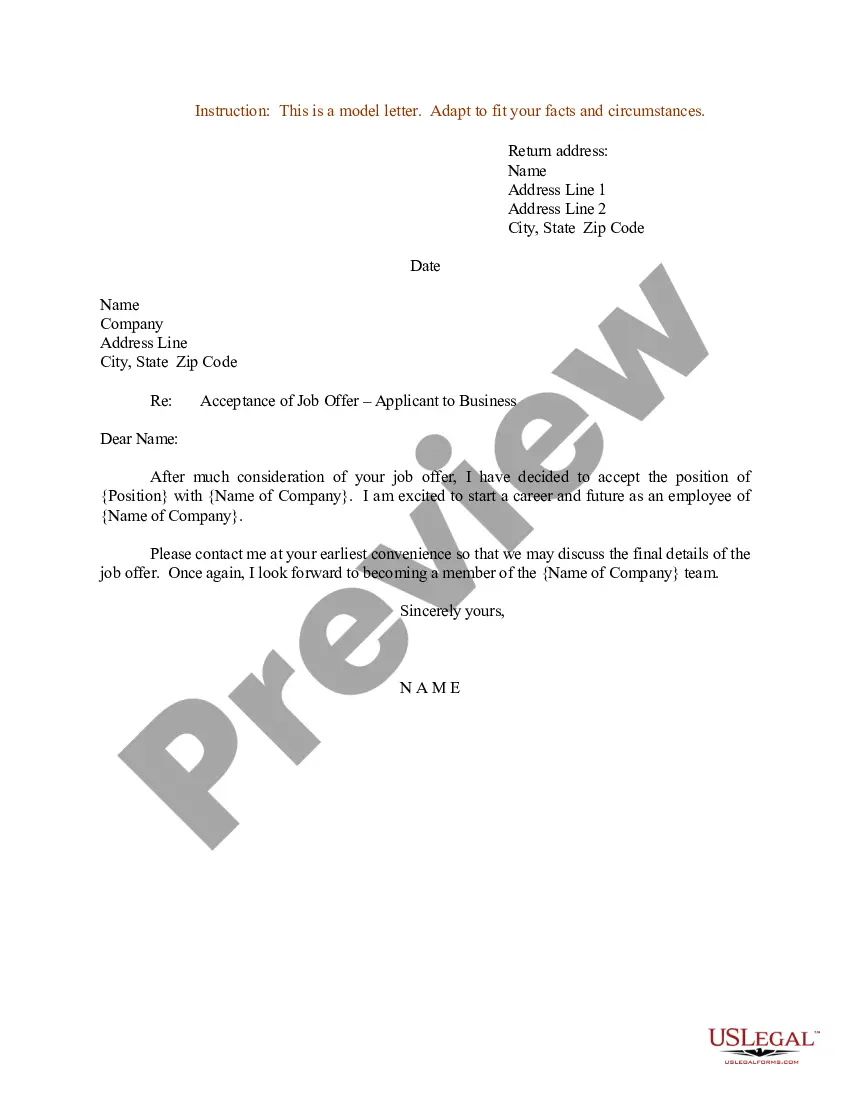
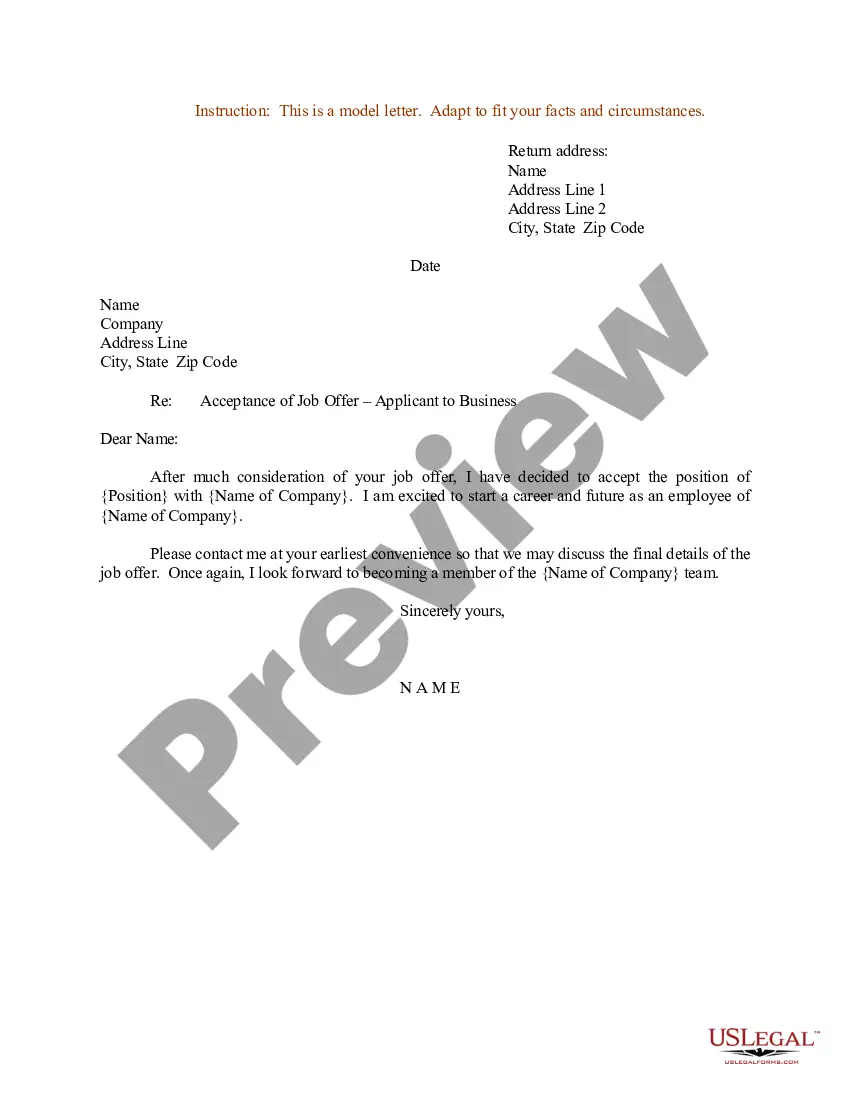
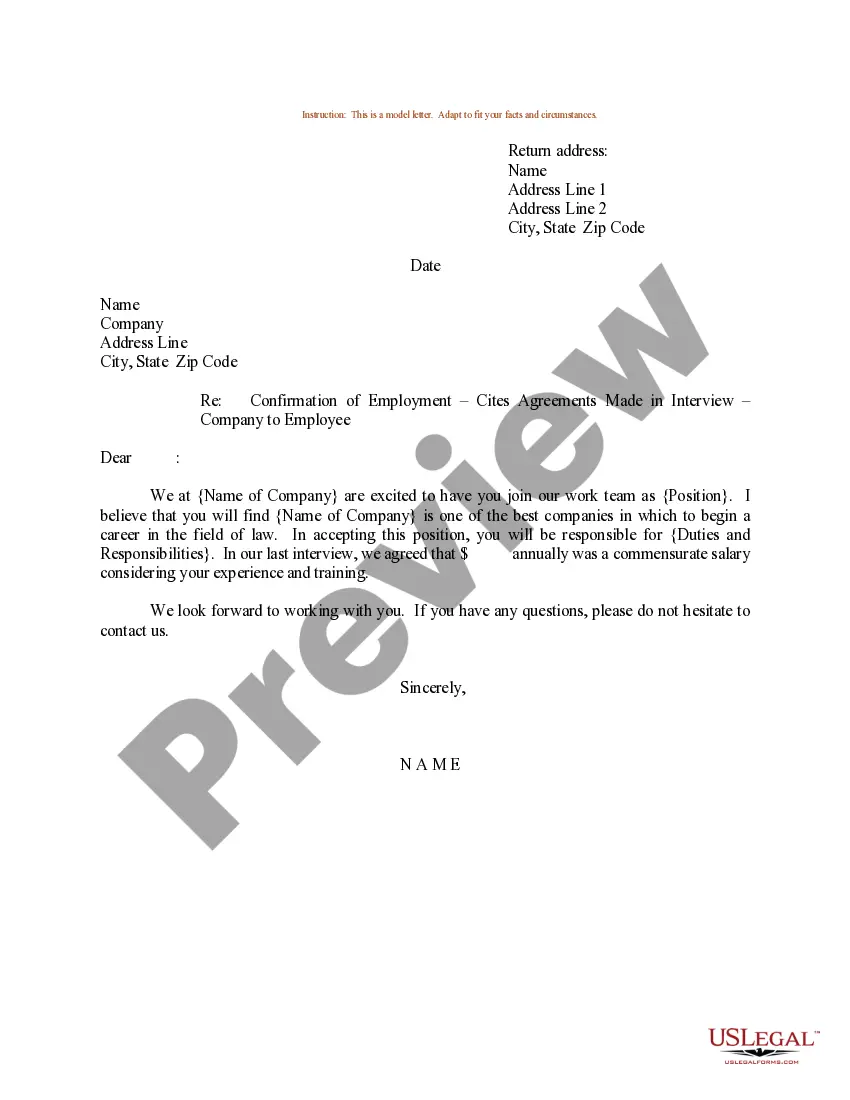
Letter Offer Document Without Comments In Arizona
Description

Get your form ready online
Our built-in tools help you complete, sign, share, and store your documents in one place.
Make edits, fill in missing information, and update formatting in US Legal Forms—just like you would in MS Word.
Download a copy, print it, send it by email, or mail it via USPS—whatever works best for your next step.
Sign and collect signatures with our SignNow integration. Send to multiple recipients, set reminders, and more. Go Premium to unlock E-Sign.
If this form requires notarization, complete it online through a secure video call—no need to meet a notary in person or wait for an appointment.
We protect your documents and personal data by following strict security and privacy standards.

Make edits, fill in missing information, and update formatting in US Legal Forms—just like you would in MS Word.

Download a copy, print it, send it by email, or mail it via USPS—whatever works best for your next step.

Sign and collect signatures with our SignNow integration. Send to multiple recipients, set reminders, and more. Go Premium to unlock E-Sign.

If this form requires notarization, complete it online through a secure video call—no need to meet a notary in person or wait for an appointment.

We protect your documents and personal data by following strict security and privacy standards.
Looking for another form?








Form popularity
FAQ
Private letter ruling A PLR is issued to establish with certainty the federal tax consequences of a particular transaction before the transaction is consummated or before the taxpayer's return is filed.
A private taxpayer ruling or a taxpayer information ruling is the department's interpretation of the law or rules only as they apply to the taxpayer making, and the particular facts contained in, the request.
Where fast-track handling is available, the IRS will endeavor to issue a private letter ruling in a compressed time frame, generally about 12 weeks. Outside of the fast-track process, the IRS generally aims to respond to ruling requests within 180 days of receipt, though more complex issues can take more time.
Common abbreviations the you may encounter for private letter rulings are PLR and LTR, both indicate the same item. A determination letter is similar in purpose and nature to a private letter ruling, except that it is issued by the office of the local IRS district director not the national office of the IRS.
The defendant has 20 calendar days from service of process to file an answer (Form No. AOCLJCV4F) to the lawsuit. An answer is your written response that you file with the court admitting or denying the creditor's claims and the reasons why. The answer should respond to each element of the complaint.
A certificate of good standing has a bunch of different names depending on the state in which it's issued. It can sometimes be referred to as: Letter of good standing.
A corporation or limited liability company must be registered with the Arizona Corporation Commission and in good standing with that agency before submitting an application for a contractor's license. The corporation or limited liability company must remain in good standing in order to renew their contractor's license.
