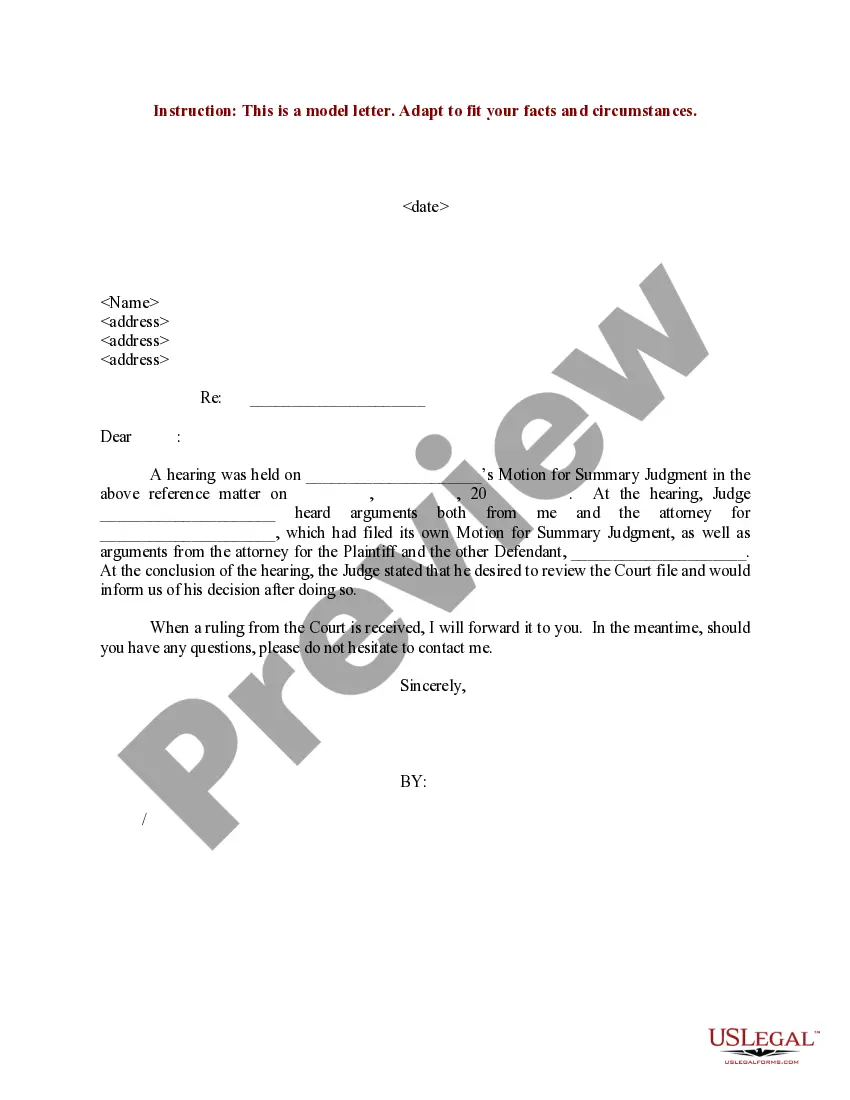
Letter Concerning Hearing For Employee In San Jose
Description
Get your form ready online
Our built-in tools help you complete, sign, share, and store your documents in one place.
Make edits, fill in missing information, and update formatting in US Legal Forms—just like you would in MS Word.
Download a copy, print it, send it by email, or mail it via USPS—whatever works best for your next step.
Sign and collect signatures with our SignNow integration. Send to multiple recipients, set reminders, and more. Go Premium to unlock E-Sign.
If this form requires notarization, complete it online through a secure video call—no need to meet a notary in person or wait for an appointment.
We protect your documents and personal data by following strict security and privacy standards.

Make edits, fill in missing information, and update formatting in US Legal Forms—just like you would in MS Word.

Download a copy, print it, send it by email, or mail it via USPS—whatever works best for your next step.

Sign and collect signatures with our SignNow integration. Send to multiple recipients, set reminders, and more. Go Premium to unlock E-Sign.

If this form requires notarization, complete it online through a secure video call—no need to meet a notary in person or wait for an appointment.

We protect your documents and personal data by following strict security and privacy standards.
Looking for another form?





Form popularity
FAQ
A Skelly Hearing is an opportunity to protect yourself from allegations, challenge proposed disciplinary action, and restore your reputation with your employer. They are given without a lot of notice, but here are ways you can prepare for a Hearing and fight the proposed discipline.
The purpose of the Skelly rule is to allow employees an opportunity to respond to the charges and to request a reduction or elimination of the discipline. It also allows for an opportunity to check out the evidence that management has against the employee.
Employees are encouraged to submit a brief in advance of the hearing addressing the Notice. The Skelly Review Officer has the responsibility to read the Notice, the materials upon which it is based, and any response submitted by the employee. This should take place before any actual “hearing” involving the employee.
The 1965 case of People v. Huntley which was decided by New York's highest Court established the requirement in New York that the voluntariness of a statement be determined by a judge prior to a jury hearing the statement.
A Skelly Hearing is a pre-disciplinary hearing named after a 1975 California Supreme Court case which solidified public employees' rights when faced with disciplinary action. A Skelly Hearing is part of due process to provide public employees with the reason for disciplinary action before that action is taken.
Who is entitled to a Skelly hearing? Employees entitled to the Skelly process, including a hearing, are non-probationary for cause employees, including the following: Represented Employees: employees in which a CBA governs the employment relationship; and.
If the proposed adverse action is not withdrawn as a result of the Skelly meeting, the state civil service employee may file an appeal with the SPB Appeals Division within 30- calendar days3 after the effective date of the adverse action.
To document employee discipline, include the employee's name, the date of the write-up, clear reasons for the disciplinary action, the number of times the employee has been written up, details about the problem including evidence, and a deadline for corrective action. Then, have the employee sign and date the document.
A proper disciplinary process should contain a five key steps: A disciplinary investigation. An initial disciplinary letter that sets out the issues to be discussed. A meeting to discuss the issue (the disciplinary hearing) A disciplinary decision. A chance to appeal the disciplinary decision.