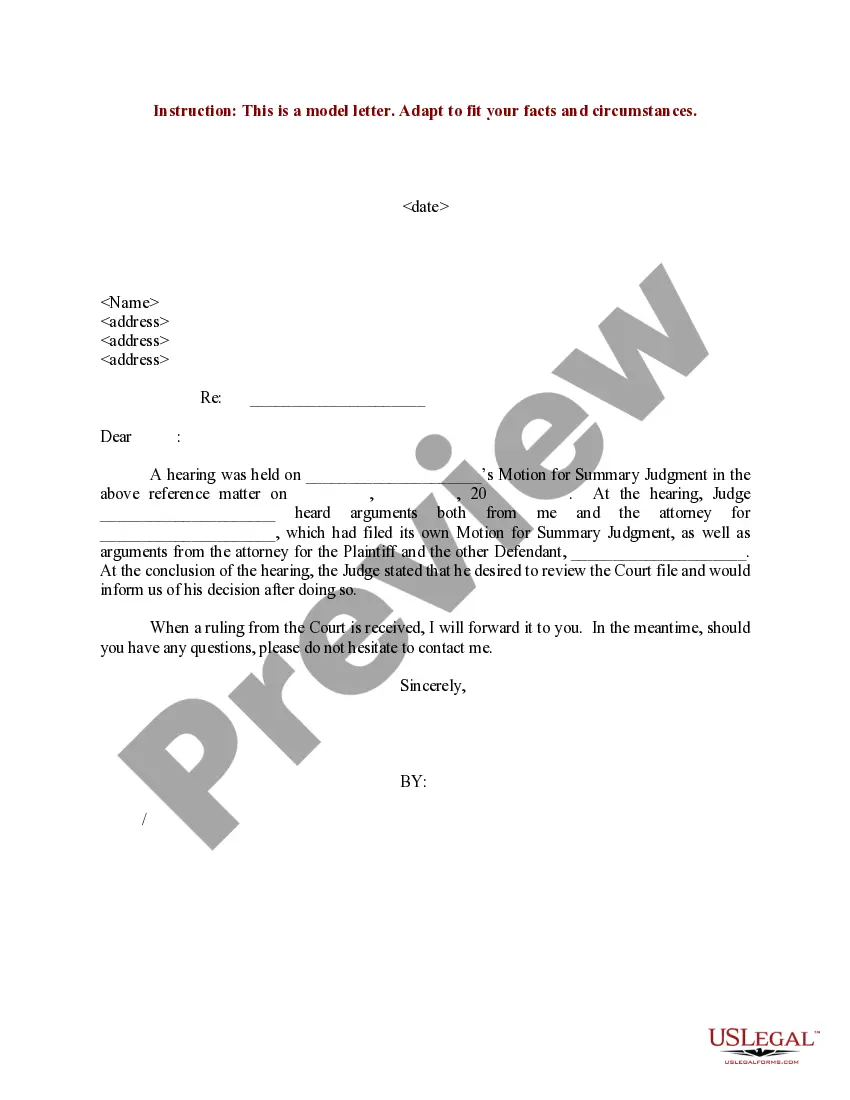
Letter Concerning Hearing Without Consent In Oakland
Description
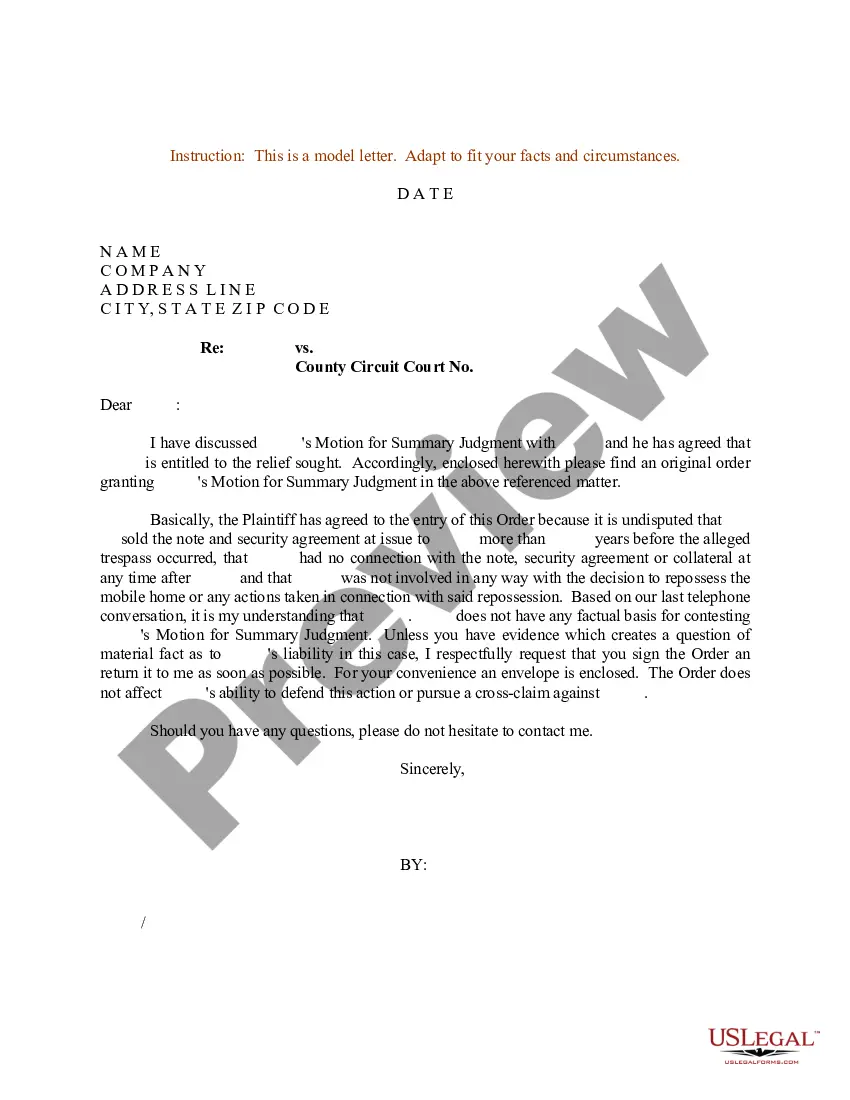
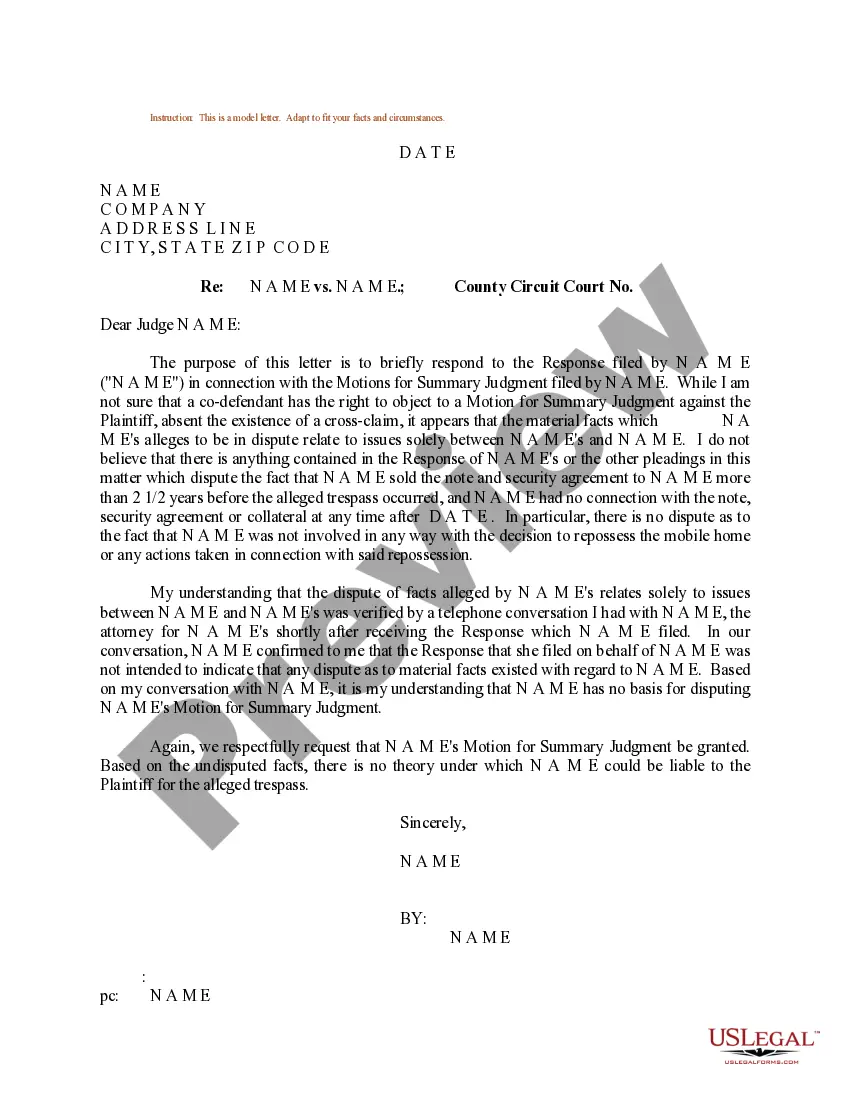
Get your form ready online
Our built-in tools help you complete, sign, share, and store your documents in one place.
Make edits, fill in missing information, and update formatting in US Legal Forms—just like you would in MS Word.
Download a copy, print it, send it by email, or mail it via USPS—whatever works best for your next step.
Sign and collect signatures with our SignNow integration. Send to multiple recipients, set reminders, and more. Go Premium to unlock E-Sign.
If this form requires notarization, complete it online through a secure video call—no need to meet a notary in person or wait for an appointment.
We protect your documents and personal data by following strict security and privacy standards.

Make edits, fill in missing information, and update formatting in US Legal Forms—just like you would in MS Word.

Download a copy, print it, send it by email, or mail it via USPS—whatever works best for your next step.

Sign and collect signatures with our SignNow integration. Send to multiple recipients, set reminders, and more. Go Premium to unlock E-Sign.

If this form requires notarization, complete it online through a secure video call—no need to meet a notary in person or wait for an appointment.

We protect your documents and personal data by following strict security and privacy standards.
Looking for another form?










Form popularity
FAQ
You may have grounds to sue someone or a company for recording you without your permission under certain circumstances. California's law, specifically Penal Code 632, prohibits the recording of confidential communications without the consent of all parties involved.
Federal law requires that at least one party taking part in the call must be notified of the recording (18 USC §2511(2)(d)). That means if you are a party of the conversation you can record it. Many states do require all parties be notified.
California requires the consent of all parties, with a minimum consent being the notification that the parties are being recorded in a confidential conversation with an audible beep at particular intervals throughout the recording. Without permission, an individual can face imprisonment and fines.
Penal Code 632 PC Explained Under PC 632, criminal eavesdropping is defined as willfully using "an electronic amplifying or recording device to eavesdrop upon or record the confidential communication" between other people without the consent of all parties.
Personal Safety. California law allows individuals to record conversations without consent if they reasonably believe that it is necessary to protect their personal safety or the safety of others.
Communicate Directly: Politely ask the person to stop recording. Move Away: If possible, distance yourself from the person recording. Seek Help: If the situation feels threatening or you're uncomfortable, consider asking nearby individuals for assistance or alerting security personnel. Know
If someone records you without your permission, you may sue them in a small claims court under certain conditions. A recording must meet certain circumstances and laws for a lawsuit to be valid. Among them are: The caller didn't notify you about the recording.
It is against the law to record a telephone communication or a communication made by a person other than a sender or receiver, without the consent of either the sender or receiver. For civil cases, however, it is not a one-party consent state. There are also different rules for in-person recording vs.