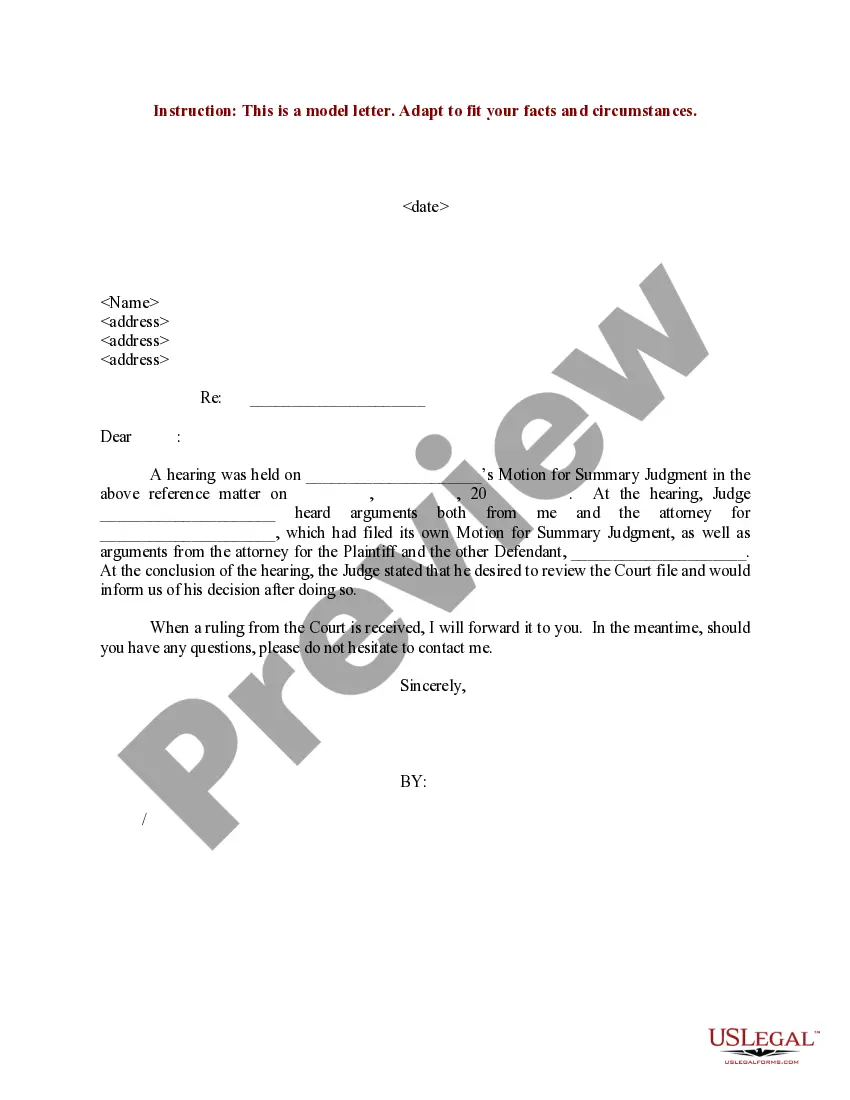
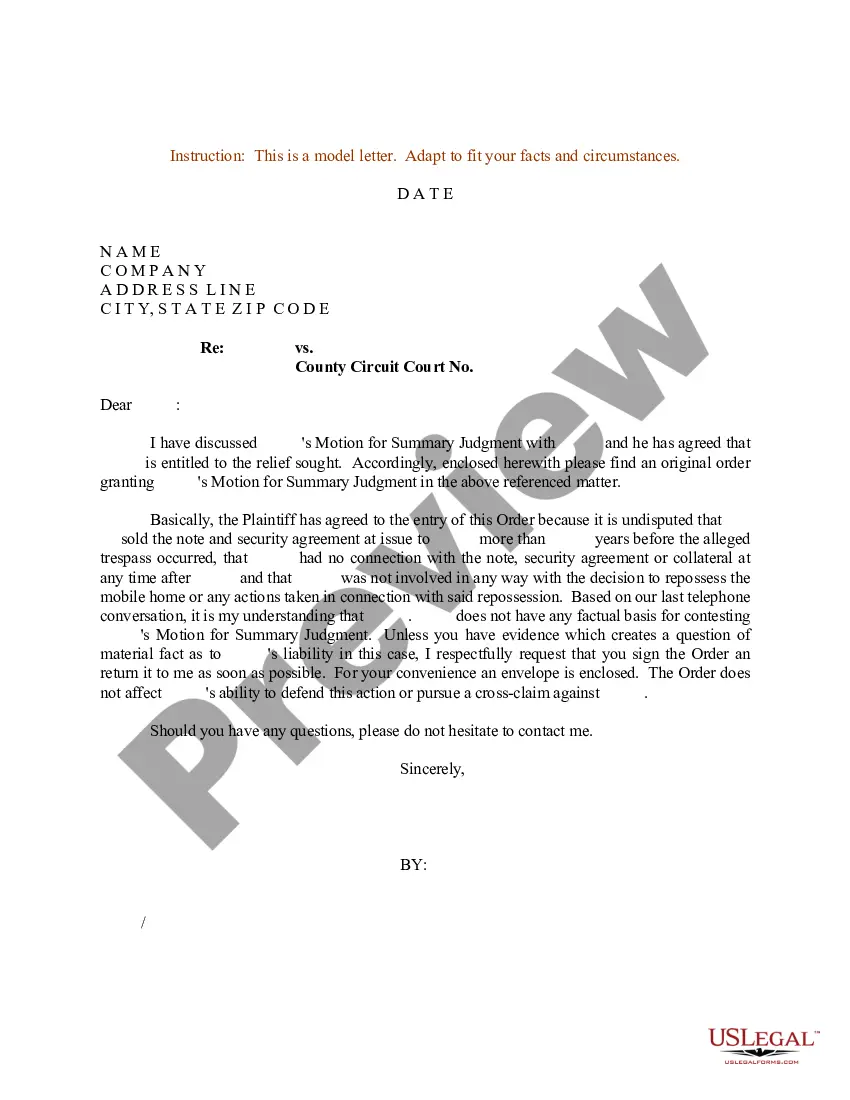
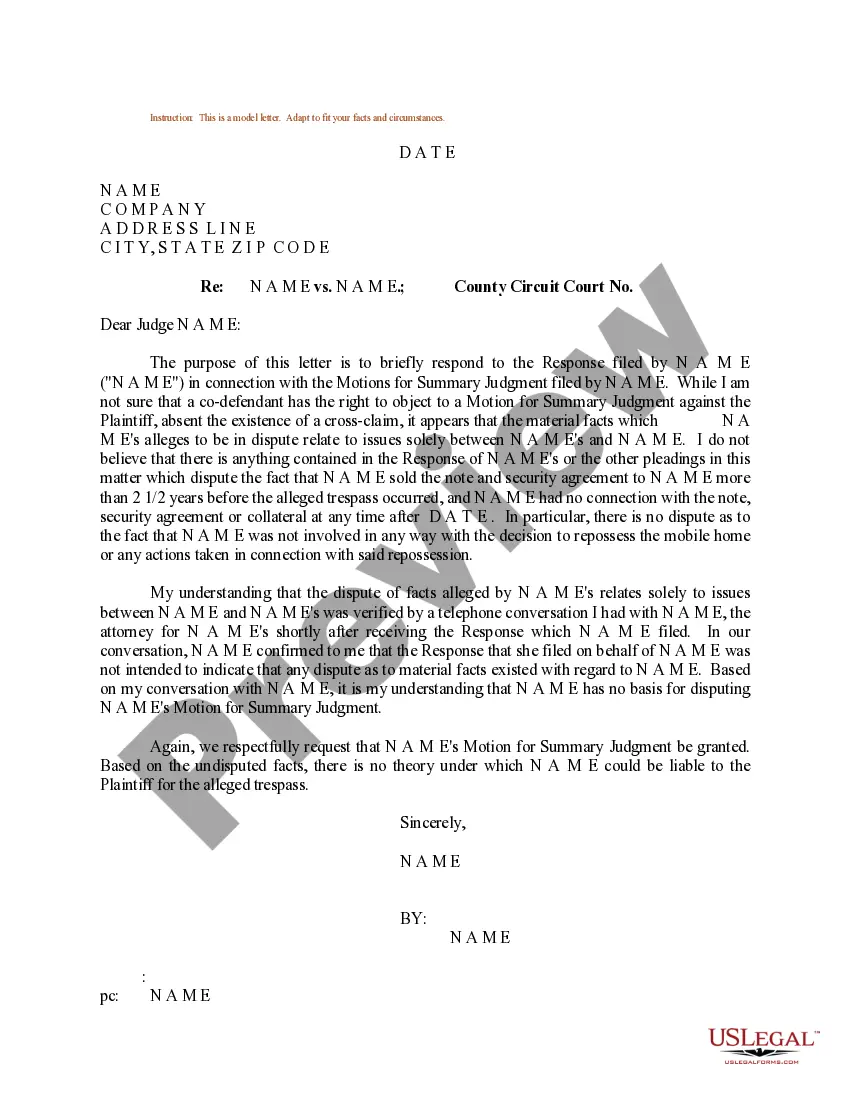
Letter Concerning Hearing Without Consent In New York
Description
Get your form ready online
Our built-in tools help you complete, sign, share, and store your documents in one place.
Make edits, fill in missing information, and update formatting in US Legal Forms—just like you would in MS Word.
Download a copy, print it, send it by email, or mail it via USPS—whatever works best for your next step.
Sign and collect signatures with our SignNow integration. Send to multiple recipients, set reminders, and more. Go Premium to unlock E-Sign.
If this form requires notarization, complete it online through a secure video call—no need to meet a notary in person or wait for an appointment.
We protect your documents and personal data by following strict security and privacy standards.

Make edits, fill in missing information, and update formatting in US Legal Forms—just like you would in MS Word.

Download a copy, print it, send it by email, or mail it via USPS—whatever works best for your next step.

Sign and collect signatures with our SignNow integration. Send to multiple recipients, set reminders, and more. Go Premium to unlock E-Sign.

If this form requires notarization, complete it online through a secure video call—no need to meet a notary in person or wait for an appointment.

We protect your documents and personal data by following strict security and privacy standards.
Looking for another form?








Form popularity
FAQ
How to Fill Out an Order to Show Cause Write the county name. Write the Article for your case type. Write the name(s) of the petitioner(s). Write the name(s) of the respondent(s). Write the docket number, if it exists. Write your name. Write the date you signed the affidavit. Write the month you signed the affidavit.
After a summons with notice is served, the defendant will demand that the plaintiff serve a complaint. The plaintiff must then have the complaint served within 20 days after being served with the demand, or the case may be dismissed.
A motion may be withdrawn at any time prior to its return date by filing with the clerk a written request signed by counsel for the moving party.
How to Fill Out an Order to Show Cause Write the county name. Write the Article for your case type. Write the name(s) of the petitioner(s). Write the name(s) of the respondent(s). Write the docket number, if it exists. Write your name. Write the date you signed the affidavit. Write the month you signed the affidavit.
Outlining the required elements of an Order to Show Cause Identify the parties involved in the legal action. Set forth the relief requested. Specify the legal basis for the requested relief. Specify the timely filing of the Order to Show Cause. Identify a date and time for the hearing.
Specifically, pursuant to Uniform Rule 202.7 (f), upon an application for an order to show cause that seeks a temporary restraining order, the application must contain an affirmation demonstrating that there will be significant prejudice to the party seeking the restraining order by the giving of notice.
Similar variation across courts was seen in motions to dismiss and motions for summary judgment. Across all cases, the mean time to rule on Rule 12 motions was almost 130 days, but when broken down by district the mean time varied from 63 days in the fastest court to 176 days in the slowest court.
Sometimes, the Judge makes a decision right away. If not, the Judge has 60 days by law to decide the motion.
The decision of the court shall be rendered within sixty days after the cause or matter is finally submitted or within sixty days after a motion under rule 4403, whichever is later, unless the parties agree to extend the time.
Under CPLR 2214(b), a notice of motion must be served at least eight days in advance of the motion date. Five additional days are added when service by mail is used. Responding papers are due two days before the motion date.