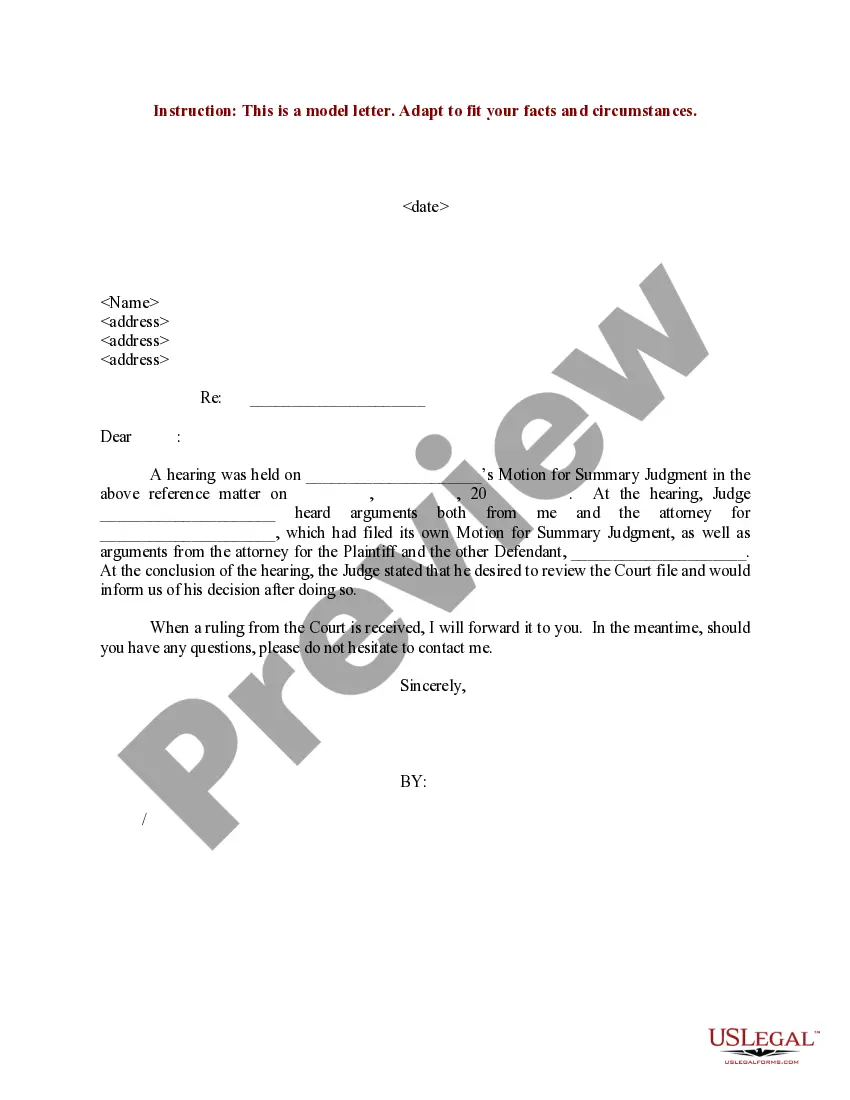
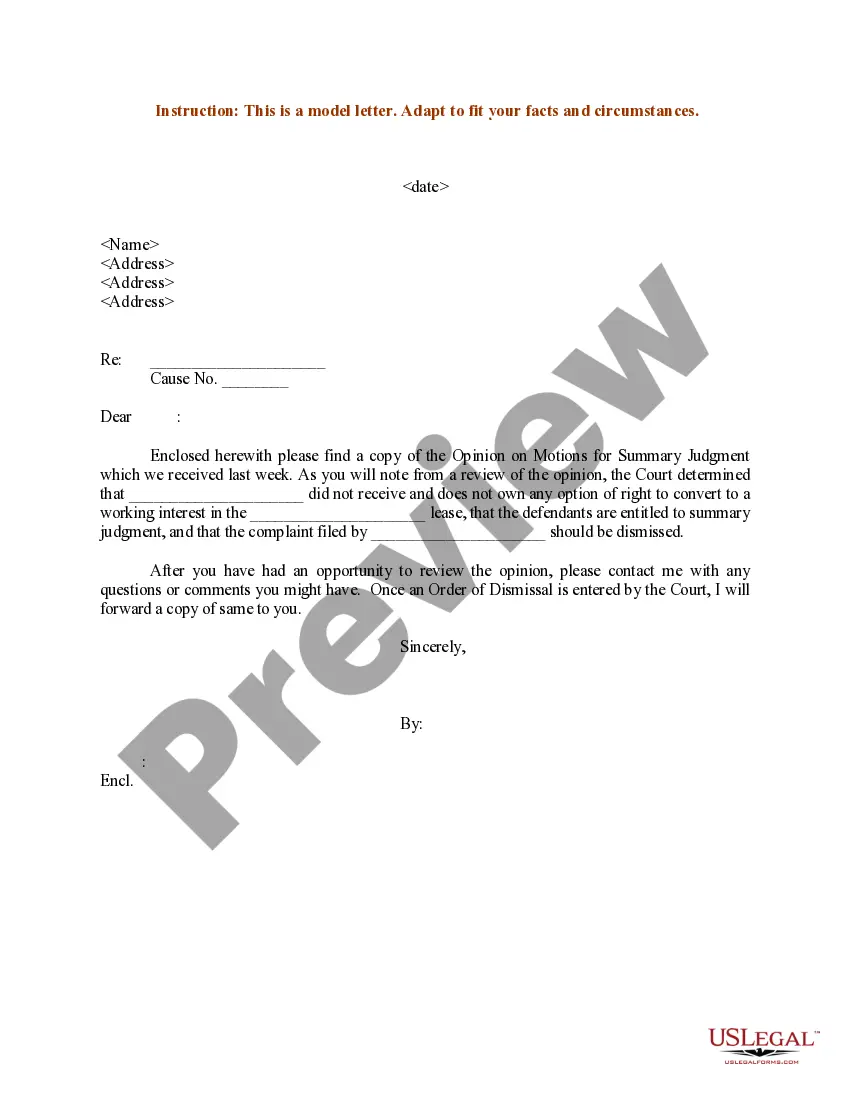
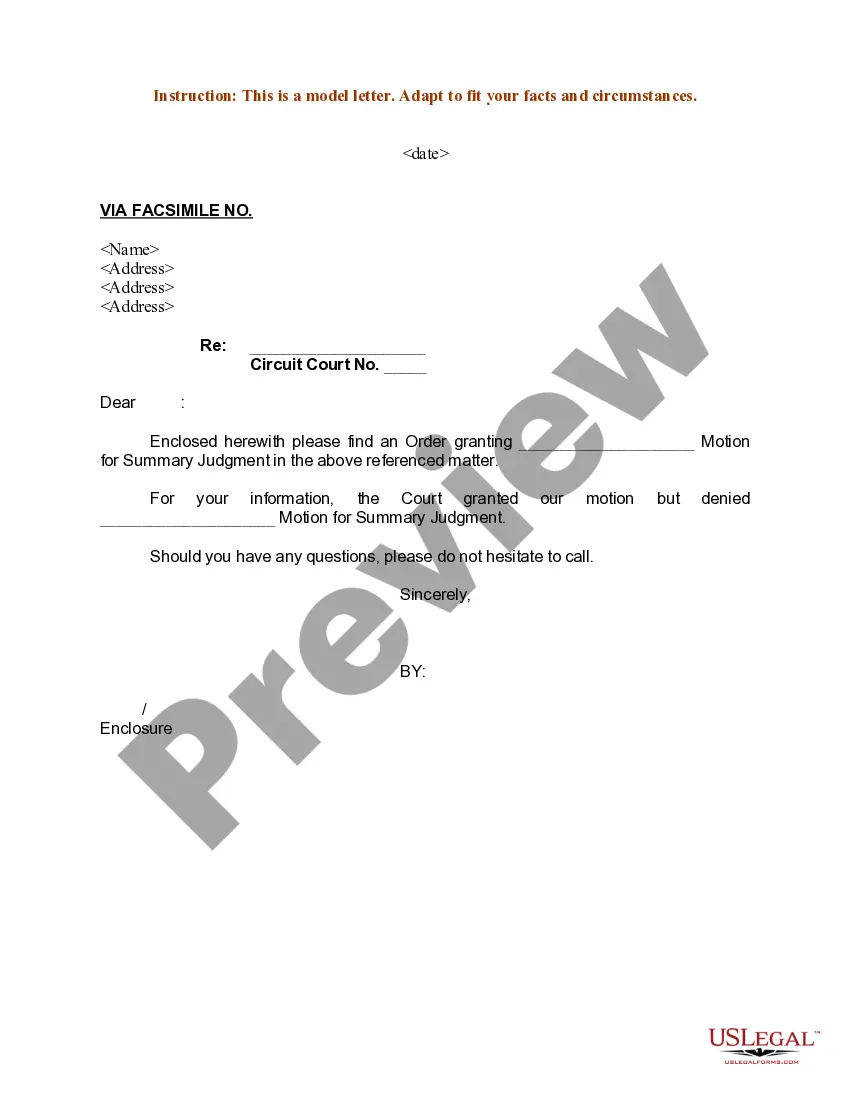
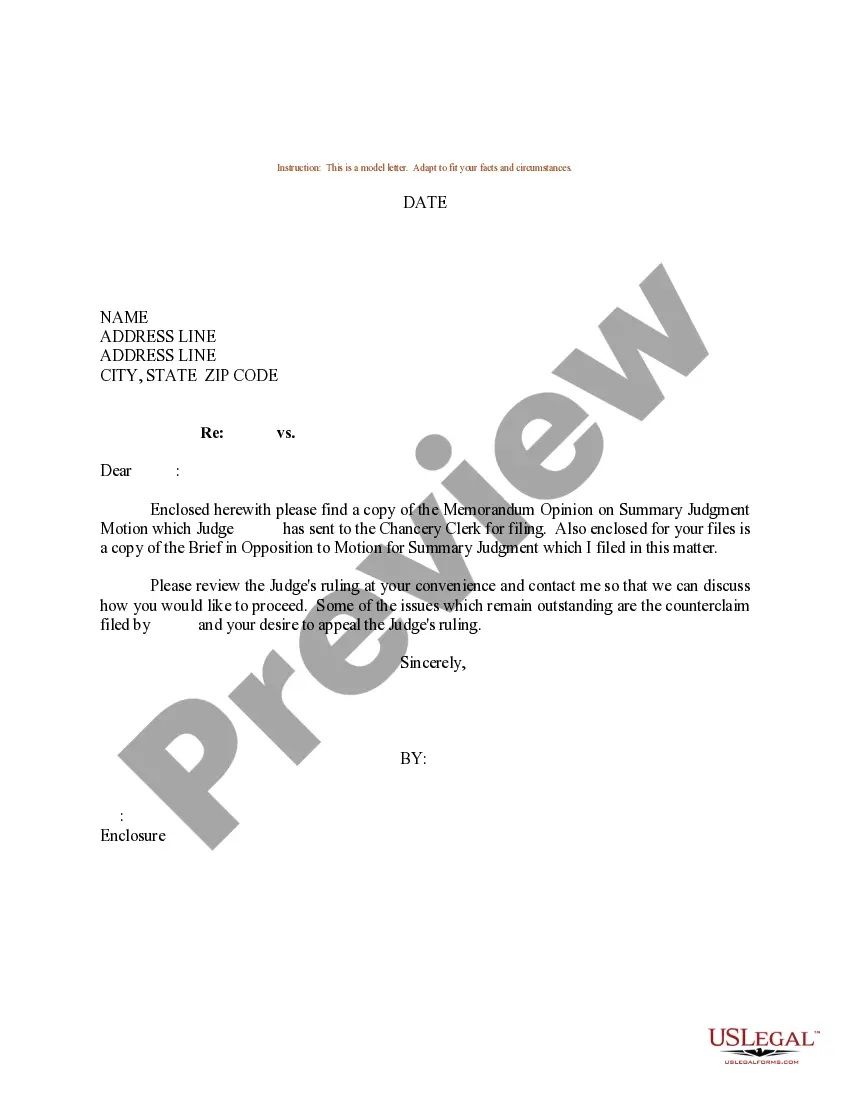
Letter Concerning Hearing Without Consent In California
Description
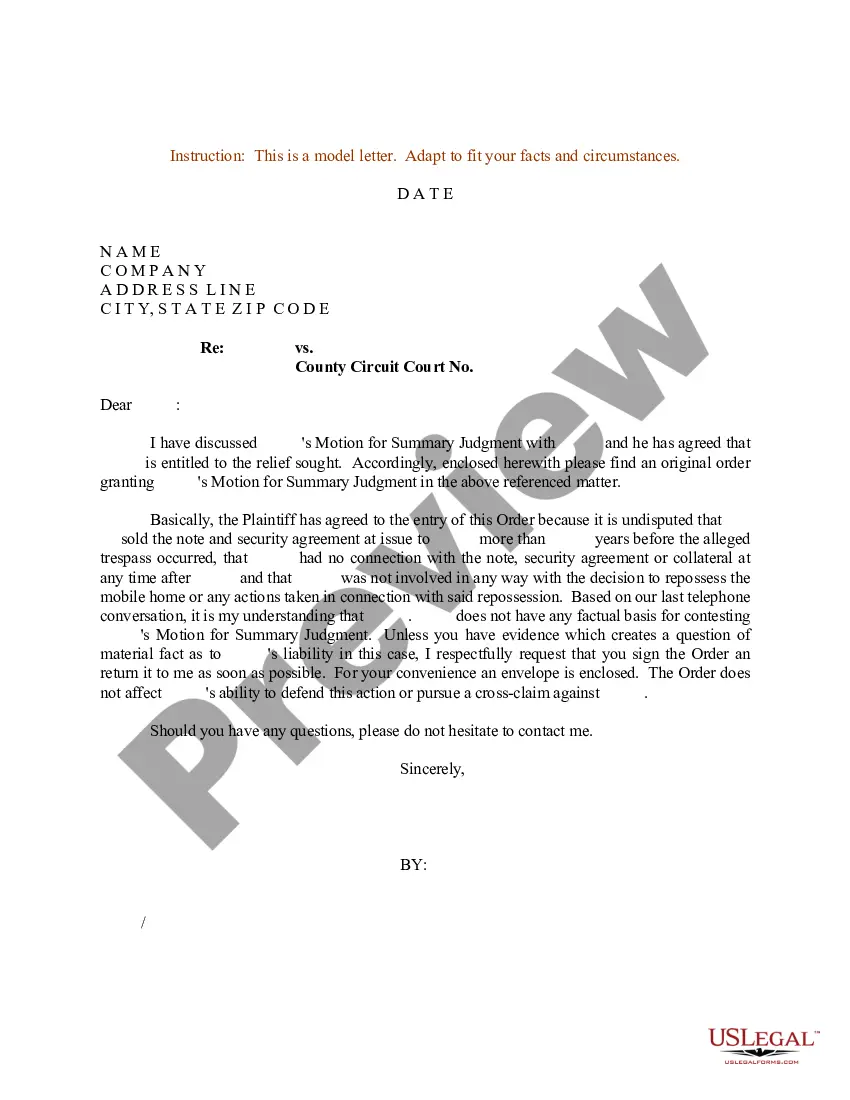
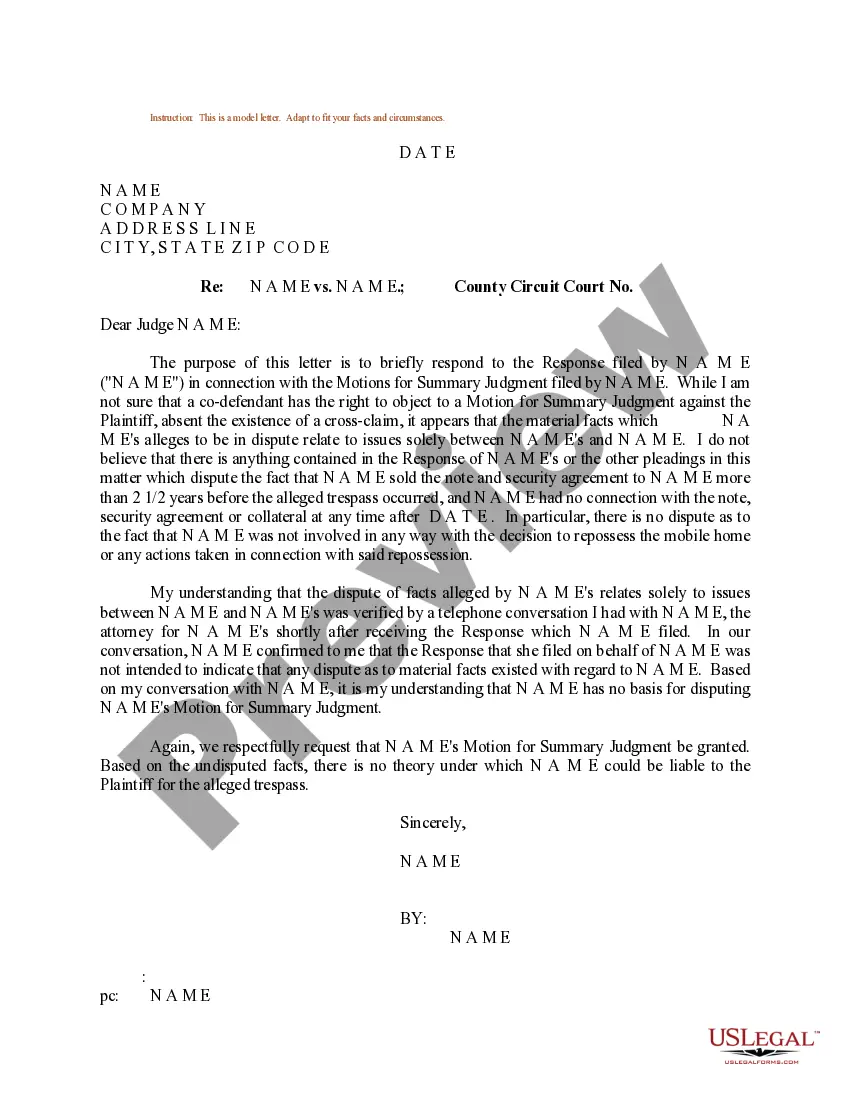
Get your form ready online
Our built-in tools help you complete, sign, share, and store your documents in one place.
Make edits, fill in missing information, and update formatting in US Legal Forms—just like you would in MS Word.
Download a copy, print it, send it by email, or mail it via USPS—whatever works best for your next step.
Sign and collect signatures with our SignNow integration. Send to multiple recipients, set reminders, and more. Go Premium to unlock E-Sign.
If this form requires notarization, complete it online through a secure video call—no need to meet a notary in person or wait for an appointment.
We protect your documents and personal data by following strict security and privacy standards.

Make edits, fill in missing information, and update formatting in US Legal Forms—just like you would in MS Word.

Download a copy, print it, send it by email, or mail it via USPS—whatever works best for your next step.

Sign and collect signatures with our SignNow integration. Send to multiple recipients, set reminders, and more. Go Premium to unlock E-Sign.

If this form requires notarization, complete it online through a secure video call—no need to meet a notary in person or wait for an appointment.

We protect your documents and personal data by following strict security and privacy standards.
Looking for another form?








Form popularity
FAQ
Can a process server leave papers at your door in California? In California, a process server cannot simply leave papers at your door as a first attempt or without making diligent efforts to serve you in person.
You can file a personal injury lawsuit for violation of your privacy. If successful, you could recover the statutory penalties of: $5,000 for each violation, or. 3 times the actual damages you suffered.
California Penal Code Section 631 and Section 632 make it a misdemeanor to secretly record a conversation without consent from everyone involved. This crime is punishable by a fine of up to $2,500 and/or one year in state prison.
California is an all-party consent state. California is a “two-party consent” state, meaning it is illegal to record a conversation without all parties' consent. Without everyone's consent, you are unlawfully eavesdropping under California Penal Code 632 PC.
To prevent someone from recording your call, you need to use encrypted calling apps, block unwanted calls, or seek legal advice.
Service by mail is also permitted for most papers to be served on a party if that party has already filed papers in the action. The address for service by mail is the address that party put at the top of the papers they filed.
Notice of Hearing on Petition (NC-150) Tells you that the court has set a hearing in your case because someone is opposing your request, and the day, place, and time of that hearing. At the hearing, the judge will review any objections that were filed.
If a bank, lender, collection agency, or debt collection attorney has recorded you without your consent in a private telephone call, you may be considered the "injured party" under the law. As the injured party, you have the right to take legal action against the person who unlawfully recorded you.
Proof of service. Parties must file with the court a completed form to prove that the other party received the petition or complaint or response to petition or complaint. (Subd (a) amended and lettered effective January 1, 2017; adopted as unlettered subd.)
Every person who opens, sets up, or keeps, by himself or by any other person, any office or other place for the sale of, or for registering the number of any ticket in any lottery, or who, by printing, writing, or otherwise, advertises or publishes the setting up, opening, or using of any such office, is guilty of a ...