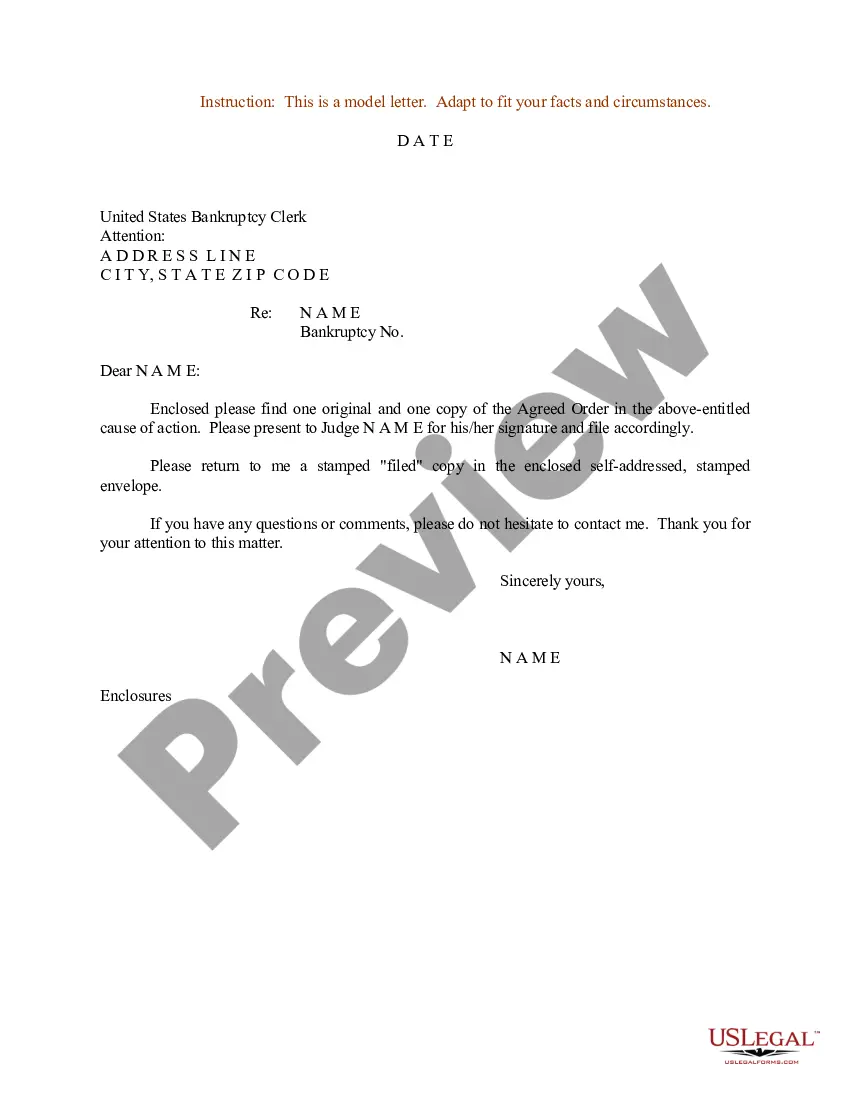
Sample Order For Judge To Sign In Orange
Description


Get your form ready online
Our built-in tools help you complete, sign, share, and store your documents in one place.
Make edits, fill in missing information, and update formatting in US Legal Forms—just like you would in MS Word.
Download a copy, print it, send it by email, or mail it via USPS—whatever works best for your next step.
Sign and collect signatures with our SignNow integration. Send to multiple recipients, set reminders, and more. Go Premium to unlock E-Sign.
If this form requires notarization, complete it online through a secure video call—no need to meet a notary in person or wait for an appointment.
We protect your documents and personal data by following strict security and privacy standards.

Make edits, fill in missing information, and update formatting in US Legal Forms—just like you would in MS Word.

Download a copy, print it, send it by email, or mail it via USPS—whatever works best for your next step.

Sign and collect signatures with our SignNow integration. Send to multiple recipients, set reminders, and more. Go Premium to unlock E-Sign.

If this form requires notarization, complete it online through a secure video call—no need to meet a notary in person or wait for an appointment.

We protect your documents and personal data by following strict security and privacy standards.
Looking for another form?




Form popularity
FAQ
A court order is an official proclamation by a judge (or panel of judges) that defines the legal relationships between the parties to a hearing, a trial, an appeal or other court proceedings. Such ruling requires or authorizes the carrying out of certain steps by one or more parties to a case.
An "Order" is a separate document that a judge signs which sets forth the judge's ruling on a motion. A "Judgment" is a separate document that a judge signs and sets forth the judge's ruling at the end of an adversary proceeding.
Written Order means a written order signed by the General Manager or properly authorized representative or agent, mailed to the Contractor at the address designated in the firm's Bid, or to such other address as may be designated in writing as its official place of business.
Good Words To Use In Custody Hearing Your Child is Not Property. The primary thing you must remember is that your child is not property. Best Interests of Child. With that in mind, you must always remember in Court, it is about your children. Status Quo. Child's Schedule. Co-Parenting. Flexibility. Step-Up Plan. Our Child.
Legal Examples: A Show Cause Order is issued to a party who has allegedly violated a court order. The individual must appear in court to explain why they should not be held in contempt for failing to comply with the original order, such as not paying court-ordered child support.
In person: In an interview, social event, or in court, address a judge as “Your Honor” or “Judge last name.” If you are more familiar with the judge, you may call her just “Judge.” In any context, avoid “Sir” or “Ma'am.” Special Titles.
A court order is an official proclamation by a judge (or panel of judges) that defines the legal relationships between the parties to a hearing, a trial, an appeal or other court proceedings. Such ruling requires or authorizes the carrying out of certain steps by one or more parties to a case.
Opinion - A judge's written explanation of a decision of the court. In an appeal, multiple opinions may be written. The court's ruling comes from a majority of judges and forms the majority opinion.
A motion is a paper you can file in your case. It asks the court to decide something in your case. For example, if you need more time to answer a complaint against you, you can file a motion to extend the time to answer. If you do not have a case, you cannot file a motion.
Writing a Persuasive Motion to Dismiss Be Clear and Concise: Use straightforward language and be diligent with proofreading. Stay Focused on the Legal Issues: Avoid unnecessary details and stick to the relevant legal arguments. Support Every Claim: Use statutes, case law, and rules of procedure to back up your points.

