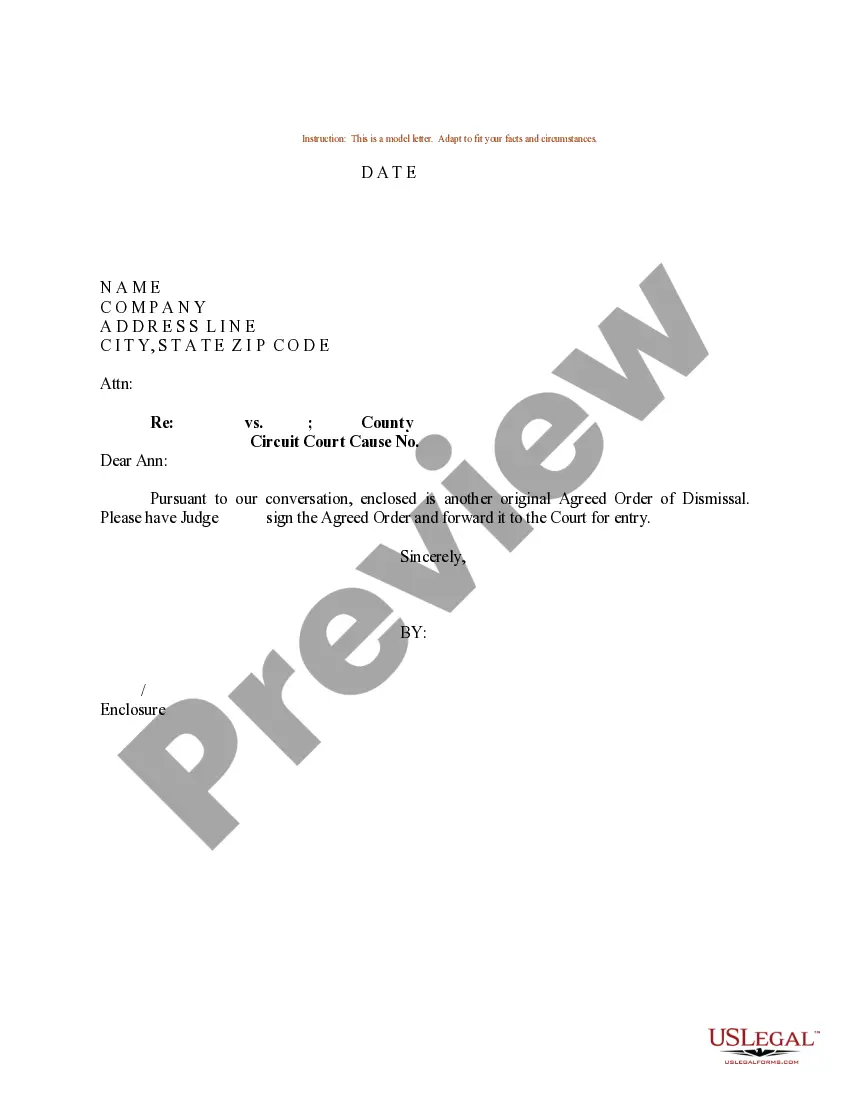
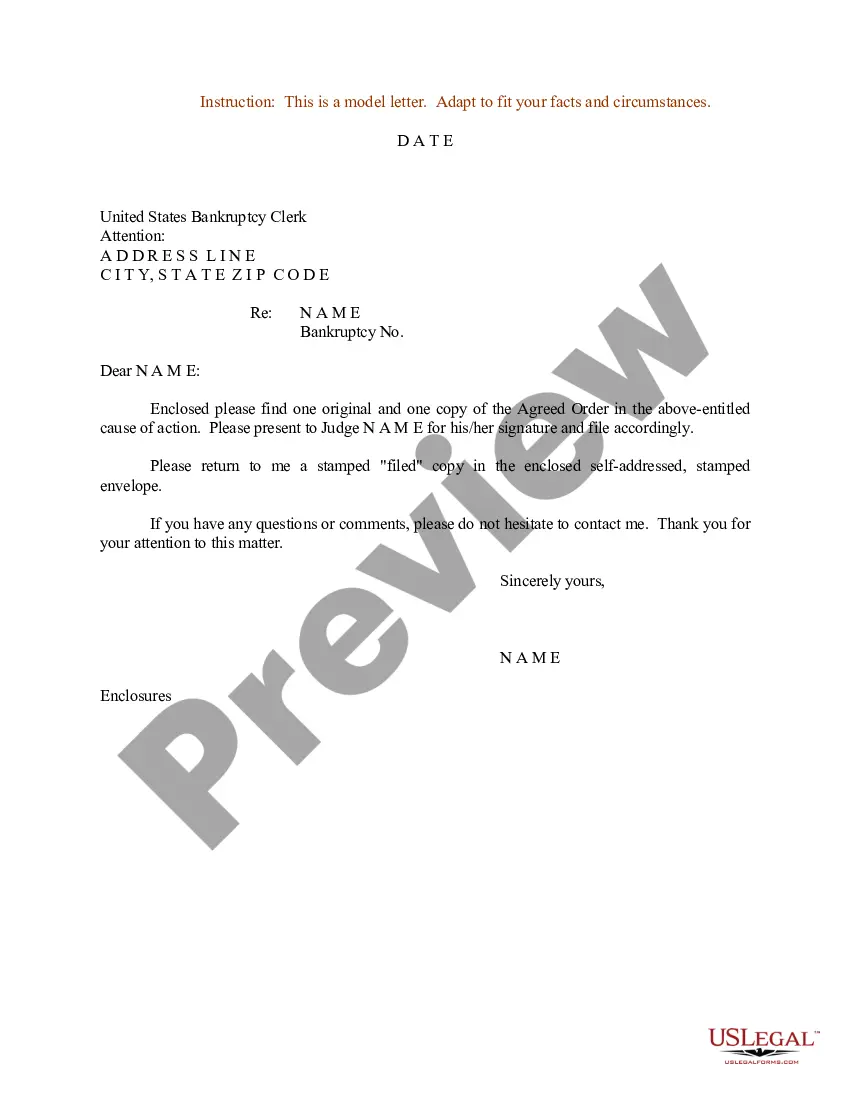
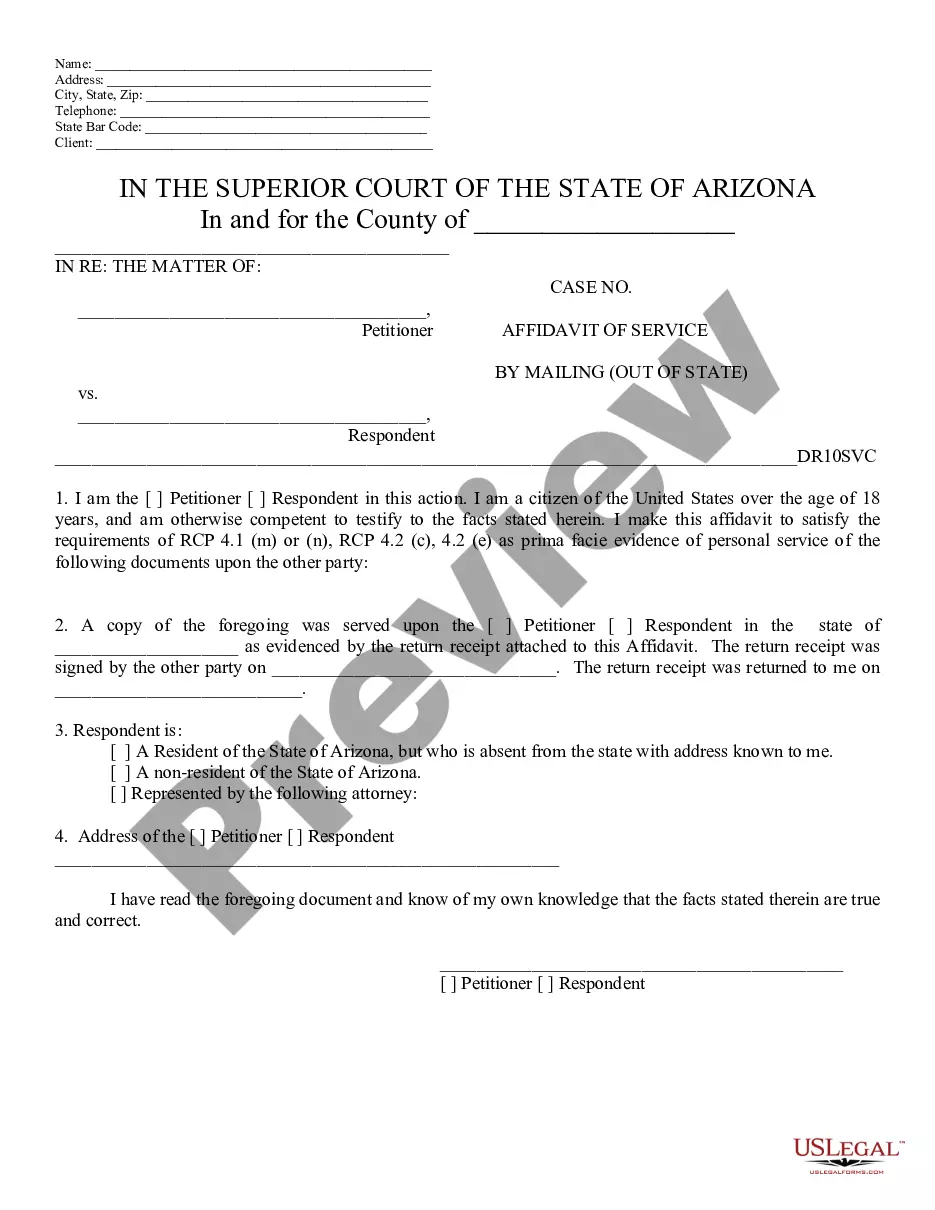
Sample Order For Judge To Sign In Michigan
Description

Get your form ready online
Our built-in tools help you complete, sign, share, and store your documents in one place.
Make edits, fill in missing information, and update formatting in US Legal Forms—just like you would in MS Word.
Download a copy, print it, send it by email, or mail it via USPS—whatever works best for your next step.
Sign and collect signatures with our SignNow integration. Send to multiple recipients, set reminders, and more. Go Premium to unlock E-Sign.
If this form requires notarization, complete it online through a secure video call—no need to meet a notary in person or wait for an appointment.
We protect your documents and personal data by following strict security and privacy standards.

Make edits, fill in missing information, and update formatting in US Legal Forms—just like you would in MS Word.

Download a copy, print it, send it by email, or mail it via USPS—whatever works best for your next step.

Sign and collect signatures with our SignNow integration. Send to multiple recipients, set reminders, and more. Go Premium to unlock E-Sign.

If this form requires notarization, complete it online through a secure video call—no need to meet a notary in person or wait for an appointment.

We protect your documents and personal data by following strict security and privacy standards.
Looking for another form?









Form popularity
FAQ
If you want to file a motion, the process is generally something like this: You write your motion. You file your motion with the court clerk. The court clerk inserts the date and time your motion will be heard by the judge. You “serve” (mail) your motion to the other side.
The court must sign a properly submitted proposed judgment or order if no written objections have been filed within 7 days after service of notice, as long as the judgment or order is consistent with the court's decision. MCR 2.602(B)(3). (This is commonly referred to as the “Seven-Day Rule.”)
Process may be served on a resident or nonresident individual by (1) delivering a summons and a copy of the complaint to the defendant personally; or (2) sending a summons and a copy of the complaint by registered or certified mail, return receipt requested, and delivery restricted to the addressee.
A Motion for Relief from Judgment: What You Need to Know If you have been convicted of a crime in Michigan and believe that you have grounds for relief from the judgment, you may file a motion for relief under MCR 6.500. This motion must be filed in the circuit court where the conviction occurred.
If serving by mail, the court rules require service by registered or certified mail, return receipt requested, restricting delivery only to the addressee/ defendant. Service is complete when the defendant acknowledges receipt of the mailing by signature.
In California, The most common methods include personal service, where a registered process server personally hands over the court papers to the defendant.
A motion that claims a party has disobeyed a court order. The judge may issue a show cause order that requires the party to appear for a court hearing. At the hearing, the judge will decide if the party disobeyed the order and whether they should face penalties, such as paying a fine or going to jail.
Except for crimes exempted by MCL 780.131(2), the inmate shall be brought to trial within 180 days after the department of corrections causes to be delivered to the prosecuting attorney of the county in which the warrant, indictment, information, or complaint is pending written notice of the place of imprisonment of ...

