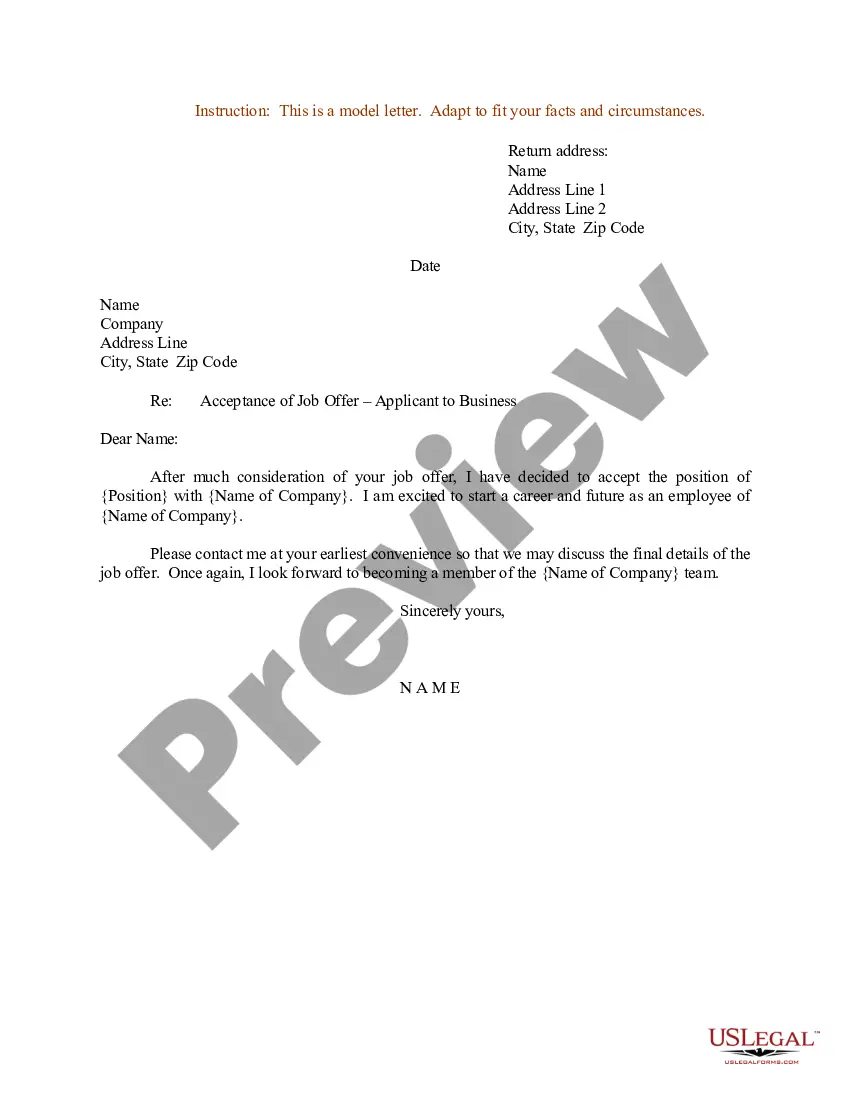
Daycare Acceptance Letter For Parents In Texas
Description
Get your form ready online
Our built-in tools help you complete, sign, share, and store your documents in one place.
Make edits, fill in missing information, and update formatting in US Legal Forms—just like you would in MS Word.
Download a copy, print it, send it by email, or mail it via USPS—whatever works best for your next step.
Sign and collect signatures with our SignNow integration. Send to multiple recipients, set reminders, and more. Go Premium to unlock E-Sign.
If this form requires notarization, complete it online through a secure video call—no need to meet a notary in person or wait for an appointment.
We protect your documents and personal data by following strict security and privacy standards.

Make edits, fill in missing information, and update formatting in US Legal Forms—just like you would in MS Word.

Download a copy, print it, send it by email, or mail it via USPS—whatever works best for your next step.

Sign and collect signatures with our SignNow integration. Send to multiple recipients, set reminders, and more. Go Premium to unlock E-Sign.

If this form requires notarization, complete it online through a secure video call—no need to meet a notary in person or wait for an appointment.

We protect your documents and personal data by following strict security and privacy standards.
Looking for another form?





Form popularity
FAQ
If you plan on caring for more than three kids at one time, regardless of whether this is in your own home or another location, you need to follow the appropriate licensing processes and obtain your license from DFPS.
The registration process requires the provider to apply to the State of Texas, undergo an on-site inspection, complete an orientation class, and achieve clearances on background checks. The difference between licensing and registering is the amount of state involvement in regulating the daycare facility.
Health statement: Signed by a health care professional who has examined the child in the past year. It says the child can participate in the day care's program. Routine vaccinations: Immunize by 3 months old for diseases including polio, hepatitis B and diphtheria, tetanus and pertussis (DTaP).
Childcare licensing requirements in Texas Must be at least 21 years old. Have a high school diploma or GED equivalent. Meet specific educational requirements. Have a certificate of completion of the licensing pre-application course dated within one year of the application date. Meet background check requirements.
Minimum Space Requirements for Texas Daycares ing to Texas HHS, the minimum indoor space required for each child in a daycare setting is 30 square feet. This measurement excludes areas such as restrooms, kitchens, hallways, and storage spaces.
Childcare licensing requirements in Texas Must be at least 21 years old. Have a high school diploma or GED equivalent. Meet specific educational requirements. Have a certificate of completion of the licensing pre-application course dated within one year of the application date. Meet background check requirements.
0 – 11 months: 1 adult for every 4 infants. 12 – 17 months: 1 adult for every 5 toddlers. 18 – 23 months: 1 adult for every 9 toddlers. 2 years: 1 adult for every 11 children.
Requirements include the following: Criminal background check for child care staff. Ongoing training for child care staff, such as CPR, first aid, and safe sleep for infants. Sanitation. Emergency planning. Building safety. Child and caregiver health.
Eligibility review may take up to 20 business days. You will be notified via mail of your eligibility status. All eligible applicants go on the waiting list and when funding becomes available, families are outreached by wait/date order.
Waitlists can vary from a few weeks to over a year, depending on your location, how coveted that specific daycare is and other factors. So, it can help to start your search as soon as possible.